

Last Updated on 02/07/2012 by Chris Gampat
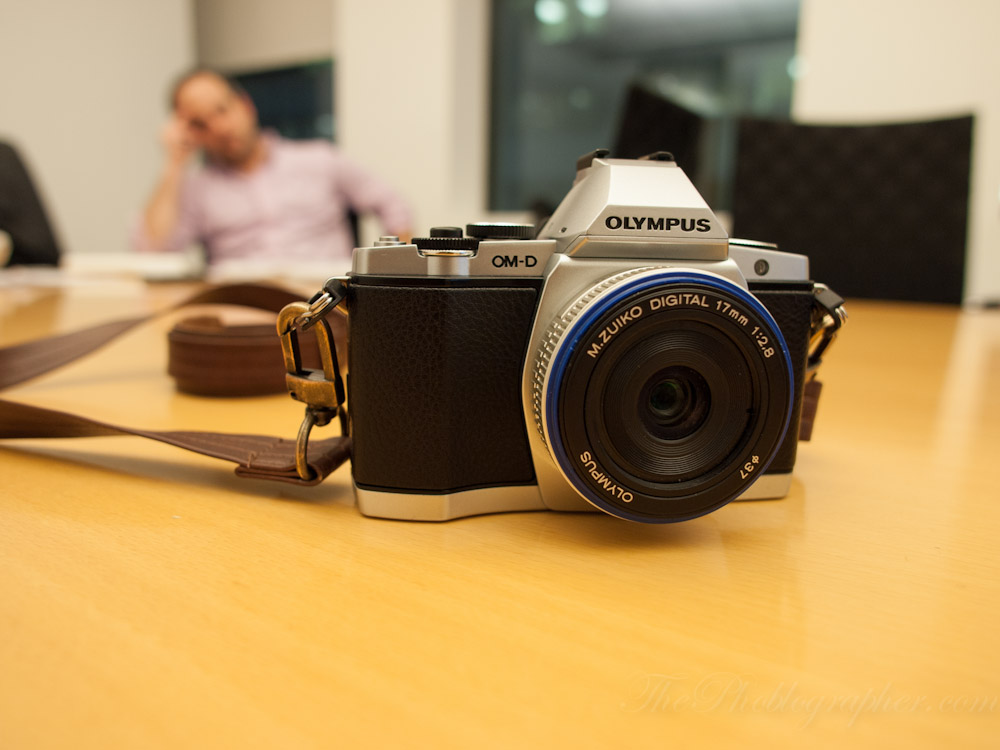
Yes, the rumors have been true for the most part. Olympus has finally decided to let the cat out of the bag with the new OMD (or OM-D) modernly coined the EM5 (or EM-5). Pitched to me as their new professional Micro Four Thirds camera, the reps stated that the system is now complete with both consumer products and professional products. Additionally, new lenses and accessories were also announced.
We got some fondling time with the camera; and our thoughts aren’t everything you might think they would be.
Update: B&H Photo and Amazon has it available for Pre-Order
EM-5 with kit lens (Amazon is body only in silver and Black with kit lens)
Weatherproof Four Thirds lens adapter
Video Demo
<
Tech Specs
| Model name | OM-D E-M5 |
| Version/Date | Ver. 0.9 / Jan 24, 2012 |
| Product | |
| Product type | Micro Four Thirds interchangeable lens system camera |
| Memory | SD Memory Card*1 (SDHC, SDXC, UHS-I compatible, Eye-Fi Card compatible*2) *1: Class 6 is recommended for Movie shooting. *2: Not compatible with endlessmode. Release time lag may be generated in actual use. |
| Screen size | 17.3 mm (H) x 13.0 mm (V) |
| Sensor | |
| Sensor Type | 4/3 Live MOS Sensor |
| Number of pixels / Aspect ratio | Number of effective pixels : 16.1 million pixels Total number of pixels : Approx. 16.9 million pixels Aspect ratio : 1.33 (4:3) |
| Dust reduction | Supersonic Wave Filter (dust reduction system for image sensor) |
| Filter array | Primary color filter (RGB) |
| Recording Formats | |
| Recording format | DCF, DPOF compatible / Exif, PRINT Image Matching III, MPO compatible |
| File format | RAW (12-bit lossless compression), JPEG, RAW+JPEG, MPO(3D still) |
| Recording image size | [RAW] 4608 x 3456 pixels [JPEG] 4608 x 3456 pixels – 640 x 480 pixels |
| File sizes | RAW: 4608(H)x3456(V) (approx. 1/1.5 lossless compressed) Approx. 17MB Set1(LF): 4608(H)x3456(V) (1/4 compressed) Approx. 7.5MB Set2(LN): 4608(H)x3456(V) (1/8 compressed) Approx. 3.5MB Set3(MN): 2560(H)x1920(V) (1/8 compressed) Approx. 1.1MB Set4(SN): 1024(H)x768(V) (1/8 compressed) Approx. 0.3MB |
| IS SYSTEM | |
| Type | Built-in (Image sensor shift type for movie & still, 5-axis* image stabilization) * yaw/pitch/vertical shift/horizontal shift/rolling |
| Modes | 3 modes (IS1, IS2, IS3), OFF |
| Focal length setting | Available |
| Manual Function | Input focal length 8, 10, 12, 16, 18, 24, 28, 30, 35, 40, 48, 50, 55, 65, 70, 75, 80, 85, 90, 100, 105, 120, 135, 150, 180, 200, 210, 250, 300, 350, 400, 500, 600, 800, 1000 |
| Effective compensation range | maximum 5 EV steps * Based on Olympus in-house measurement conditions. |
| Shutter speed range | 60 – 1/4000 sec. (Not available when Bulb is selected) |
| ELECTRONIC VIEWFINDER | |
| Eye Level Finder type | Eye-level electronic viewfinder, approx. 1.44M |
| Eye point / Diopter adjustment range | Approx. 100% / Approx. 0.92x*1 – 1.15x*2 (-1m-1, 50mm lens, Infinity) *1 : at Finder Style 1, 2 (aspect 4:3) *2 : at Finder Style 3 (aspect 4:3) |
| Approx. 18mm (-1m-1, Distance from rear lens surface) / -4 ~ +2m-1 | |
| Preview | Available with Live Preview function button [custom function] |
| Level Gauge | 2-axis level gauge; horizontal /vertical |
| Finder Style | Selectable from 3 types |
| Brightness / Colour temperature control | ±7 levels / ±7 levels |
| EyeCup | Removable, Optional eyecup EP-11 is available. |
| LCD MONITOR | |
| Live view | 100% field of view, Exposure compensation preview, WB adjustment preview, Gradation auto preview, Face detection preview (up to 8 faces), Grid line, Histogram, Magnification display (x5/x7/x10/x14) OFF |
| Grid/ Monitor Display Types | Normal Mode, Grid Line Mode(4 types), Histogram Mode, Magnified View Mode, OFF |
| Magnification Ratio | x5, x7, x10 (Default), x14 |
| Monitor information | Aperture value, Shutter speed, Auto Bracket, AE Lock, AF mode, IS, Shooting Mode, Battery Check, Myset, Internal Temperature Warning, Face / Eye Detection, Histogram, Number of storable still pictures, Record mode, ISO, Sequential shooting, Self-timer, White Balance, Metering Mode, AF confirmation mark, Exposure Compensation Value, Spot metering Area Flash Mode, Flash Status, Flash intensity Control, Super FP Focusing length, Tone control, Eye-Fi condition |
| Display of Face Detection | Max 8 frames of face detection can be displayed. |
| Monitor Specs | 3.0-inch tilting OLED monitor Approx. 610k dots, Touch control in electrostatic capacitance Type |
| Touch control | Touch shutter release, Touch enlargement, Touch Live Guide, AF area selection, AF area enlargement, Frame advance/backward, Enlargement playback, Touch Super Control Panel |
| Tilting angle | Upward tilting angle : up to 80 degrees / Downward tilting angle : up to 50 degrees |
| Brightness / Color temperature control | ±2 levels / ±3 levels |
| Color tone select | Vivid / Natural |
| AF SYSTEM | |
| AF Type | High-speed imager AF |
| Focus modeS | Single AF (S-AF) / Continuous AF (C-AF)* / Manual Focus (MF) / S-AF + MF / AF tracking (C-AF + TR) * |
| Full-time AF | Available |
| Maginified frame AF | Selectable from over 800 AF points Enlarged view check by magnify button Magnification x5, x7, x10(Default), x14 selectable |
| Face detection AF / Eye detection AF | Available / Available Eye Detection AF mode : OFF / Nearer-eye priority / Right-eye priority / Left-eye priority |
| Focusing point / Focusing point selection | 35-area multiple AF / All target, Group target area (9-area), Single target |
| AF illuminator | Yes |
| Manual focus assist | Live view image is magnified when the focus ring is rotated. (at S-AF+MF or MF mode) |
| AF tracking | Yes |
| Metering system | |
| TTL Image sensor metering | Digital ESP metering (324-area multi pattern metering), Center weighted average metering, Spot metering, Spot metering with highlight control, Spot metering with shadow control |
| Metering range | EV 0 – 20 (at normal temperature, 17mm f2.8, ISO 100) |
| Exposure modes | i Auto, P: Program AE (Program shift can be performed), A: Aperture priority AE, S: Shutter priority AE, M: Manual, Bulb, Time, Scene select AE, Art Filter, Underwater wide / macro* * Selectable from menu as a function on Fn-1/Rec button |
| Scene Select AE Modes | Portrait, e-Portrait, Landscape, Landscape + Portrait, Sport, Night, Night + Portrait, Children, High Key, Low Key, DIS mode, Macro, Nature Macro, Candle, Sunset, Documents, Panorama, Fireworks, Beach & Snow, Fisheye Conv., Wide Conv., Macro Conv., 3D * * Still image only |
| ISO sensitivity | AUTO: ISO 200 – 25600 (customizable, Default 200-1600) / Manual ISO 200 – 25600, 1/3 or 1 EV steps selectable |
| Exposure compensation | ±3 EV in 1/3, 1/2, 1 EV steps selectable |
| AE lock | Locked at 1st release of shutter button (can be set to Fn1/Rec button) |
| Metering standard value adjustment | 1/6 EV step, +/- 1EV range |
| SHUTTER SYSTEM | |
| Type | Computerized focal-plane shutter |
| Shutter speed | 1/4000 – 60 sec. (1/3, 1/2, or 1EV steps selectable.) Bulb: default setting 8min. (1/2/4/8/15/20/25/30 min. selectable.) |
| FLASH SYSTEM | |
| Flash intensity control method | TTL Auto, Auto*, Manual, FP-TTL AUTO*, FP-MANUAL* * Available on the external flash |
| Built-in flash | No |
| Bundled flash (FL-LM2) | TTL flash, GN=10 (ISO200・m) / GN=7(ISO100・m) |
| Flash mode | Flash Auto, Redeye, Fill-in, Flash Off, Red-eye Slow sync.(1st curtain), Slow sync.(1st curtain), Slow sync.(2nd curtain), Manual(1/1(FULL)~1/64) |
| Synchronization speed | 1/250sec. or less* (using the bundled flash) * It depends on flash models or flash mode FL-50R: 1/180 sec., Exept FL-50R: 1/200 sec., Super FP: 1/125-1/4000 sec. |
| Flash intensity control | Up to ±3 EV in 0.3, 0.5, 1 EV steps selectable |
| Compatible external flash | FL-50/FL-50R, FL-36/FL-36R, FL-30, FL-20, FL-14, FL-300R, FL-600R |
| Colour Temperature | 5500±400°K |
| Compatible external flash | FL-50R, FL-36R, FL-300R, FL600R |
| Control method | Triggered and controlled by bundled flash (FL-LM2) ** Available on FL-LM1/ FL-600R. (Olympus Wireless RC Flash system compatible) |
| Channel No. | 4 channels |
| Group Number | 4 groups (External flash 3 groups + a bundled flash) |
| Drive | |
| Drive mode | Single-frame shooting, Sequential shooting, Self-timer |
| Sequential shooting maximum speed | [Sequential shooting H mode] 9.0 fps [Sequential shooting L mode] 3.5 fps / 4.2fps in case of “I.S. OFF”. |
| Max. recordable pictures on sequential shooting |
[RAW] Max. 17 frames (in seq. shooting L), Max. 11 frames (in seq. shooting H) [JPEG] Up to full extent of data strage capacity (in seq. shooting L), Max. 17 frames ( in seq. shooting H) (with TOSHIBA SDHC UHS-I card R95-W80 8GB model, under Olympus test standard) |
| Self-timer | Operation time: 12 sec., 2 sec. (cancel available) |
| Wireless remote control | Not Available |
| BRACKETING | |
| Exposure bracketing | 2, 3 or 5 frames in 0.3/0.7/1.0EV steps selectable, 7 frames in 0.3/0.7EV steps selectable |
| White balance bracketing | 3 frames in 2, 4, 6 steps selectable in each A-B/G-M axis. |
| Flash bracketing | 3 frames in 0.3/0.7/1.0EV step selectable |
| Art Filter bracketing | i-Enhance, Vivid, Natural, Muted, Portrait, Monotone, Custom, Art Filters selectable |
| ART FILTER | |
| Mode (Variation / Effect) | Pop Art (I, II / a.b.c.d.e.) |
| Soft Focus ( – / c.e.) | |
| Pale & Light Color (I, II / a.b.c.d.) | |
| Light Tone ( – / d.) | |
| Grainy Film (I, II / b.c.d.) | |
| Pin Hole (I, II, III / d.) | |
| Diorama ( – / d.) | |
| Cross Proscess (I, II / b.c.d.) | |
| Gentle Sepia ( – / a.b.c.d.) | |
| Dramatic Tone (I, II / b.c.d.e.) | |
| Key Line (I, II / a.b.c.d.e.) | |
| Art Effect | a. Soft Focus Effect |
| b. Pin-Hole Effect | |
| c. White Edge Effect | |
| d. Frame Effect | |
| e. Star Light Effect | |
| MOVIE | |
| Recording format | MOV(MPEG-4AVC/H.264) , AVI(Motion JPEG) |
| Movie Mode | MOV(MPEG-4AVC/H.264 ),AVI(Motion JPEG) |
| [MOV] | |
| Full HD: 1920(H)x1080(V), 59.94i Recording *3 20Mbps(Fine) *4 / 17Mbps(Normal) *4 : Aspect 16:9 |
|
| HD: 1280(H)x720(V), 59.94i Recording *3, 13Mbps(Fine) *4 / 10Mbps(Normal) *4 : Aspect 16:9 |
|
| *3 : Sensor output 30fps *4 : bitrate |
|
| [AVI Motion JPEG] | |
| HD: 1280(H)x720(V), 30fps *4, Aspect 16:9 | |
| SD: 640(H)x480(V), 30fps *4, Aspect 4:3 | |
| *4 : Except for some of the Art Filters | |
| Maximum Recording Times | Full HD : Approx. 29min(Fine) / Approx. 22min(Normal) |
| HD : Approx. 29min(Fine) / Approx. 29min(Normal) | |
| Effects | Movie Effect : One shot echo / Multi echo Art Filter Movie, Aperture priority Movie, Shutter Priority Movie, Manual Shooting Movie |
| IS for Movie | Built in (Image sensor shift type image stabilization) IS1. mode only |
| AE Lock | Avarable |
| Exposure control (Movie) 動画露出制御 |
P: Program AE, A: Aperture priority AE, S: Shutter speed priority AE, M: Manual, Art Filter * S mode and M mode : Shutter speed is limited in less than 1/30 sec. |
| Compression ratio | Motion-JPEG Format : 1/12(HD), 1/8(SD) |
| File size | MOV Format : Max 4GB Motion-JPEG Format : Max 2GB |
| Recording format | Wave Format (Stereo linear PCM/16-bit, Sampling frequency 48kHz) |
| Micophone/Speaker | Stereo/Mono |
| Microphone function | Wind Noise Reduction, Recording Volume Audio dubbing possible for still pictures (up to 30 sec.) |
| Color matrix | sRGB, Adobe RGB |
| Mode | i-Enhance, Vivid, Natural, Muted, Portrait, Monotone, Custom, Art Filters |
| Gradation | Auto, Normal, High Key, LowKey [except fot Art Flters] |
| Adjustment parameter | 4 levels (Auto, Normal, High key, Low key) |
| Filter effect (B&W filter) | Neutral, Yellow, Orange, Red, Green for Monotone |
| Picture tone | Neutral, Sepia, Blue, Purple, Green for Monotone |
| NOISE REDUCTION | |
| At High ISO setting | Off, Low, Standard, High |
| At Slow shutter speed | Off, On, Auto On : effective when shutter speed is slower than 1 sec. Auto : effective when shutter speed is slower than 4 sec. (at ISO 200 or higher) or 8 sec. (at lower than ISO200) |
| MULTIPLE EXPOSURE | |
| Number of picture / Function | 2 frames / Auto gain, Exposing on Recorded picture(RAW) |
| ASPECT RATIOS | |
| Aspect Ratio | 4:3(Default) / 3:2 / 16:9 / 1:1 / 3:4 |
| Post Processing | RAW: Aspect ratio is recorded as Exif data, JPEG: JPEG image is produced based on the aspect ratio |
| LEVEL GAUGE | |
| Detection | 2-axis |
| DIGITAL TELECONVERTER | |
| Magnification | x2 |
| PLAYBACK FUNCTIONS | |
| Playback mode | Single-frame, Information display, Index display (4/9/25/100 frames), Calendar, Enlargement (2x – 14x), Movie (with sound, FF/REW/Pause), Picture rotation (auto), Slideshow *(with BGM/BGM+Sound/Sound) * Slideshow : Still/Movie/Still+Movie, When a camera is connected to HDTV with HDMI cable, 3 new slideshow effect can be selectable.(Still) |
| Information display | Histogram (independent luminance / RGB available), Highlight/Shadow point warning, AF frame, Photographic information, OFF |
| MENUS | |
| Languages | 34 languages selectable : – English, French, German, Spanish, Italian, Japanese, Korean, Traditional Chinese, Simplified Chinese, Russian, Czech, Dutch, Danish, Polish, Portuguese, Swedish, Norwegian, Finnish, Croat, Slovenian, Hungarian, Greek, Slovakian, Turkish, Latvian, Estonian, Lithuanian, Ukrainian, Serbian, Bulgarian, Rumanian, Indonesian, Malay, Thai |
| Reset and custom settings (My mode) | 4 settings recordable |
| IMAGE EDITING | |
| Editing function | RAW development, Gradation auto, Monochrome, Sepia, Red-eye fix, Saturation, Resize (1280×960, 640×480, 320×240), Trimming, Aspect, e-Portrait, Image Ovarlay, Postrecording |
| RAW picture editing | RAW development based on settings of the camera(including Art Filter) |
| JPEG editing | Shadow adjustment, Red-eye fix, Cropping, Aspect, Black&White, Sepia, Saturation, Resize, e-portrait |
| Image Overlay | Up to 3 RAW images |
| Erasing function | Single frame, All, Selected frames (from Index) |
| Protect function | Single frame, Selected frames, Release protect (Single/All selected) |
| PRINTING | |
| Print function | Print reservation (DPOF), Direct print (PictBridge compatible) |
| INPUT/OUTPUT | |
| USB/AV/Remote controller connector | Dedicated multi-connector [USB: USB2.0 High Speed, Video: NTSC/PAL selectable, Optional Remote cable RM-UC1 can be used.] |
| HDMI connector | Micro HDMI (Type-D) |
| Flash attachment | Hot shoe |
| Accessory Port 2 | Dedicated multi-connector [Available for VF-2/VF-3, SEMA-1, MAL-1 and PP-1.] |
| PC interface | USB 2.0 High Speed |
| TV interface | HDMI (HD/Stereo Sound), VIDEO-OUT(SD/Mono Sound) |
| DC-in | – [Optional Power Battery Holder HLD-6 has DC-IN jack for AC-3.] |
| POWER REQUIREMENTS | |
| Battery | BLN-1 Li-ion battery (included) |
| Power battery holder | (Option) Power Battery Holder HLD-6 |
| AC adaptor | (Option) AC adapter AC-3 *Optional HLD-6 has DC-IN jack for AC-3. |
| Sleep mode | Available (1/3/5 min. off selectable) |
| Number of recordable pictures | Approx. TBD shots [IS ON, CIPA test standard] (with BLN-1 and TOSHIBA super high-speed Class 6 SDHC 4GB card) |
| WEIGHTS/DIMENSIONS | |
| Dimensions | 4.8 inch (W) x 3.5 inch (H) x 1.7 inch (D) [CIPA guideline compliant, excluding protrusions] |
| Weight | Approx. 15 ounces [CIPA guideline compliant, with BLN-1 battery and Memory card] Approx. 13 ounces [body only] |
| Temperature | 32 ~ +104 (operation) / -4 ~ +140 (storage) Farhenheit |
| Humidity | 30 – 90% (operation) / 10 – 90% (storage) |
| Box contents | Body, Flash FL-LM2, Li-ion battery BLN-1, Li-ion battery charger BCN-1, USB cable, AV cable, Shoulder strap, OLYMPUS Viewer 2 (CD-ROM), Instruction manual, Warranty card |
Ergonomics
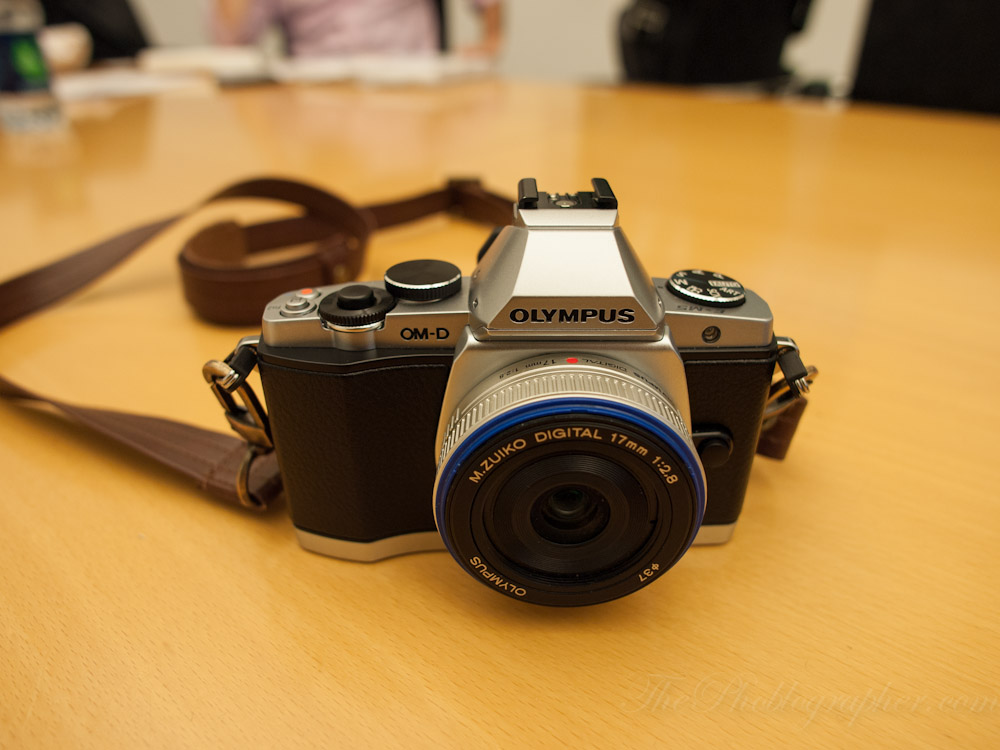
Before they brought out the EM-5 for me to stare at, the reps put an old OM-10 on the table. And to be honest with you, I firmly believe that that camera was one of the most unsightly the company has produced. The OM-4 was perhaps the sexiest and that’s what I really wanted.
Then when I was finally presented with the new digital OM, I was a bit taken aback. It’s alright looking, but it doesn’t look super sexy to me. Perhaps that could be because I saw it in silver. To be honest, I hate silver cameras and even expressed that if they released a white version with brown leather accents, they’d have my money. I fully expect consumers to spring for the black version of the camera.
Anyway, the camera screams retro with design accents even harkening to the recent Olympus E-5. And believe it or not, this is probably one of the largest mirrorless camera’s I’ve ever seen or held.

The top of the camera will be familiar to Pen users and also familiar to fans of everything vintage. The left features a very simple mode dial. And to be honest once again, I can’t for the life of me understand why the company would put an iAuto mode on the camera if this is targeted to professionals.
The top right is where all the business goes down. The two dials will remain unmarked and will change different settings in various camera modes. In practice, the two dials are placed exactly where your thumb and forefinger might be if you’re a Nikon or Olympus user. If you’re a Canon DSLR user, you’ll have to rebuild your muscle memory and not think about reaching for the dial on the back of the camera.
On the front dial is the shutter release as well.
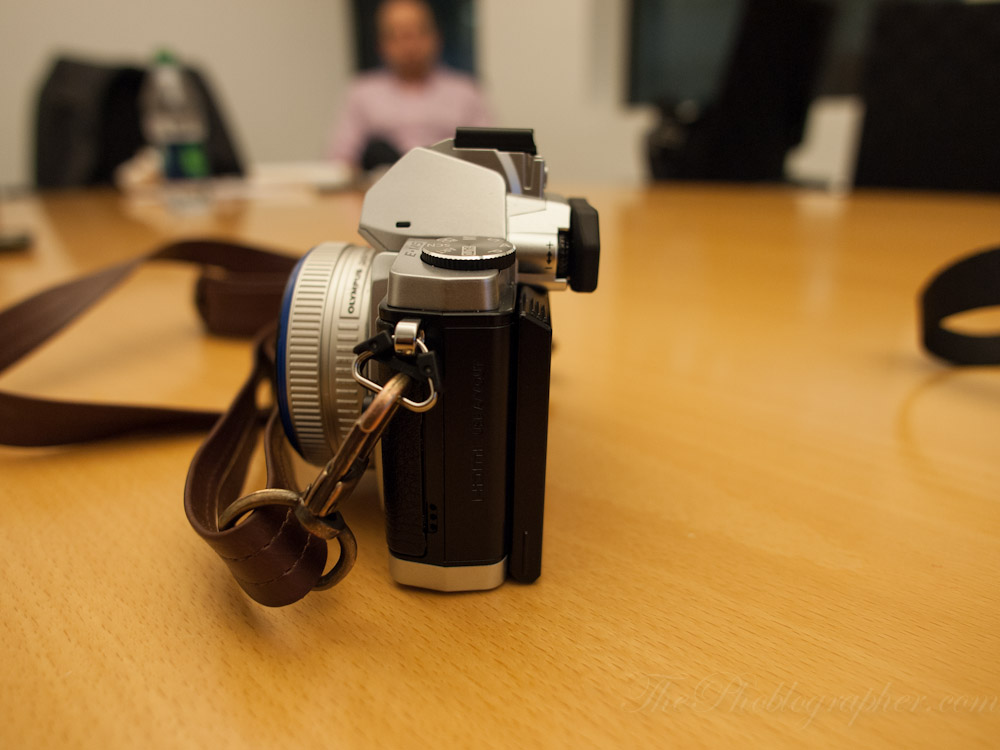
It’s a fairly thin camera all in all, but to my eyes and in my hands, it is still probably one of the largest mirrorless cameras out there. But in terms of ergonomics, it seems to work out.
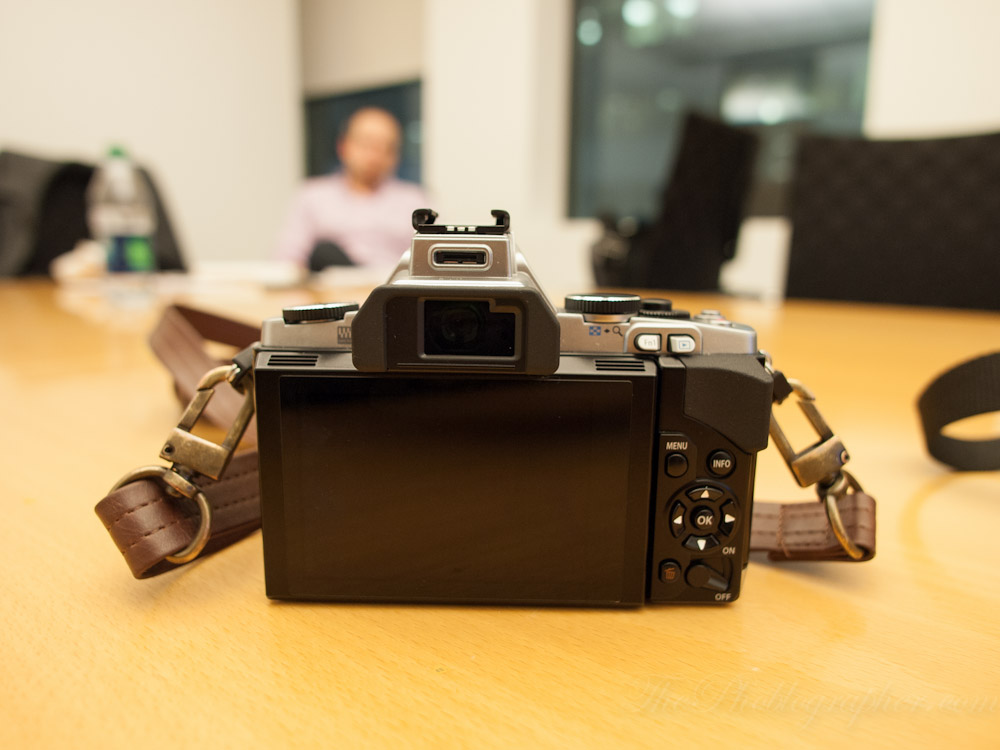
The back of the camera features a giant LCD touchscreen and that wonderful EVF. The EVF has the exact same resolution as the VF2 (a little over a megapixel). The right side of that giant screen features a bunch of different buttons. The directional buttons are a bit tough to get used to. I’m much more used to them being labeled, “ISO, Drive, etc.”
That screen flips up just like the one that many Sony NEX users will be familiar with.
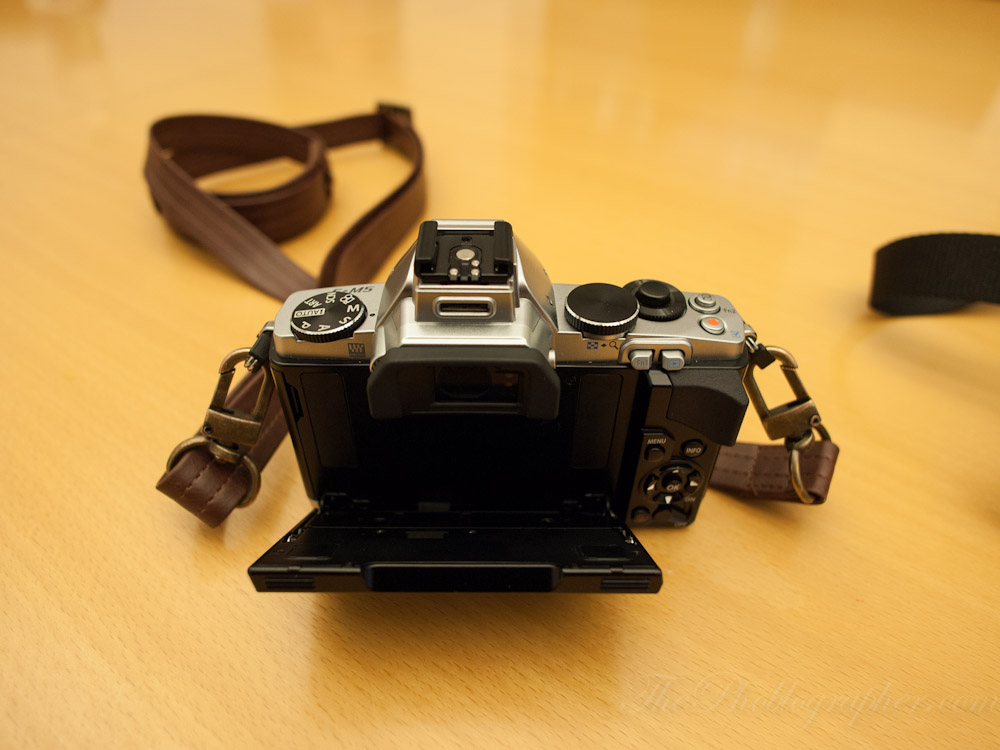
If you’re at a concert and need to shoot over your head, here’s your configuration.
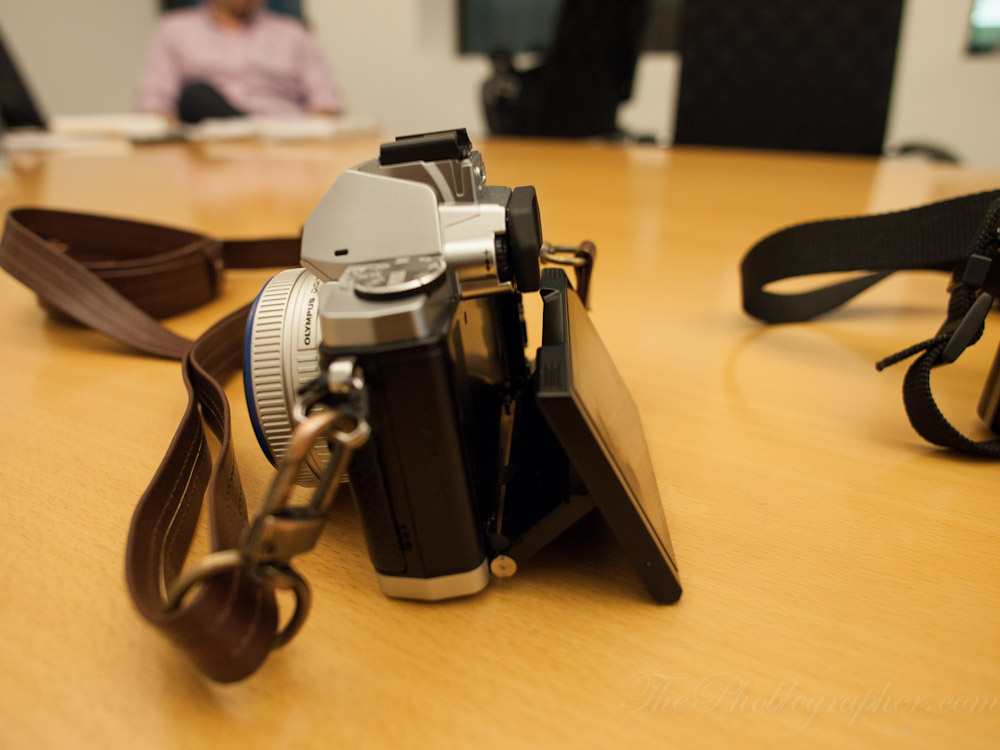
Shooting from the hip? Here you go, sort of. It can flip so that you can look directly down at it.
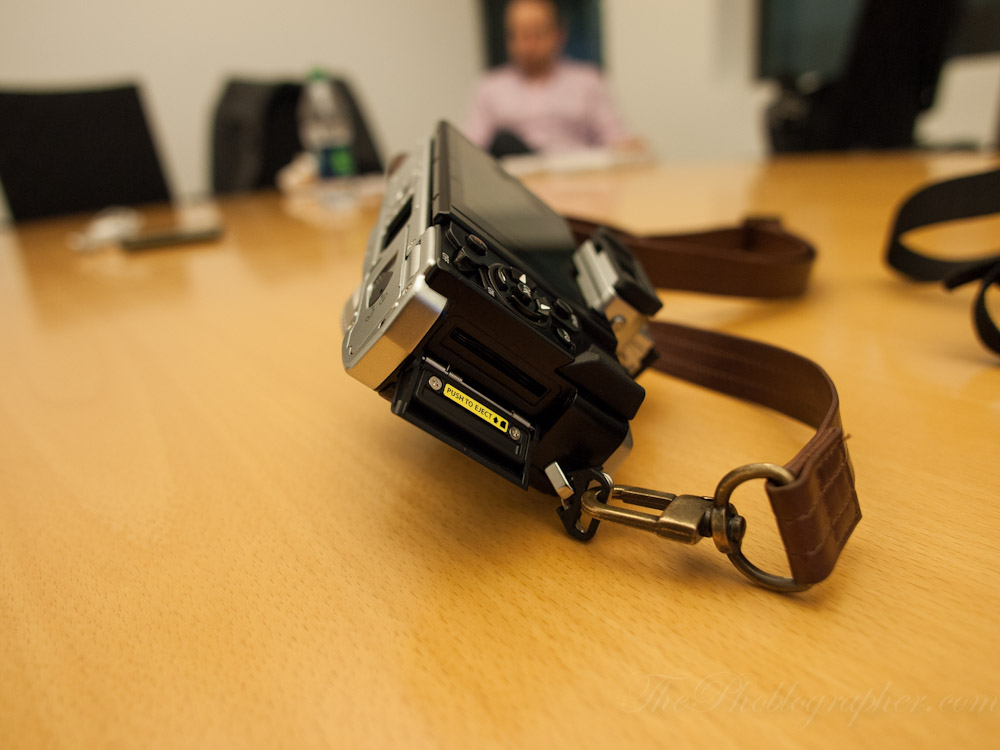
The camera features very few ports overall. It takes SD cards as well.
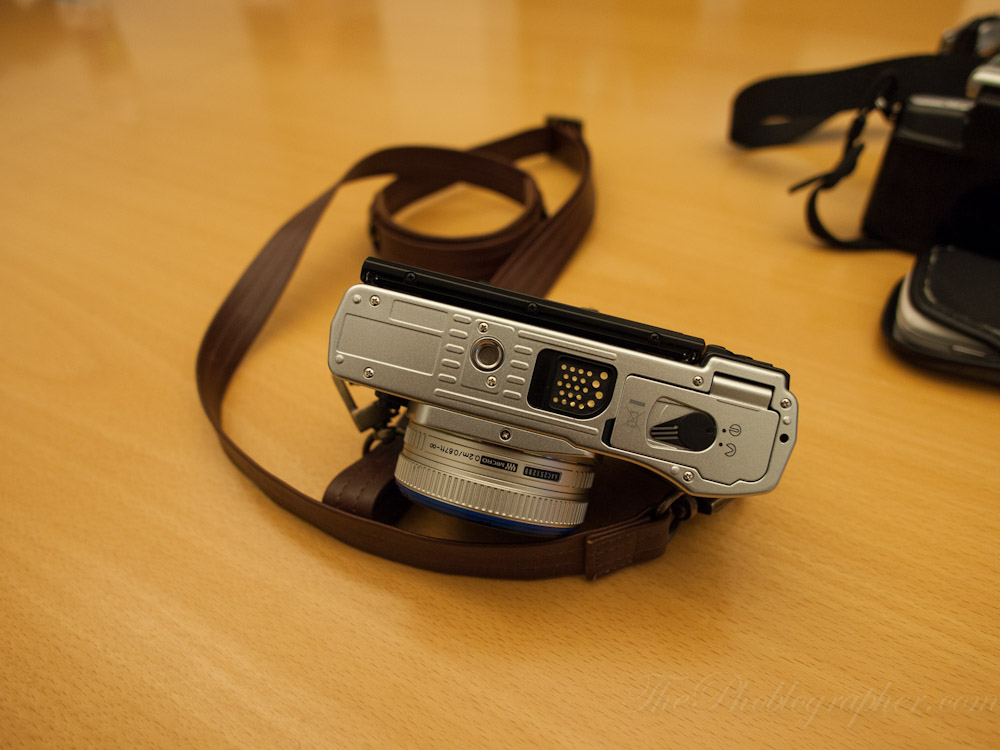
The bottom of the camera features this interesting port contact area that works with the battery grip.
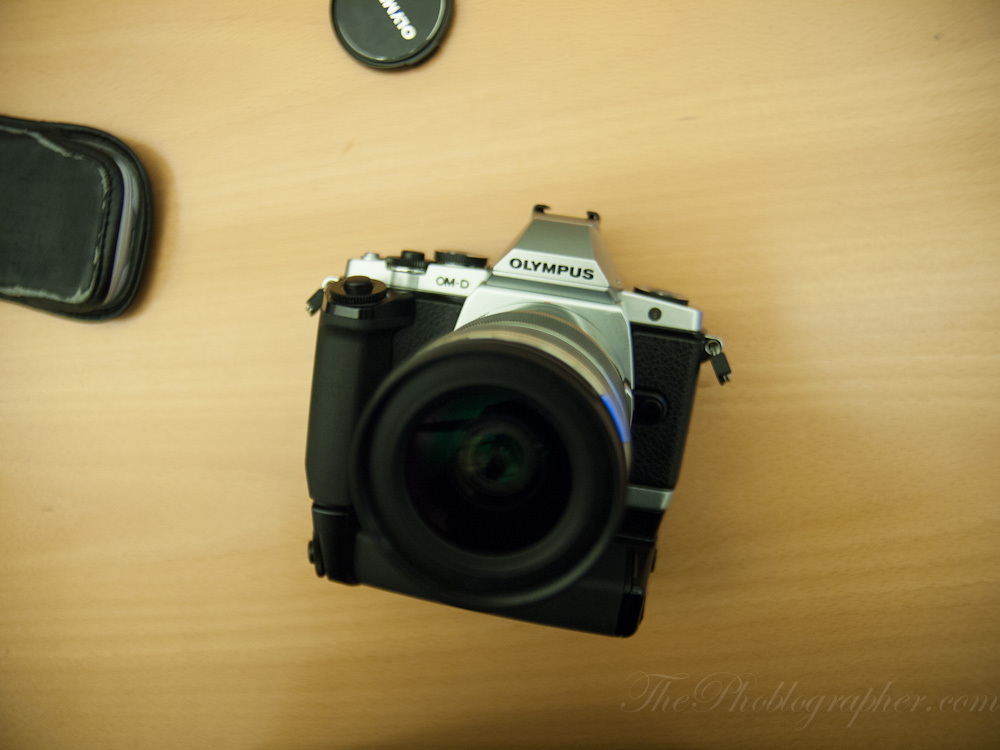
The battery grip comes in two different parts. It can be used as just a grip on the front of the camera to give the user more to put their fingers around when holding the camera, or it can have the battery expansion with a vertical grip as well. The overall package, feels like one of the older cameras with an automatic advance.
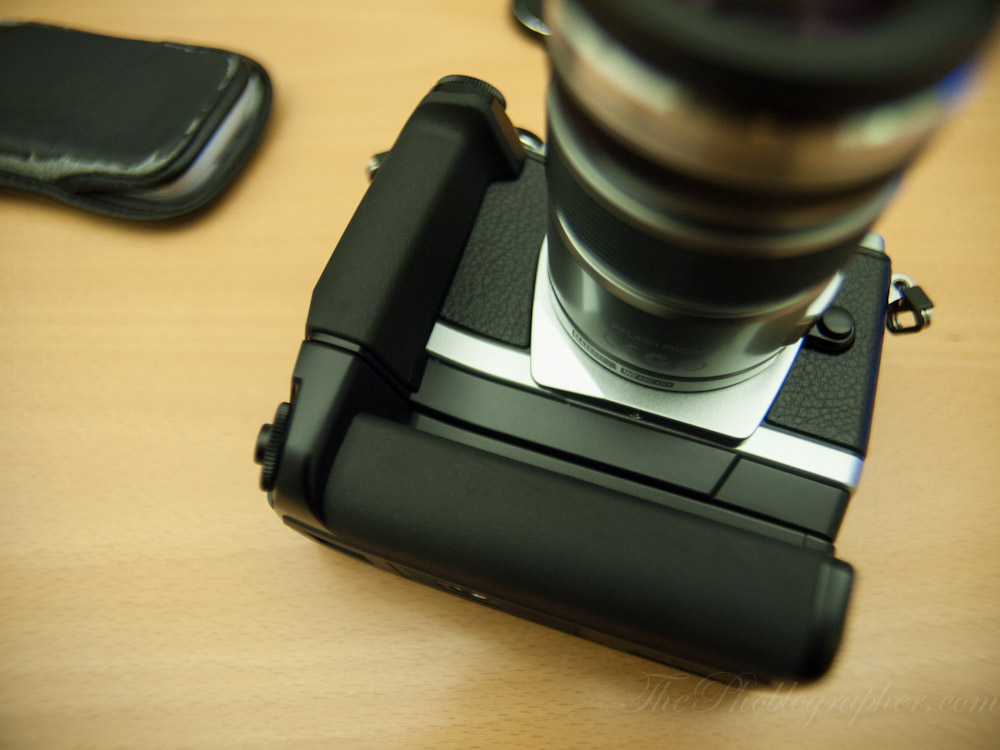
The grip actually also feels very nice overall. However, this is also probably the only mirrorless camera that offers a grip option natively. That’s a bold move for Olympus to make considering that mirrorless cameras are supposed to be smaller.
In the end, it’s still nowhere as big as a Rebel with a grip.
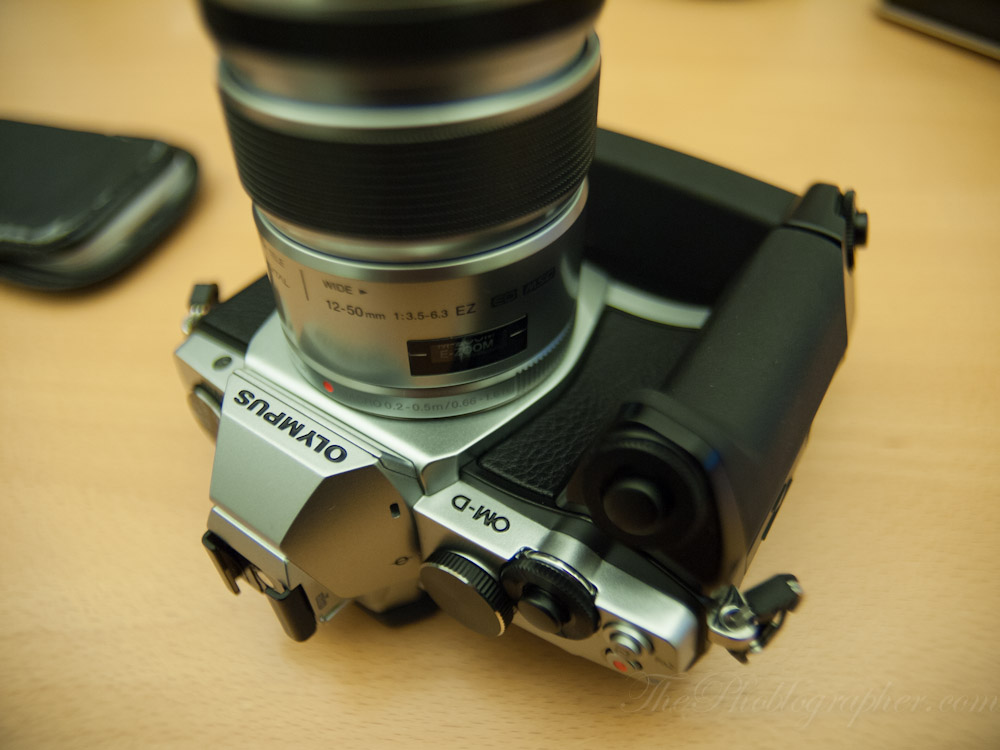
Once the grip is on, the camera actually seemed more visually pleasing in my eyes. However, it could once again be the silver color.
Autofocusing
As seen in the video above, the focusing is super quick. The company states that it is faster than the EP3 and now the fastest in the world. I still have yet to personally see that but I can assure that with the company’s MSC lenses, the camera is indeed quite fast. In fact, it is also even quite fast with the older lenses.
Image Quality
I wasn’t able to stick a card in the camera, so I can’t judge yet. However, they stated the the images are usable up to 12,800. As a Micro Four Thirds user, I’m going to pray that they’re right.
All That Other Stuff

The camera is splashproof and dustproof.
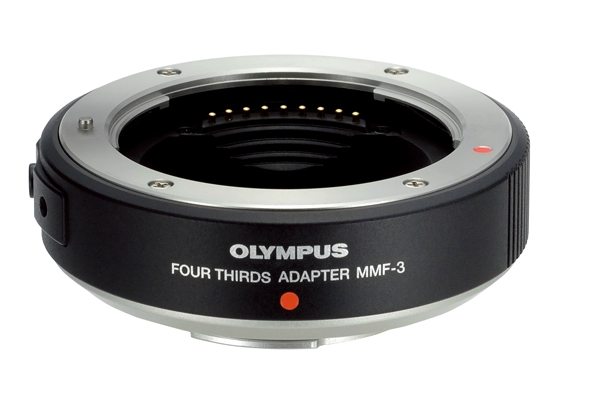
New weatherproof four thirds lens adapter.

New FL-600 flash that also features a front LED light for video. Which will compliment the new camera well since the video codec is now in MOV instead of that dreaded AVCHD codec they used previously.
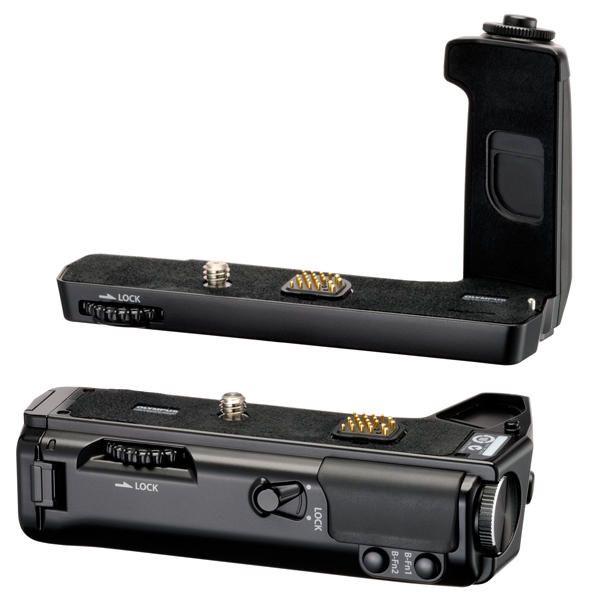
Here’s the grip separated into its two parts.
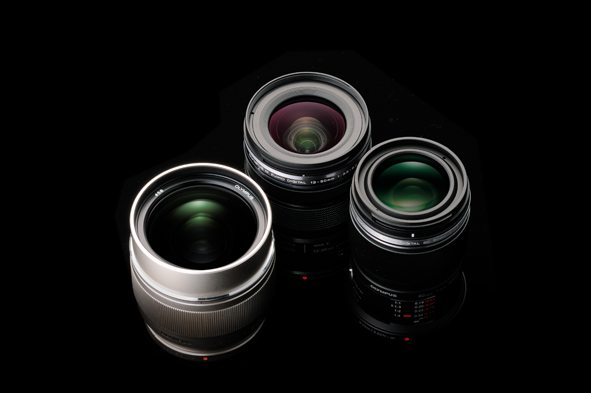
Two new lenses are coming: a 75mm f1.8 and 60mm f2.8 Macro lens. The reps told me that the f2.8 will stay at a constant aperture throughout the focusing range and not change the way some of Nikon’s lenses do.
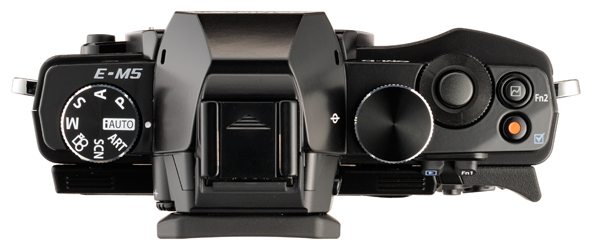
And the top.
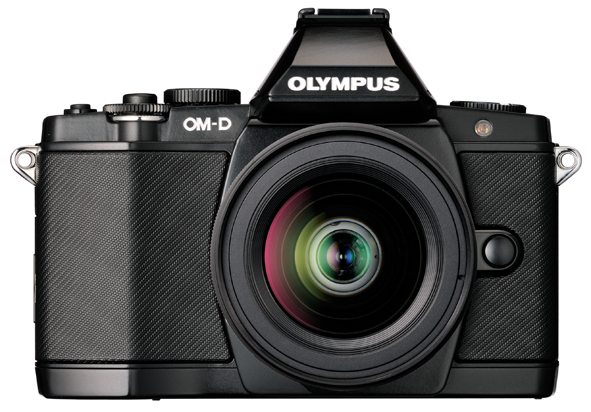
And here is the camera in all black.
Am I excited for this one. Yes, but I have to admit that I’m not as sold on it as I was about the EP3 during that briefing. I’m not sure what it is, but something about the back button placement throws me off a bit and that top head of the camera is huge to accommodate the viewfinder.
It could very well be that I’m so disgusted by the silver color. Indeed, that black up top looks tempting. But I’ll need to put the camera through its paces. My experience could very well change during a street photography session.
And I assure you all that I’ll be honest about it and not try to force you guys to click our affiliate links by masking ourselves as a salesmen (as some of our competitors do.)
Please Support The Phoblographer
We love to bring you guys the latest and greatest news and gear related stuff. However, we can’t keep doing that unless we have your continued support. If you would like to purchase any of the items mentioned, please do so by clicking our links first and then purchasing the items as we then get a small portion of the sale to help run the website.
Get rid of the ads!
Did you enjoy reading this article as much as we enjoyed writing it? There's a way to support us and our reporting, getting ad-free navigation and more as a bonus. Subscribe to us for less than a coffee per month —just $3.99— or take advantage of our yearly subscription with a hefty discount for only $25.- An ad-free experience
- A free mystery box for Lightroom or Capture One
- All the books in our store
- 20% discount on Capture One
- 30% discount on Imalume Photo Theft Protection
- 20% off Herbs and Kettle Tea Company.
- 20% off your order from MPIX printing services.
- 5% off Viltrox Products via their eCommerce store.
- 10% off all film developing, printing and scanning services from Blue Moon Camera and Machine
- 15% off 7Artisans products: The lens and accessory maker is offering a sweet discount for Phoblographer's readers.