How the Fuji X100 Retaught Me Street Photography

by Chris Gampat on 05/18/2011

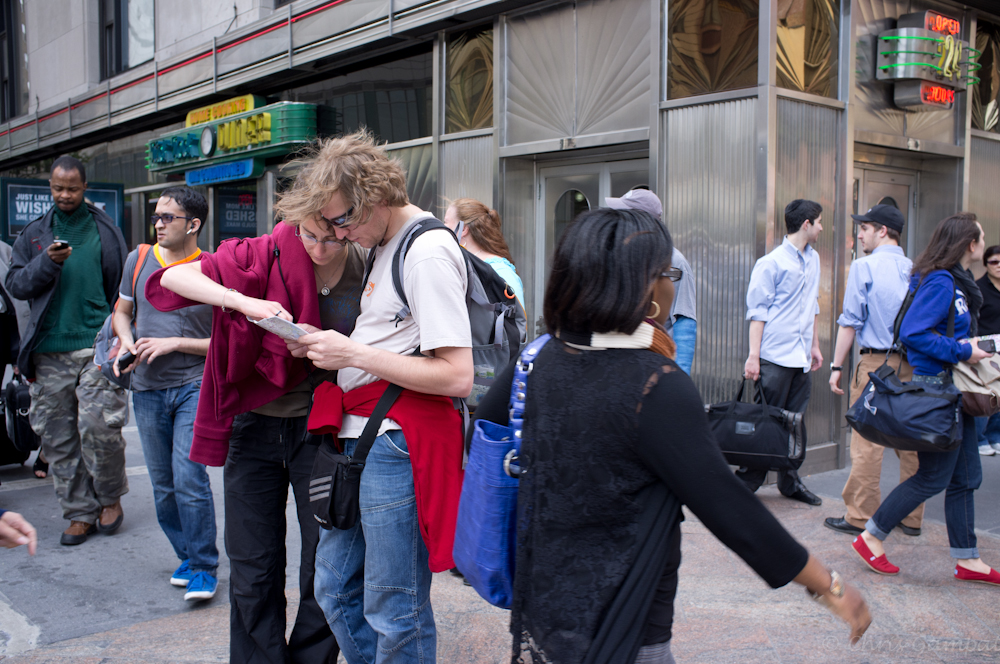
Part of my methods of testing cameras here at The Phoblographer is by using them for street photography. While I agree with Eric Kim that it’s the photographer that creates the images, I believe that the camera is the tool that we use to do it. With that said, you wouldn’t use a wrench when you need a screwdriver. Upon using the Fuji X100, I believe that the camera retaught me how to do street photography.

It Re-taught Me to Slow Down

Using the Fujifilm X100 was a bit of a task for me: sure the learning curve is short but there are aspects of the camera that force you to slow down rather than try to capture the decisive moment as quickly as you possibly can. Those that read the review will remember that I had problems with the metering so I switch my methods up to relying on my own knowledge of light to meter accordingly. Plus, the camera forces you to focus, let go of the focus, adjust your exposure settings using the four different dials, refocus, and then recompose your image. After this, you can finally snap the photo. This often helped me yield the best results.

With DSLRs, I’d set the camera to aperture, choose the focusing point, compose and then shoot. With the Fuji X100, I felt more care went into my images. While I don’t feel like many of them were stellar, each image reminded me of the mistakes I was often making and later on I pondered about how I could fix them.

Of course, you can also put the camera in program, shutter or aperture priority.

It Absolutely Forced Me To Get Up Close and Personal
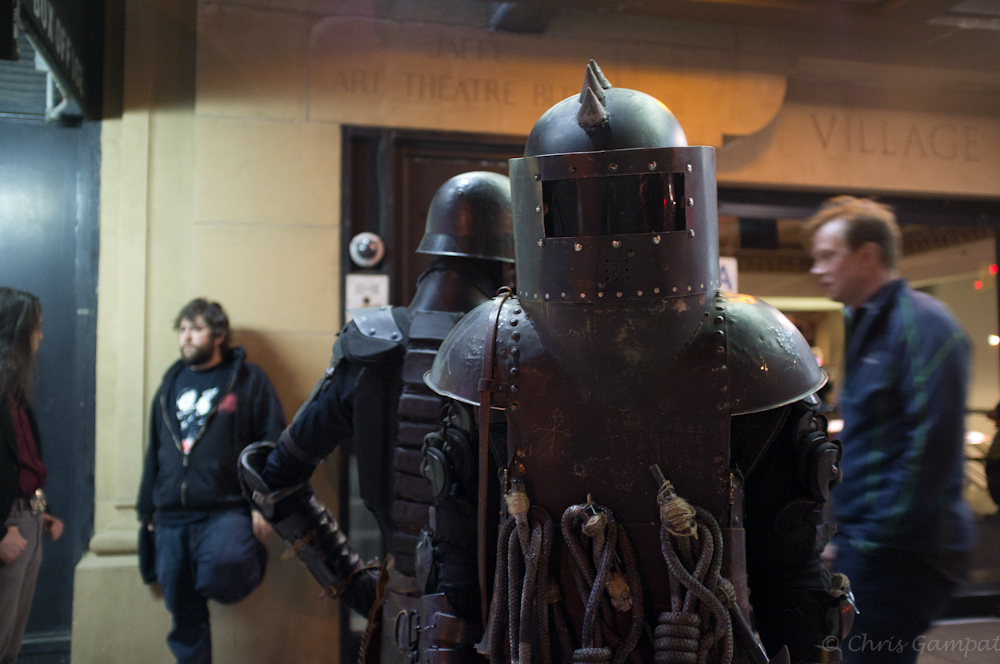
With the Fuji X100, it’s just you and a fixed lens that cannot come off of the camera. To get the image you want, you’ll need to get up close and personal. Because the camera is so small and there are no pieces jutting out, you won’t intimidate people when pointing it into their faces or when you’re around them. Additionally, the closest it can focus is two feet unless you set it to the macro mode: which I’m often doing. The near 35mm equivalent forces you to get closer than with a 50mm lens.

With a DSLR, people sometimes cover up their faces. The great thing is that I didn’t experience this at all when testing this camera—and that was a total first.

It Reinforced That I Can’t Get Every Photo I Want
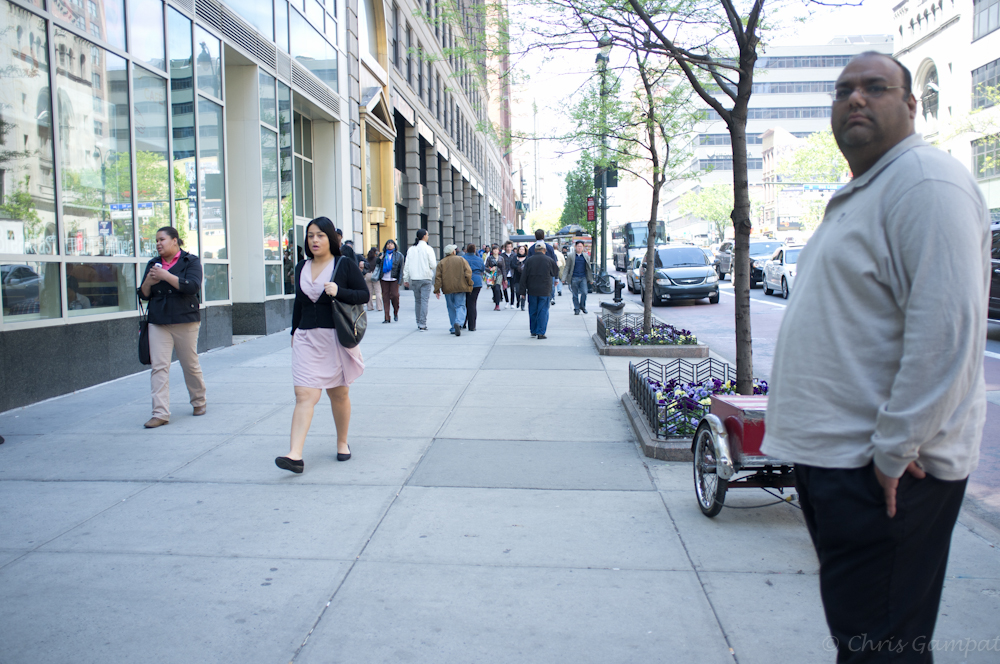
There are times where you often see a photo opportunity in your mind, then go to shoot it and realize that it’s not often the photo you want. I’m a decent photo editor, but there are times where even I can’t get the photos I envisioned. While I often keep working at these photos to get them as close to what I envisioned, I often need to just accept that I can’t get them for various reasons: missing the moment, wrong exposures, missed focus, composition is off and can’t be fixed, etc.

With this in mind, this camera will teach you to be more careful. With being more careful comes acceptance.

It Made Me Remember that 1 out of every 1,000 Photos I shoot will be amazing

As it stands, I believe I’ve only got maybe three or four amazing street photos: and none of them were taken with the Fuji X100. In fact, they were all shot with the Canon 5D Mk II. As much as taking photos with the Fuji X100 excites me every time I look into the viewfinder, I’m not always able to nail the photo I envisioned or capture the feeling of being there. So this forces me to try different approaches and methods.

It Forced Me To Pay Attention to More Details
The Fuji X100′s viewfinder is huge, and therefore let’s you pay attention to more details. It overlays lots of information for you if you choose to. I like as much info as possible: the light meter, histogram, rule of thirds lines, shutter speeds, isos, apertures, etc. I want it all.

Beyond this, because the easiest way to focus with this camera is to use the focus and recompose method, you’ll often pay more attention to your details when you recompose your image because you’ve put such great care into focusing, setting your exposures, recomposing, checking the meter, ensuring that everything in your image is the way you want it, etc.

You can purchase the Fujifilm X100 from B&H Photo. Please also consider making purchases from Amazon by clicking the links as they help to support this site.

Please Support The Phoblographer

We love to bring you guys the latest and greatest news and gear related stuff. However, we can’t keep doing that unless we have your continued support. If you would like to purchase any of the items mentioned, please do so by clicking our links first and then purchasing the items as we then get a small portion of the sale to help run the website.

Also, please follow us on FacebookFlickr and Twitter.

  • Sidhoster

    Weak

    • Chris Gampat

      Care to explain why you feel so?

  • Pingback: How the Fuji X100 Retaught Me Street Photography – The Phoblographer (blog) | The Photo Bargains

  • http://www.musrara.co.il/%D7%9C%D7%99%D7%9E%D7%95%D7%93%D7%99-%D7%A6%D7%99%D7%9C%D7%95%D7%9D קורס צילום

     brings some memories back. my father had a camera just like that in the 80′s

  • http://www.book4me.co.il/ אלבום תמונות דיגיטלי

     totally agree, digital cameras
    change my techniques as well
    http://www.pbase.com/musrara/people

  • Anonymous

     In other words: “How I learned to put up with my camera’s limitations”

    • http://www.facebook.com/profile.php?id=575547510 R.j. Knackstedt

      All cameras have limitations. It’s the photographers job to figure out effective ways to work around the limitations and exploit the strengths. Great photographers don’t make excuses for limitations of their gear, they simply make the gear work for them.

      • popeyoni

        A camera is a tool. Why would you buy tool X if it is not as good as tool Y?

        I own this camera. It is fun to use and can produce outstanding images, but it has some serious limitations compared to its competitors. I hear the X100s is much improved.

  • Anonymous

     For me it’s the optical viewfinder that makes this camera worth the effort. You see differently through a clear window than through a DSLR tunnel. I am still learning how to tweak it. A few tips that may help, from a guy on the photo.net forum

    p.p1 {margin: 0.0px 0.0px 0.0px 0.0px; font: 12.0px Helvetica}

    “Auto ISO: I’ve heard lots about how Fuji got this wrong, but I believe Fuji got this right. I set my max ISO to 3200, and my min shutter speed to 1/40. Then, I set the ISO to 200. (This last step is important.) The X100 uses the manually set ISO as a target. That means if I’m outside in bright light, even with auto ISO on, if I’m manually set to a higher ISO, the X100 will use a higher ISO. Seems so simple now that I understand this.”Once I did this I reset the function button to call up the ND filter.”Focus: manual focus. Then, I use the AFL/AEL button to focus. Sorta like using the * button on the back to focus my Canon. If I don’t need to refocus, then I’m free to fire the shutter quickly to take more photos. I use the command control to zoom into the focus area. That works even using the optical view finder. It switches to EVF momentarily. I can confirm focus is where I want it, lightly tap the shutter, and I’m back to the OVF, and the shutter button is very responsive.”William Albert Allard says it well on the differences between seeing with an SLR and a rangefinder. The same applies with the X100:“With an SLR, you are looking at your subject through the optic; you are literally seeing what the picture is going to look like. You have a device that will show you your depth of field, the area that will or will not be in critical focus. This is particularly true for me, because I’m often shooting at the maximum aperture of the lens, the aperture you actually view through. This helps you see how areas of color are affected. It can tell you if that blue has a hard edge, or if it’s somewhat soft and blended into something else.”“When you look through a rangefinder, though, everything is sharp. The rangefinder window is by and large a focusing and framing device that lets you pick a part of the subject you want to be in critical focus. The only real way you can tell how the rest of the picture is going to look is by experience, or maybe a quick look at the depth-of-field scale on the lens itself. I think the rangefinder frees you up in a certain way. You are probably going to work a little looser in a structural sense, because everything is clean, clear and sharp. When I look through an SLR, I think I’m a little bit more aware of compositional elements, of the structure of the image. With a rangefinder camera, I’m seeing certain spatial relationships.”– Page 41 of “William Albert Allard The Photographic Essay.”

    p.p1 {margin: 0.0px 0.0px 0.0px 0.0px; font: 12.0px Helvetica}

  • Anonymous

    Fuji really fubar’d the firmware on this camera. Here’s hoping they fix it. The dpreview review is spot on as to the shortcomings on the camera.  This is the first gen of this kind of camera.  I do own an X100 and for me it’s the optical viewfinder that makes this camera worth the effort. You see differently through a clear window than through a DSLR tunnel. I am still learning how to tweak it. A few tips that may help, from a guy on the photo.net forum

    “Auto ISO: I’ve heard lots about how Fuji got this wrong, but I believe Fuji got this right. I set my max ISO to 3200, and my min shutter speed to 1/40. Then, I set the ISO to 200. (This last step is important.) The X100 uses the manually set ISO as a target. That means if I’m outside in bright light, even with auto ISO on, if I’m manually set to a higher ISO, the X100 will use a higher ISO. Seems so simple now that I understand this.”

    Once I did this I reset the function button to call up the ND filter, which should have been a direct button. A RAW button? Really?

    “Focus: manual focus. Then, I use the AFL/AEL button to focus. Sorta like using the * button on the back to focus my Canon. If I don’t need to refocus, then I’m free to fire the shutter quickly to take more photos. I use the command control to zoom into the focus area. That works even using the optical view finder. It switches to EVF momentarily. I can confirm focus is where I want it, lightly tap the shutter, and I’m back to the OVF, and the shutter button is very responsive.”

    William Albert Allard says it well on the differences between seeing with an SLR and a rangefinder. The same applies to the X100:”With an SLR, you are looking at your subject through the optic; you are literally seeing what the picture is going to look like. You have a device that will show you your depth of field, the area that will or will not be in critical focus. This is particularly true for me, because I’m often shooting at the maximum aperture of the lens, the aperture you actually view through. This helps you see how areas of color are affected. It can tell you if that blue has a hard edge, or if it’s somewhat soft and blended into something else.”"When you look through a rangefinder, though, everything is sharp. The rangefinder window is by and large a focusing and framing device that lets you pick a part of the subject you want to be in critical focus. The only real way you can tell how the rest of the picture is going to look is by experience, or maybe a quick look at the depth-of-field scale on the lens itself. I think the rangefinder frees you up in a certain way. You are probably going to work a little looser in a structural sense, because everything is clean, clear and sharp. When I look through an SLR, I think I’m a little bit more aware of compositional elements, of the structure of the image. With a rangefinder camera, I’m seeing certain spatial relationships.”- Page 41 of “William Albert Allard The Photographic Essay.”

  • http://twitter.com/jogofoto John Goldsmith

    I’m sorry the review sounds a bit like Dr. Strangelove or: How I Learned to Stop Worrying and Love the Bomb — but, not “da Bomb.” What has been described is no way to use a camera, especially for Street, which moves far too quickly when some firmware glitch strikes again. Any camera should feel more like an extension of one’s own body without having to fight it for a last split-second techno workaround. 

    That said, the X100 is not all bad but, as DP Review says,  it’s “quirky,” has a “litany of bugs” and “it’s decidedly flawed.” In my opinion, the camera is plagued with slicked up marketing hype. Fuji says the X100 is quote: “The Professional’s Choice.” Sorry, again, but for anyone who gets paid to shoot they don’t have time to figure out why their camera decided to go on the fritz, again…

  • Pingback: Sony A77 and NEX-7 Coming, Samsung Medium Format Digital and Rooftopping Photography | DailyCameraRumors

  • http://twitter.com/simonking Simon King

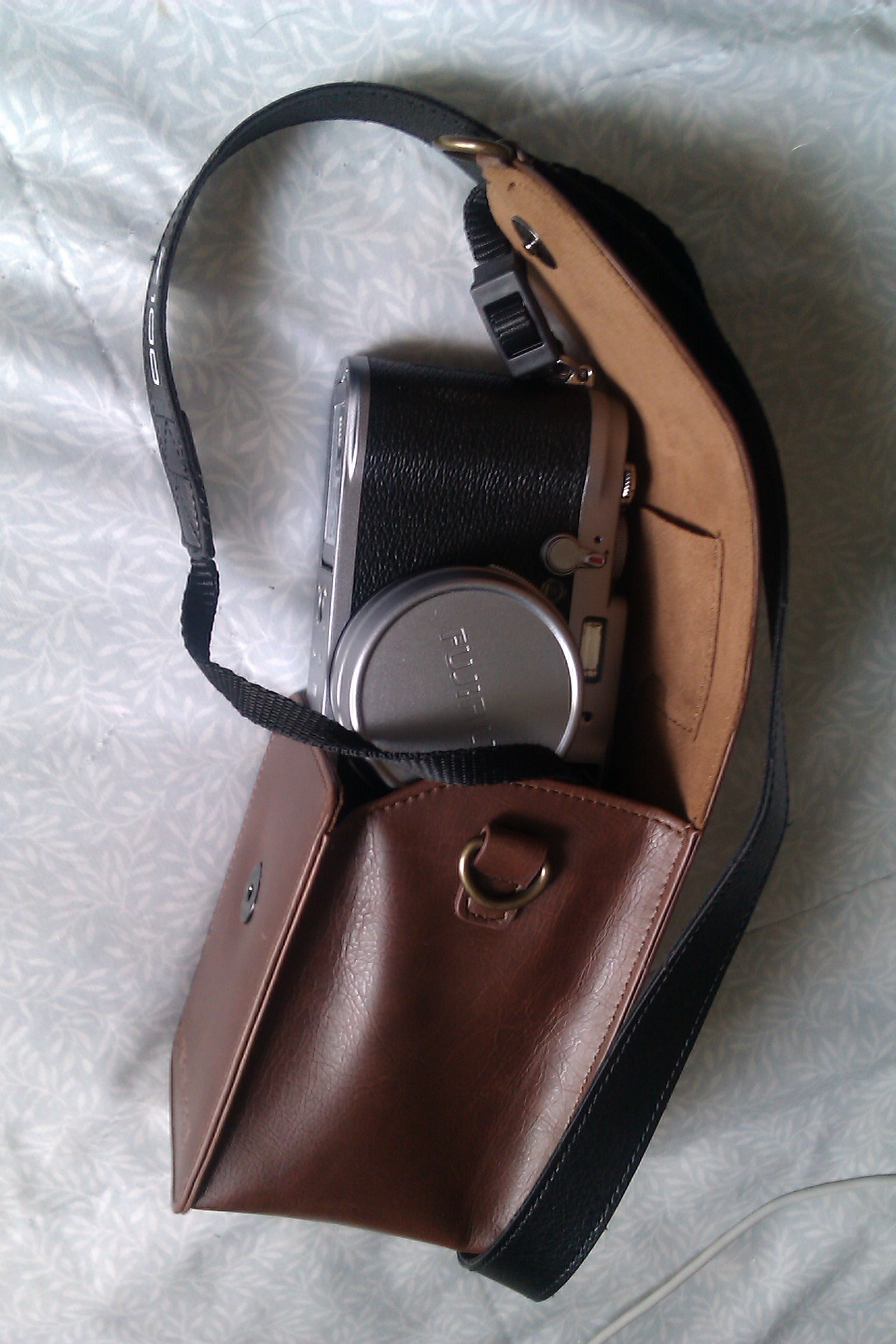
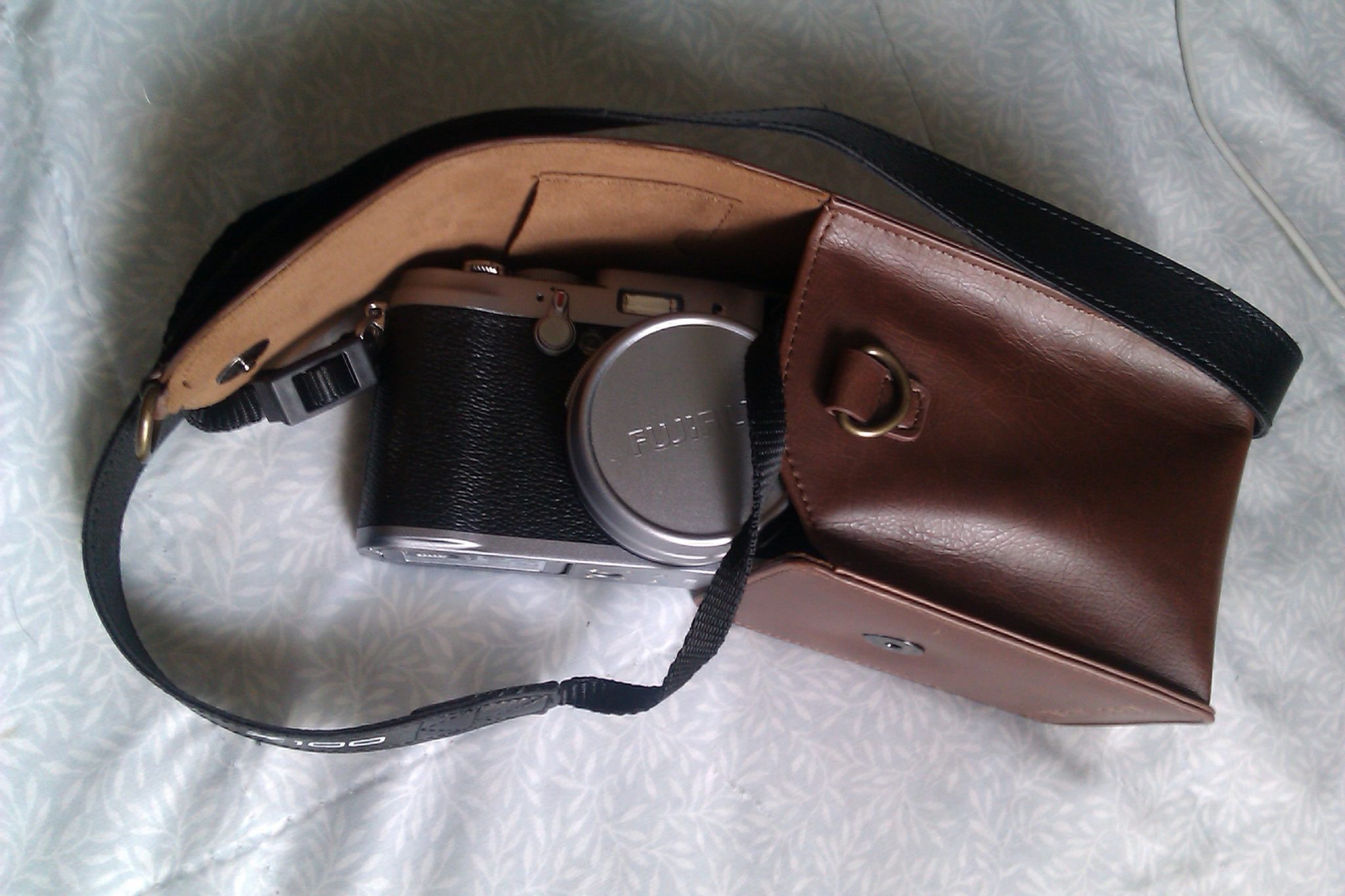
     Great leather camera case in the first photo BTW. Where did you get it?

  • Pingback: Why I Chose The Olympus EP-2 Over the Fuji X100 at The Phoblographer

  • Pingback: Review: Leica M9-P at The Phoblographer

  • Leonard Washington

    I used the Fuji X100 for 9 days I could not go past the quirks… I could not live with all the bugs the camera showed me… I had a GF2 at the same time and it was used more as it simply worked. I could not deal with the slow manual focus by wire on x100, constant crashing, inconsistent WB, and slow menu interface that had everything so hidden far away especially ISO. 

    I got a Leica M8 with a Summicron 35mm and the whole new world opened up to me. Frustrations aside learning everything about new way of shooting from Nikon DSLRs I have been using. It became clear to me to take my time, breath, and get creative with the way I shoot, look for subjects, meter, and focus. That introduced new level of street photography to me. 

  • Pingback: Why the Fuji X100 Will Eliminate Your Fear of Street Photography at The Phoblographer

  • http://www.facebook.com/profile.php?id=675159745 Scott Kim

    Great article. I’m also sharing my own experiences with X100, definitely different learning curve from DLSR. But what can I say, it is just a brilliant camera. http://scott-kim-photography.blogspot.com.au/

  • Pingback: Street Photography and the X100 | Random Sights and Diversions

  • Musica3173

    May I know what strap is that?

    • ChrisGampat

      Olympus pen premium strap. Click our amazon banner and then if you type it in it should come up.

      -Chris Gampat
      Editor in Chief
      ThePhoblographer.com

  • JM

    I had my X100 since April of 2011. It’s the only camera I bring when I travel. Fujifilm had been great in updating the firmware. It had multiple updates since then. Early adopters were in no way abandoned by the manufacturer, wherein some just concentrate efforts on the next generation of their product. As of May 2012, I can now program my Raw button as a second custom function button. And the last update added face detection capability. I read praises and complaints for a year regarding this camera. I always thought, if Cartier Bresson or Ansel Adams didn’t worry and complain about their manual, hulking cameras, why should I with mine?

    This shot is from the X100, taken about 10pm, handheld ISO 3200. Very minimal addition of contrast in post-processing. I’d rather let the picture speak for itself.

    http://www.flickr.com/photos/jmluis/6651046909/in/set-72157626663119974/lightbox/

  • JM

    Here’s when my X100 nearly drowned while on vacation in California

    http://www.flickr.com/photos/jmluis/5958635830/in/set-72157626663119974/lightbox/

  • Andy

    Lots of snapshots, don’t see much photography. Nothing bringing me into a photo. Nothing that takes a chance, engages me with the subject.

  • GourmetZockerAt

    Sorry man, but what’s up with those bad pictures taken? Bad framing, bad motives, shooting people from behind and blurry images. This has nothing to do with street photography. Are you just suffering from G.A.S. or are these just test photos on purpose? If so, than I still cannot understand why. I really got a little bit angry while reading your article. You are writing like being a pro but you show pictures my granny would have made more interesting. Sorry for my bad grammar, I’m no native speaker.

Previous post:

Next post: