ISO Torture Test: Pentax K-5 vs. Nikon D7000, which is better?

by Matt Beardsley on 02/04/2011

vs

There has been some debate, on this site and on others, about the Pentax K-5 and Nikon D7000. Both are new on the market, packed with their respective company’s hottest new features including 16+ CMOS sensors that deliver wide dynamic capture, great color, and smooth detail. Both have made favorable impressions with reviewers, including myself. To address some of the comments we’ve been getting regarding grain and image quality, as well as to satisfy my own curiosity, I decided to set up a little informal test up to push both cameras to the extremes of high ISO and noise and the results are pretty interesting.

Regarding ISO, it’s interesting to note that the Pentax K-5 has a higher range. When extended via a custom menu setting, the camera can soar all the way to the twilight zone of ISO 51,200 (a new crop-sensor 35mm record). The D7000, meanwhile, offers more fine tuning, defaulting to 1/3 stop steps compared to the K-5′s full steps. Also, the D7000, in Nikon’s tradition, turns to the coded labels “H0.3, H0.7, H1.0, and H2.0″ once a photographer passes ISO 6400 (representing 1/3 stops).

It seems to me, with Pentax’s subtle hide and seek with the super sensitivities and Nikon’s naming game, that neither company wants us to think these are intended for every day use, just there for the rare times when you want to take pictures in the dark. And they’re right, the settings get grainy. Heck, the settings for my eyes get grainy when it’s dark enough to need ISO 51-thousand.

Both cameras really are exceptional, especially for the sensor size and price points. Neither will be taken for the full-frame $5,000+ cameras on the market, but both represent well the new creative doors open to the “prosumer” market.  But is one better at high ISO?  Yes, and my results are:

ISO Torture Test Results, Nikon D7000: 2nd Place

I’ve criticized the D7000 for its tendency to show too much grain in some settings. It’s true. Nikon has, in the game of engineering balance, added more pixels, higher ISO, and allowed a bit of grain. On the plus side, the D7000 has amazing color rendering and very good dynamic range. The D7000 has as much color pop as any camera I’ve tested, and a little grain in the mix is not so bad.

In my test, the Nikon files look better, in terms of color. They have more noise, to be certain, but it comes with good detail, and more lively images. I might say, subjectively, that the files look better, with a sharp clarity that only falls to distracting noise when zoomed in. But, without doubt, the Nikon files, as tested here, are more noisy, with noticeable grain and loss of detail, especially when zoomed (just take a look at the example images below.)

ISO Torture Test Results, Pentax K-5: 1st Place

I have really enjoyed the Pentax K-5, it renders fantastic detail and offers a tremendous range of ISO. It has a tendency to purple fringe, but is highly respectable in every other conceivable area of image quality. Its files, as described in more depth in our review series, have the slightly-flat look of wide dynamic range medium format files, which is awesome. It takes a little processing, in camera or in post, to get the same pop the Nikon files have naturally, but all the data is there.

In my test, all the data IS there with the Pentax. The K-5 files are distinctly cleaner, with more detail, and less noise. In this little showdown, the Pentax K-5 has clearly demonstrated both less noise and more detail at high ISO and is a clear winner.

Pentax K-5 vs. Nikon D7000

So the Pentax K-5 is the high-ISO champion from today’s showdown, but there is more to photography than just shooting in the dark.  So, while these two cameras are going head to head, here are some other thoughts on advantages between the two, and my thoughts on which I’d recommend to potential buyers:

The Pentax is better-made, nicely heavier, and more rubbery.  

•Build Quality Advantage: Pentax K-5

Having used both Pentax and Nikon cameras professionally, I prefer Nikon’s control style and the D7000 just feels less clunky to work… love that Video/Live View control, and the exposure mode/drive mode control wheel combo.  Plus, the Nikon is much faster with previews, menus, etc.

•Control Advantage: Nikon D7000

Nikon has given the D7000 a natural tendency to decisive contrast and saturation, while the K-5 plays it safe in both areas (at least in RAW files) and delivers cleaner, smoother-looking images with more natural contrast and subdued colors. Nikon D7000 files look great, Pentax K-5 files look great, both are different.  Throw in High ISO image quality and the balance tilts towards the Pentax, but then there’s the purple fringing. Also, of course, both cameras offer extensive controls for amping up, tweaking, and finessing RAW files when shooting.

•Image Quality Advantage: Pentax K-5

Nikon has, once again, delivered the world’s best autofocus. This one is no contest.

•Autofocus Advantage: Nikon D7000

Price: Nikon D7000: $1200 camera body only, $1500 with a kit lens (18-105mm VR); Pentax K-5: $1,470 camera body only, $1,580 with a kit lens (18-55mm).

•Price Advantage: Nikon

Recommendations

My conclusion? I love both of these cameras. For the market, for the price, for the size, I’d have to give a slight nod towards the Nikon D7000. I prefer the color and contrast of the Nikon files and the controls of the D7000. It’s a great camera for family portraits, travel, and learning the ropes of high-end photography and offers a clear upgrade path to full-frame professional cameras. It lacks the image quality clarity of the the K-5, but easily captures punchy, vivid images and video.

The Pentax K-5 has its place too, and will be the preferred camera for many photographers. As a better-made camera with cleaner, more professional output, it’s a wiser choice for professionals looking for a super compact DSLR. Indeed two K-5s and a bag of lenses, and a wedding photographer is in business for half the weight and a third of the cost of professional Nikon gear. Its files are impeccably clean, exactly as I’d want files to be going into post production. The Pentax K-5 delivers professional results at an impressively accessible price point and from an impressively small camera.  It offers more options, more refinement, more experimenting, and is overall a more complex machine. Techy experimental photographers will prefer it to the simpler Nikon. My preference, for what it’s worth, is for the quick, straight-shooting Nikon.

Test Images, ISO Torture Tests

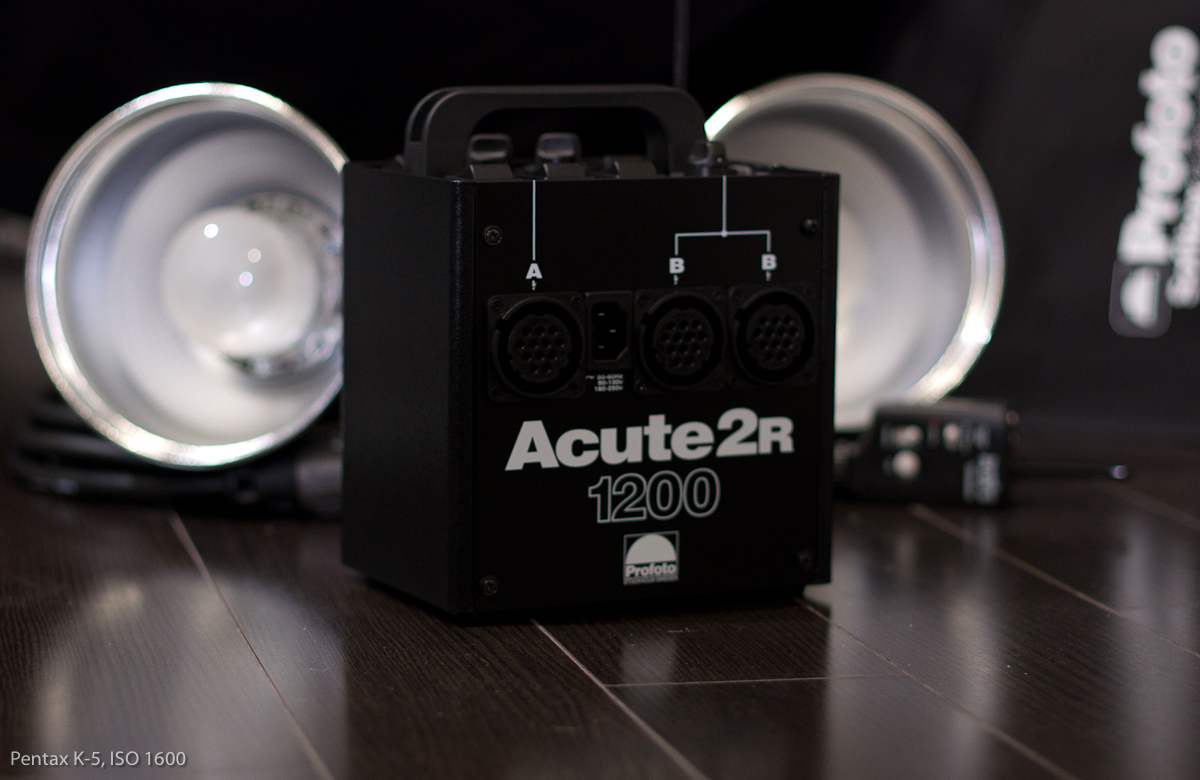
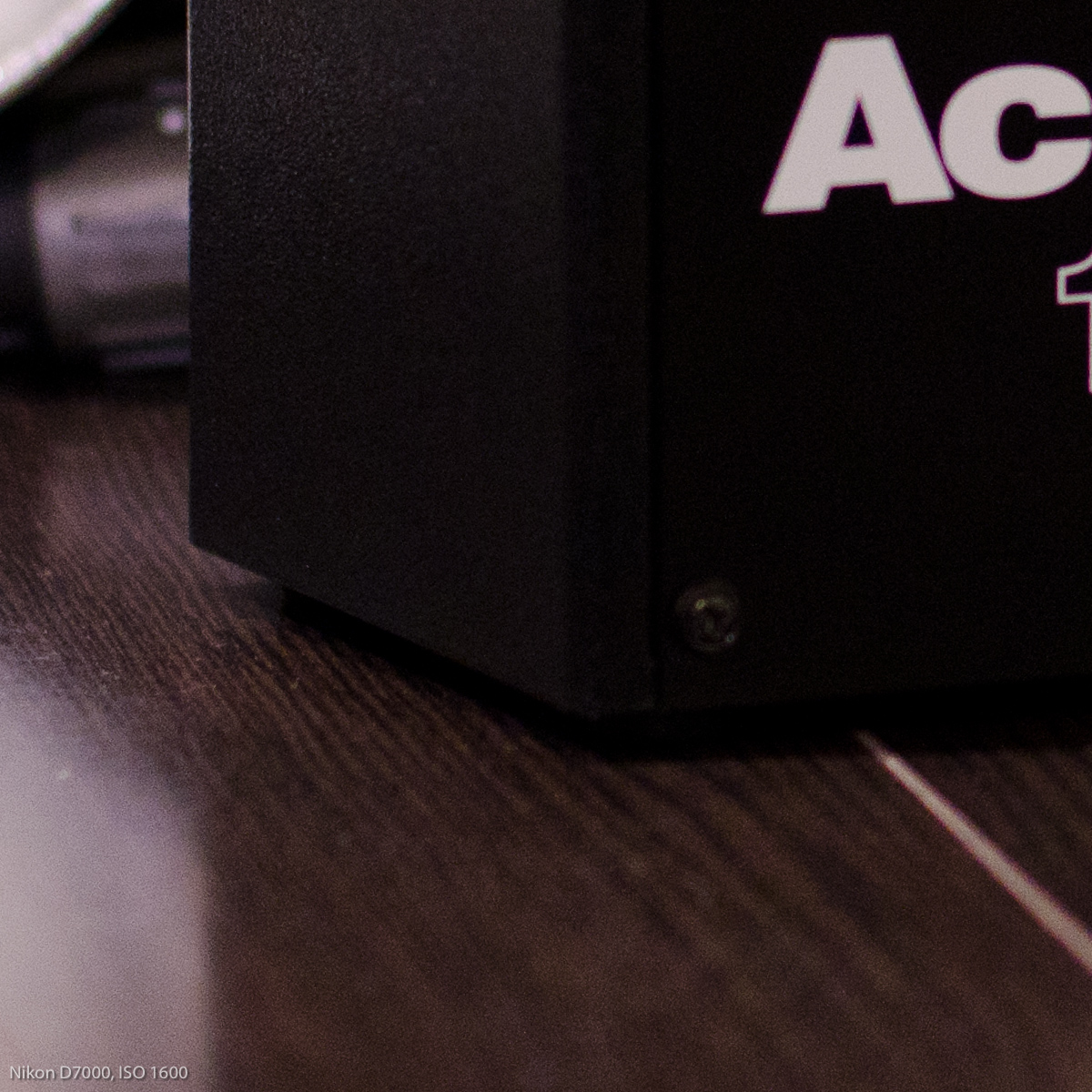
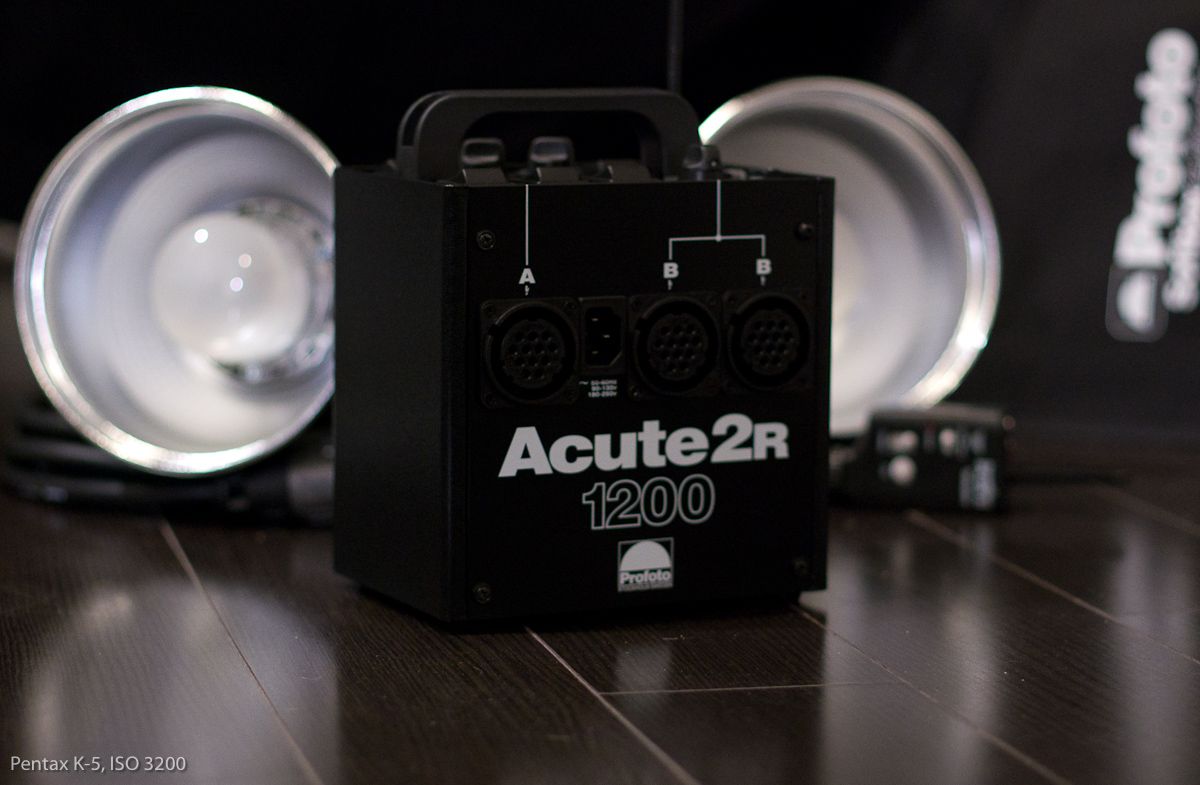
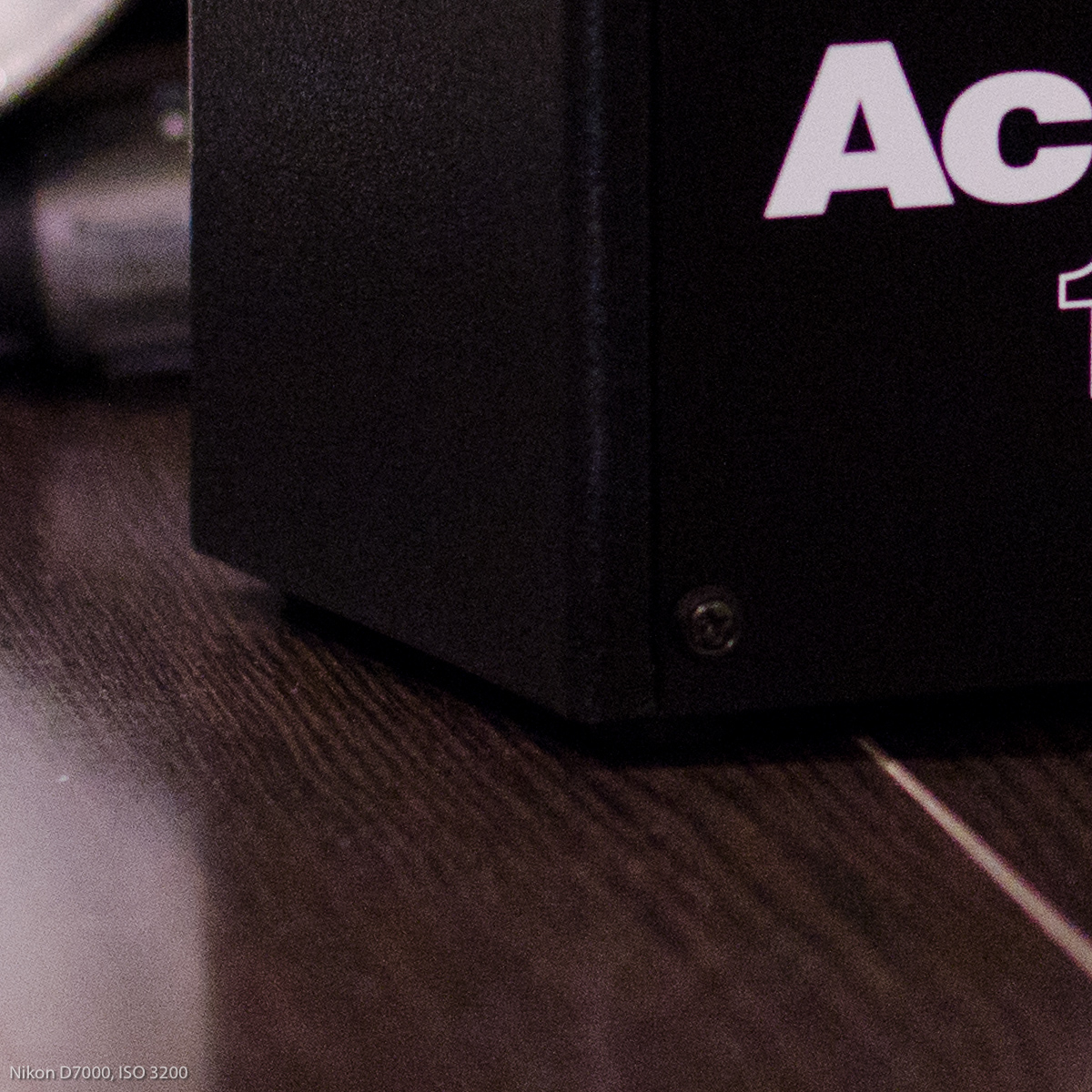
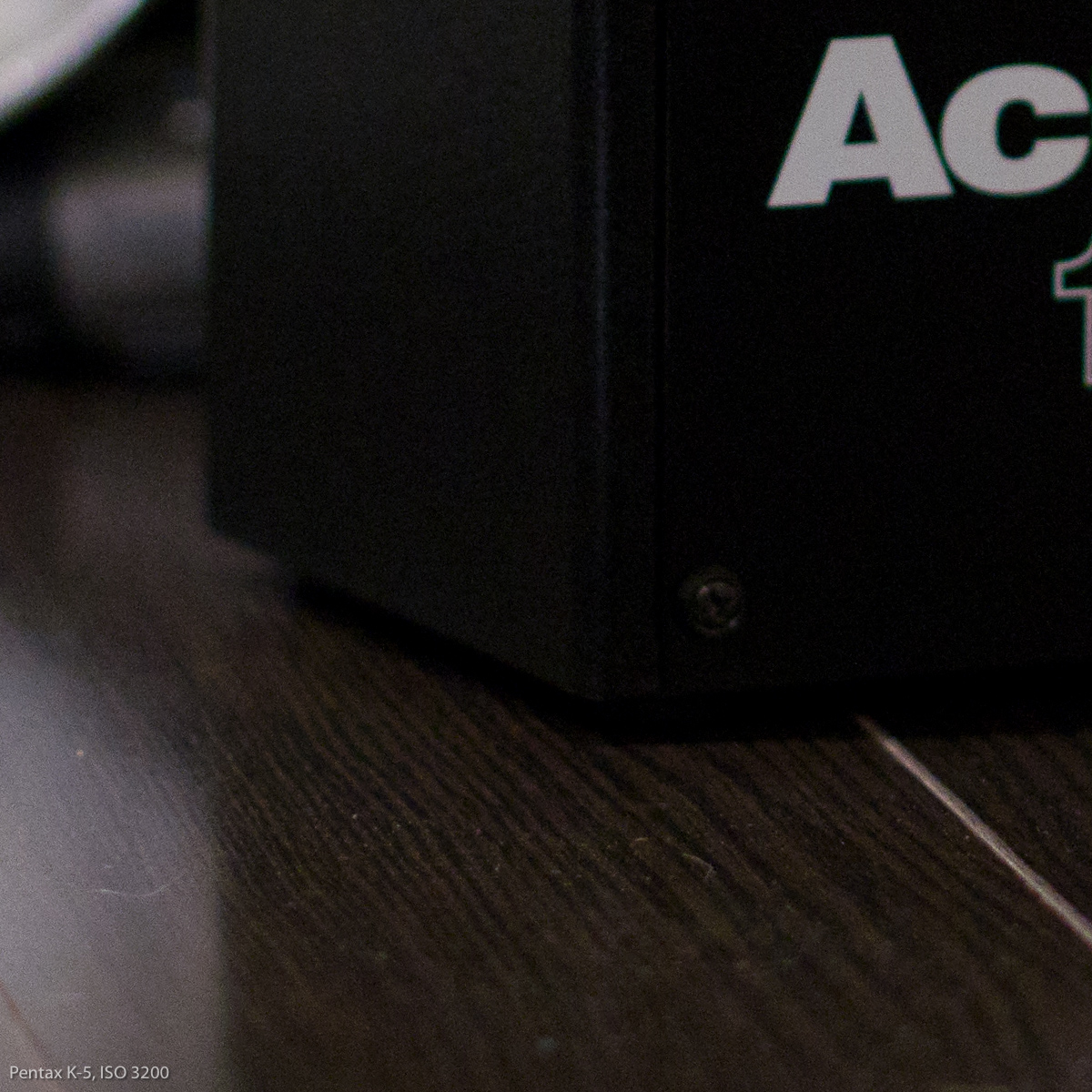
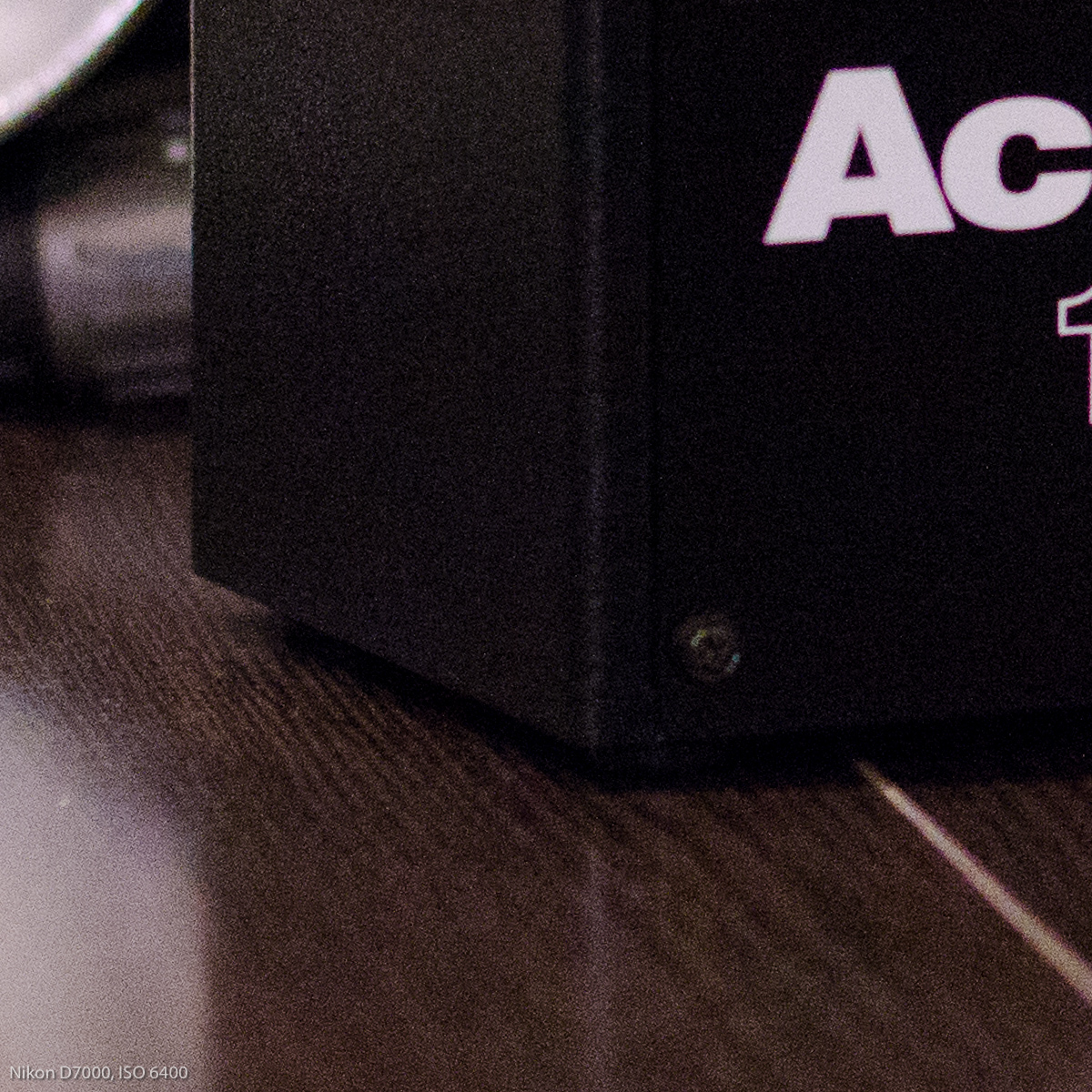
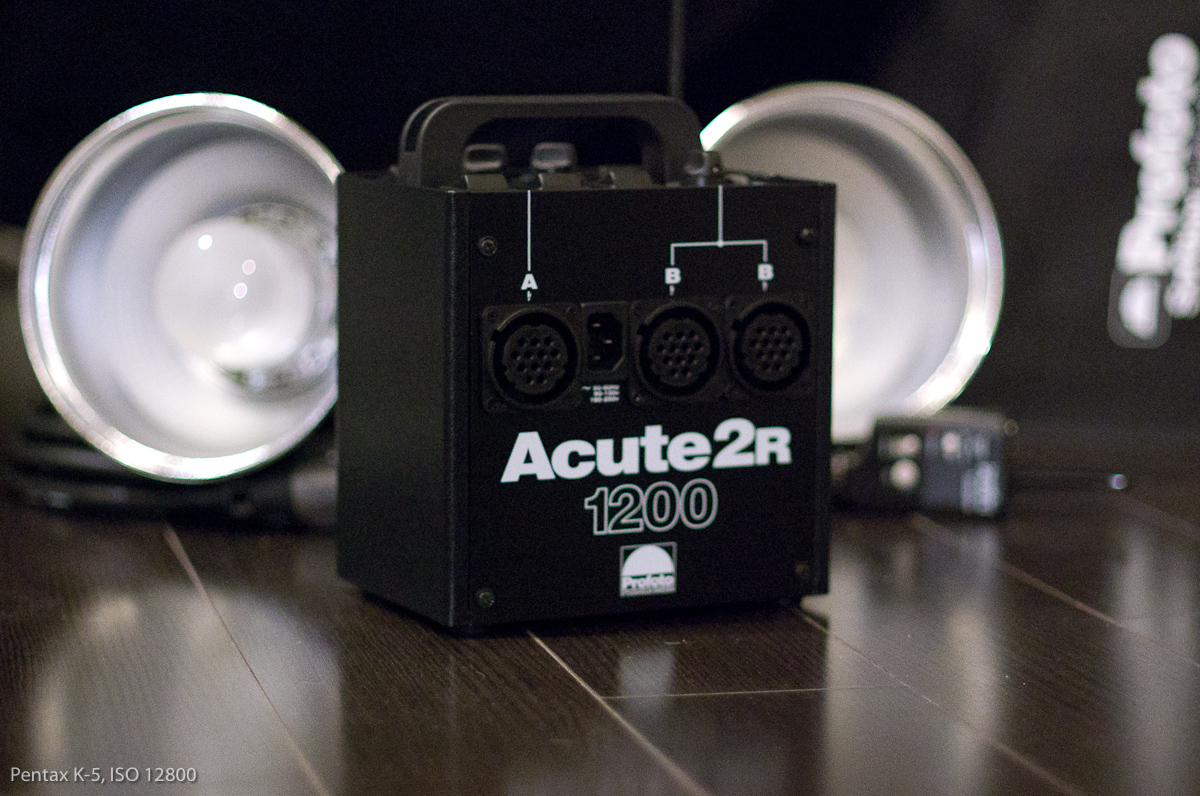
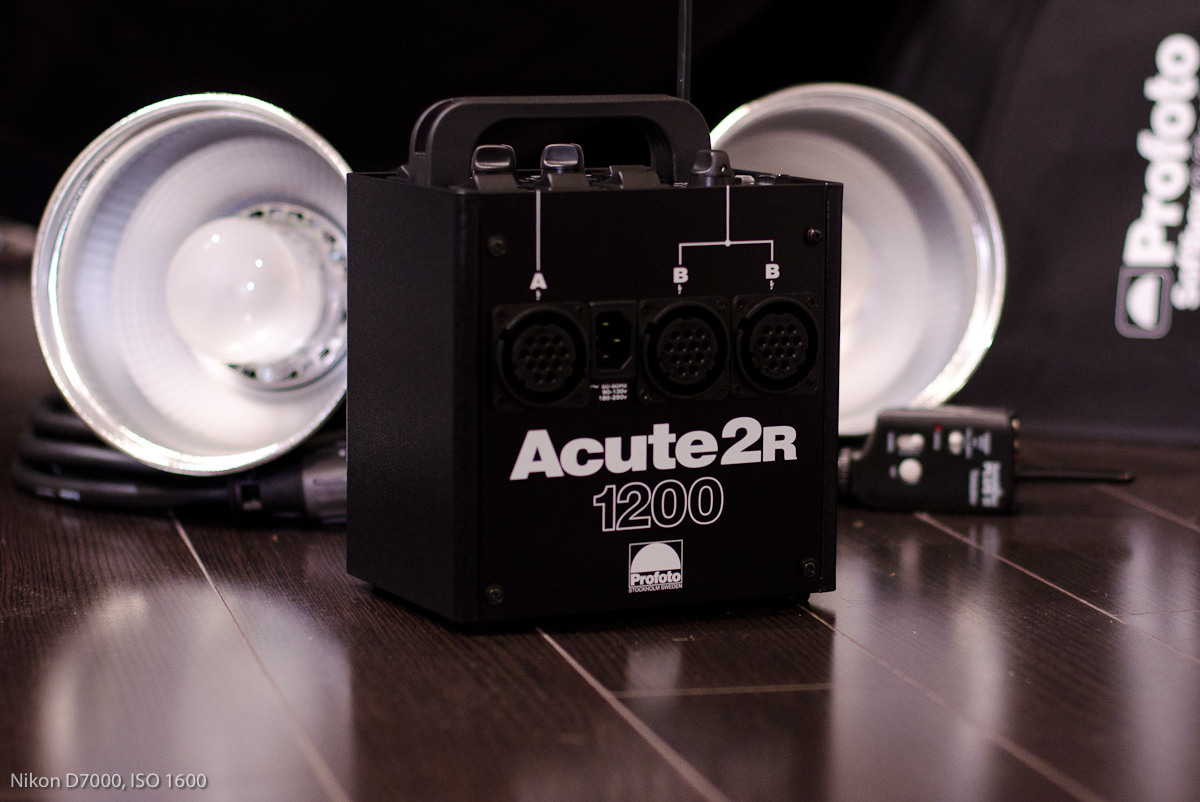
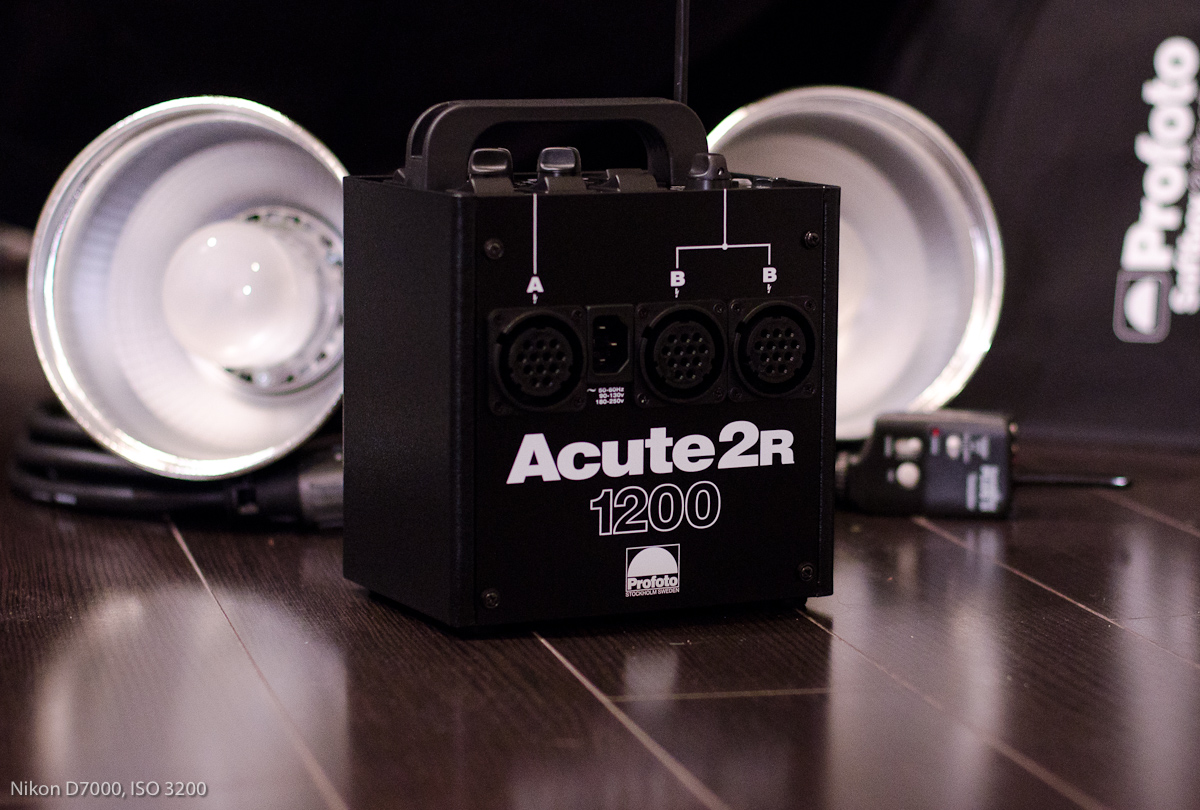
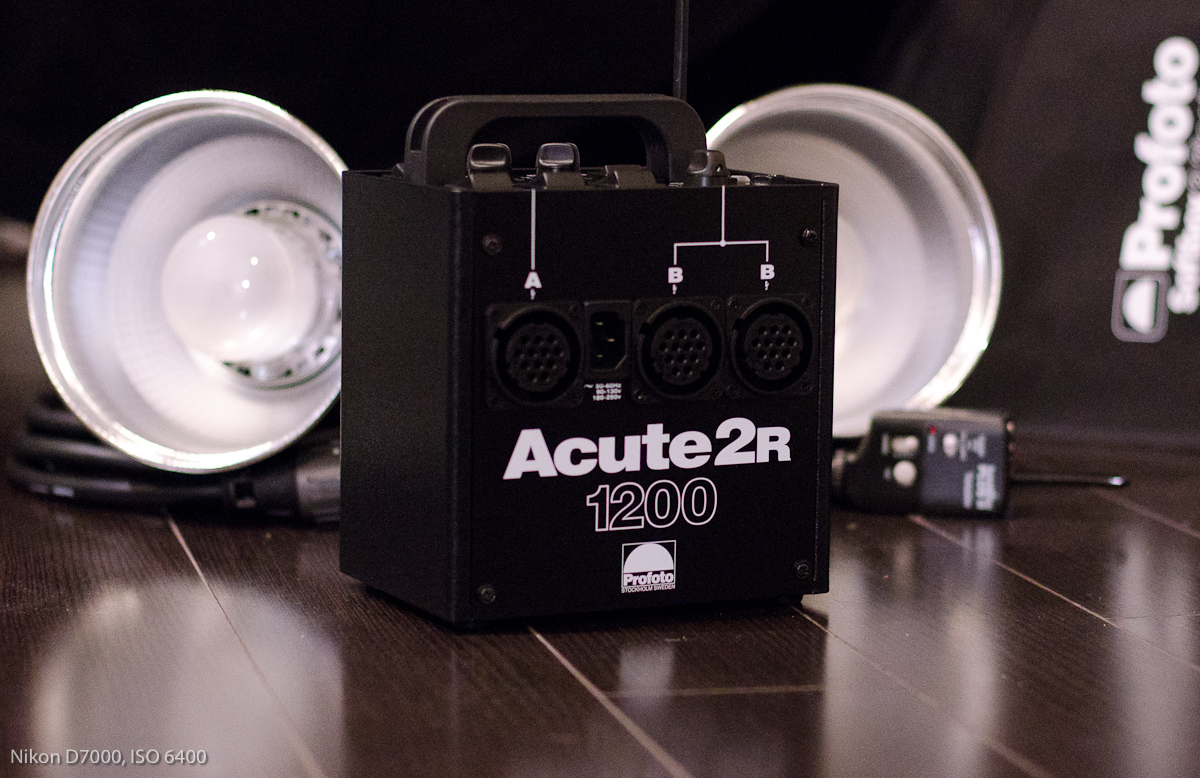
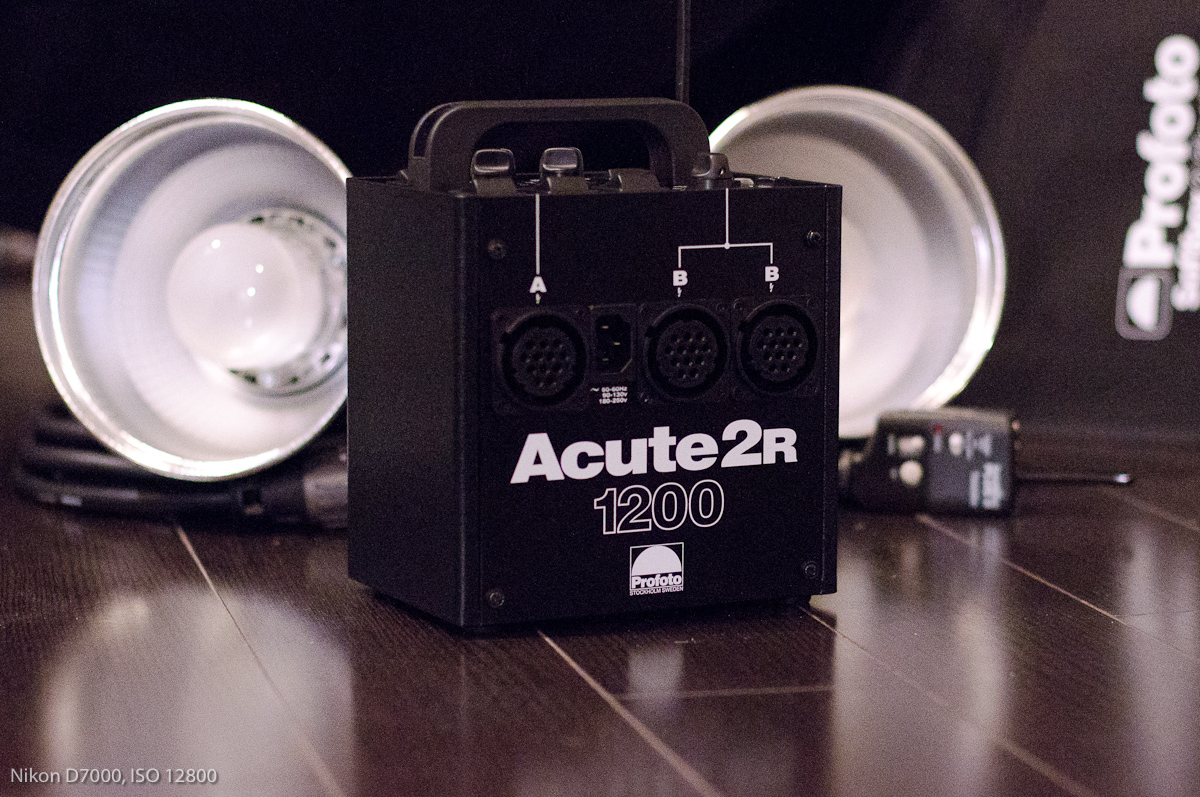
Where is noise most likely to happen? At high ISO and in the dark areas of an image. I set up the following dimly-lit still life scene of dark-colored objects to harvest the most grain possible. [It's not fair, to be sure: please note that both cameras are capable of amazing photos in more reasonable settings!] The subject is Profoto’s Acute 2R 1200 lighting kit (which, if used, would have made for brilliant, noise-free photos from both cameras, but that wasn’t the point!)

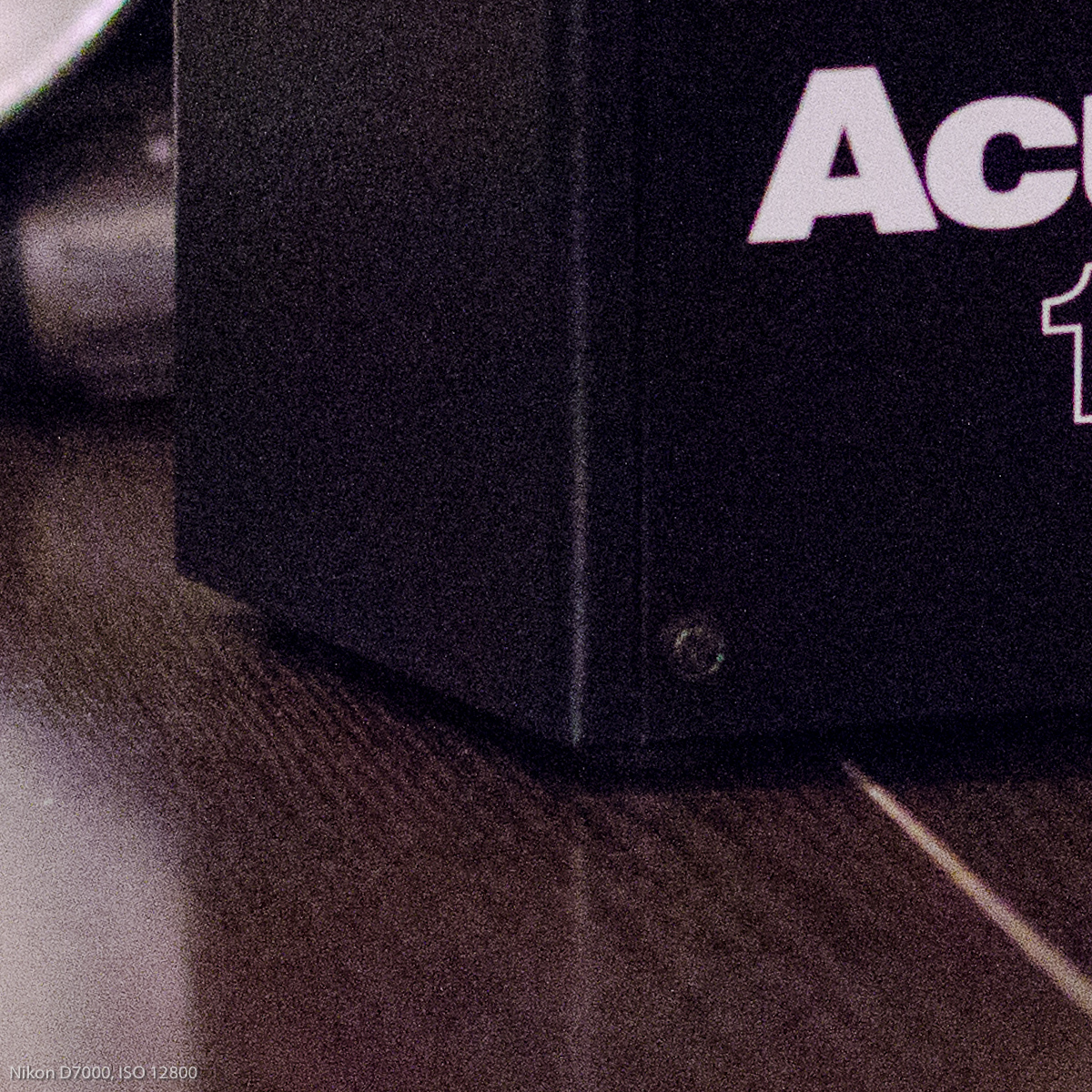
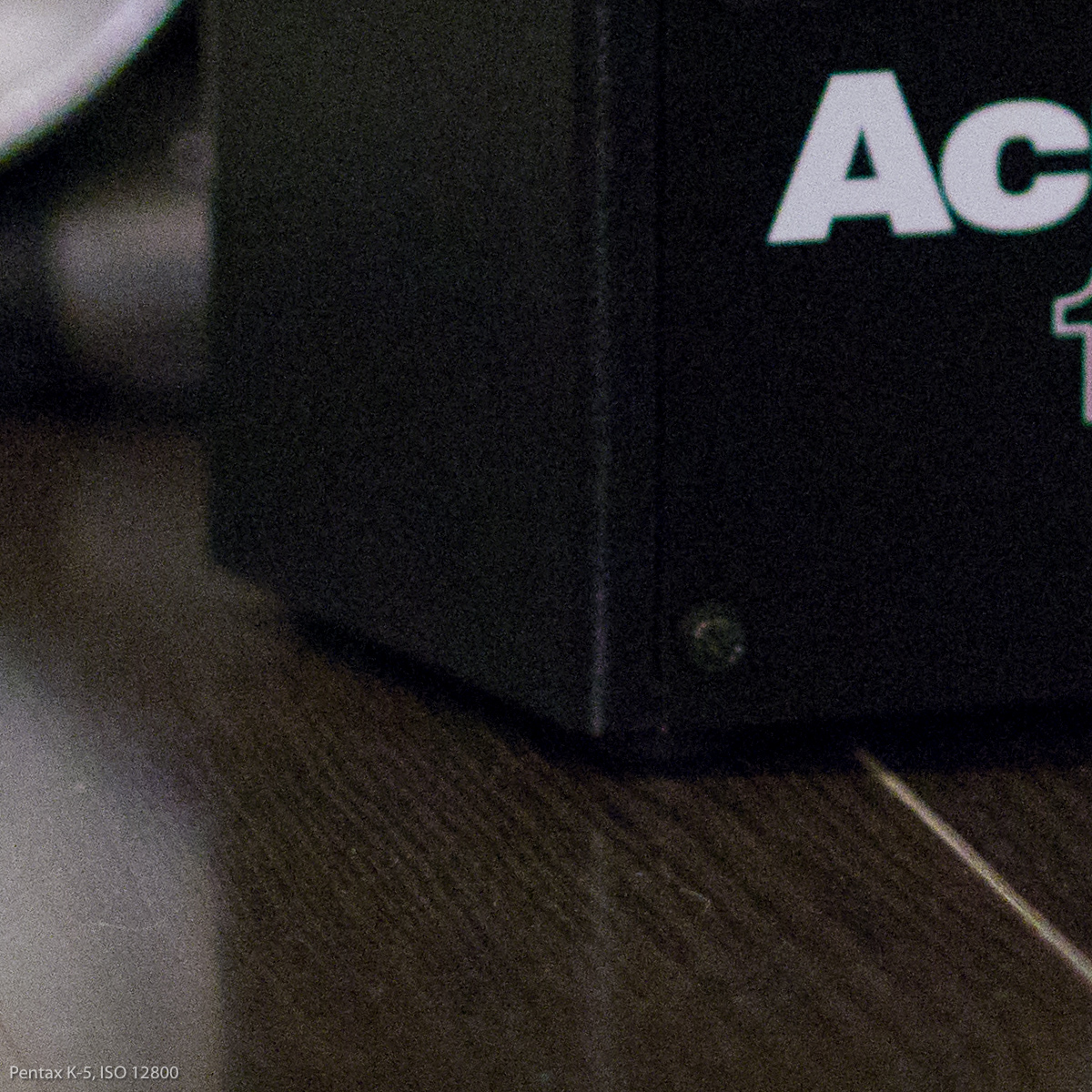
Crops at approximately 100% are provided, for more painful camera torture.  Please note that my findings as described above are based, not on these web-resized versions, but on viewing full-size RAW files on a calibrated studio monitor. Even in the crops, depending on your screen, the difference in grain is visible, but on the big screen, the difference is much more striking.

ISO 1600
ISO 3200
ISO 6400
ISO 12,800
Please Support The Phoblographer

We love to bring you guys the latest and greatest news and gear related stuff. However, we can’t keep doing that unless we have your continued support. If you would like to purchase any of the items mentioned, please do so by clicking our links first and then purchasing the items as we then get a small portion of the sale to help run the website.

Also, please follow us on FacebookFlickr and Twitter.

  • http://www.chrisjonesfoto.blogspot.com Chris

    Chris,

    Do you think that these test results could possibly have anything to do with the IQ of each lens – or is your stance that the grain issues are solely a product of the IQ of each camera’s body?

    • John

      You can only compare noise performance when both sharpening and noise reduction are adjusted to give a similar result. When you have one soft image and one sharp image, then of course the sharper one will show more noise.
      Sorry, but I’m afraid your comparisons show a fair bit of misunderstanding here.

  • Pingback: Tweets that mention ISO Torture Test: Pentax K-5 vs. Nikon D7000, which is better? at The Phoblographer -- Topsy.com

  • john

    on the ISO 12,800 photo, the Pentax photo looks like that there is some noise reduction on it, the photo just look too soft for an noise reduction off photo

  • http://Niceladyproductions.com Kelly

    Great review. Thanks for reviewing the over-looked K5.

  • Andrey Mokhov

    Thanks, very interesting comparison of two giants! :-)

    I noticed that focal planes on the test images are quite different. Look at the table: the Nikon is focused much further than the Pentax. And none of them is actually focused on the Acute2R box (the Nikon’s focus is behind the box, the Pentax’s focus is in front of it). This may be unfair to one of them in terms of resolving details.

  • Justin

    Everyone’s been harping on the K-5′s purple fringing, but in your test shots, there’s a very noticeable purple fringe around the letters “Ac” of the Nikon shots! The K-5 shots have a less noticeable green fringe. But, I suppose this is often the fault of the lens, not the sensor.

    • Chris

      That fringing is axial chromatic aberration in the lenses, and its different because (as has already been pointed out) both test series are misfocused, but in opposite directions.

  • James

    Matt,

    Thanks for the review. I’m curious about the Pentax VR system. I’ve heard some argue that while in-camera VR is convenient for the large array of lenses it supports, it’s inherently inferior to the in-lens systems on Canon and Nikon. How does the VR in the Pentax compare to your experiences with Canon and Nikon? I shoot a lot of low-light stuff with slower shutter speeds and I’m sometimes annoyed with the lack of VR in the Nikon line-up for their faster lenses (ie 50mm f/1.4). I’d love to see you guys do a VR test of these cameras (and others).

  • Pingback: Weekly Nikon related news/links #96 | Nikon Rumors

  • http://www.onsitemn.com/ Onsite Minnesota Photography

    The Pentax is really impressive at 6400. It looks pretty soft or fringed at every other ISO though.

  • Obtusa

    I love Pentax too much. You cannot degradate the name just to loft Nikon’s false image. Yuck, yuck, yuck.

    • MannyLibrodo

      Both are quite Good.. but, really…. are you going to be proud to be a pentax user?

      Nikon Has already made a top name for its history of excellence.

      Nikon D7K has the “street cred” that you are paying for. Cheers

      • Arnaud Bouk

        Oh ? And you make picture with your “street cred” ?

        Asahi (Pentax) was founded in 1919, Nikon in 1917.(Canon 1933..)
        Pentax was the first Japanese company to build a 35mm SLR, PENTAX they make the world’s
        first SLR camera with a TTL  aperture-priority (AE) control…
        IT’s a company with a lot of innovations than you found in all other brands now.

        For conclusion, when i read some comments like yours, i’m really proud to be a Pentax user, and not being in the same crowd than people like you :)

        • Anonymous

          This has nothing to do with being a Pentax user. This test was conducted correctly. Any arguments are merely fanboyism.

          -Chris Gampat
          Editor in Chief
          The Phoblographer

  • http://iainisbald.wordpress.com Iain

    Thanks for doing the test, but there is clearly noise reduction involved in the RAW conversion for both cameras. So some of the differences may be down to how well the noise reduction works for each camera.

  • Pingback: Henk van Vugt Fotografie » Weekly Nikon related news/links #96

  • Marc Brown

    Great review and I liked your candid opinions.
    My thoughts are:
    Your cropped test images don’t show any mid-tones or skin tones where noise is most apparent.
    How do they respond to noise reduction and sharpening?
    Most pros crank open the shadows, which files handle it better?
    Is the noise more luminent or chromatic?
    Thanks again…

  • Eric

    The Nikon seems to be a stop or two more sensitive. Its images are brighter and have greater depth of field. So, the comparison is difficult to digest.

  • ingi

    I disagree with your findings. At the highest ISO the D7000 clearly shows more details, even while beeing badly focused (c’mon, you shurely noticed that).
    What is the purpose of this test ? you say that the K5 shows more detail, but the only detail you show is well focused on the pentax, but slightly in blur for the nikon. What detail could the nikon show, then ? I say you should redo the test with proper focusing.

  • jack

    Pixelpeepers, give the guy a break…

    Matt, I appreciate your time. If it confirms anything, it is just that the two manufacturers have a different default choice for processing. For most of the people that bother reading posts like this, they are most likely shooting RAW anyway, in which case the difference between the two is near negligible.

    You are looking at very usable ISO 3200 and usable ISO 6400 shots. That is incredible! Be happy.

    • Chris Gampat

      I agree with you Jack. Thanks for the comments.

      I believe that people also need to consider that Lightroom 3′s noise processing algorithms are very, very good.

  • http://www.dustylens.com Steve

    “It has a tendency to purple fringe” Hmmm. This is a LENS issue

    Accutance, sharpness, and focus are all different animals – which were not controlled in this test.

    Too many uncontrolled variables with some misunderstandings thrown in. A rather poor test in my opinion. Sorry.

  • http://sapnis.com N.R.

    This is not a serious test, ISO noise tests should be done in at least moderate darkness. ISO noise is worst in the shadows. You don’t need high ISO in such bright conditions as the test shot. The results will be very different if you turn the lights out.

    • Chris Gampat

      Hi N.R.;

      “You don’t need high ISO in such bright conditions as the test shot.”

      I’m guessing you’ve never shot sports in even brighter conditions such as a High School basketball game or a college football game where people may actually use these cameras? The test is totally accurate for the conditions. If you wanted a stronger torture test in lower light, than that could have easily been said otherwise.

  • Pingback: The Nikon D7000 (updated 7 Feb 2011) | in focus - a malaysian photography blog

  • SJ

    Chris,

    According to a number of sites, The K-5 applies Noise reduction at ISOs above 1600 even if the NR setting is OFF. So how did you level the playing field.

    Also, with the right settings on the Nikon, you can get that flatter, less contrast, lower saturation image you want. The data is there.

    Both are great cameras to be sure. But when we have to up the ISO to 12,600 to see a difference (and perhaps an artificial one at that), aren’t we comparing Lambourghinis to Ferarris?

    • Chris Gampat

      Hi SJ,

      Matt wrote the posting, and we made the decision to give into what our readers wanted to see: an ISO comparison of these two cameras.

  • Grumpy

    Focal plane is far different between the two. Re-conduct the test with a shorter prime stopped down to at least F5.6 to increase DOF.

  • Grumpy

    Also, stopping down will reduce lens-induced fringing on highlights, a problem with fast primes used at large apertures.

  • http://robinedgar.blogspot.com Robin Edgar

    I have to agree with other commenters that this is a flawed test in that two significantly different focal lengths were used. You need to do the test with identical focal length lenses. Most such tests are done with 50mm normal lenses. It would help if you did shots at different aperatures too. . .

    I would also suggest doing test shots with a subject that has a variety of colors rather than the all but monochrome “black & white” flash power pack.

    It does seem that the Pentax K-5 shots are softer than those taken with the Nikon D7000 and I expect this is due to the noise reduction “smoothing” that Pentax applies to the RAW file.

  • joergens.mi

    I’ve a small correction to your sayings about Iso Settings.
    If you go to custom settings you can choose Sensitivity Steps to ”1 EV Step” or ”As EV Steps”, if you select the second, than you can choose either ”1/3 EV-Steps” or ”1/2 Ev Steps”

    So in total you can choose between 3 Series
    1 EV Step 80, 100, 200, 400, 800, … 12800, 25600, 51200
    1/2 EV Step 80, 100, 140, 200, 280, … 18000, 25600, 36000, 51200
    1/3 EV Step 80, 100, 125, 160, 200, … 20000, 25600, 32000, 40000, 51200

    The rest of report, very interesting. What is the reason for the distinct colors of the two cameras. Has something gone wrong with AWB. If you look at the two lamps I think pentax fits better to the nature

    greetings

  • Marc

    “Nikon has, once again, delivered the world’s best autofocus.”

    nope, not even close. You just lost all your credibility. Are you Ken Rockwell’s brother or what ?

    • Spoorthy Vemula

      I Think that the nikon has the BETTER auto focus but the pentax clearly has the FASTER autofocus

    • Spoorthy Vemula

      I Think that the nikon has the BETTER auto focus but the pentax clearly has the FASTER autofocus

    • Skilak

       so far both cameras use same 9 crosses, even if nikon had 1000 , you would use still those 9 as the most accurate measurement UNO. Once a guy told me that the more af point the better because you can choose one that you want to be the one. I said I use only one in the middle, – lock it, – recompose and voila:)

      … Ken Rockwell’s brother.. LOL :)

      • sayithere

        “I said I use only one in the middle, – lock it, – recompose and voila:)”
        I do the same thing. I think it’s genius! why bothering with many dots LOL

        • Skilak

          I have asked a guy how many Hasselblad has got focusing points, he answered, perhaps a hundred, then I said, no mate, only one :)
          DO you really want to know the difference between Nikon and Pentax??? so I will tell you, the difference is in photographers:) Pentax users use camera as a tool, Nikon users want to have Nikon (most of them). I have been using recently both K-5 and D7000 and I prefer to work with K-5 rather than holding a brick in my hand. Am I subjective? could be but I have spent 7 years with Nikon and a month with Pentax:)

  • Matt Beardsley

    Thank you everyone for the comments. Always fun to have a lively discussion! A few thoughts:

    Both cameras are astonishingly great at high ISO, especially for cropped-sensor 35mm cameras. Also, I think both 50mm f1.4 lenses perform well (to address one concern, I used the same focal length and same aperture setting for both cameras, with very closely-related lenses).

    To address another concern, yes, it was dark in the studio, and yes, the shots would look better with more light.

    I disagree with some that noise is most common in middle tones. Shadow areas have always presented a challenge for noise suppression and detail rendering. I chose a dark subject to “cut to the chase” so to speak.

    I apologize for the variation in focus from image to image. It seems to be a hot topic for you all. Most are focused on the “C” on the pack’s logo, though the plane tended to shift from shot to shot. In each, there is a plane of sharp focus. Were this an actual product shot for a client, I would certainly light it well and focus precisely, and be shooting at ISO 100 with at least 1200 watts of strobe light… but then we wouldn’t have any noise to discuss, which was the whole idea.

    Variation in focal plane aside, I find it interesting to study the differences in how Pentax and Nikon engineers have programmed these cameras, with similar sensors, to sort through noise, grain, details, color rendering, etc. There are obvious differences, and the two styles are likely to appeal differently to different shooters.

    So why choose f2.0 for all these? Were I shooting in the dark in a more real-world setting, I’d certainly open the lens… though by f1.4, we’d definitely be discussing more lens character than camera… f2.0 is something like a compromise between discussing lens distortion, fringing, etc., and the merits of each camera.

    Perhaps f8.0 would make for even more objective tests of the cameras, but the combination of an extremely high ISO and a closed-down aperture would be unlikely in real world shooting. Night photography with a tripod has, traditionally, always been a low-ISO affair, to minimize noise.

    The RAW files were processed using default settings in Lightroom 3.3, including lens profiles, mild sharpening, and 0 noise reduction. During output, they were saved as screen-sharpened sRGB JPGs.

    For whatever it may be worth, I find the results from each camera to be pretty interesting. Certainly, there are many other ways to test cameras. We try to keep our testing within the bounds of “real-world” situations, and leave the odd lab testing routines we’ve all seen to sites more inclined to that type of thing.

    Thanks again,
    Matt

  • Mikah

    Thanks for the review both cameras are very capable at high IOS.
    Would have liked more depth of field perhaps f.4 or 5.6.
    Pity that power pack was used it needed something with detail like black cloth or a face.

  • Jeff

    I have a real problem with Nikon – no 64 bit NEF codec. They appear really really backward. They forget that the camera is a small part of the photograpers environment. Did I miss it or did teh article talk about this very important issue?

    How does the Pentax family compare?

    Thanks and regards
    Jeff

    • name

      In Pentax, you can use more open and versatile DNG for raw

  • kai

    someone already mentioned at least part of it: different focal length, diffent aperture, different lighting: the K-5′s shots appear darker than the D7000′s; apart from that fact supporting your thesis, that Pentax delivers more detail, I thinks it’s recommendable to strive for more comparable settings that, coincidently, are more likely to pull out the best of both systems (optimum aperture for best sharpness and detail). Nonetheless thanks for your efforts – at least it may be concluded, that K5 doesn’t buy the even look out its high ISO outcome at the cost of less detail. Kai

  • http://sonaten.se Jonas

    Wow, even when the noise starts appearing on the Pentax, it’s so smooth and monochrome, that the noise on 12800 is almost beautiful! Much more chromatic and thus annoying noise on the Nikon, unfortunately.

    But both of these would be a major step up, low light performance-wise, from my Nikon D90. Crazy that we can now shoot in ISO 3200 on either of these DX format cameras without having to worry all too much about noise.

  • joergens.mi

    @Kai
    Where did you see different focal length both 50mm?
    Where different aperture both 2.0?
    Different colors yes, different lightning??

    Do you think that the AF system always take exactly the same place as sharp in a real life environment. His results will differ by mm’s between shots.

    I think it is well known, that all pentax tend to a darker base setting, because it’s easier to get information out of the dark than from the white.

    @Marc, have you any ideas for the different coloring
    but really impressive results

  • tmt

    @joergens.mi:
    I think that if (as Marc said) there was just a very little postprocessing in lightroom, the auto white balance should be blamed for the different colors of the two cameras.

  • Pingback: Weekly Nikon related news/links #96

  • John

    Bro, on the high iso test, the k-5 seems underexpose…ebery camera metering different so u should overexpose when shooting with k-5 then can compare it side by side…

    • erth

      That was my first thought, the nikon is exposing for the blacks more, and in that you will see more noise, naturally.

  • Richard

    A fair test.
    The K-5 is Pentax’s top dslr, and is priced higher for its better build quality.
    The Nikon D7000 is their mid-range prosumer, below the D300S.

    Both achieve great image quality, but with an edge to the Pentax.
    I own both brands and have no problem with the test procedures.

  • candyspan6

    This test is incredibly flawed, and catered to those who want to believe that the K-5 is better than the Nikon. It’s blatantly obvious that the K-5 applies noise reduction in their RAW files. Just look how much softer it is than the Nikon! The Nikon is still super sharp, and I’m sure if I applied NR in Lightroom, my picture will be much cleaner and sharper than the K-5, making the K-5 images less valuable to me as a photographer. Sure the K-5 uses a bit more metal than the d7K, but to me the size of the d7K feels better in my hand, and more solid. So your noise test holds no water whatsoever! Good try, but the d7K is clearly the king of the prosumer DSLRs, not to mention the price point difference, viewfinder, focusing system, metering, flash, video, the list goes on and on.

    There’s no reason to keep posting flawed tests like these except to preach to those who have already made up their mind that they’re going to hate on Nikon. They’re both good cameras, when I was in the market I looked at the K-5 and really wanted to buy it so I wouldn’t be just another Nikon shooter. But when I tested it against the d7K, I chose it instead. Believe me, I really wanted to love the K-5 but fell in love with the d7K instead.

    Test like these only confuse newbies who are looking to a new system, and then end up with something they didn’t work.

    • Anonymous

      Nikon fanboy much? ;)

      -Chris Gampat
      Editor in Chief, ThePhoBlographer.com
      Twitter.com/ChrisGampat

    • Anonymous

      Nikon fanboy much? ;)

      -Chris Gampat
      Editor in Chief, ThePhoBlographer.com
      Twitter.com/ChrisGampat

    • http://www.facebook.com/jamesmc.msju James McDonnell

      Settle Down Buddy, they both do a good job.

    • Arnaud Bouk

      Oh my God ! Oh my God ! Oh my God !
      You prefer the D7000, so the D7000 should win, of course !
      That was funny, keep going please !

      • Chris Gampat

        The staff is mostly brand agnostic though we have favorite cameras. However, this test was conducted by a staffer that uses both Pentax and Nikon.

        No favoritism here.

    • Anonymous

      1) good luck trying to make an image as sharp as the k-5′s in lr3
      2) The k-5 has a LOT more metal and is super waterproof. Good luck w/ your d7k in a snowstorm :D
      3) I highly doubt you have ever held a K-5- its much more solid for one. And in my hand it feels much better (the groove for the index finger is at 3x bigger than for the nikon)4) The k-5 is cheaper
      5) the k-5 has better iq in other aspects (like DR)

      I know there are lots of advantages for the nikon i havent said but this comment was just meant to invalidate everyt hing this fanboy said

    • pick@a.name.com

      it sounds that you had picked the wrong choice then regretted that stupid decision later

  • http://www.flickr.com/photos/andrewdalerichardson Pentaxpro

    You can adjust the iso of the K-5 in 1/3rd increments but it doesn’t come that way from the factory.  I read most of the manual.

  • Pingback: Battle of the Flagships: Olympus E-5, Pentax K5, Canon 7D, Nikon D300s: Which is Better? at The Phoblographer

  • Guest

    you faggot, look at those pentax pic, its a mush…very soft, nikon maintain the sharpness at all iso, those pentax things just apply image softening higher as so with higher iso

    • Guest

      I can smell the grease pouring out of your angry sweat glands as you typed that.

      • anon

        what else do you expect from lemmings?
        this ken-chuck-norris-rockwell worshipper really shown his class

  • Keith

    cant it be front focus issues ?the dof of these images are different pentax delivers more bokeh
    and why did u apply +1.3 ev for pentax?

  • Shlomo

    Clearly the D7000 has better DYNAMIC RANGE so that why there is a slightly noise.
    If you kill the Dynamic Range the dark areas will loose details as well the light areas will go flat than you will notice les noise.

    • Arnaud Bouk

      Y’ou’re totaly wrong.
      The K5 have a better DR, according to DXO tests.

      • Anonymous

        DXO mark isn’t a totally trustworthy site.

        -Chris Gampat
        Editor in Chief
        The Phoblographer

        • Kadarpik

          Thats true, I use K5 and 5DII in my shooting and I must admit K5 allows to recover shadows very well, but highlight area of dynamics is very narrow. When I shoot against bright light and must give up and overexposure the bright light, 5d transitions to max levels look much cleaner on the other hand K5 produces very non smooth gradients near  highlight burned area.

          The new sony sensor inside K5 and D7000 is really marvellous, it really tolerates high dynamic  range but you must exposure correctly. In stage concert it outperforms 5DII in some light conditions.  I have used F4 lens in 5dII and f2.8 in K5, so the sensor should get same amount of total light exposure. And even with f.28 5d will loose, when you want to recover something from background.

          Before K5 I was rejecting Pentax, but the K5 sensor + so so AF system is quite nice toolkit. I hope they will add f2.8 fast af sensor to their SAFOX system.  In last concert I used f.14 lens and it worked but in some lighting conditions you can get some out of focus images.

          • Anonymous

            I own a D5100, almost the same sensor as the K5 and D7000 and can agree with the amount of detail that can be recovered. But that’s also what I’ve been preaching forever: dynamic range means absolutely nothing without a correct exposure.

            Overall though, absolutely nothing beats my 5D Mk II at the end of the day. The overall picture quality trumps my D5100.

            For concerts, f2.8 is too slow. I opt for f1.4 glass instead. Even Todd Owyoung generally agrees but he uses f2.8 zooms on his D3 because of the sensor and because he can push the files well. Plus, he’s a master editor.
            But otherwise, in extremely low light nothing will beat an f1.4 lens. Pentax, and even the third party manufacturers who make lenses don’t have many of those. I need a 24mm f1.4, 35mm f1.4, 50mm f1.4, and 85mm f1.4. Pentax makes a 50mm but the rest aren’t there. Sigma makes most of those. Rokinon has lenses but they’re manual focus. Try shooting a concert with a manual focus lens without zone focusing. Good luck!

            *-Chris Gampat*
            Editor in Chief, ThePhoBlographer.com
            Twitter.com/Phoblographer
            Facebook.com/ThePhoblographer
            The Phoblographer on Google
            +
            The Phoblographer on Tumblr

            • Linda

              I photographed concerts for national magazines around the world, major bands/record companies etc in the 70s thru early 1990s.Way before autofocus,before zooms too. The good old days of film and generally 2.8 lenses. We pushed our black & white Tri-X film to about 800 to 1200 or so..Grainy,yep! 

        • dxo

          but still it is more trusted than a random poster

  • Anonymous

    Now that the k-5 is much cheaper than the d7k, dont you think that makes the k-5 better? If they were about equal when the k-5 was $300 more expensive when its $200 cheaper then should it be better then?

  • Pingback: ISO Torture Test: Sony A77 vs Pentax K-5

  • drizzlerD

    Or…you can just go the DxO Mark and read their evaluation of the camera sensors….enough said, K-5 wins hands down.

  • http://www.facebook.com/people/Zebulon-Doyle/799402697 Zebulon Doyle

    The K-5 is, in my 15 year photography career, the better choice here. When storm chasing, I have heard a few complaints about Nikon’s lack of GOOD weather sealing and none from the K-5 users. The D7000 feels nowhere near as tough as the K-5. Image wise, you’d have to be a major pixel peeper to tell any difference between the two. The K-5′s dynamic range and color depth are “SLIGHTLY” better than the D7000. As for handling, yeah, the K-5 takes some getting used to, but it feels more like a professional camera in the same vein as a 5D Mark II/III from Canon, just smaller. The D7000, during a week-long rental, didn’t seem like one I would take on many storm chases and feel confident about using in light rain, but the K-5.. I have been in an HP supercell’s core(deluge of rain) and the K-5 didn’t whimper or fuss, it just took great pictures.. I could write a review 10 pages long on this, but will keep it short by saying that for the average user, either camera is great, but for those that are out in the elements quite a bit, the best choice is of course, the Pentax K-5!

Previous post:

Next post: