


How far are you willing to go for those digicam vibes? That’s the biggest question that I had to ask myself when I picked up the Canon PowerShot G1 again this summer. It’s no surprise that the “digicam” look has become the signature look of this decade’s most popular images. As a result, several affordable, small sensor cameras promising that nostalgic look have popped up and reached virality – but if you’re looking for the most authentic, and even more sustainable option, then you really want to pick up an actual camera from that era. But can the PowerShot G1 keep up when compared to today’s modern retro-digital cameras?
Revisiting the PowerShot G1 in 2026 — I Checked my Emotions at the Door

Last year, I tested this camera as it approached its 25th anniversary and, at the time, I found the resulting images to be aesthetically pleasing but the process of getting them a very slow and deliberate process. Since then, I’ve tested several cameras and the technological gap between a modern camera (one made in the last five to ten years) and a camera that was released in 2000 may as well be the Grand Canyon. That said, there’s still something about the PowerShot G1 that keeps me coming back to it – even if it means I’ll be coming back home with fewer images.

When I decided to take another look at this camera, now in 2026, I did my best to use it as my primary camera – ignoring all the other cameras that I currently have access to. For those not aware, the Phoblographer’s editors have access to TONS of cameras. Specifically, we have access to at least one from every camera system. This forced me to once again slow down my process and really anticipate where my subject is going to be when making photographs. It also reminded me of an old trick to achieve better focusing results by half-pressing the shutter to lock focus at my intended distance and then reframing the shot. For many, this might be a deal-breaker. We live in a world of instant everything – with our machines trying to tell us what we see. By contrast, the Canon PowerShot G1 only sits there waiting for you to make decisions about your photography, and sometimes, even I forget just how liberating that can be.
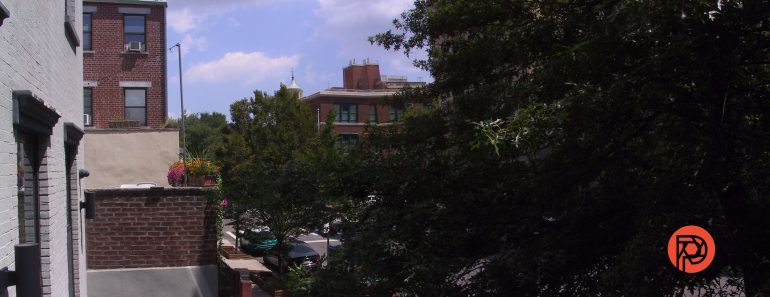
That’s not to say that the G1 doesn’t have any “advanced” features. The PowerShot G1 has your core Program, Shutter, Aperture, and Manual modes, along with a full Auto and four Scene modes. On the more creative side of things, there’s also a dedicated Black and White mode as well as a Panorama mode. During this second review period, I took some additional time to work with the Panorama mode, and it really did open my eyes to just how innovative this would’ve been in 2000. The G1’s Panorama Mode creates a frame guide for you to take multiple exposures for you to upload the resulting images onto your editor of choice when you offload the files from your card. While this isn’t the in-camera panorama stitching that’s found in modern Canon cameras, it is a testament to how much thought went into the capabilities of this now 26-year-old camera.
“…the Canon PowerShot G1 only sits there waiting for you to make decisions about your photography, and sometimes, even I forget just how liberating that can be.”
Still, These Photographs are Worth the Process

The biggest change between now and my last review is that I exclusively shot in JPEG this time around. The truth is that if you’re consciously choosing to use a 20+ year-old camera, then you want the resulting images exactly as they come out of the camera. During the week I tested the Powershot G1, there were many overcast and rainy days. I leaned into the grayness of the weather and opted to increase the contrast and decrease the saturation in the camera’s settings. Honestly, I have forgotten just how bare bones the options on this camera are and, again, I find that liberating in a lot of ways.
These images were taken straight out of the camera:


The following images were edited:


The PowerShot G1: Great Vibes, Mostly Impractical in 2026

The Canon PowerShot G1 is a 3.3-megapixel point-and-shoot with 4x optical zoom lens that was in many ways ahead of its time (in 2000). From the flip-out, swivel LCD screen at the rear to the ability to shoot RAW images, it was a true professional point-and-shoot camera. In our review last year, I stated that the G1 was an opportunity to relive some of my early photography experiences. This year I wanted to look at it with fresh eyes and no emotional attachment – focusing mainly on the experience and how it holds up to today’s cameras. I’m still very much in love with the images that you can make with this camera – flaws and all, but it’s still very much worth noting that only using the PowerShot G1 in 2026 is not exactly practical. Pick this one up if you’re looking for a fun travel camera but not as a second camera for your work.
Get rid of the ads!
Did you enjoy reading this article as much as we enjoyed writing it? There's a way to support us and our reporting, getting ad-free navigation and more as a bonus. Subscribe to us for less than a coffee per month —just $3.99— or take advantage of our yearly subscription with a hefty discount for only $25.- An ad-free experience
- A free mystery box for Lightroom or Capture One
- All the books in our store
- 20% discount on Capture One
- 30% discount on Imalume Photo Theft Protection
- 20% off Herbs and Kettle Tea Company.
- 20% off your order from MPIX printing services.
- 5% off Viltrox Products via their eCommerce store.
- 10% off all film developing, printing and scanning services from Blue Moon Camera and Machine
- 15% off 7Artisans products: The lens and accessory maker is offering a sweet discount for Phoblographer's readers.
- 15% off a VSCO One subscription: Get a bunch of great tools with their all-in-one package.