


Sony has introduced over 80 lenses for the FE lineup over the past decade or so. The company has a wide range, from ultra-wide primes to spectacular zoom lenses, as well as some lovely bright aperture options. However, it appears that the company has a glaring omission about one format: fisheye lenses. Here’s why it’s time for Sony to focus on this often overlooked piece of optics.
If you look at fisheye lenses, many major brands have manufactured them, and some third-party lens makers are also creating them. Both Canon and Nikon have some lovely options, such as 8-15mm, for their DSLR range. Canon has also introduced 3D VR fisheye lenses, such as the 5.2mm f2.8 L, and the standard RF 7-14mm f2.8-3.5 L.
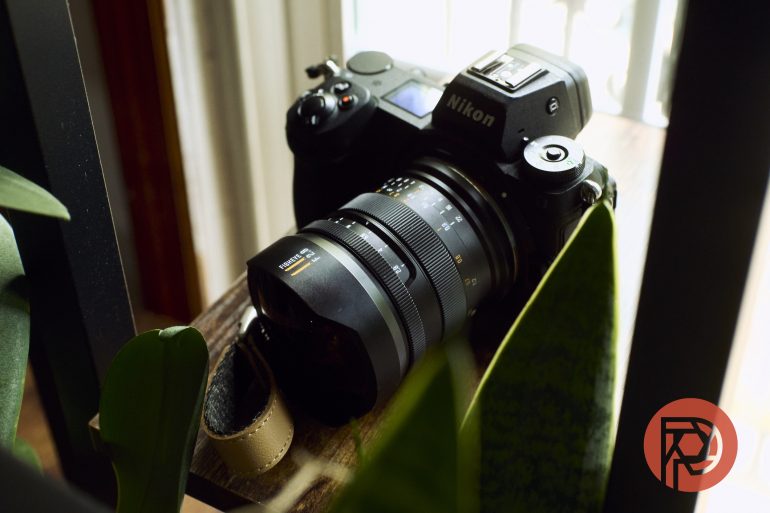
On the other hand, Sigma has introduced 15mm f2.8 EX DG Diagonal Fisheye and the 8mm f3.5 EX DG Circular Fisheye, both of which were made for Sony’s A and E mount cameras. Laowa also offers a 4mm f2.8 for MFT, while their 9mm f2.8 is for APS-C cameras. There is also the Laowa 8-15mm f2.8 for full frame cameras as well as Brightin Star 11mm f2.8 II, including Sony E models.
In this regard, while Sony E users can adapt a lens with an adapter or invest in a third-party native option, none of them will be able to carry the same optical quality, autofocus performance, or weather sealing of a first-party Sony G Master or G lens.
So, why must Sony even think of investing in this? For one, that its competitors are now offering such variants, with third-party manufacturers introducing cost-effective models. Secondly, it is also about the users. Extreme sports and action photographers have relied on fisheye lenses to get extreme depth of field at close focusing distances, and to include more of their surroundings. Architecture and interior photographers may also rely on it for creative documentation of the place. Underwater, creative and fine art photography are some genres that require one to use fisheye to capture vast spaces in one circular frame.
Thus, Sony photographers, who like G and GM series lenses and their pristine image quality, have to rely on options that may not cut the mark for them. Similarly, the company’s DX motor for autofocus, its design, and weather sealing are a few things that are missing from third party options. In fact, a circular-to-diagonal zoom fisheye would be helpful for a broad user base.
Sony has clearly made the most comprehensive lens portfolio, and the ecosystem will not be complete until they introduce fisheye lenses. Many sports and underwater photographers rely on Sony cameras, including the a9 III, the a1 II, or the a7R V for speed, pixels, and pure performance. A native Sony fisheye lens further makes the whole system more reliable, even when one is shooting in challenging condition.
Since the market already exists, Sony has to answer the question of when they are releasing newer lenses. Canon has already filed patents for RF fisheye lenses, which means Sony will have to join the parade soon, too.
Get rid of the ads!
Did you enjoy reading this article as much as we enjoyed writing it? There's a way to support us and our reporting, getting ad-free navigation and more as a bonus. Subscribe to us for less than a coffee per month —just $3.99— or take advantage of our yearly subscription with a hefty discount for only $25.- An ad-free experience
- All the books in our store
- 20% discount on Capture One
- 30% discount on Imalume Photo Theft Protection
- 20% off Herbs and Kettle Tea Company.