


Sigma is one of the few companies that has evolved its portfolio, offering some exceptional focal ranges for various photographers. Models such as the Sigma 35mm f1.2 ART, the 56mm f1.4 DC DN Contemporary, and the recently launched 200mm f2 DG Sports continue to showcase the company’s commitment to its users. While they have introduced some great primes and zooms, the company is now focused on expanding the latter. Per the new patent, the focal ranges are unusual but showcase the direction the company wants to take.
According to Asobinet, patent P2025182227 was released on December 15, and showcases lens designs that offer “a variable magnification optical system and imaging device.” This includes designs that resemble the 28-105mm f2.8 DG DN | Art, as well as the 28–85mm f2.8 and 35–130mm f2.8 lenses. The patent notes that the designs will be compact, offer a high zoom ratio, and maintain aberration correction throughout the focal ranges.
Example 1

- Focal length: 28.55-102.37
- F-number: 2.91
- Half angle of view: 77.11-22.75
- Image height: 21.63
- Total length: 174.47-216.16
- Back focal length: 27.8972
Example 2
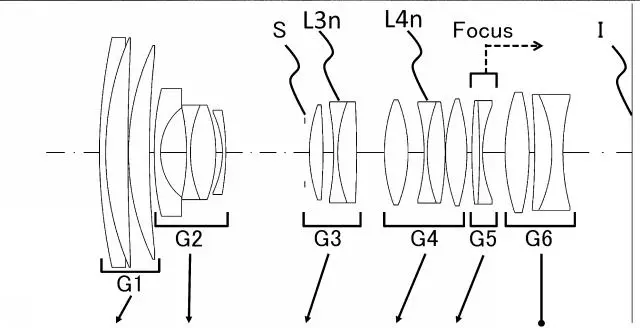
- Focal length: 24.72-82.45
- F-number: 2.91
- Half angle of view: 86.47-28.04
- Image height: 21.63
- Total length: 171.89-216.15
- Back focal length: 22.2969
Example 3
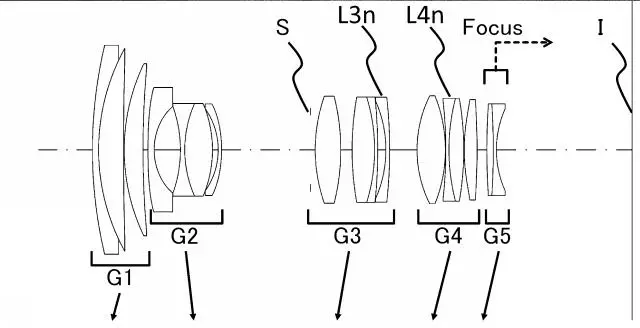
- Focal length: 36.05-130.94
- F-number: 2.91
- Half angle of view: 64.53-18.07
- Image height: 21.63
- Total length: 199.15-249.15
- Back focal length: 28.6321
The company introduced models such as 24-70mm and 28-70mm, the latter of which did not really perform well in our review. However, in that regard, the 28-105mm can rival Canon’s 24-105mm f2.8L lens, which now costs about $3,300. If Sigma can rival an option that costs under $1500, we will certainly have a winner. In fact, Sigma is already working with the RF-S lineup, but it is unclear where the full frame lineup will be open to the Aizu-based company.
As for the 35-130mm, it could rival Tamron’s own 35-150mm f2-2.8. Tamron has been holding the zoom lenses, and they work perfectly well with Nikon and Sony cameras. Naturally, Canon users lose out on their party options. In that regard, if both Tamron and Sigma can design for an APS-C sensor, Tamron is likely to launch something similar for Canon users. The only way Sigma can win here is if they introduce some stellar innovation or undercut Tamron in the price point. Viltrox and TTArtisans are a few brands that also offer lenses; however, they do not offer zoom lenses for the Canon mount.
This puts Sigma in a great position, just like Tamron. Their designs can be effective if the lenses are well-built, feature weather resistance, and are compact and lightweight. Since the company has changed its branding strategy, it is likely that this change will also be reflected in its future lenses. For now, it is safe to say that the R&D seems to be going in an interesting direction. Even if one of the lenses reaches the production stage, it can help to reshape the styles of zoom lenses for full frame users. If not, then these are great ideas that can become a reality later in the future.
Get rid of the ads!
Did you enjoy reading this article as much as we enjoyed writing it? There's a way to support us and our reporting, getting ad-free navigation and more as a bonus. Subscribe to us for less than a coffee per month —just $3.99— or take advantage of our yearly subscription with a hefty discount for only $25.- An ad-free experience
- A free mystery box for Lightroom or Capture One
- All the books in our store
- 20% discount on Capture One
- 30% discount on Imalume Photo Theft Protection
- 20% off Herbs and Kettle Tea Company.