


Shooting a roll of analog film and developing negatives can be an enjoyable experience. However, scanning those negatives to create digital files is often slow, cumbersome, and requires heavy equipment. Copy stands, tripods, light pads, and a tangle of cables can sap your energy and time. The Valoi easy35 aims to change that by drastically cutting down the digitizing time and effort.
The Big Picture: Valoi easy35 Review Conclusions
If you’re into film photography, you know the drill. You load the camera, shoot a roll, and out comes a strip of magic waiting to be revealed. Digitizing those negatives is a process that can drain that magic in no time. That’s where the Valoi easy35 comes in. It’s not here to upend your whole workflow-it’s designed to help it run more smoothly. Valoi is a name that has been earning respect in the film photography accessories world. It is a Finnish word meaning light and creation, and their mission focuses on making film workflows easier without losing the core of analog photography. With the Valoi easy35 film scanner, they have created something truly practical.
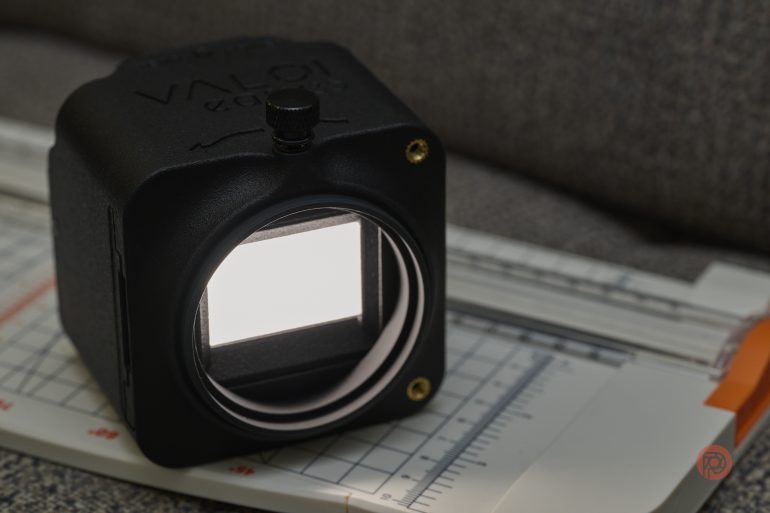
The simplicity lies in the fact that this is just a compact backlit unit that connects directly to your macro lens. You insert your negatives or slides into the slot and start capturing frames as if you were shooting portraits. There’s no need for a tripod, a complex copy stand, or a power outlet. It’s just you, your camera, and the simple pleasure of scanning film wherever you want. The first time you use the Valoi easy35, you really wonder why no one thought of it before. Good negative digitization requires a dedicated macro lens anyway, so why not just attach the light source as close as possible to the lens? In practice, the aasy35 offers a mix of speed, convenience, and creative freedom that in turn, makes you commit to shooting more 35mm film negatives and creating more reversal slides to digitize.
- Easily fits into your bag, turns any space into a scanning station
- Powered by a rechargeable battery, so no having to be connected to a power source while scanning
- Color-consistent light source with variable power and temperature adjustments
- Convenient film scanning like never before. Lie down on the couch and scan even
- Shades your film from external light sources
- Comes with adapter rings for various filter thread sizes and adjustment tubes for various focal length macro lenses
- Requires a proper macro lens for the absolute best results
If you’re new to film digitization and want a convenient, portable, and affordable solution for your negative scanning, the Valoi easy35 is going to be a top choice for you. It’s made me put aside all other film scanning products I have and focus solely on this for my scanning requirements. It totally deserves a full five stars for its ease of use and build quality. I can see many hours in the weekends ahead being spent using the easy35.
The Valoi easy35isn’t meant to replace professional drum scanners or high-end dedicated film scanners. It doesn’t claim to be the best choice for archivists who demand complete perfection. Instead, it targets photographers who want speed, ease, and flexibility. For me, it changed scanning from a hassle into an easy part of my workflow. I could scan more rolls in an afternoon than I usually would in a weekend with my tripod setup. I did it sitting comfortably, free from cables and away from power sources.
Is it perfect? It’s arguably close to it for anyone looking for a really fast but affordable way to scan their precious negatives and slides. If you shoot multiple formats beyond 35mm, you’ll need to look at something like their easy120. It’s important to still invest in a good macro lens to achieve the best results. A lens that does good close-ups but isn’t a true macro may not give you the scans you’re looking for. But here’s the main point – the Valoi easy35 makes digitizing film a breeze. It lowers the entry barrier into film scanning, speeds up the process, and keeps you connected to the joy of shooting analog. In my opinion, that makes it one of the most exciting tools to enter the film community in recent years. I can’t wait to test out the easy120 now.
Experience
For testing the Valoi easy35, I used my Nikon Z8 and a Nikon Z 105mm f2.8 macro lens, which I purchased specifically for this review (I’m so glad I did). The package comes with the light source, step-up adapter rings, a USB-C cable for charging, and extension tubes for adapting various macro lenses to the light. Valoi also sent us the additionally available easy35 Sprocket Holder, easy35 Slide Holder, and the easy35 Duster.
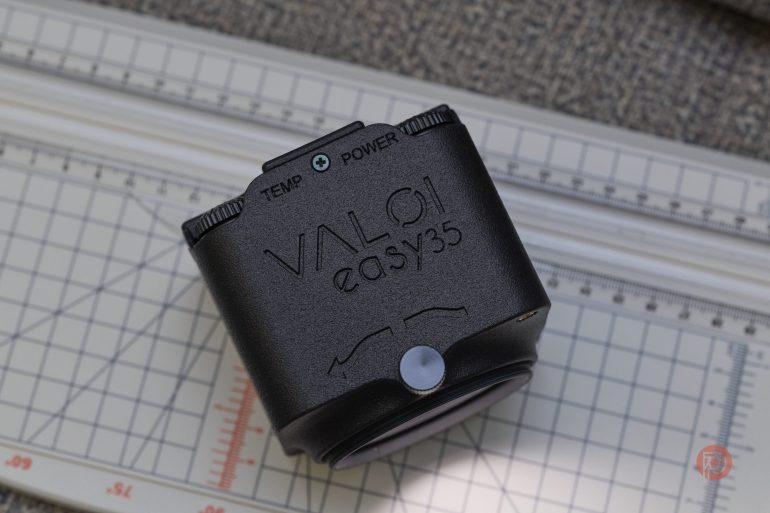
When I first held the Valoi easy35, I was surprised by how simple it is, yet the build quality really impressed me. It doesn’t stand out with flashy buttons or a complicated design. Instead, it feels practical. The main light source unit is no bigger than a standard-sized Rubik’s Cube. This is a product made for photographers who want to get the job done and move on to the enjoyable part: editing and sharing images. Until now, my scanning process involved a copy stand, a macro lens pointed downwards, and a carefully placed light pad. Often the whole setup involved a wired shutter release cable too. It works, but felt clinical and rigid, almost like being tied to a microscope in a science lab. With the Valoi, I felt unchained. I could sit on my couch with a cup of chai by my side, and scan film almost as easily as flipping channels on TV. That increase in comfort made me fall in love with the workflow.
The film-feeding process is simple. You insert your strip of negatives, advance it frame by frame with your hand, and press the shutter. It feels like shooting a roll in reverse. The scanner’s backlight is strong and consistent. It gave me confidence that I wasn’t dealing with uneven exposures. I tested color negatives and black-and-white, and both came through with clarity and detail that matched my bulkier setup, surpassing it at times. The biggest revelation from a process perspective, however, wasn’t just speed. It was the rhythm that I developed soon after I started. There’s something naturally calming about scanning with the Valoi. Sliding the film through and capturing each frame feels like reliving the roll, almost like retracing your steps on a journey. On my first few tries, I noticed some slight misalignments, but since the unit itself is rotatable after it’s screwed on to the lens, you can easily adjust the alignment. Depending on the focal length of your macro lens, you will need to put anywhere between 1 and 5 adjustment tubes (supplied) to get the 35mm negative filling your camera sensor’s frame.

A lot of things have been well thought out during the design of this product. For starters, the power output is variable – something many scanning light sources have these days, but here the adjustment is via an easily located dial. It’s not that which surprised me the most – this light source has an adjustable temperature scale. This makes it so much easier to get the right look for your negative in-camera, saving you time in post-processing. The other thing that I really loved was the slide holder’s mechanism of giving you a slightly audible ‘pop’ when the slide is correctly inserted into it. You could easily scan a full strip of 36 negatives in under 2 minutes once you get the hang of it. Slides understandably take longer as you need to push in a new slide to pop out the earlier one, and it takes a bit of a learning curve to not accidentally push the new slide on top of the previous one (yes, there’s enough thickness for 2 slides to fit in there for some reason).
The main light source and all the parts that come with it are made from very high-grade material. It doesn’t look 3D printed, and it feels worthy of the amount you’d have to shell out for it. There was some resistance when I tried to take out the 35mm holder to insert the sprocket holder, but I quickly realised there’s a screw on top that can be used to control friction.
Image Quality
The true test of any scanner isn’t in the setup itself; it’s in the results. The easy35 delivers results that are as satisfying as its workflow. Colors from slide film came out really well, especially when paired with good post-processing software like FilmLab. Skin tones from my Ektachrome rolls looked natural. I enjoyed the fact that highlights didn’t blow out as easily. Black-and-white film had good tonality, with some solid shadow results and subtle gradients. Because I wasn’t stuck in a rigid setup, I felt encouraged to scan more, try new things, and revisit rolls I might have otherwise ignored. Going through so many of granddad’s old slides for this review added to the therapeutic feel of it all. The results looked good, but the bigger win was how many more results I actually produced.


I was most impressed by the consistency throughout a full roll. With some scanning rigs, I’ve often observed that one frame looks slightly brighter or softer than the next, requiring careful corrections. The Valoi’s consistent light made batch scanning easier. If needed, I could apply similar adjustments across multiple frames without second-guessing. Sharpness depended on my macro lens, as expected, but with the Nikon Z 105mm f2.8 macro, I pulled out details from film grain that reminded me why film scanning can be so addictive. Even slides, which can be notoriously tricky to digitize, showed excellent results.
Declaration of Journalistic Intent
The Phoblographer is one of the last standing dedicated photography publications that speaks to both art and tech in our articles. We put declarations up front in our reviews to adhere to journalistic standards that several publications abide by. These help you understand a lot more about what we do:
- At the time of publishing this review, Valoi isn’t running direct-sold advertising with the Phoblographer. This doesn’t affect our reviews anyway and it never has in our 15 years of publishing our articles. This article is in no way sponsored.
- None of the reviews on the Phoblographer are sponsored. That’s against FTC laws, and we adhere to them just the same way that newspapers, magazines, and corporate publications do.
- Valoi sent us the easy35 and accessories for review. There was no money exchange between us or their 3rd party partners and the Phoblographer for this to happen. Manufacturers trust the Phoblographer’s reviews, as they are incredibly blunt.
- Valoi knows that it cannot influence the site’s reviews. If we don’t like something or if we have issues with it, we’ll let our readers know.
- The Phoblographer’s standards for reviewing products have become much stricter. After having the world’s largest database of real-world lens reviews, we choose not to review anything we don’t find innovative or unique, and in many cases, products that lack weather resistance. Unless something is very unique, we probably won’t touch it.
- In recent years, brands have withheld NDA information from us or stopped working with us because they feel they cannot control our coverage. These days, many brands will not give products to the press unless they get favorable coverage. In other situations, we’ve stopped working with several brands for ethical issues. Either way, we report as honestly and rawly as humanity allows.
- At the time of publishing, the Phoblographer is the only photography publication that is a member of Adobe’s Content Authenticity Initiative. We champion human-made art and are frank with our audience. We are also the only photography publication that labels when an image is edited or not.
More can be found on our Disclaimers page.
Get rid of the ads!
Did you enjoy reading this article as much as we enjoyed writing it? There's a way to support us and our reporting, getting ad-free navigation and more as a bonus. Subscribe to us for less than a coffee per month —just $3.99— or take advantage of our yearly subscription with a hefty discount for only $25.- An ad-free experience
- A free mystery box for Lightroom or Capture One
- All the books in our store
- 20% discount on Capture One
- 30% discount on Imalume Photo Theft Protection
- 20% off Herbs and Kettle Tea Company.
- 20% off your order from MPIX printing services.
- 5% off Viltrox Products via their eCommerce store.
- 10% off all film developing, printing and scanning services from Blue Moon Camera and Machine
- 15% off 7Artisans products: The lens and accessory maker is offering a sweet discount for Phoblographer's readers.