

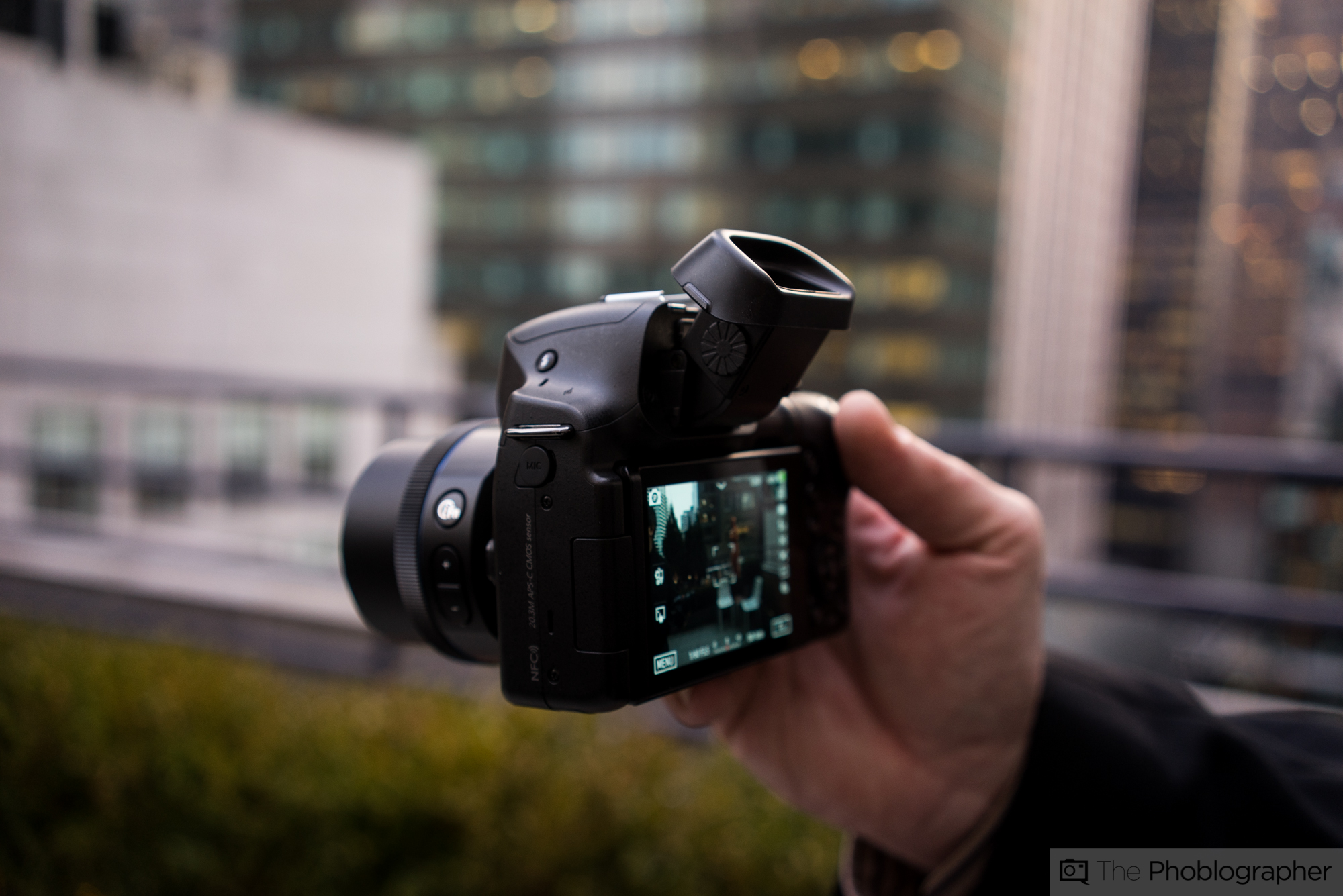
“By now, Samsung cameras are synonymous with innovation,” I wrote in my 2014 review of the Samsung NX30. “The AMOLED screen has gotten a big boost in resolution and the new, tilting EVF is an innovative feature.” Since then, none of the Japanese-made cameras designed for photography first have done this in a way that really matters. Sony has done it with cinema cameras, but not for still. The closest thing is the Leica Visioflex EVF that attaches onto Leica M cameras. However, this feature is truly very useful. So why don’t manufacturers bring it back?
Know this: if tilting EVFs ever come back to the market, it’s going to take four years at best because the Japanese camera manufacturers move way too slowly on innovating. And instead of leaning into that, they’re still playing catch up in various ways.
But this could be pretty easily brought back to the masses because it was done before.
So why do you need a tilting EVF instead of just using the screen? Well, there are times when you need to shoot at a specific angle to get a specific feeling that you simply just don’t get while looking at the screen. Instead, peering into a viewfinder makes the rest of the world around you basically disappear. You also tend to think and shoot from a different perspective.
It’s similar to using a TLR camera where you shoot top down while looking into ground glass. Photographers love doing that and people love seeing how that looks.
More than anything, it would be very useful in a world where all of our images are starting to look the same. We, as photographers, need to differentiate ourselves from other image makers out there. And we also need to start making images that aren’t designed to be made primarily for social media shoots. However, combining the tilting-EVF with something like square format could help us do both things pretty handily.
Admittedly, in my review of the NX30, I state that I ended up using the EVF a lot less than I thought I would. Here’s my quote from that review:
Earlier I said I didn’t use the EVF much and that’s true. As innovative and convenient as it was, I still generally used the AMOLED touchscreen instead. However, I will say that the EVF came in handy several times where there was just way too much glare coming from the screen while shooting outside. Although the screen can be adjusted for brightness, I still found the screen to have a ton of glare when used outside. Otherwise, while shooting inside, the AMOLED screen was crisp and beautiful.
One of the best reasons for an EVF like this is to eliminate glare, especially when wearing glasses.
Oh, if only brands thought about the fact that our eyes are getting worse from staring at screens all day.
Get rid of the ads!
Did you enjoy reading this article as much as we enjoyed writing it? There's a way to support us and our reporting, getting ad-free navigation and more as a bonus. Subscribe to us for less than a coffee per month —just $3.99— or take advantage of our yearly subscription with a hefty discount for only $25.- An ad-free experience
- A free mystery box for Lightroom or Capture One
- All the books in our store
- 20% discount on Capture One
- 30% discount on Imalume Photo Theft Protection
- 20% off Herbs and Kettle Tea Company.
- 20% off your order from MPIX printing services.
- 5% off Viltrox Products via their eCommerce store.
- 10% off all film developing, printing and scanning services from Blue Moon Camera and Machine
- 15% off 7Artisans products: The lens and accessory maker is offering a sweet discount for Phoblographer's readers.