

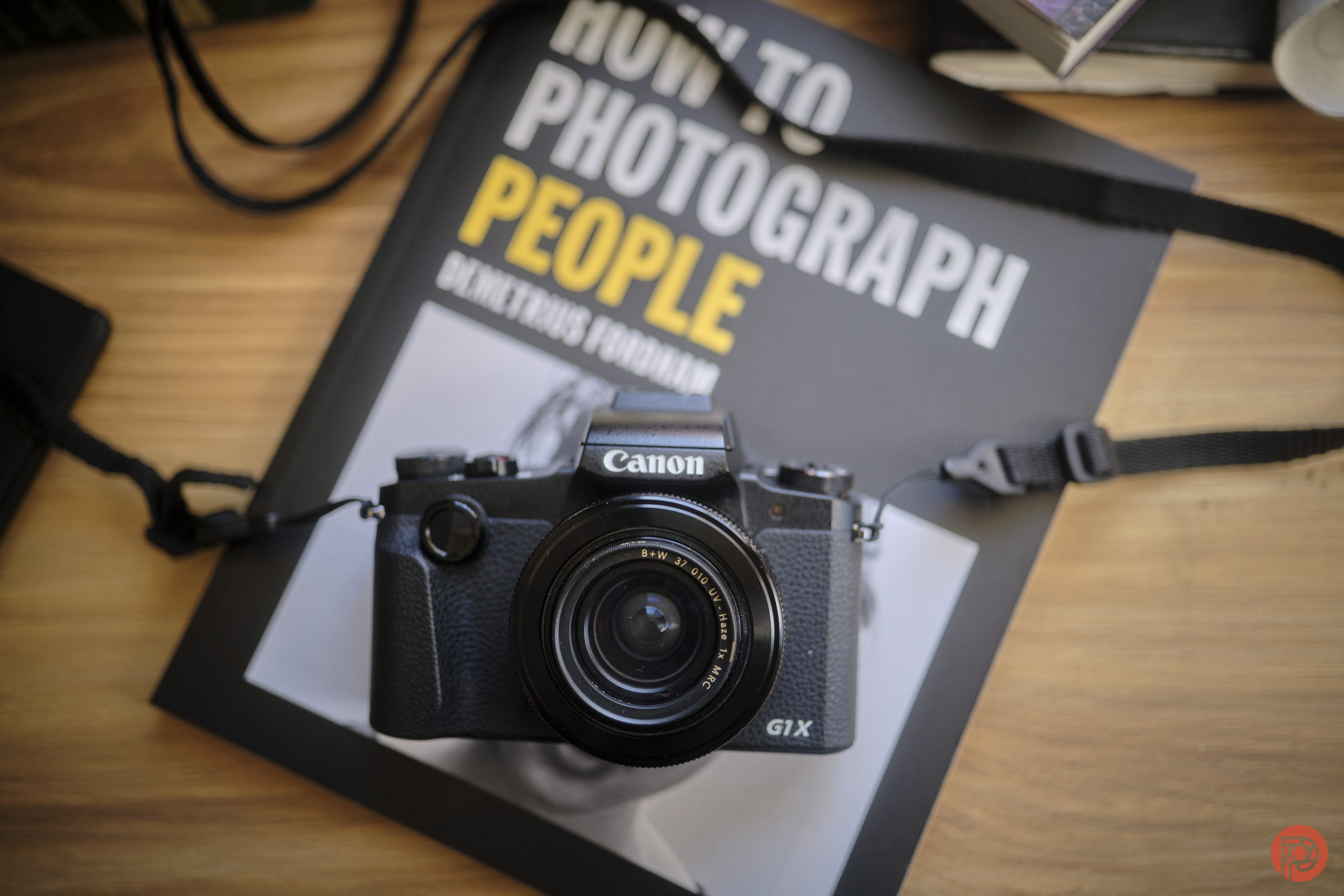
The camera world has been seeing a curious trend in the buyer’s market. Older models of certain cameras have become immensely attractive to some buyers. This means that a camera launched in 2014 could cost more than a device launched two or three years later. An example is the increasing demand for the Canon G1x Mk II and G1x Mk III, both models that are certainly more costly than the Canon 5D Mk III and 5D Mk IV. But in some searches, we’ve even found the camera to cost more than the original Canon EOS R! Why is that the case? Let’s take a look at what the experts have to say about the Canon G1x Series.
Additional reporting was done by Chris Gampat.
What Sets the Canon G1x Series Apart?
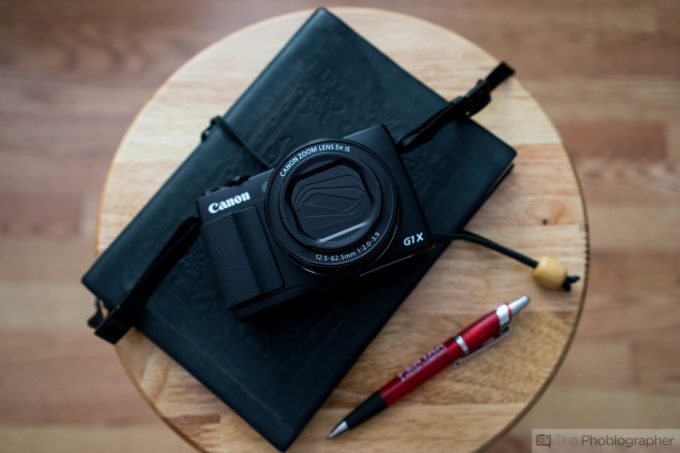
The Canon G1x was launched in 2012, and the G1x Mk II was released two years later. This camera boasted some really exciting features, such as a 12.8MP 1.5-inch CMOS sensor, a DIGIC 6 image processor, a leaf shutter, a flash, and a 24-120mm f/2-3.9 (5x) zoom lens. In addition, you also get a 5.2fps continuous shooting speed, 14-bit RAW files, WiFi, and 1080P video recording.
The Canon G1x Mk III, launched in 2017, was an entirely different camera. The new device ditched a 1.5-inch sensor for a 24MP APS-C sensor camera and a 24-72mm equivalent f2.8-5.6 zoom. The camera has a 9 fps continuous shooting speed with AF/AE locked, a DIGIC 7 processor, an ISO range of 100-25,600, and a Dual-Pixel CMOS AF system. One also gets the chance to record 1080/60p and time-lapse video capture, which is perfect for content creators.
Both cameras have all-round performance, and are perfect for travel photographers or anyone who wants a second camera for casual shooting. The point and shoot cameras make it easy for hybrid photographers to switch between stills and videos too.
Who is Using the Canon G1X Series Today?
In the United States, the Canon G1x Mk II has often been searched in areas like West Virginia, Texas, New York, and California, while the G1x Mk III has a dominant presence in Florida, Illinois, Maryland, North Carolina, and New Jersey. On the other hand, if you look at worldwide records, then G1x MK III has been Googled in various countries, including Finland, Mexico, Portugal, the United Kingdom, and France.


A quick look on social media will also help you realize that a large number of people using the G1x Mk II and G1x Mk III are millennials and Gen Z. For either group, the cameras are used for street, events (such as concerts), underwater photography, and landscape photography. Some choose it to document their day-to-day events. The G1x Mk III is also particularly famous among content creators, with many short reels being recorded with it.
Why Are These Point-and-Shoots So Popular?
We reached out to Jim Fisher, Lead Analyst of Cameras at PCMag, who reveals there are two driving factors for this renewed interest. “One is nostalgia,” Fisher tells us. “You have a generation of younger creators who’ve entered the workforce and may want to try and reconnect with childhood through tech.” Photographers who are in their 20s today, he says, have grown up seeing their families use Coolpix or PowerShot. So, these cameras tend to “pull on heartstrings” for many Gen Z.

The other point is something we have seen coming for a while. “Second is a lack of supply among new models,” says Fisher. “There are fewer options in production, and those that are still made come through in batches, leaving customers stuck waiting on a backorder,” he adds. This point also helps one understand why the demand for a 5D is not as much as a G1x Mk II. After all, many used bodies are available, and some newer models of the older cameras. One reason is also the Canon EOS R5 and R6 cameras, which are affecting the demand for the 5D. “The 5D and R5 aren’t far apart in concept and ergonomics, aside from the viewfinder,” explains Fisher. “If Canon made enough of the current G7 X to keep it in stock, I would imagine the prices for older models would drop off correspondingly,” he adds.
Photographer, filmmaker, and writer Jeanette D. Moses also echoed similar thoughts when we reached out to her. “I think the resale price of the G1x on resale sites is likely tied to scarcity,” she told us in an email interview. Jeanette says more 5D cameras were produced and sold over the years, especially based on the success of the first model, launched in 2005. “The G1x series was always popular when it was released, but it never took off as widely as the 5D did,” she explains. “So, now in 2025, there’s just way less of the G1x series available on the resale market than compared to the Canon’s 5D series,” she adds.
It’s quite evident that the compact camera craze is real and that people really, truly, do want cameras like this at an affordable price point. The Camp Snap camera, for example, has been enjoying healthy sales and growth. But what’s even more fascinating is that a point-and-shoot camera like this can be bought for even more than the Canon EOS R — the company’s first mirrorless ILC with a full-frame sensor.
Why are These Models Valuable?
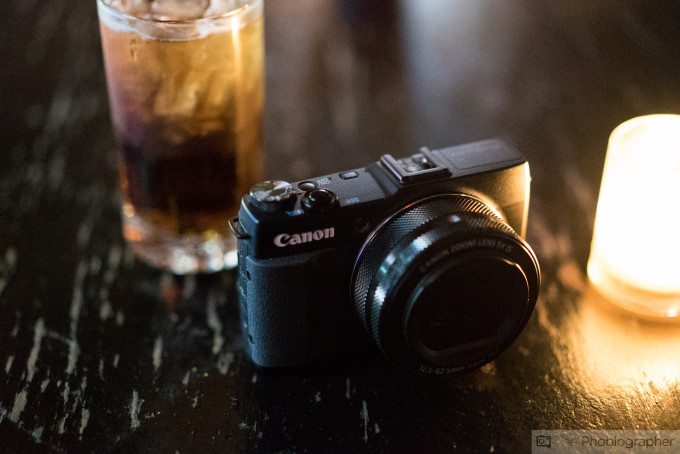
When we look at the camera market, we realize that a lot has changed. There was a point when DSLRs were ruling the industry, especially around the early 2010s. However, with the democratization of cameras, things changed drastically. “I think for a lot of professional photographers, there’s a desire to have something that is better than a phone but something that feels less cumbersome than a mirrorless camera or an old DSLR,” explains Moses. “Compact cameras like the Canon G1x series fit into that niche,” she adds. At the same time, the general trend Moses has seen is that the lower price point of Canon cameras is also driving the force. This is because compact cameras by Sony, Fujifilm, and Contax can cost more.
Fisher tells us that the G1x Mk II fits right into today’s demand. “The Mark II should still be (I’ve not used one since 2014) a solid photo camera today thanks to its mix of Type 1.5 sensor (similar to what’s in the new PowerShot V1), leaf shutter, integrated flash, and bright f2.0-3.9 zoom,” he explains. However, he doesn’t feel the same for the G1x Mk III, which he felt did not have great updates. “I wasn’t as taken by the Mark III when I reviewed it, thinking that the shorter zoom and dimmer aperture was a step in the wrong direction for the line, especially given how good the next model down in the line (at the time, the first G5 X) was for fewer dollars,” Fisher tells us.
When these point-and-shoot cameras came out and how they compare to modern ones:
The G1 X is an interesting line from Canon. I remember slamming the first edition because of its sluggish focus, but described the G1 X Mark II as “[fixing] just about every fault of the original,” in my 2014 review. The Mark II should still be (I’ve not used one since 2014) a solid photo camera today thanks to its mix of Type 1.5 sensor (similar to what’s in the new PowerShot V1), leaf shutter, integrated flash, and bright f/2.0-3.9 zoom. The Mark III is an almost entirely different camera, Canon moved to an APS-C chip and slower aperture lens, and added an EVF. I wasn’t as taken by the Mark III when I reviewed it, thinking that the shorter zoom and dimmer aperture was a step in the wrong direction for the line, especially given how good the next model down in the line (at the time, the first G5 X) was for fewer dollars.
Jim Fisher of PCMag
Why Get One?
When we reviewed the G1x Mk II, we adored the camera for its image quality, dials, buttons, and overall feel. We added, “Honestly, we’re very smitten with this camera. In fact, as a Canon customer for many years, it gives me faith again that the company may return to try to innovate again like they did years ago.” If a camera really improved on its predecessor’s shortcomings, it is certainly worth a try.
On the other hand, we recently reviewed the Canon G1x Mk III, and we realized that it is the best camera you can opt for in 2025. “The Canon G1x Mk III makes for a phenomenal companion camera that you can not only carry everywhere with you, but you can truly adore,” we said. ” It’s small, lightweight, has accurate enough autofocus if you compose based on the center of the frame, has weather resistance, and has good enough battery life.” Furthermore, you get dreamy, soft images by attaching a lens filter.
If you have been wondering whether to get one of the models, you have gotten yourself an answer just by reading this article. The Canon G1x Mk III can go for a bit over $800 renewed or even more if it’s been fully refurbished.
On the market today, there aren’t many weather-resistant point-and-shoot cameras. The big exceptions are the few from Fujifilm and Leica. However, they’re far more pricey.
Get rid of the ads!
Did you enjoy reading this article as much as we enjoyed writing it? There's a way to support us and our reporting, getting ad-free navigation and more as a bonus. Subscribe to us for less than a coffee per month —just $3.99— or take advantage of our yearly subscription with a hefty discount for only $25.- An ad-free experience
- A free mystery box for Lightroom or Capture One
- All the books in our store
- 20% discount on Capture One
- 30% discount on Imalume Photo Theft Protection
- 20% off Herbs and Kettle Tea Company.