

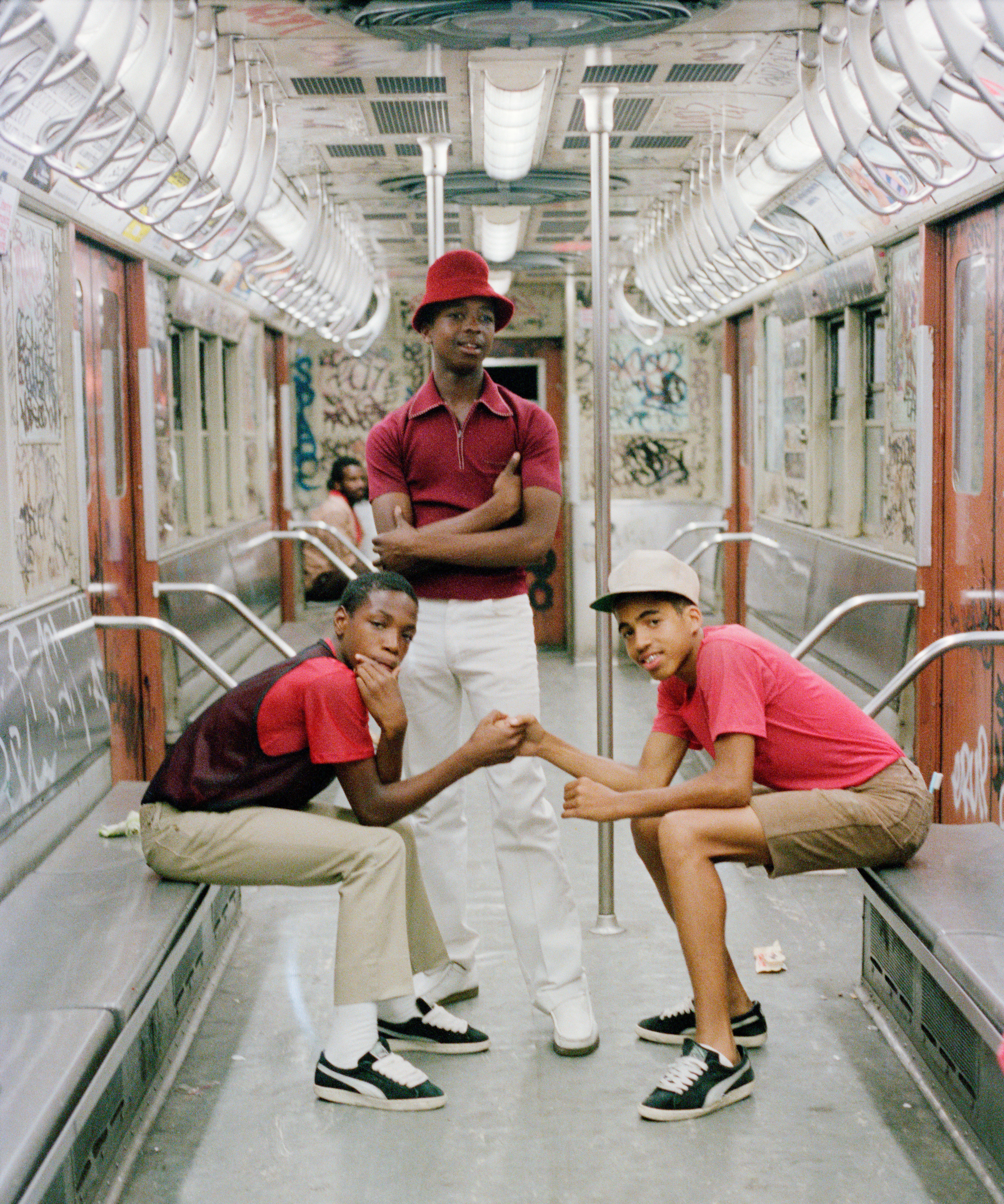
Black photographers have contributed immensely to the medium with their diverse, distinct, and emotional storytelling. One could even say that without their support and perspective, photography would not have reached its current stage. But despite their nuanced gaze, our society has consistently erased and overlooked their contribution, which results in gatekeeping the power in the hands of a few white people. As an inclusive publication, we can’t let that happen. So, we bring you a round-up of the best Black photographers we have interviewed to depict the significance of their voices and give them a stage to celebrate their authentic selves.
The lead image is by Jamel Shabazz. All images have been used with the photographer’s permission.
Table of Contents
Jamel Shabazz
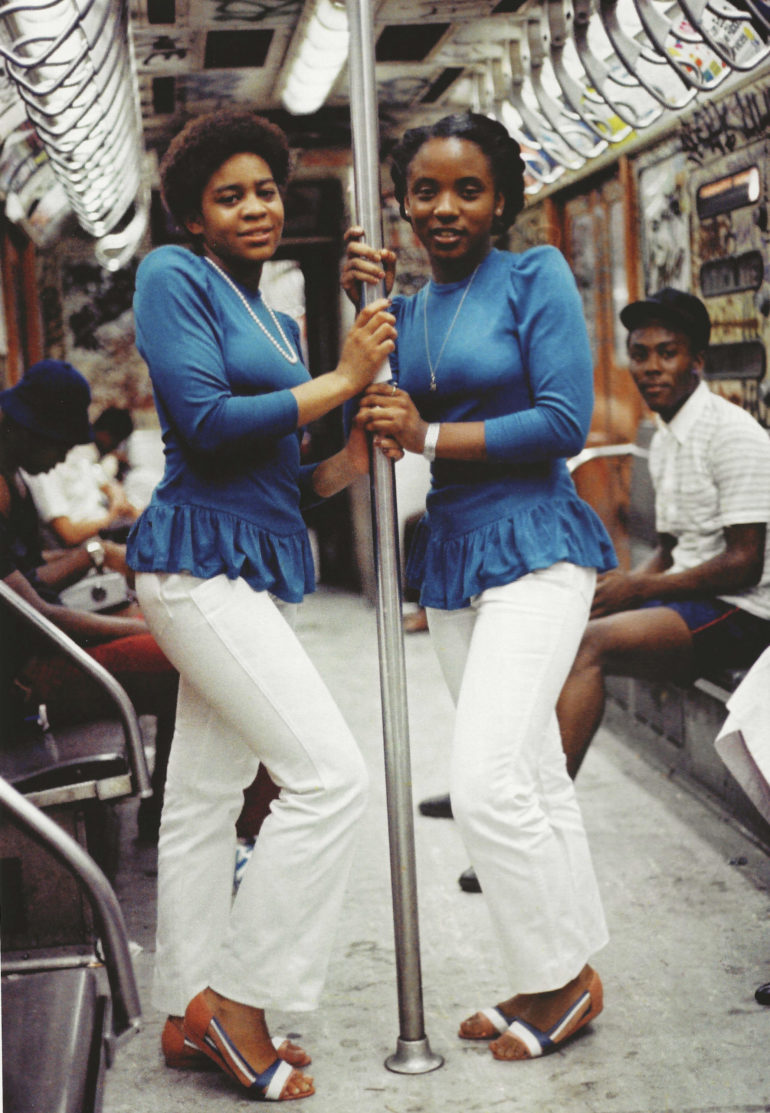
We have featured Jamel Shabazz on the website on multiple occasions, and every time we speak to him, we discuss something new about his images and the city. However, what you absolutely adore in his images is the respect and love for the Black community. The photograph above represents that. Having worked since the 1980s, Shabazz had the opportunity to capture an ever-evolving city and a community. His representation of his people is pure, something we don’t get to see today. That’s why, he is a part of our list of Black photographers this year.
With the media landscape perpetuating negative stereotypes even now, Shabazz images are a breath of fresh air. The photograph above shows us two bright and beautiful Black women whose twinning clothes add a layer of adorableness to the image. The man behind, too, eagerly looks at Shabazz, showcasing his curiosity. Overall, what you see is how welcoming these youngsters are, which is something you don’t get to see today.
In his interview with us, he said:
It was more about respect than trust, as under those extreme conditions in which I shot, one has to constantly be mindful of manipulation. In conjunction to having a mutual respect, empathy was vital as well. My advice to aspiring documentary photographers is be sincere in your intention, place yourself in your subjects’ position, and for me as a regular practice, I would always carry a small portfolio of my work along with a business card to present, so that they would see that I was sincere.
Clay Benskin
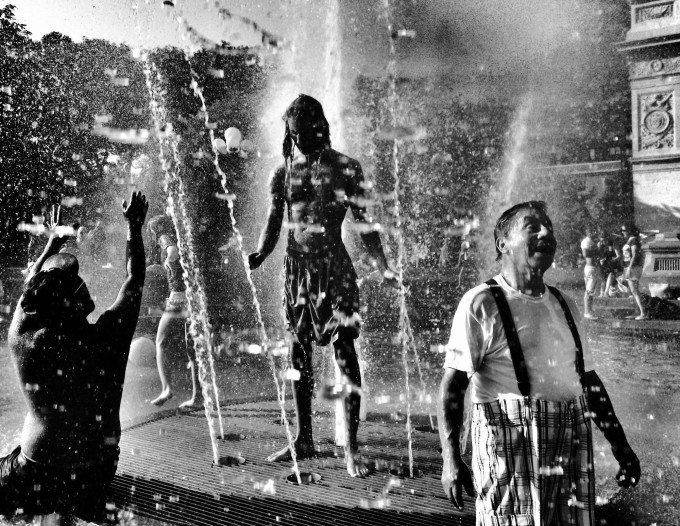
Something about Clay Benskin’s photographs stays with you long after you have seen them. For instance, the image above showcases the pure joy of the elderly man enjoying jet sprays of water around him. Although you can’t entirely see his face, it is enough to understand that he seems to be having fun.
In contrast, the man behind him seems to portray the exact opposite emotions, partly due to his body gestures. Then, we have someone to the left, who is mirroring the older gentleman’s enthusiasm. The triangle that forms can depict the cycle of life, where one feels joy, sadness, and then delight again. I doubt a color image would have had the same kind of effect as the one here. But if you look at his work, you will agree he is the best street photographer in New York.
In his interview with us, Clay said:
When I’m out in the streets, I feel I’m able to predict what a person is going to do, before they do it. I feel I’m completely in my natural element in the streets. What attracts me most to a scene are the stories I tell in my own head while watching it unfold. Street Photography is like a jigsaw puzzle and I love putting the pieces together.
Barbara Minishi
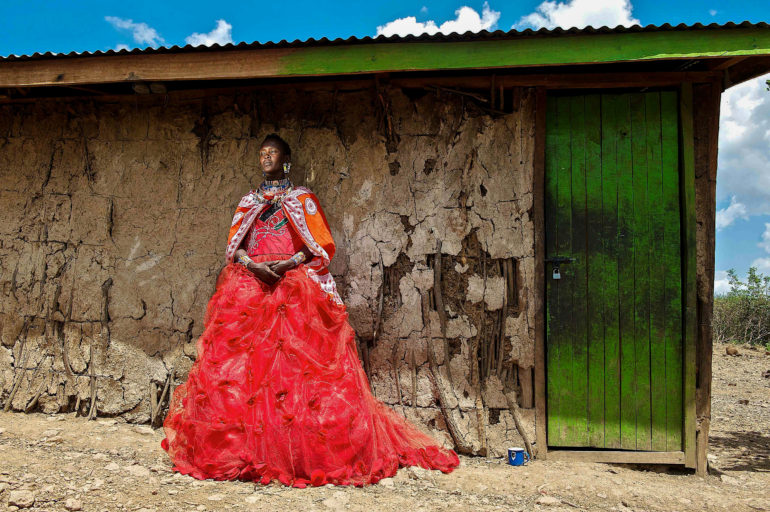
Although she has been photographing since 2003, Barbara Minishi’s biggest moment came with the Fujifilm GFX Regional Grant Award in 2022. It was her project, Utawala, that made it possible. The image above is from the series, which has been created to highlight and explore women and their power and identity in society. Barbara says the word Utawala means to reign, and with environmental portraits, her models’ dress becomes a “symbolic connective container through which their life stories are celebrated.”
What one loves about her photographs is the use of colors and the setting, which is both raw and striking. But the closer you look, you realize that the Black woman, with her graceful expressions and confidence, is the one elevating the photographs further. Perhaps this is the best representation of African women, whose contributions are often overlooked in society. In the image above, the model’s face and the way her hands are together make her appear like a queen from the farthest lands. the blue mug and sky further complement her red dress. Overall, the photograph portrays black women with dignity and power, something that we ought to see more in the media. So, we had to include Barbara on our list of a decade of Black photographers and their storytelling.
In her interview, Barbara said:
Utawala is a second first chance. It’s both an ending and beginning and speaks to legacy and reflects how our journeys are never linear. What cycles within your own life come round again and ask to be tended to? This project continues to be a self-illuminative practice on patience, resilience, and on rewriting our narratives on the creative process, especially regarding failure. Often we can get caught up in what we want stories to be, and sometimes the story demands a different timing, context, and different you.
Melissa “Bunni” Elian
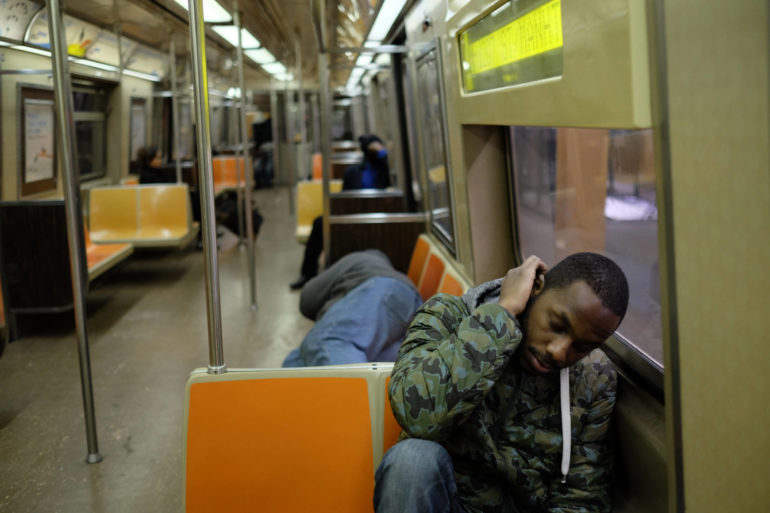
A photojournalist, Melissa created a powerful body of work in 2014 after she had to report on economic hardship, focusing on youth from the Bronx. To achieve this, she followed Travis, a 20-something Black man struggling to make ends meet. A father working two jobs, Travis’ story echoes the rest of the middle and lower-income groups of individuals who find it hard to sustain themselves and their families. However, Melissa’s visuals, through Travis, shine a light on our crumbling social and economic infrastructures, which have often excluded people of color from their policies and laws.
The image above represents the hardships many have to face. The quiet moment is a loud reminder of how our infrastructures are designed to benefit a few. The empty train, the people sleeping behind Travis, and his own tired expression only depict how a capitalist society continues to build itself on the vulnerabilities of people by exploiting them. It’s people like Travis who make America great, but despite their contribution, they continue to be sidelined. The picture reminds us why, as a society, or we else, we will fail collectively.
In her interview, Melissa said:
The people we depict do not exist in a vacuum, and showing the layers of relationships that make up someone’s life adds complexity and raises the stakes. It lets people know more than one life is in the balance here. It also introduces a level of universality.
Jaimie Milner
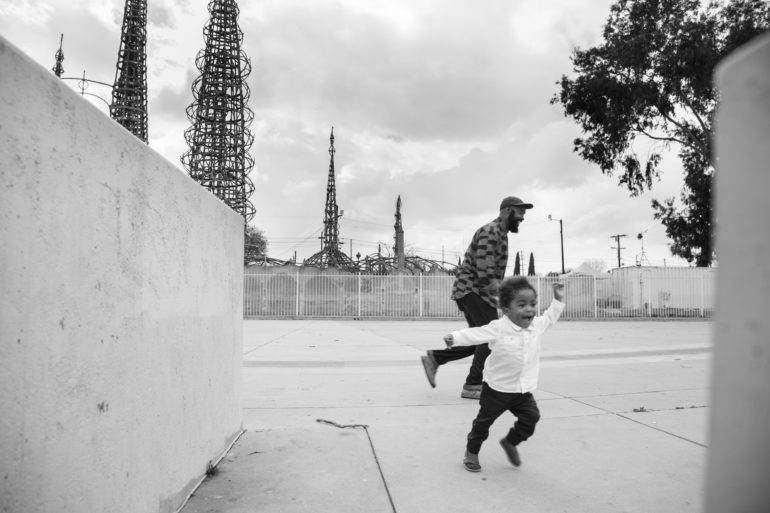
A portrait photographer, Jamie Milner, did a beautiful project: The Gifted Project, a book focusing on the beauty and genius of Black men. But not just images but also their voices through a simple questionnaire. With the images, the book aims to paint a holistic view of who these people are.
The image above is one of the many emotional images that depict an often discriminated group in honesty and truth. As it is said, once given, labels stay as some groups use them to their advantage. Similarly, the negative image of Black men has been used over and over in favor of a select group. Jamie captured this sweet image of a father chasing his son, trying to reverse the damage. And to some extent, she achieves that. The book is an archive that we need more than ever today, which changes our perspective and even those of the coming generations. That’s why Jamie is on our list of Black photographers this year.
It’s giving them a space to see themselves. I love photography because it makes me feel empowered, and that’s what I’m aiming to give black men through this project. It’s about letting them know that I see you, I hear you. I think you’re beautiful. And I think that your complexities and the depth of who you deserve to be seen.
Adeolu Osibodu
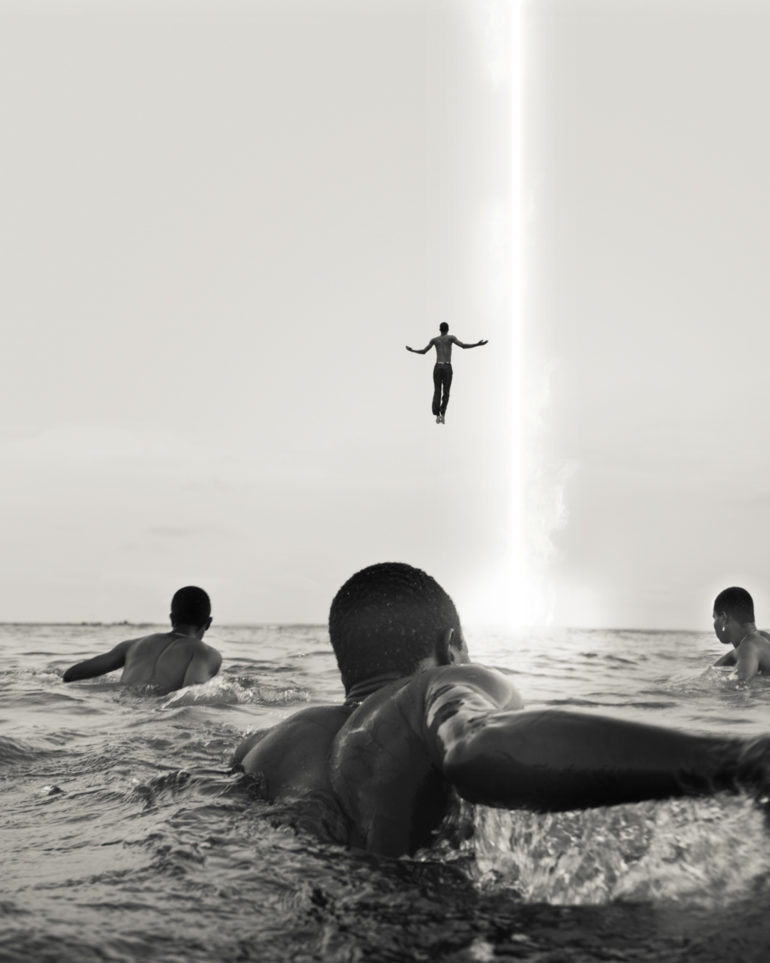
Adeolu Osibodu’s portraits are otherworldly but have a deep message about self-identity and his community. While his portraits are grounded in reality, they also disassociate from it. This paradox is as inviting as it is confusing, leaving many to ponder the message.
For instance, in the photograph above, one can view it in two ways: the man appears to be a Jesus-like figure ascending the air or a drowning man whose friends are trying to save him. The suspension in the air, the light, and the man in the foreground all add a distinct flavor to the photograph. It’s either the group saving the man in the air or the man who is saving the group. Perhaps the photograph could have fallen flat if there was no light source and the people didn’t look in his direction.
I like to work sincerely along with my ideas and dreams of the things I hope to achieve. This is also partly a result of being an African and being inspired by my environment. I’m always glad when people mention that they see my work in a new light. I feel immense gratitude and a stronger belief in making work that’s true to oneself.
Esther Mbabazi
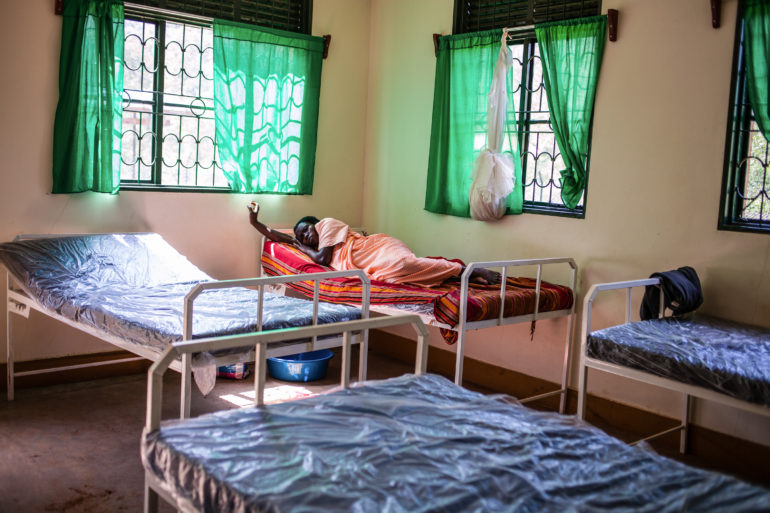
As a photojournalist, Esther turned her lens on Bududa, a village in Uganda that rests on the slopes of Mountain Elgon. The village’s unique location makes it challenging for pregnant women to commute. With the hospital at the end of the mountain, the slopes make it challenging for women to travel in labor. So, they opt for Traditional Birth Assistants (TBA), where women come to their homes to help them deliver the baby. The best way in such a situation is for the Ugandan government to ban the practice and force many women to travel. The image above is from the hospital.
As one can see, there are little amenities. In a first-world country, a labor ward would look exactly the opposite, filled with equipment to help pregnant women. However, this story also highlights how women of color bear the brunt of ill-thought policies and laws. in the United States, too, women of color choose to give birth at home, as many hospitals tend to undermine their pain and struggle. The lone woman in an empty room is a symbolic figure of how women of color are left alone to take care of their pain and their health.
In her interview, Esther said:
I found her (Masa’s) character and passion outstanding, and when editing down the series, I wanted to keep the images few to communicate enough about Masa, the landscape she works in, the issue of limited access to health care in rural Uganda and so, I was aiming for each image in the final selection to communicate something to the audience.
Nwabisa Salukazana
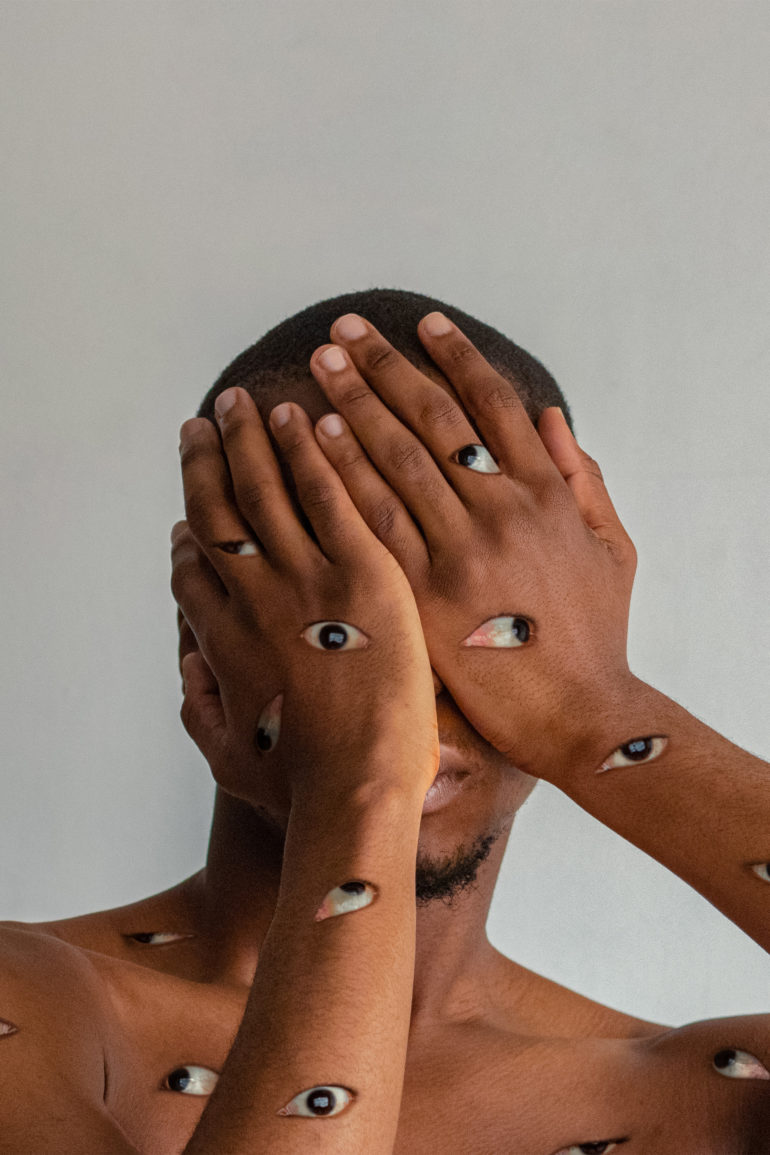
A conceptual photographer, Nwabisa’s self-portraits draw you in instantly. His ideas are unique and portray his feelings and inner turmoil, but are created in such a way that anyone can step in his shoes. The image above, for instance, can be read as a man constantly looking out for himself. That is usually the case with many of us who do not wish to be taken advantage of, especially when we have been hurt before. What is even more interesting is that he has photographed various ways his eyes wanted and placed them all over his body, like his sixth sense always on the lookout for evil. Considering he was just 22 at the time of our interview, we had to include him in our list of Black photographers.
I always want to express a sense of wonder in people; wondering if such could exist, wondering how it was done and the many interpretations they come up with. There is a story behind every image but I also share just the title to tell the viewer everything they need to know, and how what they interpret from that is up to them because not every image will make sense to people but allowing them to create their own helps, so much that I’ve started relating my work to art.
Nina Robinson
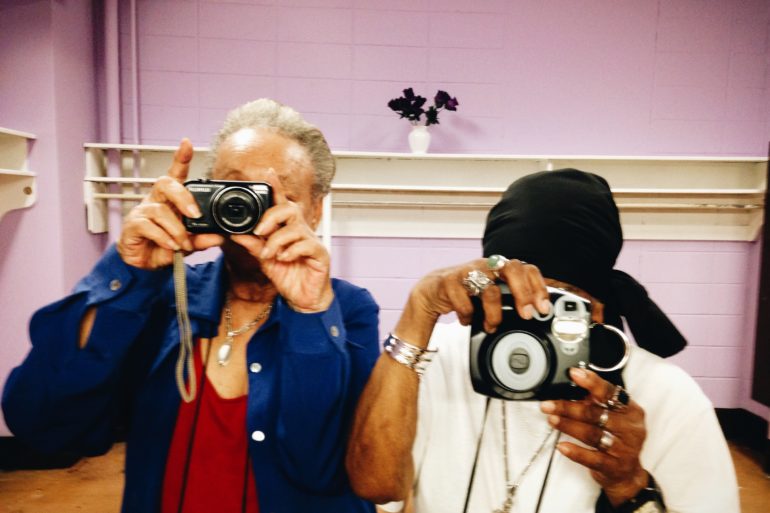
A photographer and educator, Nina Robinson is best known for her wonderful phototherapy program, where she helps senior citizens learn photography to heal and inspire them. The image above was shot by one of her students. The camera shake, slow shutter, and overall palette of the image stand out immensely. Although you can’t see their faces, you can feel a sense of purpose they have at this age.
Photography is a wonderful tool, and with this program, Nina helps the elderly to find their voice and share the stories they have buried within them. A project like this is just the push we need as a society to change the way we view aging individuals. They offer a wealth of information, but we are too ignorant to care about it. It’s exactly why had to include Nina in our list of Black photographers.
Our elderly population is often ignored in our society and we need to understand the importance of giving them a platform like this because they still have a lot to say and a lot they can do. Engaging in phototherapy amplifies their voices. It creates a space for them to speak, share, feel empowered and meet new people they may not have met otherwise.
Louis Draper
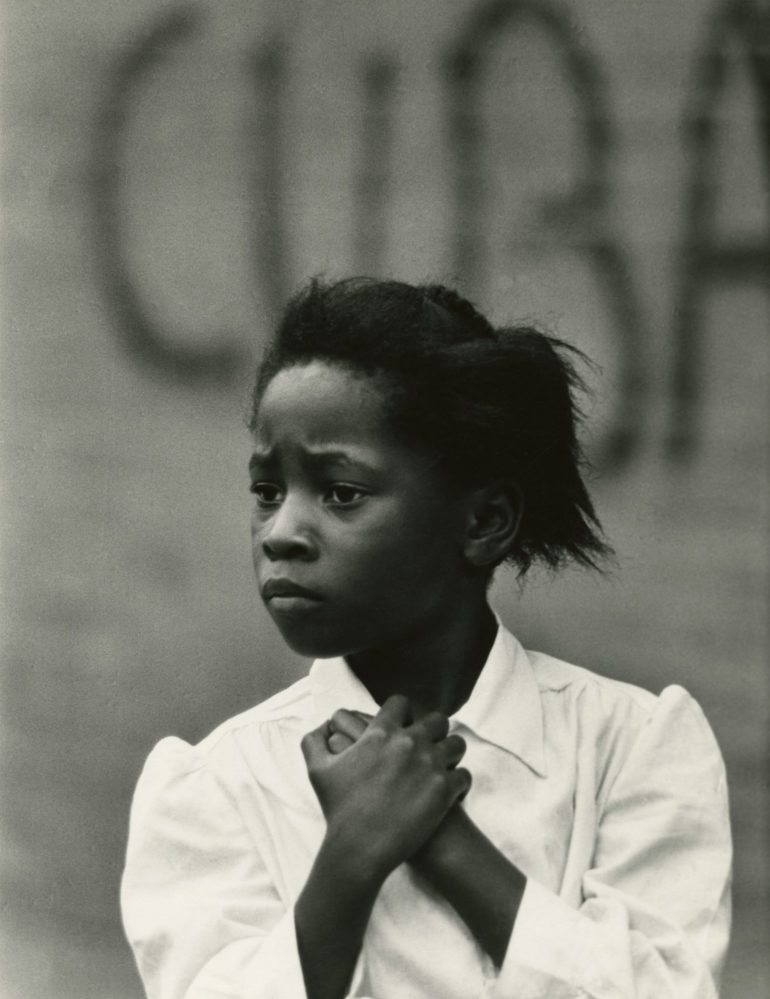
Although Louis Draper passed away in 2002, he left behind a large body of work that proves what it means to work ethically in street photography. Draper’s photographs were captured with the permission of his subjects, many of whom he felt were welcoming. The pictures showcase a changing Harlem and show how the fight for equality was certainly not an easy one.
Draper’s work remains important on two fronts: as an archive and because of his ethics. His pictures are not voyeuristic but rather lines of symphonies that depict the daily challenges in Harlem. The picture above of the little girl is an example of that. Her expression, with the tight close-up and the word Cuba printed behind her, could be interesting as the little girl having concerns about Cubans as the United States severed diplomatic ties with the country. These kinds of multi-layered images are hard to find, especially the ones that reflect the issues of society. And we had to include him on our list of Black photographers this year.
T
Get rid of the ads!
Did you enjoy reading this article as much as we enjoyed writing it? There's a way to support us and our reporting, getting ad-free navigation and more as a bonus. Subscribe to us for less than a coffee per month —just $3.99— or take advantage of our yearly subscription with a hefty discount for only $25.- An ad-free experience
- A free mystery box for Lightroom or Capture One
- All the books in our store
- 20% discount on Capture One
- 30% discount on Imalume Photo Theft Protection
- 20% off Herbs and Kettle Tea Company.
- 20% off your order from MPIX printing services.