


Third-party lens manufacturers have gained a great deal of momentum in recent years. For many photographers, they are a go-to solution for all lens woes. Amidst this, two lens brands that are creating a wonderful union between cameras from Canon, Sony, or Fujifilm, and their lenses are Sigma and Tamron. Recently, the two shared their thoughts on the future of third-party lenses, as well as which camera brand has a bigger following in the market.
Sigma’s Positive Reception of Canon RF Lenses
Before we get into the story, we’d also like to highlight that Sigma cut us off in the past, so we have not been receiving any lenses to review or press releases. However, we believe that it is imperative to report about the company, especially now that they are working directly with Canon.
In an interview with French publication, Photo Trends, Sigma’s Managing Director, Foucauld Prové, revealed how Canon opening up to third-party lenses, especially Sigma, has worked well in the company’s favour. For now, Sigma’s focus is the RF mount lineup, which mostly deals with Canon’s APS-C range. “There are no ‘expert’ lenses in RF-S at Canon,” says Prové. “So, when we offer users of an EOS R7 a 10-18 mm f/2.8 DC DN or an 18-50 mm f/2.8 DC DN with beautiful made-in-Japan manufacturing, the success is immediate.”
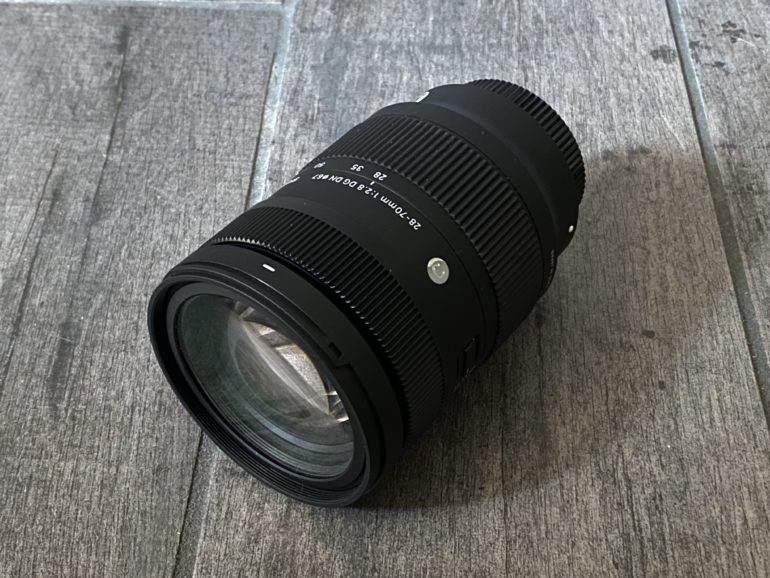
At the same time, Sigma noticed a trend in hybrid lenses, which are becoming quite mainstream this year. Sigma is not the only person to focus on this; Canon themselves are quite geared towards the hybrid era. “Since we were among the first to add a detachable aperture ring to our lenses—both on zooms and fixed focal lengths. By doing this, we are directly addressing videographers,” Prové explains. Like hybrid, he also notes the rise of “atypical lenses” such as Sigma 14mm f1.4 DG DN Art and Sigma 15mm f1.4 Diagonal Fisheye. And so, Sigma is catering to “a market of expert amateurs.”
Sigma and Tamron: Who is Catering to Whom?
Sigma and Tamron are having a great year. While both companies have been working with Sony, Nikon, and Fujifilm, the Canon RF mount, there is a whole new world yet to be explored. Prové mentioned that since the post-COVID era, the camera market has seen an extremely positive response in the entire market. Plus, the rise of content creators also helps boost sales. “I remember reading an article in 2022 in the business press, which said that the influencer market represents 150,000 people who make a living from this work. So, that means 150,000 new customers for us,” he says.
However, while there is a shift in the camera market, there is also a clear indication of which camera brand is preferred over whom. Prové acknowledges that while Canon is gaining traction, “Sony has made quite phenomenal progress.” Despite the sales of Canon RF-S Zoom, it is challenging to make comparisons across different segments.
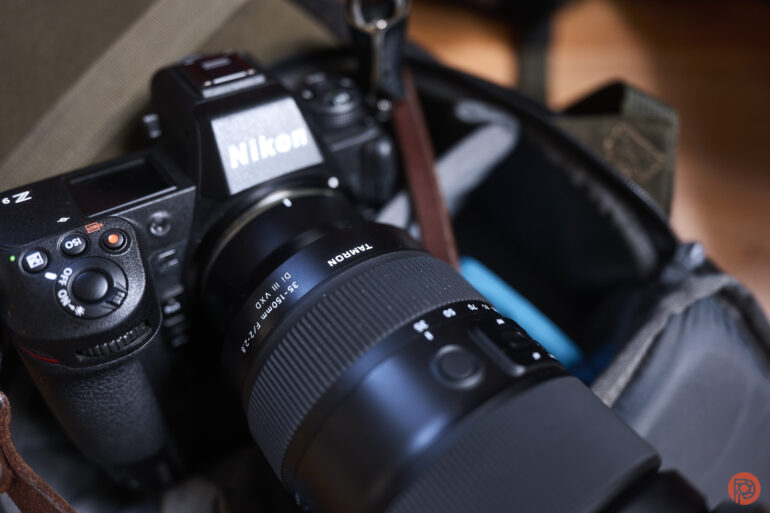
Jean-Christophe Thiry, president of Tamron France, also added that “Sony has a significant market share,” but it will be less than “50% of the total (sale)”. However, he revealed that because “the range is much wider” and that Sony sells “more products.” He added that one can’t rule out Fujifilm’s APS-C and Nikon Z camera, which both have shown a positive trend. In fact, Tamron’s Z-mount lenses with Nikon cameras are a match made in heaven. We have noted in the past, too, that Nikon and Tamron are doing everything right, and their collaboration is a boon for photographers.
Sigma and Tamron are pretty clear about capitalizing on the mirrorless market. While Sigma has a slow focus (something we often note), its image quality is great. Tamron, as we noted earlier, is pretty good at what they are doing. They found the right formula to balance with Nikon’s autofocus. Perhaps, learning from this, Sigma will follow Tamron’s suit and provide us lenses that fit like a glove.
Looking at the demand of content creators and the price bracket they go for, Sigma and Tamron seem to be right up the alley. Although Canon revealed earlier that their cameras work best with Canon lenses, at least they are not limiting the options for photographers. However, what remains to be seen is how both Sigma and Tamron continue to build on their success. Will they offer us something innovative next year? Or will their lenses only be cheaper than existing camera makers’ lenses?
Get rid of the ads!
Did you enjoy reading this article as much as we enjoyed writing it? There's a way to support us and our reporting, getting ad-free navigation and more as a bonus. Subscribe to us for less than a coffee per month —just $3.99— or take advantage of our yearly subscription with a hefty discount for only $25.- An ad-free experience
- A free mystery box for Lightroom or Capture One
- All the books in our store
- 20% discount on Capture One
- 30% discount on Imalume Photo Theft Protection
- 20% off Herbs and Kettle Tea Company.
- 20% off your order from MPIX printing services.
- 5% off Viltrox Products via their eCommerce store.
- 10% off all film developing, printing and scanning services from Blue Moon Camera and Machine
- 15% off 7Artisans products: The lens and accessory maker is offering a sweet discount for Phoblographer's readers.