


The past decade and a half has seen some exceptional changes in the photography market. Smartphone cameras became instant companions for casual shooters, with many serious enthusiasts replacing their entry-level cameras for higher-end models. With the inclusion of mirrorless, more companies are now focusing on cameras that can cost one their kidney, and that is just for the kit alone. You may have to sell another to buy extra lenses. However, despite the rising expense, premium cameras are gaining more popularity. Why? Let’s get into what is driving the demand.
Leica and Fujifilm Are Becoming Prominent Choices
There was a point when a Leica seemed a distant dream for many. However, it seems that with the rising cost of devices, many individuals see it worth spending a few more thousand dollars to purchase a camera that can easily last them their whole lives. For the unversed, Leica’s commitment to their craft is intense. By that, we mean they continue to repair cameras that have been discontinued. For instance, you can still repair their film cameras, which the company no longer produces. In that regard, a high-end camera is a great choice for many.

A report by The Economist also highlighted that premium cameras are on the waiting list. For instance, the Leica Q3, which was launched last year, had a waiting list of six months. And it costs about $6,000. Similarly, the Fujifilm x100 also sold out quickly upon its launch, with its resale value fetching more than the original price tag. Canon’s EOS R5 Mk II is also facing delays due to high demands, while Nikon, learning from Fujifilm and Leica, is also gearing up to cater to the premium market.
However, it must be noted that with new higher-end models, the camera market is becoming increasingly saturated. By that, we mean everyone is competing, but the overall appeal of the full-frame cameras has become stagnant. The GFX, for instance, is competing with Hasselblad, while the ergonomics of Canon, Sony, and Nikon are almost identical. With the need to get retro-appeal back, Fujifilm is heavily gearing toward a ranger-finder-style camera. So is Nikon with the Zf. Yet, the number of such cameras is still very limited.
Decoding the Popularity of Premium Cameras
Since the first iPhone, the smartphone camera market has tripled. In the first half of 2024 alone, about 296.2 million smartphone units were sold, which, as Annie Leibovitz famously called them, “are the snapshot camera of today.” Today, about 90% of images are created with a smartphone. With such democratization of photography and ease of access to a decent phone, many choose to invest in cameras that give them complete creative control.
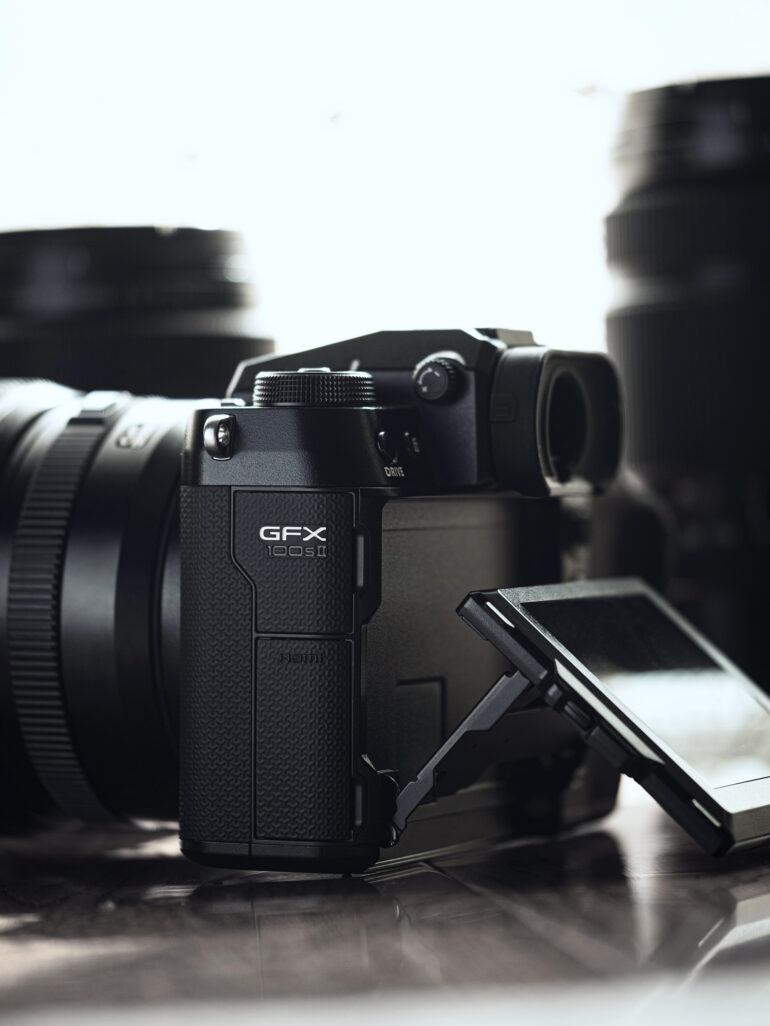
However, in addition to better ergonomics and image quality, there is also a third reason: social status. While a professional photographer hopes to finance premium cameras for better build quality and longevity, casual photographers who are in a higher income group prefer such devices more as a status symbol. I met a few marketing heads who bought their college-going children the highest-end Sony models, whose body alone rakes up thousands of dollars. Thus, an expensive camera becomes a validation in society, often helping many to display their wealth subtly.
However, those who are semi-professionals or serious enthusiasts, for whom photography is not the only source of income, will also opt for premium devices to portray their dedication to the craft. Social media, for instance, plays a crucial role here. When you say that you created an image with a Leica or a Fujifilm over an iPhone, you will earn appreciation and applause from your peers. Most likely, many users on the internet wouldn’t even know the difference between a Leica and a Fujifilm or a Nikon and Sony. But hey, if the TikTok influencer is promoting it, then it has to be great.
Perhaps things will change in the future. However, for now, it seems that the camera industry is undergoing a revival—hopefully, one that goes beyond fast fashion and genuine understanding and love for the medium.
Get rid of the ads!
Did you enjoy reading this article as much as we enjoyed writing it? There's a way to support us and our reporting, getting ad-free navigation and more as a bonus. Subscribe to us for less than a coffee per month —just $3.99— or take advantage of our yearly subscription with a hefty discount for only $25.- An ad-free experience
- A free mystery box for Lightroom or Capture One
- All the books in our store
- 20% discount on Capture One
- 30% discount on Imalume Photo Theft Protection
- 20% off Herbs and Kettle Tea Company.
- 20% off your order from MPIX printing services.
- 5% off Viltrox Products via their eCommerce store.
- 10% off all film developing, printing and scanning services from Blue Moon Camera and Machine
- 15% off 7Artisans products: The lens and accessory maker is offering a sweet discount for Phoblographer's readers.