

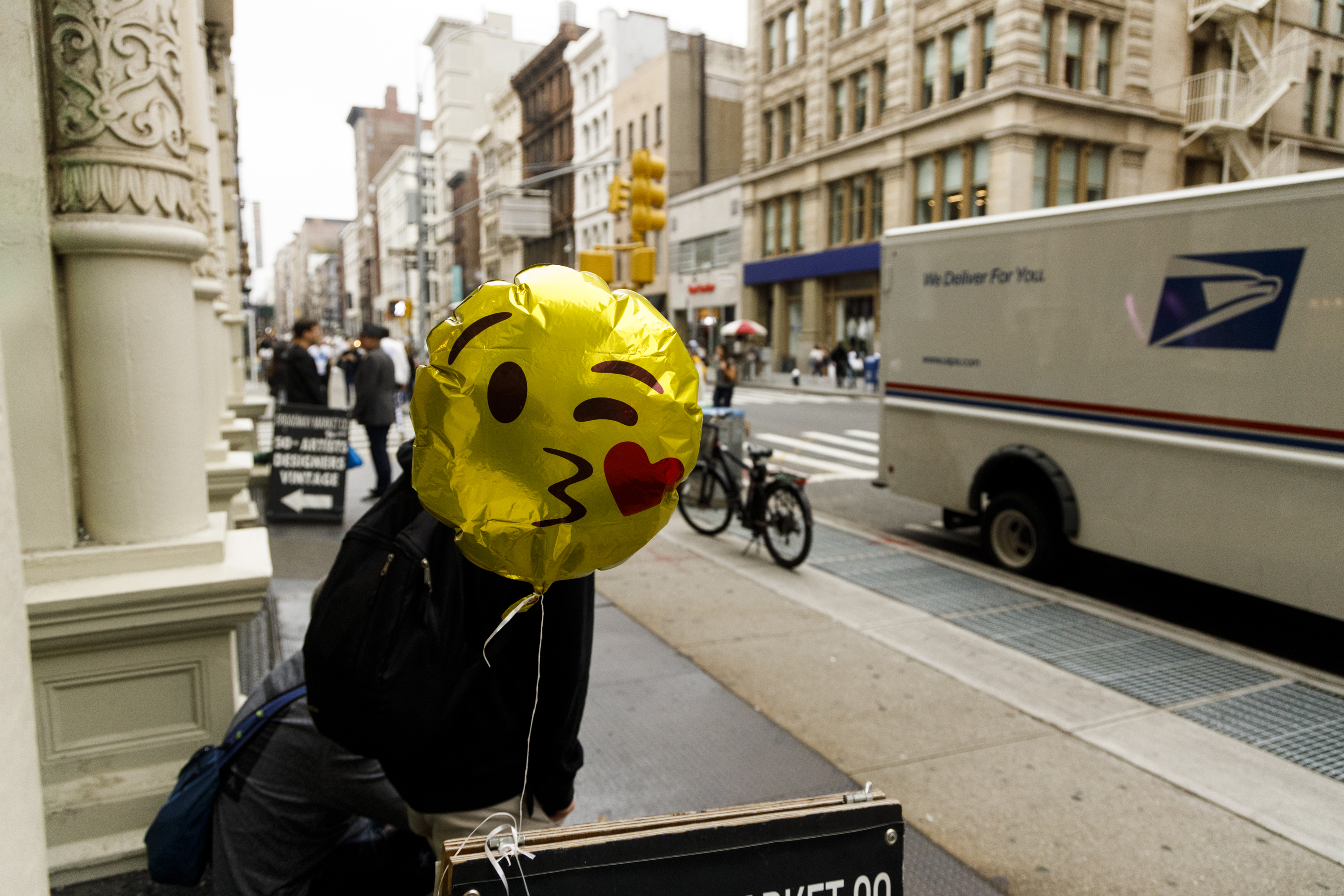
The dernier cri of photography is that everything that was old is new again. It’s evident in the work of people like Terry Richardson. Despite how much we’ve cancelled him, the look of direct flash is something that people buy into every few years. The work has gone on to shape the looks from growing powerhouses like Lanna Apisukh and Amy Lombard. But some things are absolutely timeless — like the classic style of Elliot Erwitt. Like a Filson bag, it consistently works and touches our emotions in a way that’s just enough to put a smile on our faces. Some of his work around photographing dogs is the root of a powerful lesson in photography.
Table of Contents
The Power of Substiution
One of Elliot Erwitt’s lengedary photographs can be seen here at this link on his website. It’s the adorable photograph of a bulldog in someone’s lap completely blotting out the human’s face. It looks almost like the person being photographed in half dog and half human. That’s how our mind thinks of it at least — and the fact that it’s in black and white further adds to this. There is no color in the frame, so you clearly cannot tell the difference between where the human begins and where the dog does.
Our mind immediately thinks that something is amiss here. The idea is neatly summarized by Brian Dilg in his book, Why You Like This Photo. Specifically, the reads, “When something expected and important is subtituted with something similar but surprising, the principle of substituoion makes us do a double take.” In many cases, it actually just makes that you gaze at the image for longer than a fleeting moment. This is a powerful technique to get people to stop scrolling past your photos on social media where they’re bombarded by so much other stimuli.
An Awareness of the Moment
“When something expected and important is subtituted with something similar but surprising, the principle of substituoion makes us do a double take.”
Brian Dilg
To achieve this kind of understanding, we have to train our mind to be in the moment. Street photographers learn to develop this skill very well. We’ve explained how many street photographers work in the past; but Willie Velazquez is a great modern example of someone who understands the moment as it is happening before him. Certain documentary photographers also are in-tune enough with the moments in front of them to be able to snap the images they need. However, it’s a skill that many photograpehrs these days are lacking because we shoot at 120 frames a second and just decide that we’ll cull through the images later on.
Shooting film greatly helps with curbing this — so too does curbing the brain drain that social media gives to us all. Social media these days feels like television felt like in the 1990s and the 2000s when we sat in front and mindlessly scrolled through channels looking for something to watch. When there was nothing riveting on, we probably found other things or mindlessly watched something else. Eventually, it all just became background noise for us. This too was part of the brain drain; and we can strengthen our minds against it by studying images and looking at prints.
Shoot Like Elliot Erwitt
Of course, Elliot is known for more than this. The great Ibarionex Perello reviewed Kolor for us a while back. And overall, we just have to ensure that our work isn’t boring. There are ways to too that, and it involves getting in touch with your emotions. If you don’t feel anything from an image, the kindest thing that you can do is throw it out if it can’t be salvaged. Some fruit trees are just not worth how much work you have to put into them.
Get rid of the ads!
Did you enjoy reading this article as much as we enjoyed writing it? There's a way to support us and our reporting, getting ad-free navigation and more as a bonus. Subscribe to us for less than a coffee per month —just $3.99— or take advantage of our yearly subscription with a hefty discount for only $25.- An ad-free experience
- A free mystery box for Lightroom or Capture One
- All the books in our store
- 20% discount on Capture One
- 30% discount on Imalume Photo Theft Protection
- 20% off Herbs and Kettle Tea Company.
- 20% off your order from MPIX printing services.
- 5% off Viltrox Products via their eCommerce store.
- 10% off all film developing, printing and scanning services from Blue Moon Camera and Machine
- 15% off 7Artisans products: The lens and accessory maker is offering a sweet discount for Phoblographer's readers.