

Last Updated on 07/08/2026 by Chris Gampat
I recently worked with a photographer to estimate and negotiate a project for a smaller sports apparel client. In our initial creative call, the client described the need for “dynamic and compelling” product images of their new retail line consisting of 100 items of athleisure. They wanted still life shots in sports fans’ homes as well as the same products worn by a model in a tailgating scene. We built a complete production estimate covering crew, locations, talent, set design, props, hair, makeup, wardrobe, and retouching across an estimated 125 images. These final assets were intended for the client’s website, e-commerce platforms, and paid social media.
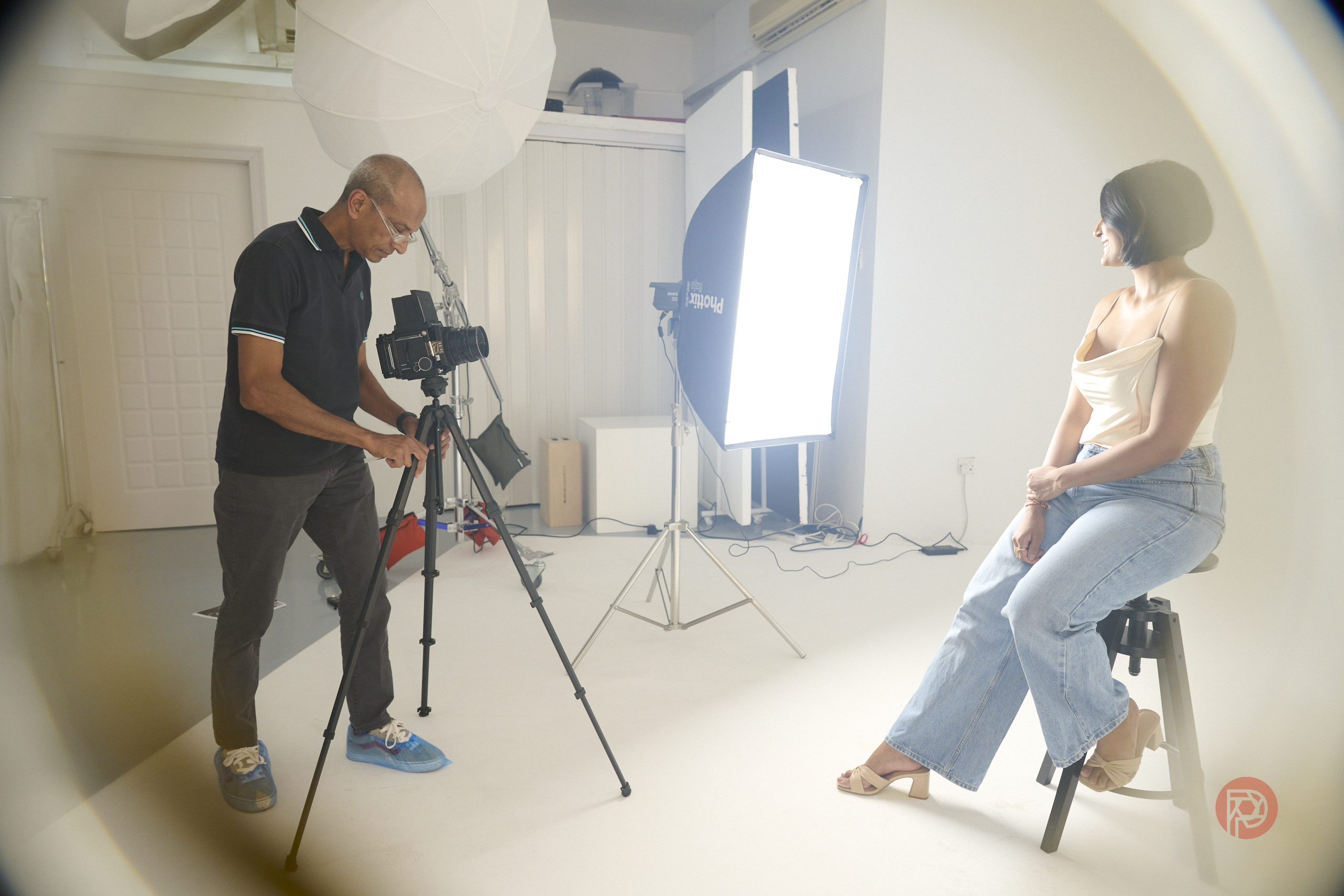
Editor’s Note: The lead image is a placeholder from the Phoblographer’s archives and wasn’t included in the final campaign. This article is provided to the Phoblographer with syndication rights from Wonderful Machine. It was written by Bryan Sheffield. You can find the original article here. You can see other articles from Wonderful Machine at this link.
More importantly, issues like this are why we at the Phoblographer created the 5 Boro Foto Fest, which has free tickets for art lovers.
Each month, we analyze a recent cost estimate, contract, or purchase order and present it in the form of a Pricing & Negotiating article. Redacting the names of the photographer and client allows us to share useful information that would otherwise be confidential. You can learn more about how we can help you with Pricing & Negotiating on the Consulting Services page of our website.
The photographer and I worked through the shot list and creative concept together and built out a rough schedule. We landed on a six-day shoot: four days at a rented home and two days at an outdoor tailgating location.
We connected with a local producer the photographer had worked with previously to weigh in on location options, crew costs, and overall logistics. Then, we mapped out an overview of the crew, art department, talent, and styling needs. From there, we started reaching out for availability and high-level costs.
We then scheduled a call with the client to further discuss the project direction, overall budget, and day-by-day plans. The client was aligned with our plan, but revised a few minor details around location and props. We also used that call to clarify what the client would be responsible for. In this case, they would supply all products to be photographed, handle product shipping, and cover all client travel expenses.
The Estimate
Fees
The photographer had previously worked with a colleague of the client on a smaller project and was highly recommended. This, combined with the client’s engagement on our calls, made us confident he was a strong contender for the project.
Given the client, the creative description, the shot list, and the intended uses, I felt $34,800 was an appropriate creative/licensing fee. This was broken down as a $2,500/day creative fee and $19,800 for three years of Web Collateral, eCommerce, and Paid Social Media use of all content captured. This worked out to $5,800 per shoot day, which I felt was in the mid-range for a project of this scope, this client, the region, and the 3-year use license being conveyed. The photographer agreed it was appropriate, though noted it was toward the top end of their range.
We also added two photographer pre-production days for client meetings, creative planning, and crew sourcing. A tech scout day and a pre-light day were included, billed at $1,500 each.
Crew
We included the project’s producer at $1,000/day across 14 days to cover prep, tech scout, pre-light, shoot, and wrap. We budgeted a first assistant at $750/day for 8 days to support the tech scout, pre-light, and shoot days, alongside a second assistant at $650/day and a third assistant at $400/day, both covering pre-light and shoot days. We also budgeted a digital tech at $850/day for 7 days and a production assistant at $400/day across 8 days (2 prep and 6 shoot). The local producer sourced these rates through their trusted crew network.
Equipment & Production Supplies
We included $2,300 per day for cameras, lenses, lighting, and grip rentals. The photographer would bring their own cameras and lenses. They planned to rent lighting, modifiers, stands, and grip from a local rental house. We added $900/day for the digital workstation rental and $1,350 for three hard drives. Two production SUVs across the eight days came to $2,400. Miscellaneous production supplies (generators, tables, chairs, fans, and heaters) added another $3,000.
Styling Crew
Since the art department and product and prop styling needs were quite large, we accounted for seven crew members.
The production designer was included at $1,000/day for 11 days, covering 3 prep, 6 shoot, and 2 wrap days. The set decorator came in at $750/day for 10 days (3 prep, 6 shoot, and 1 wrap). The First and second set dressers each came in at $500/day for 8 days — 1 prep, 6 shoot, and 1 wrap.
The Prop Stylist was included at $950/day for 13 days — 5 prep, 6 shoot, and 2 wrap and return days. Both a first and second prop stylist assistant joined at $400/day each for 9 days (2 prep, 6 shoot, and 2 wrap and return days).
Since the single talent functioned more as background than a featured model, we kept the wardrobe and hair and makeup team lean. A wardrobe assistant came in at $400/day for 1 prep and 2 shoot days. A hair/makeup Stylist came in at $850/day for the 2 days with talent.
Styling Expenses
We estimated $6,000 for furniture and location set dressing, and $2,400 for prop purchases and rentals. Art department and props trucking added $1,800. Wardrobe for two looks for the single talent came to $800.
Casting & Talent
The creative direction called for two male talent in their mid-30s, each on set for one day. We included a casting director at $850/day for 2 days, and two talent at $1,400 each, plus a 20% agency fee.
Travel
The stadium parking lot location required a bit of a drive for the full crew. We included $1,168 in mileage for the 13 crew members.
Location & Studio
Working with the producer’s locations team, we included 4 Location Scout days plus an estimated $219 in mileage reimbursement. We budgeted $3,500/day for a home living room rental across 3 days (1 prep and 2 shoot days). We budgeted the same for a dining room and kitchen rental. This accounted for the possibility that we might not find a single property with all the spaces we needed, something we explained clearly to the client on our walkthrough call.
The estimate included $2,500/day for the stadium parking lot rental for the tailgating scene, $750 for anticipated permits, and $1,200 for parking and signage.
We also included two motorhome rental days at $1,900 each to house the clients, hair, makeup, and wardrobe, and provide power and restrooms at the tailgating scene. To allow props, trucks, and grip to remain on site overnight between the two tailgating shoot days, we added security guards at $70/hour for 14 hours.
Catering & Craft Services
We included $8,910 for catering and craft services to cover 15 crew, 1 talent, and 2 clients across the shoot days. We also included $750 for pre-light and prep day meals for the crew.
Insurance
We included Liability Insurance at $2,333, calculated at 1% of the bottom line. We also included a note that the payroll fees would include Workers’ Comp.
Post-Production
The estimate included $1,200 for the photographer to perform a first edit for client review and deliver roughs via web. We had estimated roughly 12 hours of editing time for the photographer to review the images from the 6 shoot days. We included $100 per image for retouching across the requested 125 images (up to one hour per image). Additional retouching would be billed at $125/hour.
Results
We sent the estimate alongside a photographer’s treatment, which included an overview of the project approach, timelines, location references, and relevant work samples. A few days passed with no response. I followed up with the client and suggested a walkthrough call, which we scheduled for the following week.
We spent about 30 minutes reviewing the plans and expected costs. The client only had a few minimal questions, mostly around roles and responsibilities, and who would be handling the products on set. No revisions came out of the call.
A week later, I checked in again. Another week of silence followed.
When I followed up with the client about the dates we’d penciled in, the response came the next day in a long email. The client had decided to move forward and execute the entire project using an AI artist.
The email was kind, graciously thanking us for the time and care we’d put into the planning. Their reasoning cited cost savings, the ability to “own” the assets outright (I took this to mean use for whatever they want in perpetuity, since AI images cannot be copyrighted). They also mentioned the ability to “share” the work freely with partners.
Even though their response clearly described the client’s desire to spend little on quick work, it was a disappointing outcome, especially given how much time and energy the photographer, local producer, and I had invested.
I replied to the client that we’d love to work on the talent lifestyle portion of the project, reminding them that AI rendering of people (at least, in my opinion, and as of early 2026) still falls well short of life-like. The photographer chose not to respond to the client but sent a very kind thank-you note to the local producer and me. I never heard back from the client.
Takeaways
Clients are starting to judge AI-generated content on more than just cost savings. They’re also thinking about time efficiency, lack of licensing restrictions, ability to share with partners, and how flexible the content is to modify and adjust. Since in still-life product photography, there are no people or live moments to capture, this shift to AI-generated content seems to be happening especially fast. There are certainly clients who stay away from AI content because they need to secure copyright and ownership of the work. Photographers and producers have the strongest advantage in areas AI still can’t recreate well: real people, real places, and authentic moments.
Get rid of the ads!
Did you enjoy reading this article as much as we enjoyed writing it? There's a way to support us and our reporting, getting ad-free navigation and more as a bonus. Subscribe to us for less than a coffee per month —just $3.99— or take advantage of our yearly subscription with a hefty discount for only $25.- An ad-free experience
- A free mystery box for Lightroom or Capture One
- All the books in our store
- 20% discount on Capture One
- 30% discount on Imalume Photo Theft Protection
- 20% off Herbs and Kettle Tea Company.
- 20% off your order from MPIX printing services.
- 5% off Viltrox Products via their eCommerce store.
- 10% off all film developing, printing and scanning services from Blue Moon Camera and Machine