

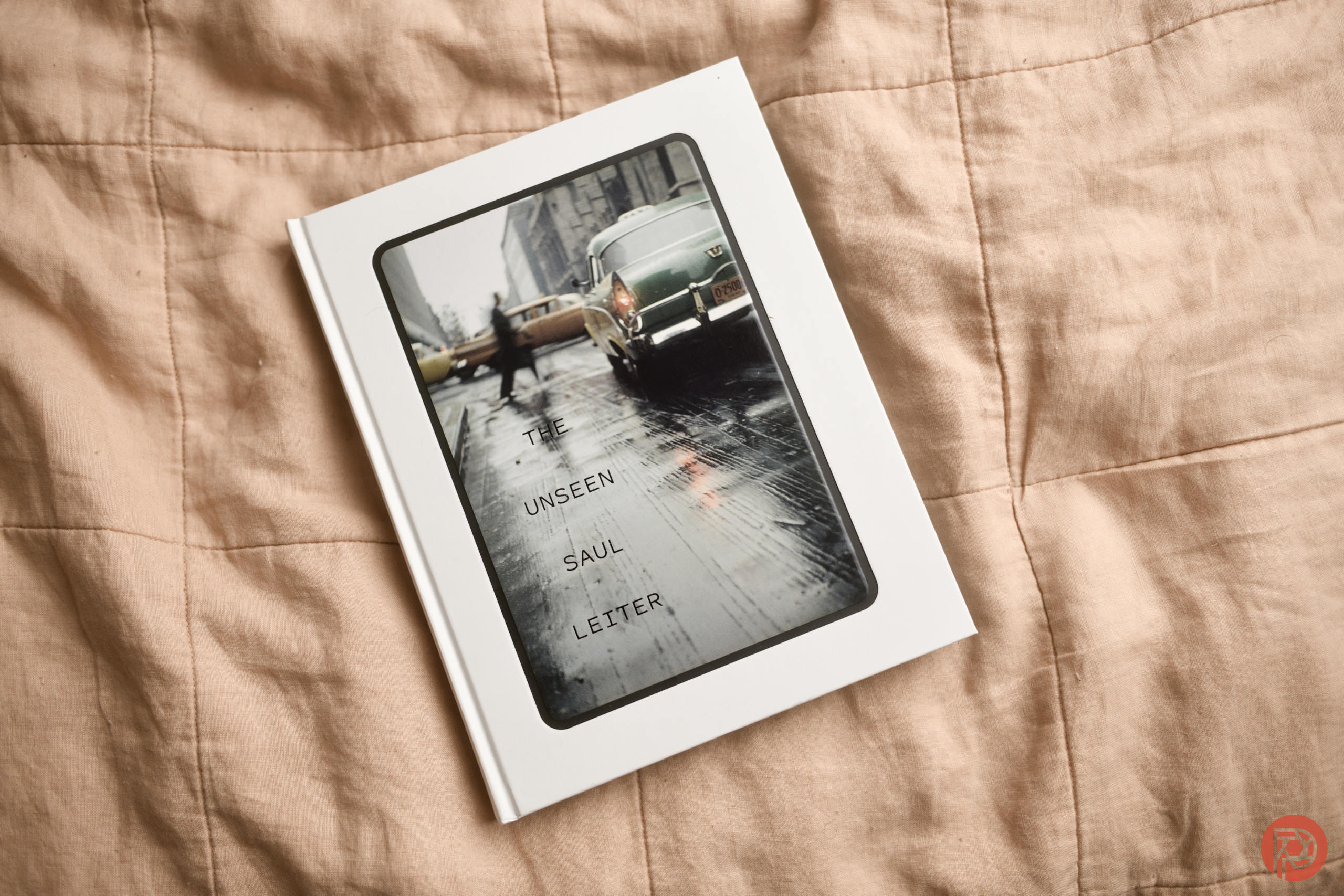
I bought The Unseen Saul Leiter during my yearly vacation last year after hanging out in Dashwood Books and hearing another photographer speak so enthusiastically about the photographer. I’ve known about Saul for years, but he wasn’t one that I spent time studying in college. Photographer Saul Leiter is quite a fascinating one. Lots of his most famous work came out at a time when color was something still relatively new and exciting. If it weren’t for him, photographers like William Eggleston probably wouldn’t have been able to make their own legacy as easily. As a man who is usually captivated by photography books more so than looking at the images online, this experience was akin to something deeply uncomfortable. And it took me a little while to realize why.
Objectively speaking, The Unseen Saul Leiter is a beautifully done photo book. Very few images are split between the page crack, the ink is beautiful, the paper is just right, and the texture of the book is very appealing to the fingertips. When put in the right light, Leiter’s images are synonymous with the sweetest blueberries you can get your hands on.
But that’s just the pure aesthetics of it all — when you really look at the times, you realize just how boring the subject matter is. At every moment, I keep wondering, staring, at looking for something to really fancy and understand. But I don’t.
Part of the mystique of photography is the idea of not explaining stuff. However, I also believe that photography is a language, one that I’m very well versed in. And in 2026, if I don’t understand something, I’ll just move on. This, ultimately, is where I’m so conflicted.


In one way, I think that photographers these days need to create work that is insanely weird. And the reason for that is because we can then lean into human emotions — which generative AI has tried to remove from everything we see.
But by today’s standards, the photographs in The Unseen Saul Leiter aren’t weird at all. They’re from a specific time period and they’re the equivalent of snapshots. There is no creative expression behind them besides the technical limitations of expired Kodachrome. This is essentially Jim Beam Whiskey when I ask for Weller Antique at the highest end or at the minimum, Gentleman Jack.
And that’s the thing: photographers have copied the work of all our predecessors over and over again in some way or another because all they’re doing is looking at visual media. Very few of us are making work that’s truly imaginary. I see this even in the documentation process when I look at event photography.
After writing this article and getting to the end of it, I’ve finally realize what I’m working on saying here. We need weird work that involves methods that photographers haven’t really done before while balancing that with expressing something that’s clearly felt to the masses. And for that to happen, we need to fundamentally change the idea of what a photograph is in the art world.
If you’re a new photographer, I wouldn’t get this book. In fact, I won’t even link to it for you to buy it. Instead, I’d tell you to go read a book and make work based off of how you’re imagining the scene in front of you.