

Last Updated on 06/01/2026 by Chris Gampat
When it comes to choosing cameras, there are a handful of models that do better than others. For instance, older Sony or Canon full frame cameras have retained their value quite well over the years. Young photographers have often looked at such models as their next best purchasing bet, but there are some who prefer fixed lens offerings under a certain price tag. The latter has resulted in a demand for compact cameras, which seems to be reaching an all-new high. Here’s what the new data reveals
Additional reporting to this article was added by Chris Gampat.
Per a new report published via Yahoo!, the Camera and Imaging Equipment Manufacturers Association of Japan has seen a 30% increase in the shipment of fixed lens cameras in 2025. This marks the second year of consecutive growth in sales.
If you look at history, compact cameras were at their peak in 2008, with 110 million units being sold across the world. With the rise of smartphones, the number dropped to 1.7 million units in 2023. This showcases a 98.5% drop over 16 years or so. However, the 2025 reports showcase the recovery to hit 2.4 million units that year, showcasing a fraction of the progress of the 2008 verdict. However, what the report does not reveal is that this is not just for new compact cameras, but the demand is prevalent in the vintage camera market, where the real cultural shift is taking place.
According to the report, Japan’s major reused goods store, KOMEHYO’s Nagoya Main Store, has seen a real-time shift. Yasuhiro Hara, Chief Assistant and Floor Manager of the camera section, has revealed that the sales of old cameras has increased 5x over the past six years. Cameras that sold for 5,000 to 10,000 yen (about $30 to $60) are now selling for 20,000 to 40,000 yen ($150 to $250), marking a 3.5x increase.
The rise includes models from the 2000s to 2010s, a time when smartphones had not yet matured. For those who were around at that time, will be aware that these cameras have CCD sensors. Most older cameras have CMOS sensor, which results in different colors and tones. While CCD is known to have issues at high ISOs, they continue to offer grain that CMOS can’t replicate. The textures that one gets now are practically impossible to replicate in CMOS. Moreover, the lower pixel count, of below 3 to 8 megapixels, is further leading to a rise of compact cameras.
This is quite fascinating because even though it could be considered a niche market, the truth is that niches become really valuable. Consider the Fujifilm X100Vi for example. Sony tried with the RX1R Mk III, and Panasonic is doing well with the L10.
As Hara said it (translated from Google):
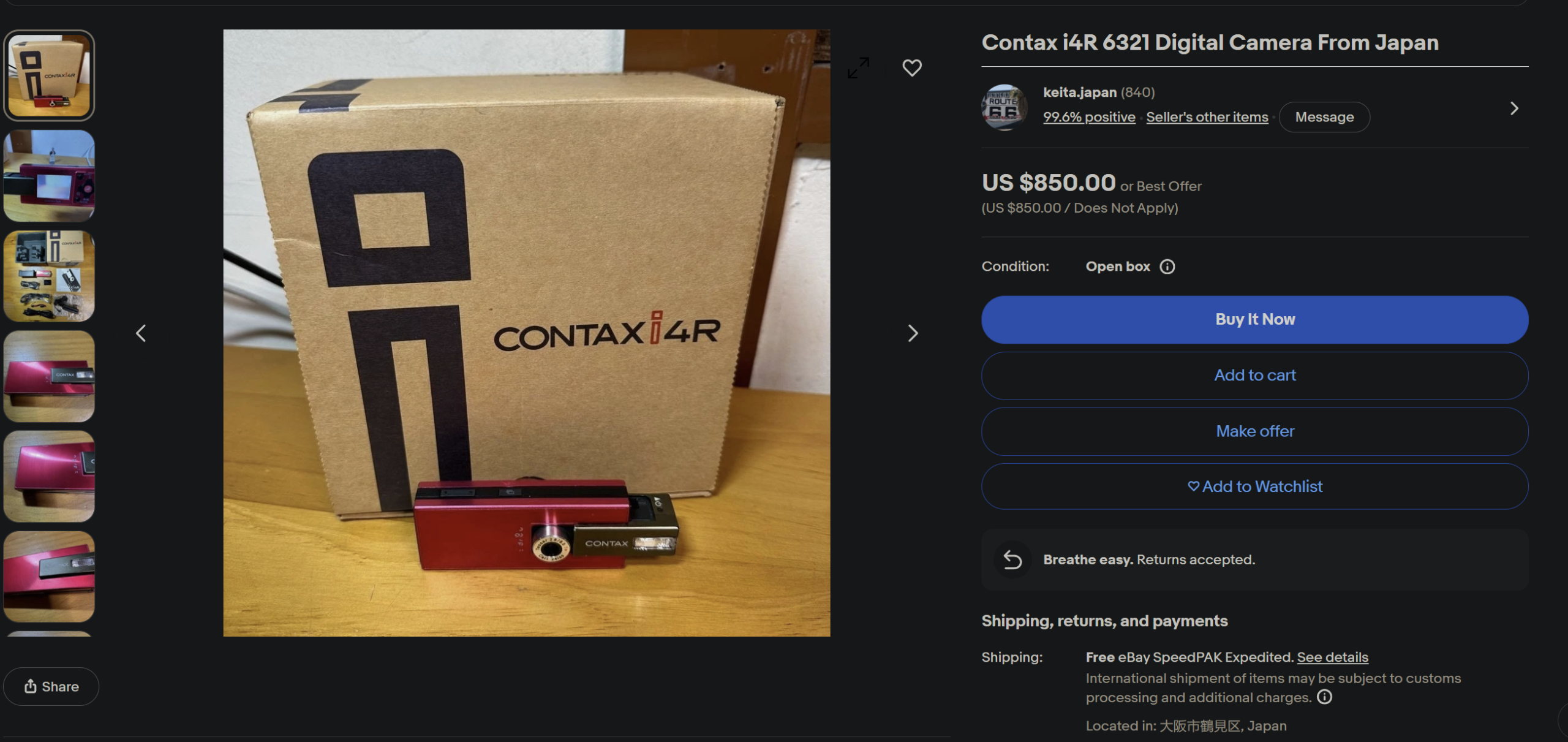
For example, the ‘CONTAX SL300RT’ and ‘CONTAX i4R’ (both Kyocera) allow you to change the lens angle (SL300RT) and pull out the lens panel to shoot (i4R). Both have eye-catching forms and are equipped with CCD sensors and Carl Zeiss lenses. It features a warm, flavorful color tone that modern cameras can’t achieve, but this is a unique character that’s hard to replicate in today’s era.
The other cameras also include models such as Sony’s T and W series, Canon’s IXUS/IXY line, Casio’s Exilim camera, and Nikon Coolpix range. All of this from early 2000s.
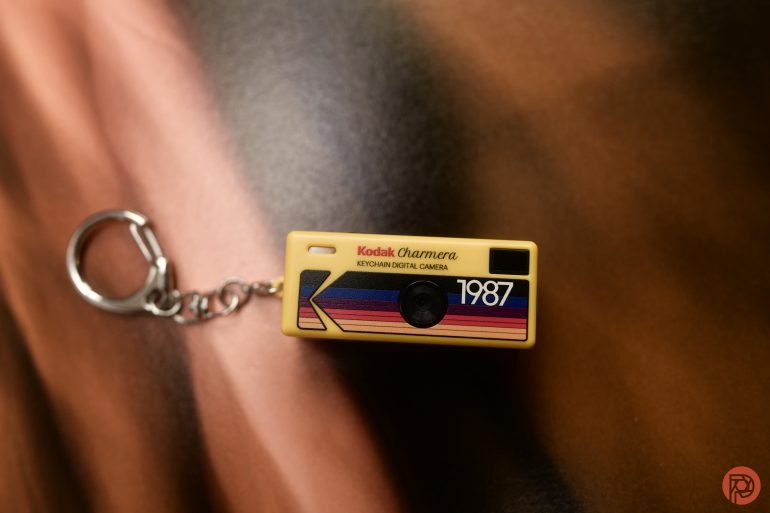
In fact, while vintage cameras are popular, so are digital toy cameras. The Kodak Charmera is one device that has gained popularity around the world. Gen Z photographers in their 20s are opting for 1.6MP cameras, thanks to social media esthetic race. Moreover, the filters, and the buyers finding surprising design and color in the packaging when they open are further elevating the tamagotchi feeling.
If you have an old model that works fine, there will be buyers in the market for the device. A quick look at eBay, and many Americans will find older compact cameras worth at least $500. For instance, models such as the 740HS are being sold in bulk for around $15000. Nikon Coolpix S9900 also fetched around $1500 in sale. Compact cameras with a better zoom range are what young photographers are often opting for, which further drives up the price.
This only proves that compact cameras are now helping youngsters to make “human” images, one where every flaw counts as an important input. In a visual world where every flaw is removed, older cameras prove that the latter matters more.
One thing is for sure here though, Sony isn’t making CCD sensors in batches to sell to manufacturers as far as we’re aware. And so brands are going to need to go to other sources to get them. If you speak to a brand rep, they’ll probably downplay it. But with nearly 20 years in this industry, I’ve begun to realize that I don’t believe any of them anymore. And here are several examples:
- Sony said the RX1R series was revived through the A7C series. This was a long-term smoke and mirrors tactic, and Sony ultimately still metaphorically undercooked a frozen pizza.
- Canon said that mirrorless was a niche market until they came out with the EOS R. It was all just a deflection to say that it’s not worth it.
- OM System and Olympus said that no one cared about retro bodies. Yet they made the OM3.
When a Japanese brand says no, it’s often a deflection. Hence why we typically can’t trust quotes from the reps anymore.
Get rid of the ads!
Did you enjoy reading this article as much as we enjoyed writing it? There's a way to support us and our reporting, getting ad-free navigation and more as a bonus. Subscribe to us for less than a coffee per month —just $3.99— or take advantage of our yearly subscription with a hefty discount for only $25.- An ad-free experience
- A free mystery box for Lightroom or Capture One
- All the books in our store
- 20% discount on Capture One
- 30% discount on Imalume Photo Theft Protection
- 20% off Herbs and Kettle Tea Company.
- 20% off your order from MPIX printing services.
- 5% off Viltrox Products via their eCommerce store.
- 10% off all film developing, printing and scanning services from Blue Moon Camera and Machine
- 15% off 7Artisans products: The lens and accessory maker is offering a sweet discount for Phoblographer's readers.