

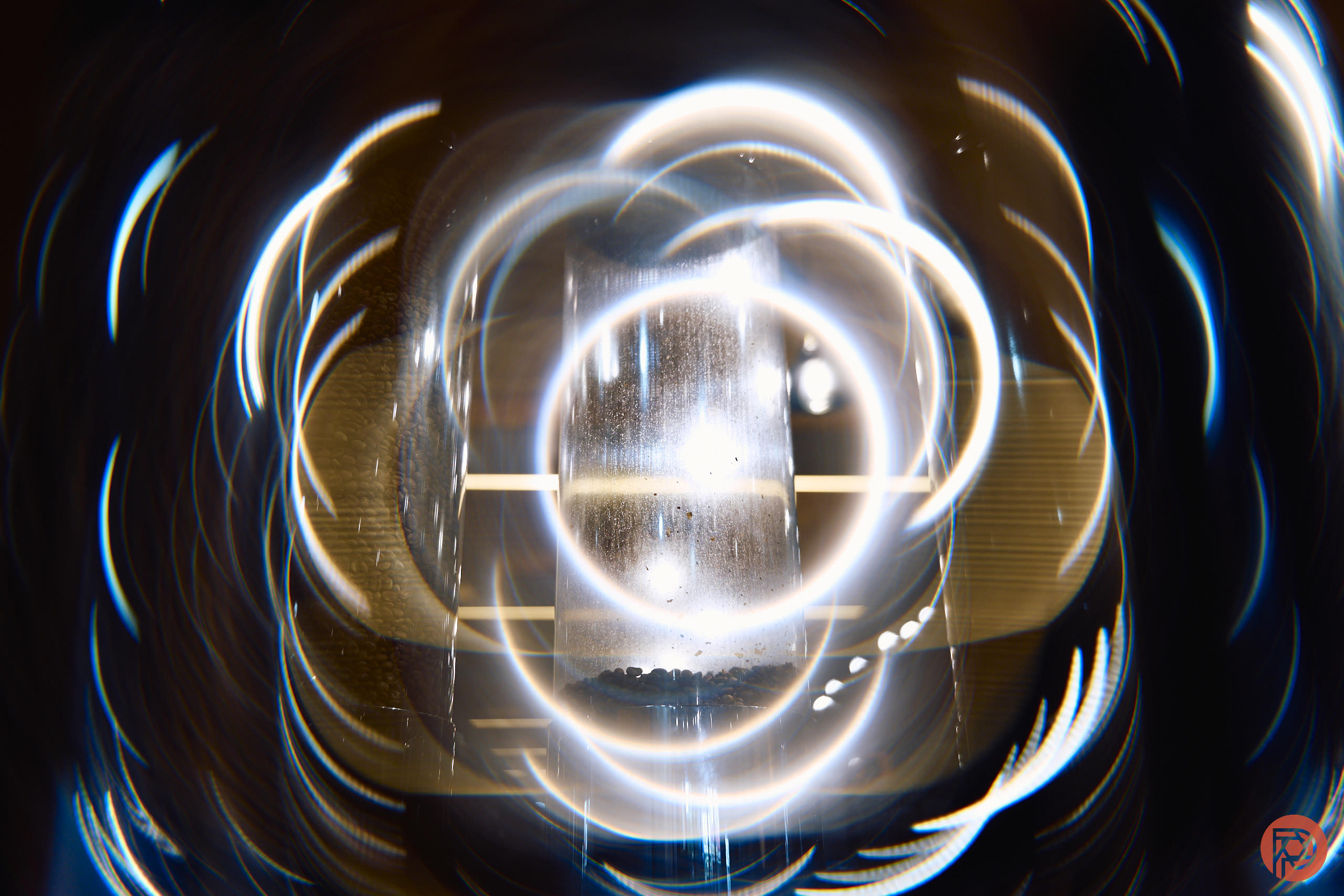
Contemporary photography has changed drastically in the past decade or so. Our understanding of photographs has shifted, with an image no longer being left to its devices. This growing inability to let a photograph exist as it is, is now resulting in a modern day crisis, where one has to be told what one must feel. As social media have become one of the prominent spaces to share one’s visuals, we are asked to see the context, before the image.
In a new video on YouTube, photographer Seamus Murphy was talking about his journey, his images, when he was asked a crucial question about photography and intent. As part of a candid reflection, Murphy said the following:
Everything has to be explained. And it gets to the point where the picture starts losing its power, even losing its worth, because it’s all about how you explain it, how you give the context, what’s the concept.
Murphy not only highlighted the problem seen across festivals, but he was also questioning how academia in photography is further complicating the relationship between images and text.
I get frustrated sometimes with the amount of debate that goes on. Is it taking a picture or making a picture? You know, is it shooting a picture which is like a gun? I just, I just think it’s all a bit. I think it’s all a bit too much… I can see the academic mileage people will get out of it… Photography has become very academic, and I think a lot of academics are now the tastemakers in a lot of things. I think a lot of photography now, or the trend seems to be, certainly in the so-called art world, is to explain everything. That’s possibly comes from the fact that the academics are running the show and they, maybe they don’t understand photography. Maybe they, maybe they don’t understand the visual process, and they can write about it. 25:28 So if they can write about it, then they’re going to be the ones with the power. I don’t know.
A part of the quote also highlights the stressful relationship of photography competing with higher art forms for its legitimacy in gallery and museum spaces. As a result, one’s ability to describe a photograph, find its deeper meaning, has become more important than the ability to take good photos. If you walk into most galleries today, a statement is designed to put the photographs together under one umbrella, then the statement helps the image. As one has often said, a photograph does not need 1000 words to explain itself. Just like a painting, it does not need one to dissect its context. In fact, as photographer Roger Ballen said, “The best photographs are the ones I cannot find a word for.”
However, the other side of the argument, which can’t be ignored, is how academia further helps to make the photographer significant. Look at the works of Claude Cahun, Dora Maar, Francesca Woodman, Eugene Atget, or the early pioneers of slave photography, whose images are now dissected to understand history and its significance. As someone who is now also teaching, I do believe that academia plays a critical role in shaping how we perceive images, to talk about gaze, power balance, the era it was created in and so on. However, these are for historical context, and to showcase how contemporary photography was shaped. But would I argue that a new body of work, created in a decade, would need similar academic context? Perhaps not. An example I can give is Pakistani visual artist, Rashid Rana’s artworks. He creates installations using photographs, but more often than not, his academic, dense writings take away from the point he is making. If you are someone who reads about the current political and social state of the world, at best, you will require factual data to support the images, or how, in the past, photographers utilized similar tools to comment on the state of the world.
Moreover, the conversation boils down to two forces: academics demanding that photography justifies itself in language, while social media want these images to be perfect on engagement alone. However, neither expect a photograph to be a mere photograph. As I have visited multiple galleries in recent weeks, I haven’t felt underwhelmed by how the big, deep statements do justice to the images being displayed. It is not that the photographs are bad; it is the fact that they are being paraded around the city as something that they are not.
In a way, a culture that consistently asks you to explain yourself is pretty much ruining and making the medium lose its meaning. Where does, then, one find themselves in the future?
Get rid of the ads!
Did you enjoy reading this article as much as we enjoyed writing it? There's a way to support us and our reporting, getting ad-free navigation and more as a bonus. Subscribe to us for less than a coffee per month —just $3.99— or take advantage of our yearly subscription with a hefty discount for only $25.- An ad-free experience
- A free mystery box for Lightroom or Capture One
- All the books in our store
- 20% discount on Capture One
- 30% discount on Imalume Photo Theft Protection
- 20% off Herbs and Kettle Tea Company.