

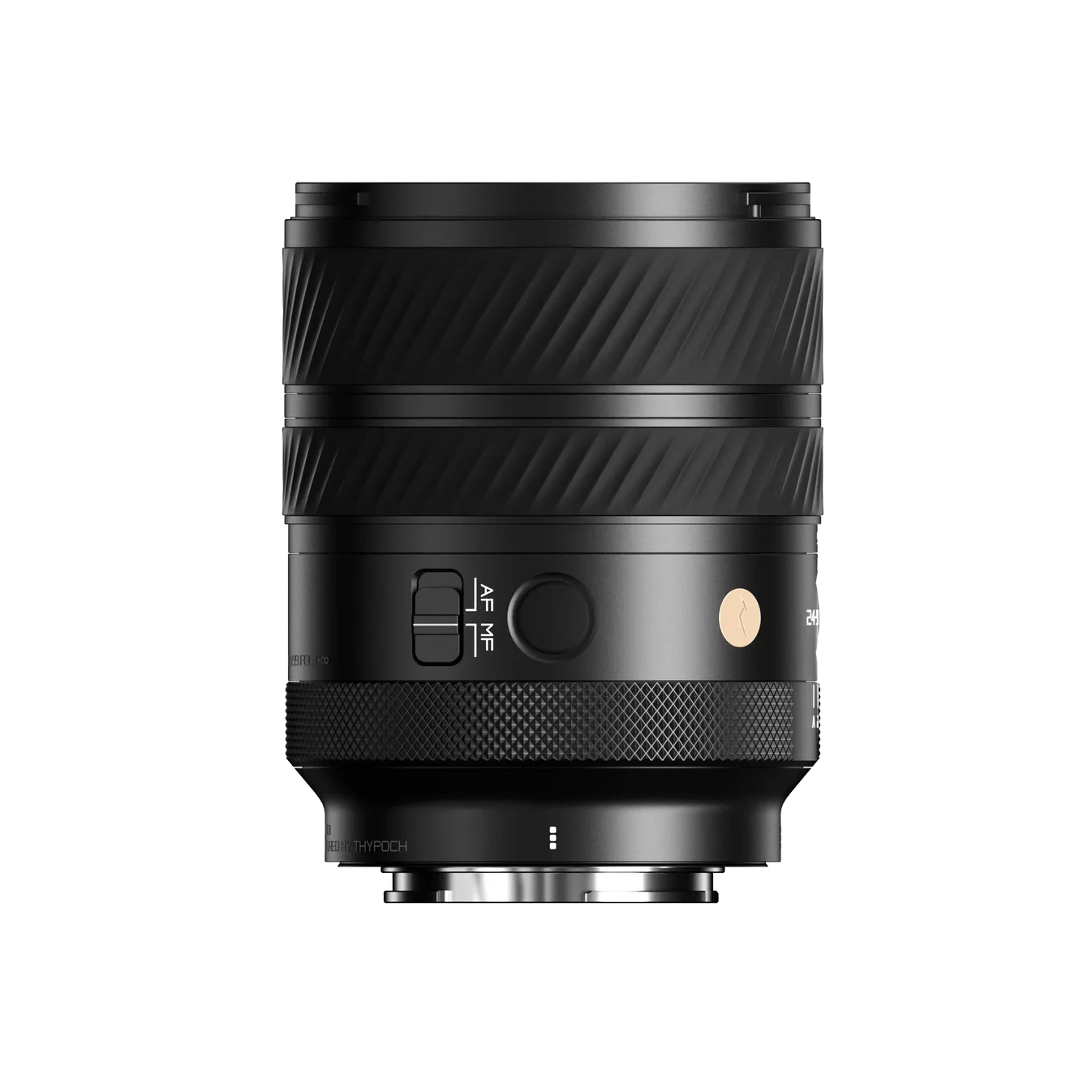
Third-party lenses have been favored by many photographers. With various brands popping up in China in recent years, these manufacturers have also tried to push innovation at very cost-effective rates. While third-party Chinese lenses have largely been primes, it appears that Thypoch is here to change that. The company recently announced the Voyager AF 24-50mm f2.8, the first-ever autofocus zoom lens ever produced by a third-party manufacturer for full-frame mirrorless cameras. Here’s a look at what it can offer.
The announcement of the Thypoch lens was made a while back, with May marking the official launch date. The lens is pretty important for those who want a lens without having to spend $1000 on a zoom. And you get that along with a constant aperture. Here are the specifications:
- Optical Construction: 16 elements in 13 groups
- Aperture Blades: 10
- Angle of View: 83°–47° (diagonal); 24mm: 73°H/52°V; 50mm: 40°H/28°V
- Maximum Magnification: 0.216x
- Minimum Focus Distance: 0.3m (from sensor plane)
- Filter Thread: 67mm
- Front Diameter: Φ70mm
- Length: 92.8mm (lens front to flange)
- Flange Distance: 18mm
- Image Circle: 43.2mm (full frame)
- Focus Type: Autofocus with AF/MF switch
- Zoom Type: Internal zoom
- Weather Sealing: Yes — precision-sealed against mist and rain
- Mount: Sony E (full frame)
- Weight: Approx. 432g
- Color: Black
- Accessories Included: Front cap, rear cap, lens hood
- Price: ~$700 USD
- Shipping: Early June 2026
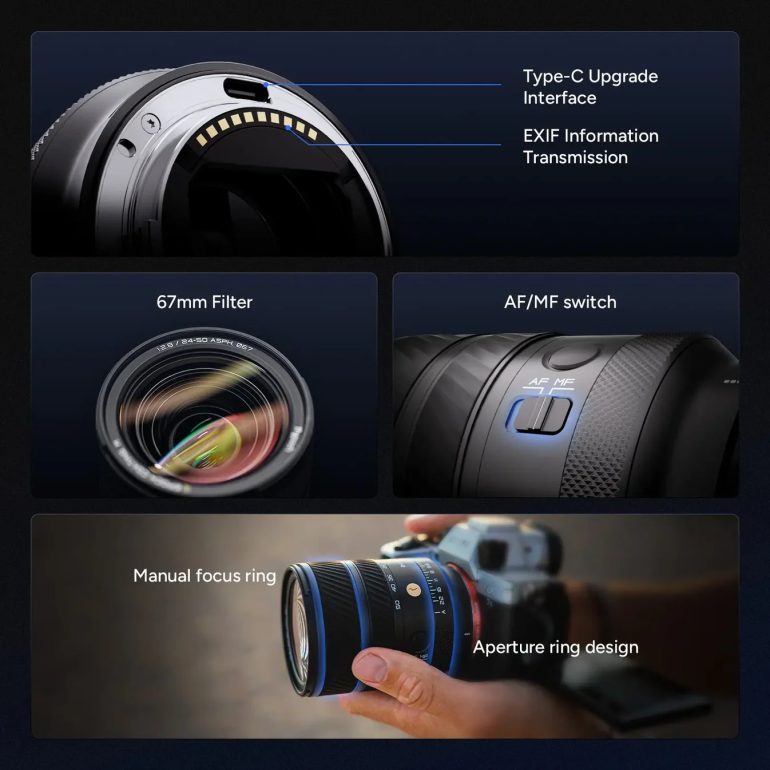
Third-party lens manufacturers have been making manual focus lenses for decades, as one can’t access the mount with ease. In that regard, the engineering needed for an accurate AF lens is often more complex than a prime, which makes things even more interesting. The company also notes that the Thypoch lens has a high-speed silent drive system for autofocus, including electronic integration, and can be used on Sony a7 V, a7C II, and a7S III.
There is also nano-coating, which offers corner-to-corner sharpness, can control distortions and flare, amongst other things. The aperture ring is smooth, and is designed to help hybrid shooters. There is also an internal zoom lens, which means the lens’ size remains the same. It not only makes the lens easy to use and store, but also helps videographers working with handheld and gimbal shooting.
The lens is now competing with Sony’s own 24-50mm f2.8G, which costs about $1,100. We haven’t reviewed either lens, so we can’t tell you which one is great. However, if you are someone who wants an additional lens, without weather sealing, then this one is for you. The Thypoch can work as a travel, street, event, and portrait photographer.
We have tested Thypoch’s other lens, Eureka 50mm f2, which we did adore. In our review, we said:
The Thypoch Eureka 50mm f2 is a fun lens to use. It has a collapsible design, but honestly, I don’t really think that it needs it. This design was made to keep a camera’s overall package more compact. But if you’re adapting it to another camera, that’s kind of irrelevant. If you’re putting it on an M-mount body, then that’s perfectly understandable. This lens oozes character, beautiful color, nice bokeh, and enough sharpness to make both Panasonic and Leica’s focus peaking work well.
Thypoch states that this is not yet the end, with five more such lenses in development. If true, photographers can now save a few thousand dollars overall, and that is worth everything.
Get rid of the ads!
Did you enjoy reading this article as much as we enjoyed writing it? There's a way to support us and our reporting, getting ad-free navigation and more as a bonus. Subscribe to us for less than a coffee per month —just $3.99— or take advantage of our yearly subscription with a hefty discount for only $25.- An ad-free experience
- A free mystery box for Lightroom or Capture One
- All the books in our store
- 20% discount on Capture One
- 30% discount on Imalume Photo Theft Protection
- 20% off Herbs and Kettle Tea Company.