


If you’ve ever looked at a Nikon NIKKOR Z lens and wondered why one costs as much as a used Honda while the other is “affordable,” the answer usually lies in the tiny motors hidden inside the barrel. How many times have you come across a featured specs list and thought, “WTF does this even mean?” Today, we’re cutting through the jargon to figure out what actually moves the glass inside your lens and why, in one very specific case, your gear might actually interfere with your grandmother’s heart health.
A Basic Understanding of Autofocusing Motors

Let’s be honest: reading a lens spec sheet is about as exciting as reading the terms and conditions for a software update, only with more confusing acronyms. Manufacturers love to toss around terms like STM, VCM, and SSVCM as if we all spent four plus years getting an advanced engineering degree instead of just trying to make decent photos to pay this month’s rent.
To get things started we’ll address something you’ve undoubtedly seen before: STM autofocusing motors. As the name infers, Stepping Motors or STM motors refer to the way the motor inside the lens moves the glass elements to acquire focus. STM motors move in discrete increments, or steps, that allow them to move quickly and quietly. This motion allows for photographers to quickly lock focus between foreground and background subjects without undesired effects like prolonged focus hunting or focus breathing (the latter becomes more important for videography applications).
The downside to STM lenses is their low torque. While an STM lens ends up being like a Toyota Corolla – small, cheap, and good for getting you to point A to point B – they tend to reach their limits quickly. STM lenses are typically found in smaller, cheaper lenses because of this torque limitation. Larger, and therefore heavier lens elements, like the ones you’d find in something like the Nikon 35mm F1.2 Z S, when used with an STM motor would likely give up, and very likely burnout, long before it acquired focus.
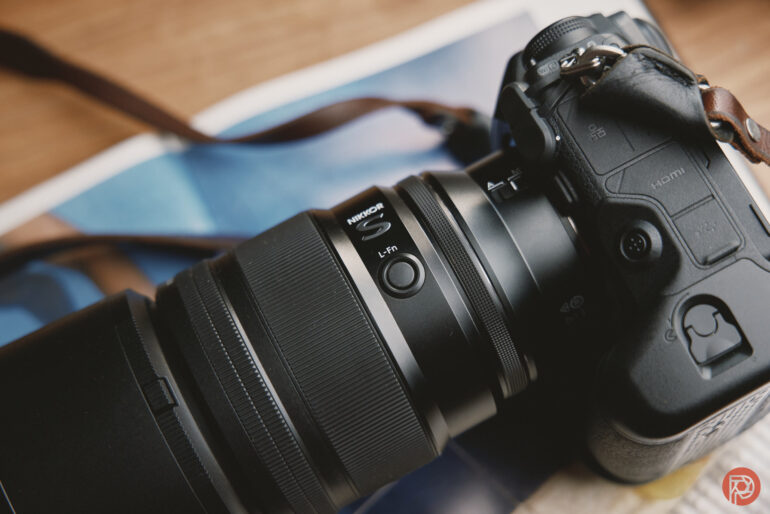
For these larger lens designs, a more “pro” motor is required – Voice Coil Motors (VCM). As is the case with the 35mm F1.2 Z S lens, a VCM makes all the difference. A Voice Coil Motor works similarly to the way a loudspeaker works (using a coil of wire and a magnet). It doesn’t move in “steps”; it uses electromagnetic force to zip the focus elements back and forth. Because of this, VCMs have incredibly high torque. They can take a piece of glass the size of a hockey puck and move it instantly. If you’re shooting sports or birds in flight, you want a VCM. It’s the difference between a motor that “drifts” into focus and one that “snaps” into focus before you’ve even finished pressing the shutter button.
One thing to note, if you have a pacemaker, VCM motors could interfere with its operation – so, please check with a doctor before adding lenses using this technology to your gear bag.
Nikon’s Silky Swift Voice Coil Motor (SSVCM): Why it Matters

Now that we got the basics out of the way, let’s drill down into Nikon’s proprietary lens design and use of their Silky Swift Voice Coil Motor (SSVCM). When I reviewed the Nikon Z 24-70 F2.8 II, I said:
The enhancements to the voice coil focusing system make this lens faster to acquire focus for still images, and if you happen to shoot video, reduce focus breathing. These features alone make a strong argument for upgrading.

As noted in the review of that lens, I stated that the introduction of Nikon’s SSVCM showed a noticeable change to how the autofocus motors worked on the 24-70mm F2.8 lens. We asked Nikon how their SSVCM differed from traditional VCM technology, here’s what they said:
The Silky Swift VCM is utilized for NIKKOR Z lenses as an AF drive motor. This system simultaneously achieves higher speed, higher accuracy and quieter operation. Each of these factors far surpasses conventional systems, and as for the “quietness” specifically, drive sound is intensively suppressed to an almost-silent level. Even heavy lenses can be controlled accurately at high speed, with minimal noise or vibration, enabling users to reliably capture sharply focused images. Extremely quiet AF operation is specifically advantageous for shooting in places where silence is required and for video recording.
Deciphering the “50% Quieter” Marketing Fluff
Finally, let’s address the elephant in the room: marketing claims like “50% Quieter than its predecessor!” Whenever you see a stat like this, remember that “50% quieter” is a relative term. 50% quieter than a jet engine is still a loud noise. Unfortunately, there isn’t a universal “Loudness Chart” for lenses.

We weren’t able to get much from our Nikon Rep, beyond a boilerplate response: “Details of the measurement methodology are not disclosed. This feature is especially beneficial in situations where silence is required—such as weddings and concerts—as well as during video recording.”
Expanding on what Nikon shared, it’s important to understand who might benefit the most from quieter lenses. Wedding photographers need quiet lens motors that ensure you don’t hear the lens focusing during the “I do’s.” Likewise, wildlife photographers need whisper quiet lenses, so they don’t scare off the rare bird they just spent six hours trekking through a swamp to find. To a lesser extent, street photographers could benefit from quiet autofocusing motors, especially if they’re trying to stay lowkey and as close to invisible.
ARNEO and Nano Crystal, and Meso Amorphous Coatings

If you’re anything like me, you’ve probably come across this section of a lens’s spec chart and thought, what does this all mean. Lens manufacturers have been adding specialized coatings on their lenses at least since the 1980s, but it’s never explicitly stated how these coatings affect the final image. When we reached out to Nikon about their lens coatings they helped clarify things a bit. With respect to Nikon’s ARNEO Coating, our rep said, “[it’s] an anti-reflective coating developed by Nikon and used in conjunction with Nano Crystal Coat to further reduce ghost and flare effects caused by incident light entering the lens vertically. This allows for the outstandingly clear capture of images even when a light source is located within the frame.” By contrast, “Nano Crystal Coat solves ghost effects caused by red light and effectively reduces ghost and flare caused by light entering the lens diagonally.” Meso Amorphous Coatings taking things even further – designed to further reduce “ghost and flare caused by incident light from various directions are noticeably reduced, delivering clear images even under harsh conditions.” Ultimately, the name of the game is to help create the clearest, sharpest image possible.
Picking the Lens That’s Right for You
So, where does that leave you when you’re staring at a digital shopping cart with three different 50mm lenses? While it’s easy to get trapped into thinking that the more you spend, the better your photos will end up looking is just not 100% accurate. Modern lens technology has evolved to the point where you could get similar image results (no pixel-peeping please) at various price points. It all comes down to what you intend on using the lens for.
At the end of the day, your lens is just a tool. A $3,000 SSVCM lens won’t make you a better photographer, but it will make sure that when you finally nail that perfect composition, the autofocus doesn’t let you down—or beep so loud the bird flies away in disgust.
Get rid of the ads!
Did you enjoy reading this article as much as we enjoyed writing it? There's a way to support us and our reporting, getting ad-free navigation and more as a bonus. Subscribe to us for less than a coffee per month —just $3.99— or take advantage of our yearly subscription with a hefty discount for only $25.- An ad-free experience
- A free mystery box for Lightroom or Capture One
- All the books in our store
- 20% discount on Capture One
- 30% discount on Imalume Photo Theft Protection
- 20% off Herbs and Kettle Tea Company.
- 20% off your order from MPIX printing services.