


In 2026, the fine art photographer is no longer a solitary auteur staring through a viewfinder, but a puppet dancing on a tangle of invisible strings. Much like the nimble rodent Remy perched beneath a chef’s hat, today’s artist often finds their “independent” hand guided by a trio of puppeteers: the rigid expectations of institutional gatekeepers, the relentlessness of the quest-for-profit art market, and the silent, algorithmic nudging of AI-saturated social platforms. As the market retreats into the safety of museum-validated “safe bets” and the digital realm demands a frictionless, narrative-heavy aesthetic, the contemporary photographer is increasingly shaped in the image of their puppeteers. I don’t mean to be hyperbolic, but stated plainly, art is no longer a reflection of a human creator’s soul, but a Frankenstein’s monster of the structural appetites of the machine that’s bankrolling artists. Listen up, I’ll explain it to you like it’s a Disney movie.
In my conversation with a curator at an Upper East Side gallery who asked to remain anonymous, they flatly noted that follower counts and Likes simply don’t translate to sales or even interest, so they simply don’t even consider it when reviewing a prospective artist’s work.
Disney’s Ratatouille was a heartfelt story about finding your identity, your tribe, and living it out fully and without shame. In it, the main protagonist, a rat who wanted to be a Parisian gourmet chef, hid behind the inept garbage boy at a restaurant and took control of him. The rat was able to live out his dream of becoming a chef while using the actual human cook as a kind of marionette. However, in the Art World, rarely is it the auteur that’s driving the conversation. While I will expand on that a bit more, it’s important to understand how we arrived at this inflection point.
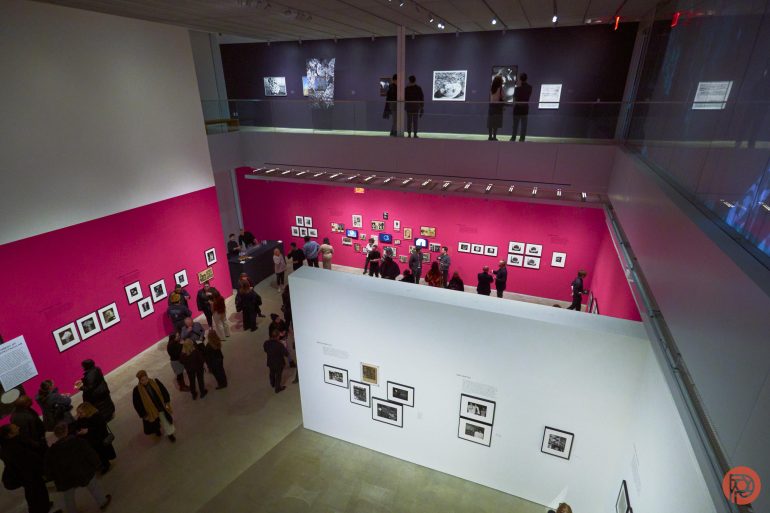
Museums have long been the institutional gatekeepers as to what becomes canon in the halls of fine art photography. Had it not been for an institution curator, William Eggleston’s work would’ve been deemed “snapshot chic” at best and worst, long forgotten. For their part, museums have long employed individuals who’ve earned, if not learned, formal training in Art History and in what the callbacks or established foundations’ new work is building upon. Unfortunately, things are not looking so good for institutions, at least not financially. In a New York Times article published last spring, an analysis of 350 solo exhibitions hosted at New York City museums found that 25% featured artists represented by one of the 11 biggest galleries in the world. Why? Well, since the 2020 Global Pandemic, museums, art galleries, and every other kind of public event space have experienced a steady decline in attendance to their exhibits, which in turn means corporate sponsors will undoubtedly pull funding (fewer eyeballs means lower ROI). And private galleries have largely stepped in to fill that gap (a notable exception is the MoMA, which has a policy of not accepting funds from art galleries).
It makes sense for art galleries to step in to help ailing museums. For starters, it’s a great avenue to give the artists whom you represent top billing at some of the most prestigious venues in the world. Secondly, perceived buy-in from established institutions, vis-à-vis museums, turns a budding artist into a “safe bet” for art investors. In Merrill-Lynch’s Art Market Report (Fall 2025), the investment brokerage identified an increase in “art lending,” or private collections on loan to museums. For the deeply monied collector, human art is nothing more than collateral for other investments.
…an analysis of 350 solo exhibitions hosted at New York City museums found that 25% featured artists represented by one of the 11 biggest galleries in the world…
The Art world is rife with issues. We’ve covered how some galleries have eschewed ethics in pursuit of clout. When the Robert Mann Gallery chose to represent and platform Instagram “photographer,” Isaac “Drift” Wright, the gallery threw out the ethics of how the images were made and the lack of purpose behind them, and defended the decision by focusing on Wright’s ability to draw an audience. Today, this decision as to what moves the public’s interest and therefore a collector’s appetite for a piece is being driven by AI-powered algorithms – designed to keep artists and their human viewers in an endless loop of mediocre work at best, and soulless slop made by machines.
Here’s where there is some light in the tunnel.
The practice of relying on the “tastes” of social media influencers seems to be disappearing, at least within some art circles. In my conversation with a curator at an Upper East Side gallery who asked to remain anonymous, they flatly noted that follower counts and Likes simply don’t translate to sales or even interest, so they simply don’t even consider it when reviewing a prospective artist’s work.
Recently, The Phoblographer received a pitch for a new photographers’ collective called Circulations. They claimed to be human-centered but was decidedly light on details as to how they achieved this. We’re so invested in human creation at this site, that it prompted EIC Chris Gampat to email for more information on the Collective’s means and methods. We ended up disappointed.
This brings us to the final hurdle for fine art photographers today – does your work connect with human beings? I’m not being rhetorical either. With generative AI seemingly taking over, “pretty pictures” just doesn’t cut it anymore. Technically perfect images also aren’t enough – even for some art galleries. My contact at the gallery shared that many galleries are not interested in AI art at this time, and for more classic galleries, probably ever. And even in a current downturn like the Art World is experiencing at the moment, some galleries are incentivized in recognizing new talent. So, how does a photographer stand out? I reached out to New York City-based photographer, Russ Rowland, to get his thoughts on this:
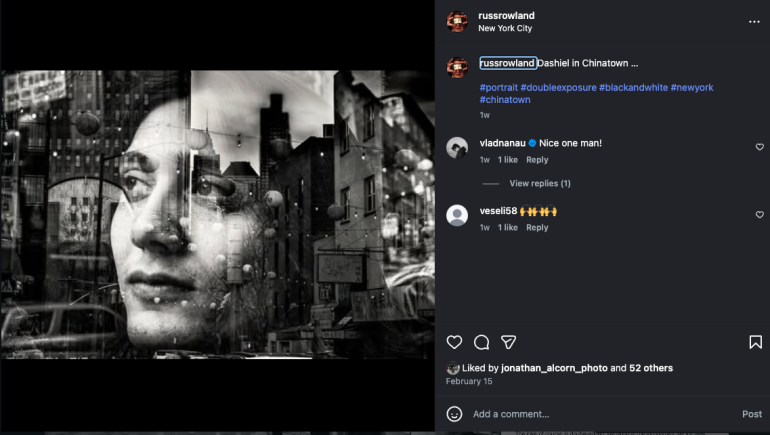
My strategy has always been to submit work I love and work that’s maybe not mainstream for whatever the call is. There are a million great landscapes, portraits, street photos, etc so that’s not enough. You need to arrest attention. And breakthrough. Don’t go with the crowd as so to speak. I think vision is essential to great photography. You have to know what you are after, what obsesses you, and have specific strategies to get it. Maybe a lack of it holds some back.
I couldn’t agree more.
Get rid of the ads!
Did you enjoy reading this article as much as we enjoyed writing it? There's a way to support us and our reporting, getting ad-free navigation and more as a bonus. Subscribe to us for less than a coffee per month —just $3.99— or take advantage of our yearly subscription with a hefty discount for only $25.- An ad-free experience
- A free mystery box for Lightroom or Capture One
- All the books in our store
- 20% discount on Capture One
- 30% discount on Imalume Photo Theft Protection
- 20% off Herbs and Kettle Tea Company.
- 20% off your order from MPIX printing services.
- 5% off Viltrox Products via their eCommerce store.
- 10% off all film developing, printing and scanning services from Blue Moon Camera and Machine
- 15% off 7Artisans products: The lens and accessory maker is offering a sweet discount for Phoblographer's readers.