


Leica cameras have always been in a league of their own. The company has introduced some exciting models over the years, and they further expanded the lineup with special edition cameras. It now appears that Leica wants to further refine the user experience of existing customers, as they have announced “comprehensive enhancements” to the SL and Q system cameras. What benefits do Leica users receive with the latest firmware version 4.0.0?
In their press release, Leica notes that the cameras will provide a “more precise, faster, and more intuitive shooting experience for photos and video recording.” That’s quite impressive, as the SL3 caters to hybrid photojournalists, while the Q3 is designed as a high-end compact offering. With firmware 4.0.0, the SL system, including the SL3 and the SL3s, will offer critical advantages. This includes new improvements as follows:
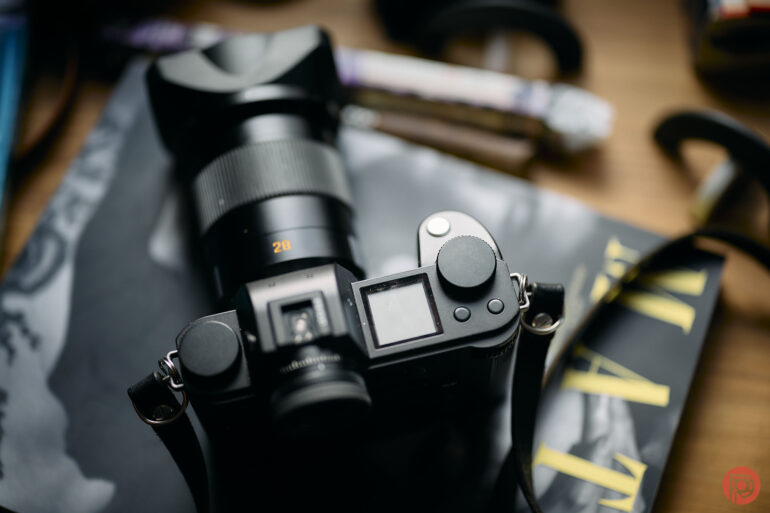
- A direct Camera-to-Cloud connection to Adobe Frame.io via WLAN. This will allow images and videos (proxy videos) to be uploaded directly to the cloud. This new function is located in the Connectivity menu, where both Leica FOTOS and Frame.io are now managed.
- The tracking algorithm automatically adjusts the size and shape of the focus field during subject tracking. This results in more stable and reliable performance over extended periods.
- Automatic focusing on human features, e.g., eyes and faces, has been significantly improved through AI-assisted models.
- The AF mode was revised, and the menu structure was simplified.
- Multi-Field and Spot were combined into one menu (Zone / Multi-Field and Field / Spot). A new AF Acquisition menu is now available in both the FN list and the Control Center. Expanded subject recognition: humans (eye/face/body) and animals – including birds, dogs, wolves, cats, and big cats.
- The Leica Looks menu was optimized. A new Intensity setting option was added.
- The monitor refresh rate can now be set to 30 fps / 60 fps. Selecting 30 fps reduces power consumption in Live View mode.
- A new Battery Condition menu now displays the overall condition of the BP-SCL6 battery.
- A Multi-Shot mode has been added for the SL3, facilitating shots of up to 241MP.
- The camera now also supports the aspect ratios 4:3 (anamorphic) and 3:2, expanding creative possibilities.
- When using an anamorphic lens, the camera can now de-squeeze distorted images during playback. Supported anamorphic de-squeeze factors: 1.25, 1.3, 1.33, 1.5, 1.6, 1.65, 1.8, 1.85, 2.0.
- The behavior of the Auto ISO display in Live View and the Control Center when using a flash was revised. The company has also corrected the displayed ISO values in flash mode:
- If a flash is connected and required for the shot, the Auto ISO value remains hidden in Live View and the Control Center.
- If a flash is connected but not ready or not required, a preview value is displayed.
- If no flash is connected, the Auto ISO value is displayed as usual.
- The AF profile labels (DE/EN) have been adjusted for clearer and more consistent terminology.
- Change to the default flash setting: The default for Flash mode is now On instead of Auto.
- RED – EU Cybersecurity Requirements: When updating from version 3.1.1 or earlier, the camera must be re-paired with the app.
- Default settings in Control Center have been adjusted: AF Detection is now enabled by default.
- Faster Start Time (after extended inactivity): The camera starts up significantly faster.
- When inserting an aged or low-performance battery, a warning message now appears indicating reduced battery condition.
- The icon for active Perspective Control is now displayed correctly in Review mode.
- The warning message regarding limited functionality when using a BP-SCL4 battery was revised. The message can now be disabled via the option „Don’t show again“.
- Starting a video recording no longer cancels a previously set autofocus lock. The focus setting is therefore maintained during the transition from photo to video mode.
- The menu items File Format and Compression were consolidated and are now available via the single menu item (File Format).
- Improved display of grayed-out settings: Current values will now always be shown in Live View and in the menu.
- The firmware resolves the “No memory card inserted” error, even when a card is present.
- Autofocus with S-lenses now operates significantly more reliably and consistently, especially in combination with the SL3-S.
- In Tethered shooting mode with JPG+DNG files, Leica Content
- The Content Credentials information is now properly embedded in both file formats.
Overall, the SL system ensures your workflow becomes far smoother, leaving no room for error. In fact, the SL3 is a beast of a camera, and as we said in our review, “the SL3 feels like a camera where photographers are put front and center.”
Similarly, the Leica Q3 and the Q3 43 also get multiple benefits that are as follows:
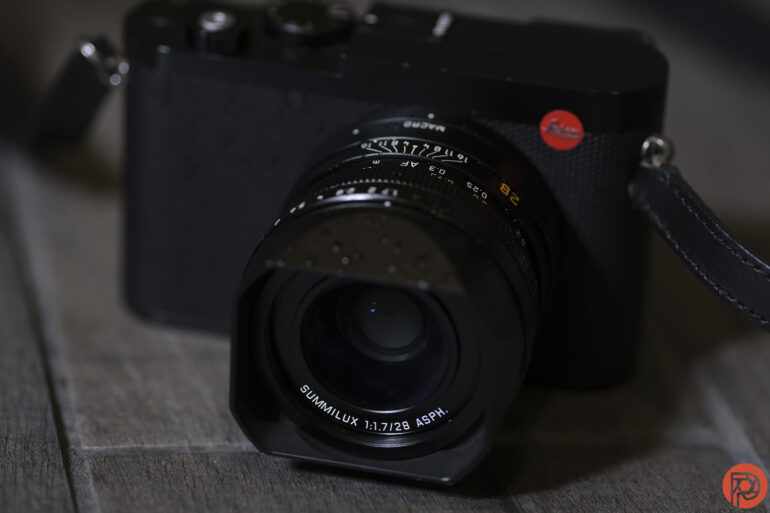
- Automatic focusing on human features, e.g., eyes and faces, has been significantly improved through AI-assisted models.
- The tracking algorithm automatically adjusts the size and shape of the focus field during subject tracking.
- The AF mode was revised, and the menu structure was simplified.
- Multi-Field and Spot were combined into one menu (Zone/Multi-Field and Field/Spot).
- Quick selection for digital zoom levels. Favorite focal lengths can now be set and recalled via a function button.
- Video profiles have been integrated.
- The designs of Live View, Control Center, and Menu were updated to match the new Leica user interface, which is inspired by the SL3. The menu is now fully controllable via touch.
- A new Battery Condition menu now displays the overall condition of the BP-SCL6 battery.
- The Leica Looks menu was optimized. A new Intensity setting option was added.
- The Info bar displays in Live View and rotates with the camera. The display automatically adjusts to operate in either portrait or landscape orientation.
In addition to the Q3 and the 43, the Q3 Monochrome model will also get the following updates:
- Improved connection to the Leica FOTOS app.
- A simultaneous use of the WLAN connection and a USB microphone.
- Default settings in Control Center have been adjusted: AF Detection is now enabled by default.
- When enlarging the image via the dial or the function button in Review mode, the zoom now automatically centers on the AF position. The AF frame will not be displayed. A double-tap on the display zooms into the tapped area. If no AF position is known, magnification begins at the center of the image, and the last used position is then stored.
- The default for Flash mode is now On instead of Auto.
- Improved L-Log video quality with improved noise behavior
- Standardized Control Center icon position: A single connection icon is displayed depending on priority (Bluetooth/Wi-Fi/Cable)
- Automatic settings restore after a firmware update. When updating from version 3.1.1 or higher to firmware 4.0.0, the camera automatically saves all current settings and user profiles and restores them after the update. Language, date, and time remain unchanged – no new input required.
- Improved display of grayed-out settings: Current values will now always be shown in Live View and in the menu.
- Faster Start Time (after extended inactivity): The camera starts up significantly faster.
- New Control Center icons and basic settings.
- The menu items File Format and Compression were consolidated and are now available via the single menu item (File Format).
The company states that the interface is inspired by the SL3, which means that users will notice several changes, including redesigned icons, an improved structure, better and faster navigation, and enhanced touch functionality. As with the other two features, Leica users get an enhanced and personalised user experience. The Q3 is indeed an exciting camera, which liberates photographers from the need to carry additional lenses. As we said in our review, “The high resolution delivers details down to the eyelash level, while the lens captures butter bokeh that even pixel peepers will love. Of course, the Leica Q3 also has classic colors and a slew of stellar color profiles for excellent JPEGs straight from the camera.”
It remains to be seen what the company introduces next year for the users, but for now, it is safe to say that they are listening to their customers.
For those interested in the firmware update, it can be installed via the Leica FOTO app or an SD card.
Get rid of the ads!
Did you enjoy reading this article as much as we enjoyed writing it? There's a way to support us and our reporting, getting ad-free navigation and more as a bonus. Subscribe to us for less than a coffee per month —just $3.99— or take advantage of our yearly subscription with a hefty discount for only $25.- An ad-free experience
- A free mystery box for Lightroom or Capture One
- All the books in our store
- 20% discount on Capture One
- 30% discount on Imalume Photo Theft Protection
- 20% off Herbs and Kettle Tea Company.