

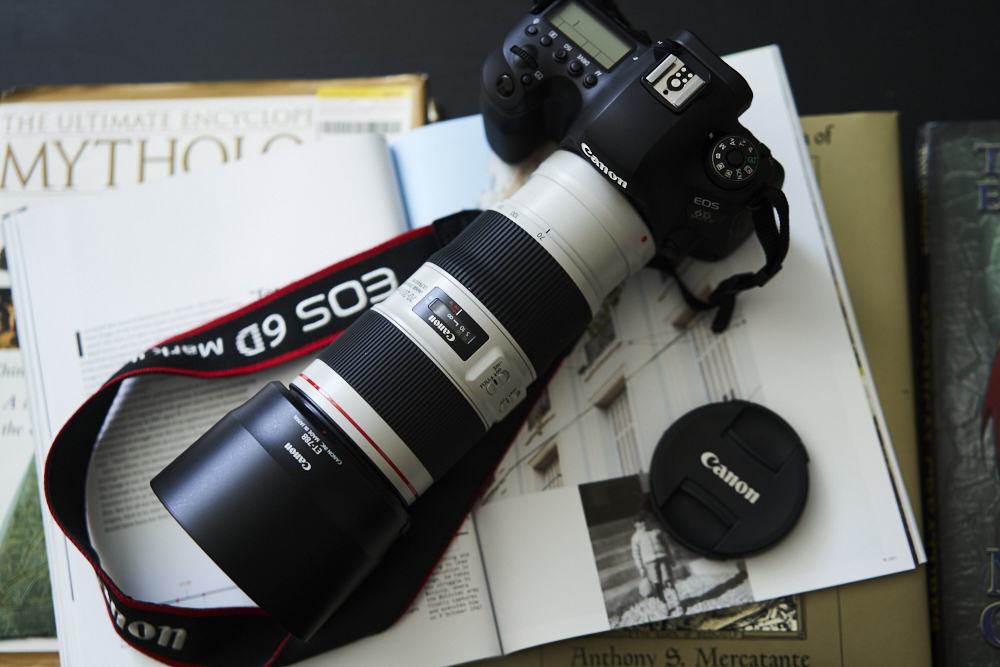
Canon lenses have been the epitome of blending image quality with a great build and versatility. Over the years, we have seen models such as the 35mm f1.4L, the 85mm f1.2L, and the mammoth 1200mm f8L, all of which have performed well in the market. However, like all good things, some lenses have been discontinued over the years. The recent addition to the list is a 70-200mm lens, which was ideal for travel users. Have a look.
First spotted by Asobinet, Canon has discontinued the 70-200mm f4 IS USM II, which is the successor to another popular lens. The report notes that many Japanese retailers, such as MAP Camera, Camera Kitamura, and Yodobashi, have listed it as ‘discontinued.’ In fact, Canon Japan has also added the 70-200mm to its discontinued EF lenses product list.
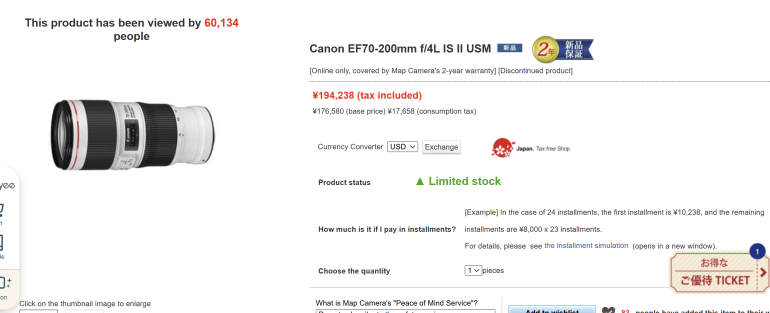
So far, this does not reflect on Canon USA’s page, but it is possible that we will see something about this soon. For the uninitiated, the 70-200mm f4 IS USM II was introduced in 2018 and is designed to be one of the better additions to a travel and portrait photographer’s kit. The lens featured 20 elements in 15 groups, including such special optical materials as a fluorite lens and two Ultra Low Dispersion (UD) lenses, as well as a close focusing distance of 1m.
In our review of the lens, we praised its performance, including its sharpness and beautiful colors. In addition, it offered fast nd accurate focusing, lightweight, weather sealing, and price ($1,200 at that time). With the company moving to RF mount, they announced the 70-200mm f4 L IS USM in 2021, which managed to give the same performance as its predecessor. The lens is short, but also sharp, and far more reasonably priced than the f2.8L version.
Given the focus on mirrorless, it appears that most EF lenses will phase out in a couple of years. Is it bad? Not really, you can always find them on eBay. However, our hope is that RF mount users, especially those who use APS-C, have more affordable options that are also weather-sealed. After all, Canon caters to the mass market. If it’s not budget-friendly, then third-party lenses seem like the best option.
Get rid of the ads!
Did you enjoy reading this article as much as we enjoyed writing it? There's a way to support us and our reporting, getting ad-free navigation and more as a bonus. Subscribe to us for less than a coffee per month —just $3.99— or take advantage of our yearly subscription with a hefty discount for only $25.- An ad-free experience
- A free mystery box for Lightroom or Capture One
- All the books in our store
- 20% discount on Capture One
- 30% discount on Imalume Photo Theft Protection
- 20% off Herbs and Kettle Tea Company.
- 20% off your order from MPIX printing services.
- 5% off Viltrox Products via their eCommerce store.
- 10% off all film developing, printing and scanning services from Blue Moon Camera and Machine
- 15% off 7Artisans products: The lens and accessory maker is offering a sweet discount for Phoblographer's readers.