


When one talks about Canon‘s SLR cameras, the AE-1 is the model that is often mentioned in conversations. While the AE-1 is truly iconic, there are two other SLRs that are just as important: The F-1 and the A-1. Each model offers a different philosophy, and they continue to hold importance even today. So, if Canon is listening to its users for a new modern SLR camera, it should not stop at the AE-1, but also consider these two models. Here’s why they deserve a comeback.
Canon F-1 (1971): The Workhorse That Won Professionals

The F-1 was the company’s answer to Nikon’s F cameras, which were designed for professional photographers in the 1960s. However, Canon did not ape the competition but created something that was trusted by professionals.
So, what did the camera offer? The F-1 was a professional system with mechanical operation, featuring precise machining, which means it can withstand storms, the battlefield, and deserts. The camera had a modular design that allowed for the easy swapping of viewfinders, screens, motor drive, and film back. This flexibility can be helpful for photographers who are shooting across genres. A wildlife photographer could switch to a split-prism screen for use with long lenses or a grid screen for architectural photography. Of course, you also get an entire pro system that allows you to work with 180 FD lenses, screens, and finders.
Canon A-1 (1978): The Future in a Black Body
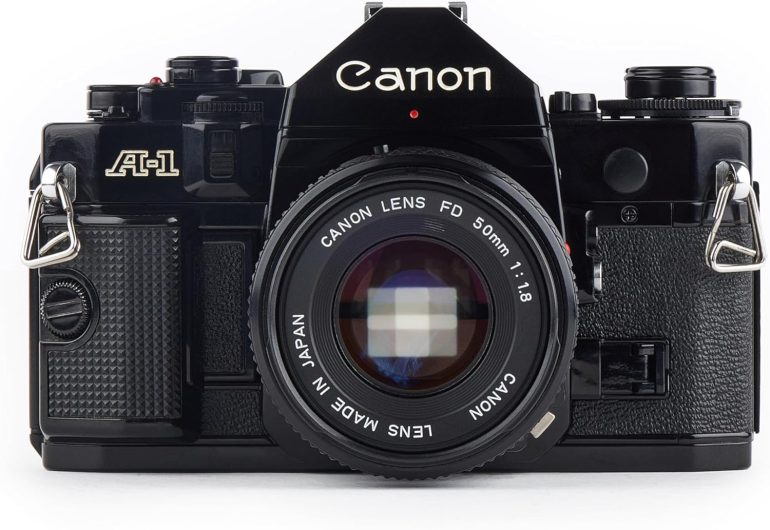
The A-1 was the world’s first camera with a full program mode, which means it would automatically choose the shutter and aperture based on the environment. The camera depicted the mastery of electronics at that time, and it was meant for photographers who wanted speed and automatic on. The Canon device had five automatic exposure models, offering a black, modern design, and the system is still used in their cameras. It could also shoot at a burst rate of up to 5 fps, and as the Canon Museum notes, the “viewfinder information was also easy to read with a 7-segment red LED readout.”
How Canon Could Revive These Icons Today
There have been rumors that Canon is interested in developing a retro camera, which could rival Nikon’s Zf. While the Zf is based on the Df, which was internally inspired by Nikon’s F series cameras, Canon can achieve the same by looking at models such as the AE-1, the A-1, and the F-1.
Canon can build a mechanical camera, such as the F-1, just like Leica has the M series. The camera can have weather sealing, a rangefinder body, a mechanical shutter and focus, but a digital sensor as its heart. The camera is suitable for street shooters, documentarians, and fine-art photographers. Sure, Canon caters to mass audiences, but it can also introduce this for niche users, such as professionals who want to take control over their images.
The A-1 can be revived as an electronic film camera or as an entirely new digital camera designed for advanced photographers. The Pentax 17 proved that film cameras, especially half-frame models, still have a place in the market. Similarly, a retro camera with a full-frame sensor can be important for serious shooters. Nikon and Panasonic both showcased that a small, rangefinder camera is important for many creators who want a smaller setup. In fact, if it’s priced under $ 2,000, many young photographers can afford it.
Both models are wishful thinking, but they are necessary because our current technology has reached its limits. It needs time to slow down and focus on craftsmanship in a highly minimalist world. Most cameras and lenses can capture images perfectly, regardless of whether they are MFT or full-frame. What will now make a difference is the joy of working with a camera that is innovative and blends nostalgia with modernity. And if the company adds film simulations, it will be up many people’s alley. It remains to be seen what Canon finally comes up with. But we hope they reclaim their heritage in the future.
Get rid of the ads!
Did you enjoy reading this article as much as we enjoyed writing it? There's a way to support us and our reporting, getting ad-free navigation and more as a bonus. Subscribe to us for less than a coffee per month —just $3.99— or take advantage of our yearly subscription with a hefty discount for only $25.- An ad-free experience
- A free mystery box for Lightroom or Capture One
- All the books in our store
- 20% discount on Capture One
- 30% discount on Imalume Photo Theft Protection
- 20% off Herbs and Kettle Tea Company.
- 20% off your order from MPIX printing services.
- 5% off Viltrox Products via their eCommerce store.
- 10% off all film developing, printing and scanning services from Blue Moon Camera and Machine
- 15% off 7Artisans products: The lens and accessory maker is offering a sweet discount for Phoblographer's readers.