

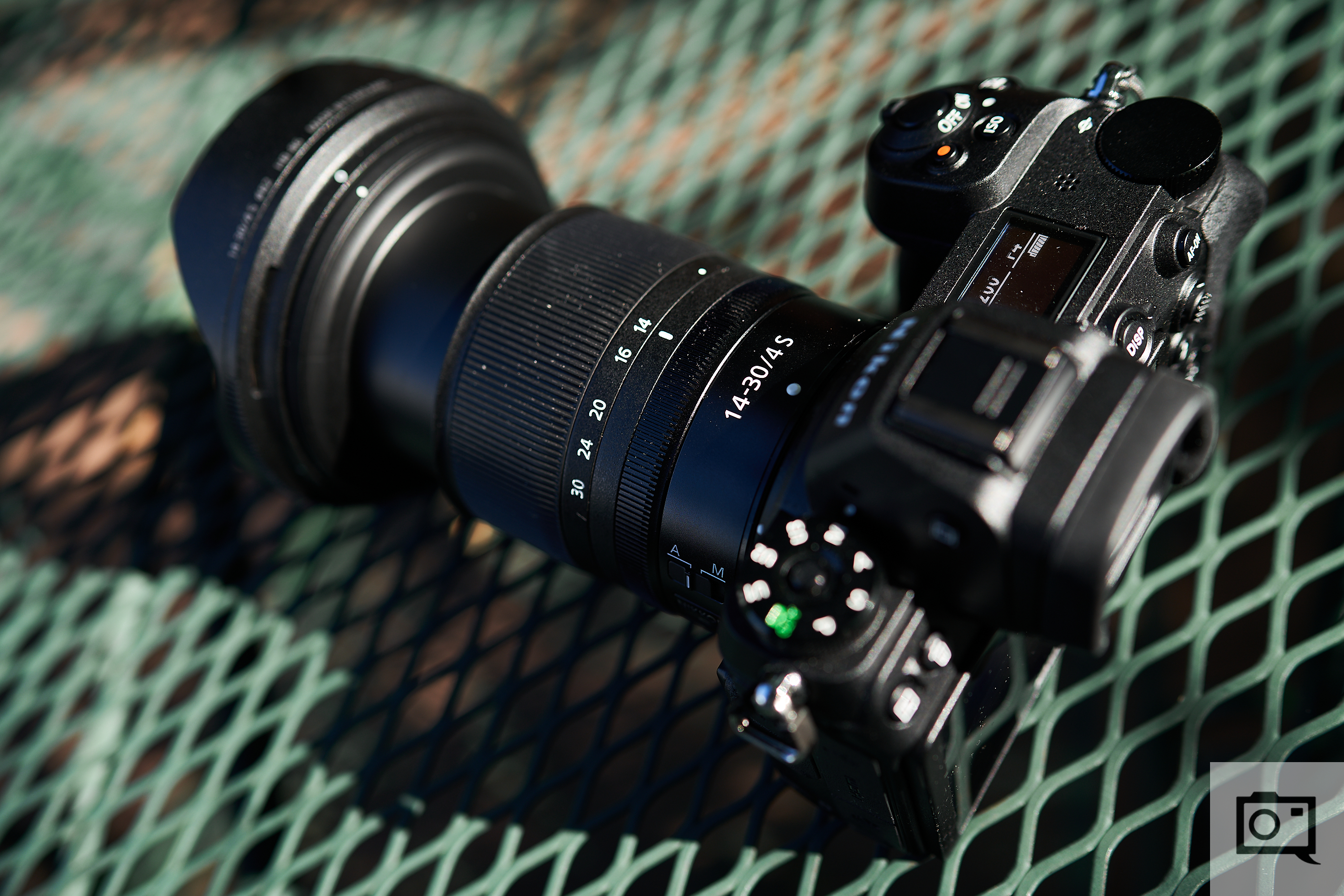
Nikon cameras and lenses have had a great run so far. The company offered some superb models like AF-S 14-24mm f2.8G ED, AF-S 70-200 mm f2.8G VR II, or AF-S 35 mm f1.4G for DSLR users. Mirrorless users, too, have recently received some great focal ranges. However, the latter is still not complete. To build its portfolio, the company has introduced a new patent, which showcases two new zoom lenses. Here is a quick peek.
First reported by Asobinet, Nikon has filed the patent 2025137252 for two new lenses, the 14-24mm f2.8 and 14-30mm f2.8, both of which feature an internal zooming mechanism. The lenses are designed specifically so that the barrel does not extend, and can be helpful for travel photographers. Here is a look at the design:
Example 1

- Focal length: 14.420-23.280
- F-number: 2.912
- Half angle of view: 57.145-42.181
- Image height: 21.700
- Total length: 125.655
- Back focus: 10.255-21.249
Example 2

- Focal length: 14.420-33.950
- F-number: 2.912
- Half angle of view: 58.355-30.422
- Image height: 21.700
- Total length: 139.555
- Back focus: 12.855-17.661
The document was made public recently, and both lenses have a constant wide-open aperture. The lenses are driven by an inear ultrasonic motor, which is also seen in the 28-135 mm f4 PZ. It also appears that these designs will cater more to video needs since power zooms have been designed for moving images. However, this should not dissuade photographers, as these Nikon lenses will be compact, have a really close focusing distance, and feature weather sealing.
Nikon already has a Z 14-24mm f2.8 S lens, which is pretty fantastic. So, a slight increase in soom will not be much for anyone to switch. Similarly, they also have Z 14-30mm f4 S. The only way one can be excited about these is if the company introduced f1.2 or 1.4 variants. Sure, that would result in a bigger front element, but if the company can change that, they will have many who will be ready to pay a higher price. Of course, there has to be weather sealing to support the price. However, the company does not have wider-angle offerings, which is a shame, since many architectural and landscape photographers will be interested in them. For instance, a revamped version of the AI-S 13 mm f5.5, which was the widest rectilinear 35 mm lens ever, can be great for mirrorless users.
The point we are trying to make is that today, most labs can achieve clinical images. Nikon has to offer something truly different: perhaps launching a fisheye lens like the 8-15 mm f3.5-4.5E ED. The Chinese counterparts already have such exciting lenses with characters that Japanese lenses may take a back seat for many. This is applicable not just for Nikon but for many other brands, too. However, if this company makes new changes, others will certainly follow.
Get rid of the ads!
Did you enjoy reading this article as much as we enjoyed writing it? There's a way to support us and our reporting, getting ad-free navigation and more as a bonus. Subscribe to us for less than a coffee per month —just $3.99— or take advantage of our yearly subscription with a hefty discount for only $25.- An ad-free experience
- A free mystery box for Lightroom or Capture One
- All the books in our store
- 20% discount on Capture One
- 30% discount on Imalume Photo Theft Protection
- 20% off Herbs and Kettle Tea Company.
- 20% off your order from MPIX printing services.
- 5% off Viltrox Products via their eCommerce store.
- 10% off all film developing, printing and scanning services from Blue Moon Camera and Machine
- 15% off 7Artisans products: The lens and accessory maker is offering a sweet discount for Phoblographer's readers.
- 15% off a VSCO One subscription: Get a bunch of great tools with their all-in-one package.