


Typically, what I’ve often seen are photographers who go for lower megapixel camera bodies when shooting bird photography. The reasons for this are very logical. Lower megapixel cameras are better at handling high ISO noise and the autofocus is typically better. But actually, I’d argue that higher megapixel cameras are better for bird photography — and there’s a good reason for that too. Still, somewhere in the middle is the ideal option.
Want more useful photography tips? Click here.
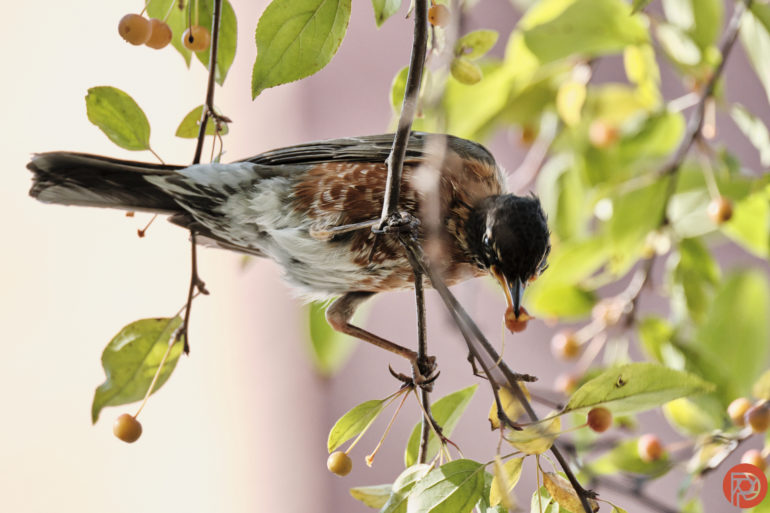
So what do more megapixels give you?
- More sharpness, if that’s what you care about
- More ability to crop and get a photo that you’re satisfied with displaying or printing
- Better and more dynamic range and color depth
The two images in this article were shot with what’s considered to be higher megapixel cameras. One is the Fujifilm XH2, and the other is the Sony a1. Both have higher resolution than 24MP sensors. In fact, the Fujifilm has a 40MP sensor and it’s an APS-C camera. Typically we don’t recommend using APS-C cameras for photography because of how the high ISO noise and the colors are handled when compared to full-frame cameras. And in this situation, I got really lucky. It’s a bright image during a bright time of the day. So because of that the image looks cleaner. But it’s shot at ISO 6400 and due to the brightness, it just looks cleaner.
The truth is that ideally, we should all be reaching for the best and highest end lenses. But we don’t always have that option. So if you’re not using something very high end, then higher resolution can still help you get the image that you want.
Ideally, you’ll have a really good lens and a high megapixel camera when photographing birds. I’ve always preferred to use a higher megapixel camera anyway because of the fact that they can give me more details and better sharpness. But there’s also a spot in the middle.
In 2025, the 40MP range is probably most ideal.
Get rid of the ads!
Did you enjoy reading this article as much as we enjoyed writing it? There's a way to support us and our reporting, getting ad-free navigation and more as a bonus. Subscribe to us for less than a coffee per month —just $3.99— or take advantage of our yearly subscription with a hefty discount for only $25.- An ad-free experience
- A free mystery box for Lightroom or Capture One
- All the books in our store
- 20% discount on Capture One
- 30% discount on Imalume Photo Theft Protection
- 20% off Herbs and Kettle Tea Company.
- 20% off your order from MPIX printing services.
- 5% off Viltrox Products via their eCommerce store.
- 10% off all film developing, printing and scanning services from Blue Moon Camera and Machine
- 15% off 7Artisans products: The lens and accessory maker is offering a sweet discount for Phoblographer's readers.