

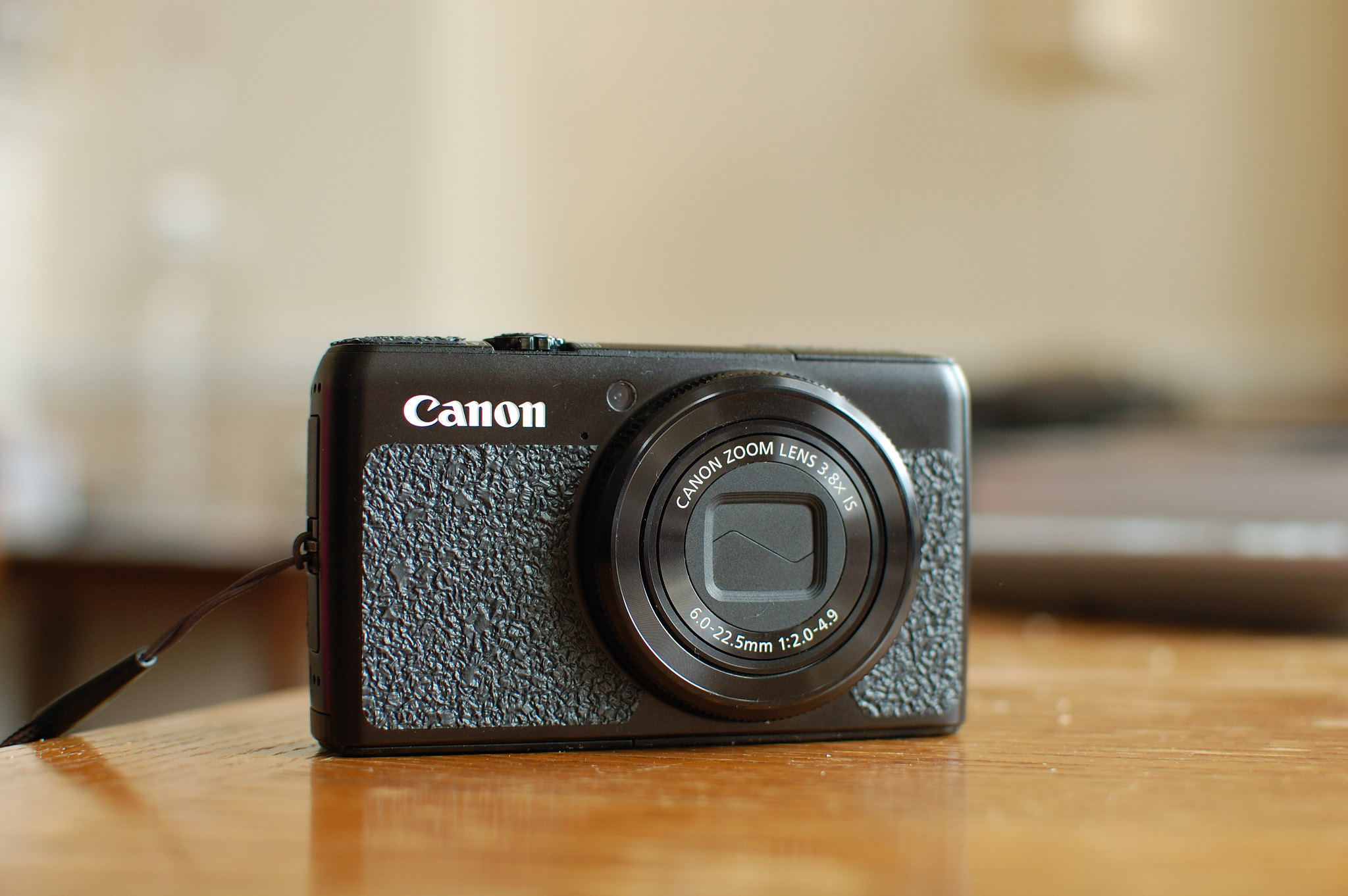
Camera manufacturers, in many ways, have concluded defeat since the rise of smartphones. They realized they couldn’t beat them in terms of production, versatility, or price, so it would be best if they focused on what’s next: higher-end cameras. While this is not an entirely wrong way to look at things, what many brands forget to see is that after a point, many enthusiasts will grow tired of the stagnation in the smartphone business. And 2024 proved to be just that. In just a span of nearly two decades, many people who are into photography have grown tired of it. And now, that group of late millennials and Gen Z are driving the compact camera business. This is exactly the best opportunity for Canon to divert its attention and fill the gap in the market.
Lead image by Andrew Sales on Flickr. Used with attribution permissions.
If you are wondering why, specifically Canon, it is one of the largest companies that can actually turn things on its head. Sony and Fujifilm are two brands that have not entirely abandoned the idea, whereas Nikon just found its footing in the mirrorless business. So, their turning to compact seems impossible. Leica already has full-frame offers, and the Q series is quite popular amongst professionals who need a good point-and-shoot. Canon, amidst this, still has a better chance to pull off what others can’t, and for that, they can take a page from Pentax 17.
Canon Had A Great Digital Compact Camera Range
Canon’s first consumer digital compact camera was launched in 1996, the PowerShot 600. From then on, the company kept expanding and introducing more and more to the lineup. For instance, the A series in 1998, with the A50 Zoom, was a sister model of the A50 and featured a 28-70mm (35mm camera equivalent) 2.5x wide zoom lens. Then, in 1999, came the S series, with the S10 capable of shooting at two-second intervals. At the turn of the century came the G1 series, which had the capability to shoot RAW. A year later, the Pro90 IS became the first digital camera with a built-in 10x zoom lens and optical IS. As you can see, in just 5 years, Canon achieved immense success in the digital camera sphere. This continued, and in 2007, we achieved the first vertical-oriented camera, the TX1. In 2019, the company launched its last compact, the G5X MK II, shutting its door on entry-level point-and-shoot.

Although, they announced the EOS M, an interchangeable lens entry-level camera, in 2012, the brand went quiet on the lineup after the launch of the M50 Mk II, which simply forgot the philosophy it was built on. Canon did nothing special, and now, with their mirrorless lineup, it surely seems to be the same case.

In fact, the Canon Powershot S90 is a camera that we still love, and the reason is that it offered so much to people who wanted a small device with the feel of a DSLR. “Technology in new cameras has made the art of photography so easy. So, what happens when you have to actually apply old-school shooting techniques? Can you, as a photographer, still do it?” our Editor, Chris Gampat, wrote. He stands corrected, and the rise of digital cams in the second-hand camera market is proof of this.
Canon is Losing on an Important Bridge Market
As technology makes things simpler and cleaner, we, as humans, want to find ways to connect to our roots. The rise of digicams is an example of that. Many of us want to find ways with the hurried nature of photography, where you instantly snap and post on social media. An older digital compact camera with no WiFi is just a great example. Sure, the images will be grainy, but there is so much to learn from unlearning.
On the other hand, Gen Z, the biggest driver of the digital camera market, wants a simple device. They don’t want to hassle themselves by carrying additional lenses, flashes, or a whole lot of gear. One camera, one lens, and you are set. While Leica offers that, it is not made for entry-level photographers trying to move away from their phones.
Furthermore, as Canon Rumors pointed out, new photographers do not want to spend too much money on a technology they haven’t tested. That is interchangeable mirrorless cameras. A used digicam is anywhere between $100 to 300 dollars, but if it’s a Leica, it can fetch up to $500 or $800. Even an APS-C or a second-hand older full-frame camera can cost about $1000 to $1600. Many can purchase a phone in that range. So, Canon has the chance to gain the trust of youngsters, just like Sony has. With the right kind of marketing, they can easily take back the audience that smartphones stole all those years ago.
Whether they will do it remains doubtful, but if Canon can’t find new ways to make a profit with the mirrorless, they may be in more trouble. Let’s see what the next year brings to the table.
Get rid of the ads!
Did you enjoy reading this article as much as we enjoyed writing it? There's a way to support us and our reporting, getting ad-free navigation and more as a bonus. Subscribe to us for less than a coffee per month —just $3.99— or take advantage of our yearly subscription with a hefty discount for only $25.- An ad-free experience
- A free mystery box for Lightroom or Capture One
- All the books in our store
- 20% discount on Capture One
- 30% discount on Imalume Photo Theft Protection
- 20% off Herbs and Kettle Tea Company.
- 20% off your order from MPIX printing services.