

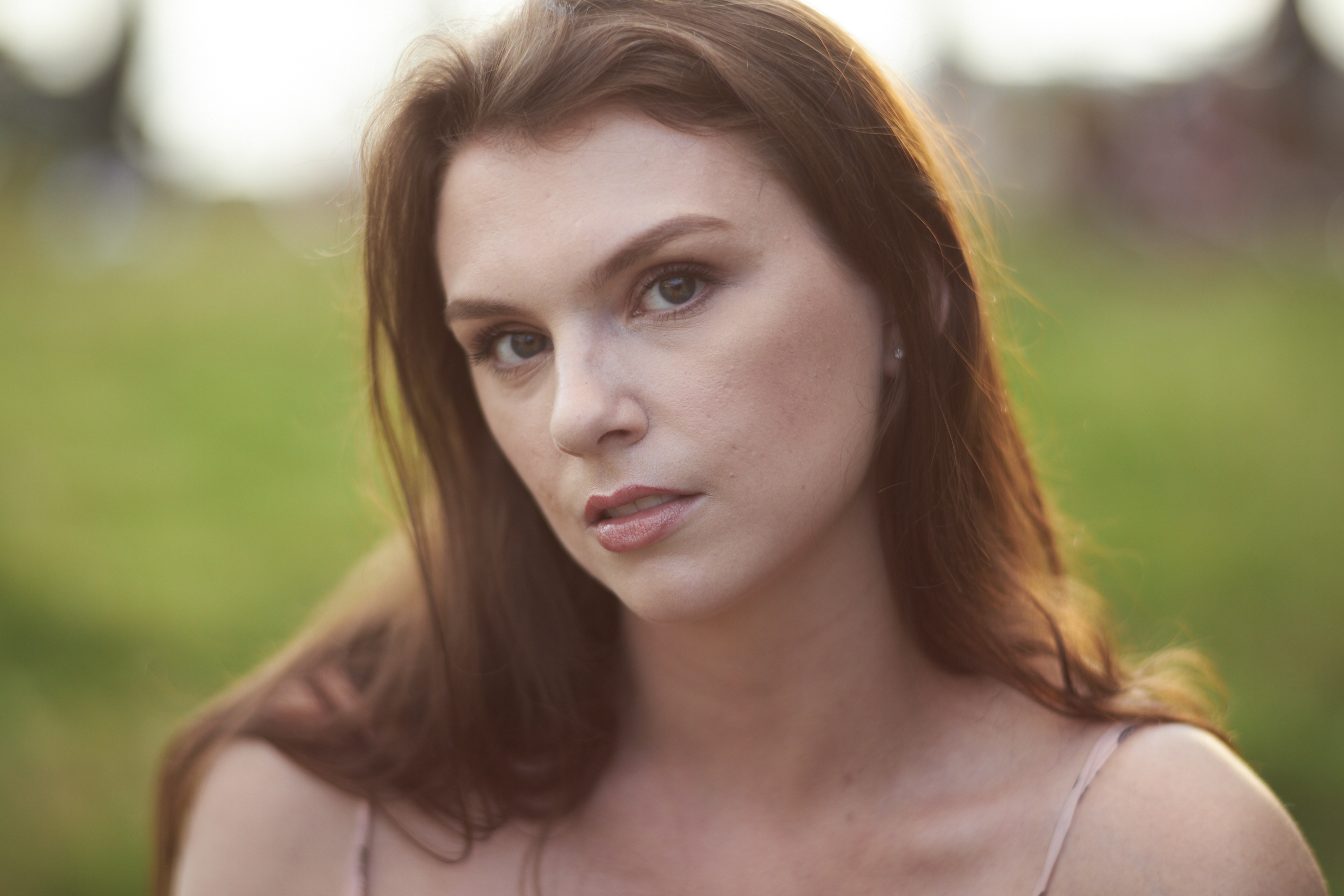
Photography tends to talk about two different kinds of shadows: hard shadows or not shadows. Traditionally, shadows in portraiture was frowned upon because they didn’t make people look flattering. But that changed with fashion photography and embracing the feeling in an image more than the technical know-how. But what we don’t talk about enough is the idea of soft shadows. More specifically, we don’t discuss how they offer a flattering look to a person while giving definition that isn’t as hard as deep shadows.
Table of Contents
What are Soft Shadows?


To help you understand this, let’s first discuss high-key lighting and low-key lighting. High-key lighting has no shadows and is very soft in character. That means that the shadows are often not even visible at all. “High key lighting at its basic nature is overexposure,” is what we say in a quote from another article. “You’re exposing for the shadows, and there’s a ton of white, blown out areas of the photos. But more or less, your subject is perfectly exposed, and there is sufficient lighting on them.”
Low-key lighting, on the other hand, has deeper shadows. It is often used to create contours and make sharper-looking portraits possible. That’s because the black levels are so deep in the photo that your eye immediately goes to what’s well-illuminated or in color. If you’re a fan of using a single light source, low-key lighting is easy.
Soft shadows are quite literally shadows that you can look at and still see some sort of detail in the shadow area. They live somewhere in between high-key and low-key lighting.
How Do You Use Soft Shadows?


Soft shadows are perhaps the best thing to use when photographing normal, everyday folks. We all come in different shapes, sizes, and shades. And soft-shadows can be used to emphasize where we want people to look in the images that we’re shooting while also still balancing out details for storytelling.
To begin with, think about the image in terms of the shadows to form a scene. Train your eyes to look at what’s not being illuminated, instead of what’s being illuminated. Then, adjust your exposure accordingly.
Portrait Photography Tips on Making People Look Better With Soft Shadows


Here are some tips on how to make better use of soft-shadows in portrait photography:
- Soft shadows are easy to achieve with a single light source as long as it’s larger than your subject and closer to them.
- If you’re using natural light, try to shoot on cloudy days and underexpose the images.
- Also, consider shooting under a shadowy area if you’re shooting on a bright, sunny day.
- If you’re using an off-camera flash or strobe, use a large umbrella or softbox. Start at around six feet large.
- Combine using a soft shadow with a shallow depth of field to lead a person’s eyes around a frame to exactly what you want them to look at.
- Good portrait photography isn’t just about high-key lighting, low-key lighting, or soft shadows. It’s also about story and execution. Always remember that you have to be effective in your images too.
- Soft shadows are far more effective in color photography than in black and white. Black and white gives you highlights, shadows, and the middle ground. But it loses the effectiveness of good color in a scene.
- The easy way to get soft shadows is to use diffused window lighting and then underexpose the scene by just a bit. You should still be able to see details in the shadows.
- Overall, think of the scenes as being low-contrast.
Get rid of the ads!
Did you enjoy reading this article as much as we enjoyed writing it? There's a way to support us and our reporting, getting ad-free navigation and more as a bonus. Subscribe to us for less than a coffee per month —just $3.99— or take advantage of our yearly subscription with a hefty discount for only $25.- An ad-free experience
- A free mystery box for Lightroom or Capture One
- All the books in our store
- 20% discount on Capture One
- 30% discount on Imalume Photo Theft Protection
- 20% off Herbs and Kettle Tea Company.
- 20% off your order from MPIX printing services.
- 5% off Viltrox Products via their eCommerce store.
- 10% off all film developing, printing and scanning services from Blue Moon Camera and Machine
- 15% off 7Artisans products: The lens and accessory maker is offering a sweet discount for Phoblographer's readers.