

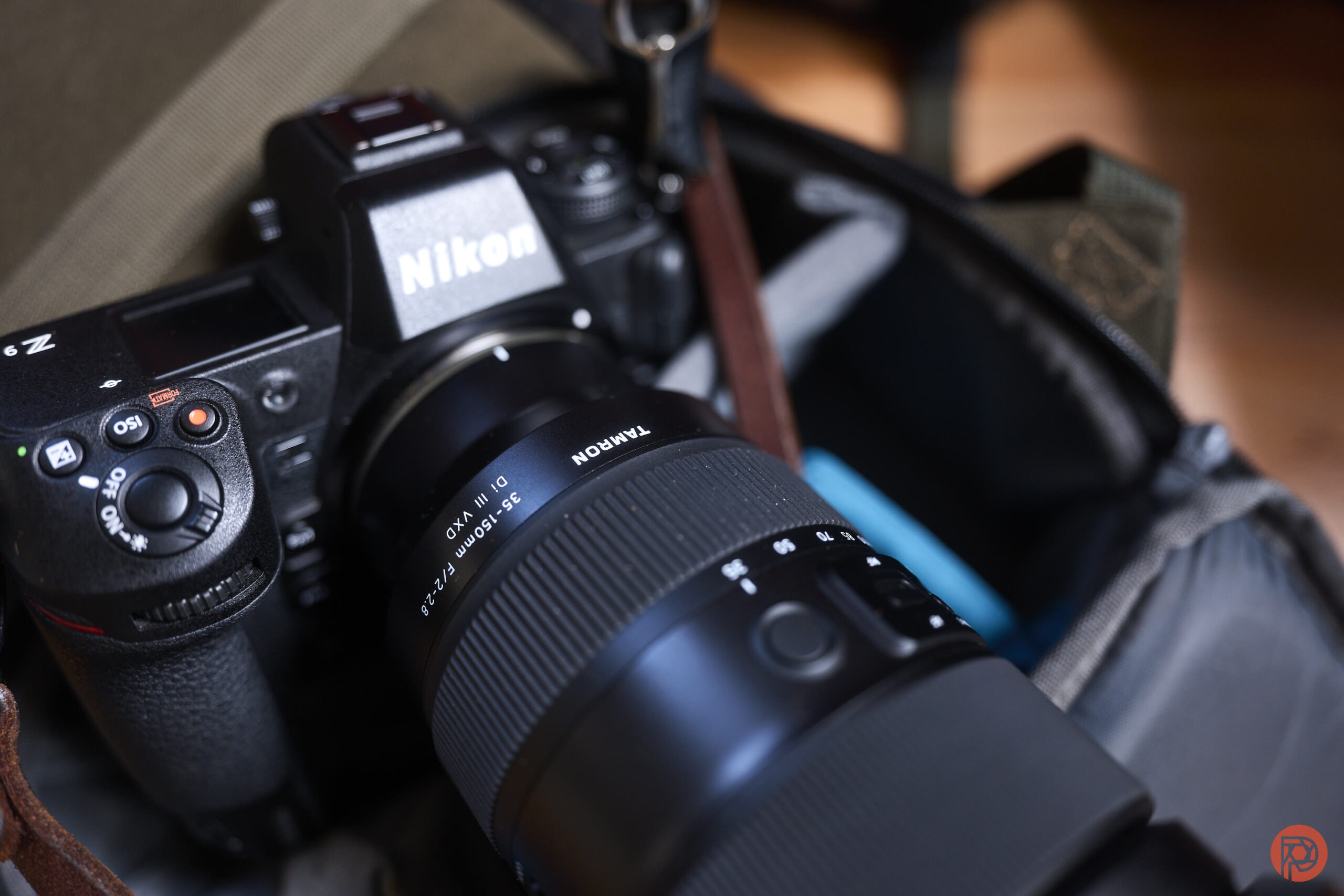
The Apollo 11 mission is historic for several reasons: it was the first time humans landed on the moon and the first time they photographed the pale blue dot from its surface. With this mission, Hasselblad also etched its name in history books for creating film cameras that were light and could still be lying around the moon’s surface. And now, it seems Nikon will follow in Hasselblad’s footsteps with their latest collaboration with NASA: The Artemis III Mission. What’s even more fascinating is that the Nikon Z9 could become the first mirrorless camera to do so.
At the Consumer Electronics Show 2025 (CES) in Las Vegas (via Nikon Rumors), Nikon announced the development of their camera for the collaboration. NASA and Nikon announced the partnership in March 2024, and now, they share details of the modified version of the Nikon Z9 camera. For the unversed, the Artemis III lunar mission aims to land astronauts on the Moon by 2027. As a result, Nikon, who has been collaborating with the organization since the Apollo 15 mission in 1971, will create the Handheld Universal Lunar Camera (HULC). This highly specialized camera will capture high-resolution photographs of the journey, as well as details of the surface of the Moon.
How Will the Nikon Z9 Be Modified?
The Moon poses multiple difficulties for photography. For instance, its temperature ranges from -173°C (-280°F) to 127°C (260°F), which can damage the camera. Lunar dust, too, can cause scratches and harm the device. Thus, Nikon hopes to address these problems by using advanced thermal blankets and designing the camera body to withstand extreme conditions. If Nikon succeeds, then the Z9 can be used for a longer duration and, perhaps, be able to capture the entire mission.

In addition, the camera will be altered to resist cosmic radiation so that its internal hardware is not damaged. For instance, Nikon Z9’s circuits have been modified to withstand radiation exposure. The company will put the device through its vacuum and thermal tests so that the camera can operate 383,000 kilometers (238,000 miles) from Earth.
Features Designed for Astronauts
Since astronauts will take the camera outside the space station for spacewalks or moonwalks, Nikon has also designed a customer grip for them. This is because the space suit has bulky gloves, making it challenging to switch between settings or use the shutter button efficiently. The grip is said to have controls such as video capture and a shutter button and will be connected through a 10-pin terminal.
Some other modifications include custom firmware to simplify astronaut workflow, reduce battery consumption, and improve noise reduction for better pictures. These changes will also be designed for select Nikon Z lenses that will be a part of the mission.
A New Step In the Right Direction
If you happen to be visiting CES 2025, then do stop by Nikon’s booth to see the modification for yourself. Honestly, the Nikon Z9 for the Artemis III mission is a significant step in the direction of space photography. The images made through telescopes and landers are purely technical from a standpoint. However, photographs captured by a human are likely to have a larger emotional touch, especially when it comes to photographing Earth or the Moon. A lander or a telescope does not “frame” an image like an astronaut would. And that’s exactly why this mission will add layers to our relationship with our planet and the Moon.
In addition, through this partnership, Nikon will perfect its Z9, which will make history. This will not only solidify Nikon’s image as a leading imaging brand but also prove its dedication to its craft.
Get rid of the ads!
Did you enjoy reading this article as much as we enjoyed writing it? There's a way to support us and our reporting, getting ad-free navigation and more as a bonus. Subscribe to us for less than a coffee per month —just $3.99— or take advantage of our yearly subscription with a hefty discount for only $25.- An ad-free experience
- A free mystery box for Lightroom or Capture One
- All the books in our store
- 20% discount on Capture One
- 30% discount on Imalume Photo Theft Protection
- 20% off Herbs and Kettle Tea Company.
- 20% off your order from MPIX printing services.
- 5% off Viltrox Products via their eCommerce store.
- 10% off all film developing, printing and scanning services from Blue Moon Camera and Machine
- 15% off 7Artisans products: The lens and accessory maker is offering a sweet discount for Phoblographer's readers.