


The Indian subcontinent has produced some excellent photographers over the decades. From Raghubir Singh to Dayanita Singh, Indian photographers have added flavor to the medium, bringing distinct narratives from distant lands. Joining the growing list is Magnum Photos member (only the second Indian artist after Raghu Rai) Sohrab Hura, whose surreal photographs stand at the intersection of political, social, and personal narratives. And now, in a recent exhibition hosted by the Museum of Modern Art (MOMA), Hura provides us a glimpse into his world.
The lead image is by Sohrab Hura, courtesy of the Museum of Modern Art. All images are used with permission.
Titled Sohrab Hura: Mother, the exhibition showcases over 50 artworks, including photography, film, sound, drawing, painting, and text. Hura began his journey as a self-taught photographer, but soon, his documentary stills were layered on to depict the daily, mundane moments of India and the region’s entrenched political and colonial history. Organized by Ruba Katrib, Curator and Director of Curatorial Affairs, with Sheldon Gooch, Curatorial Assistant, Sohrab Hura: Mother showcase includes multimedia works from series like Pati (2010), Coast (2019), Snow (2015–ongoing), and The Lost Head & The Bird (2017).
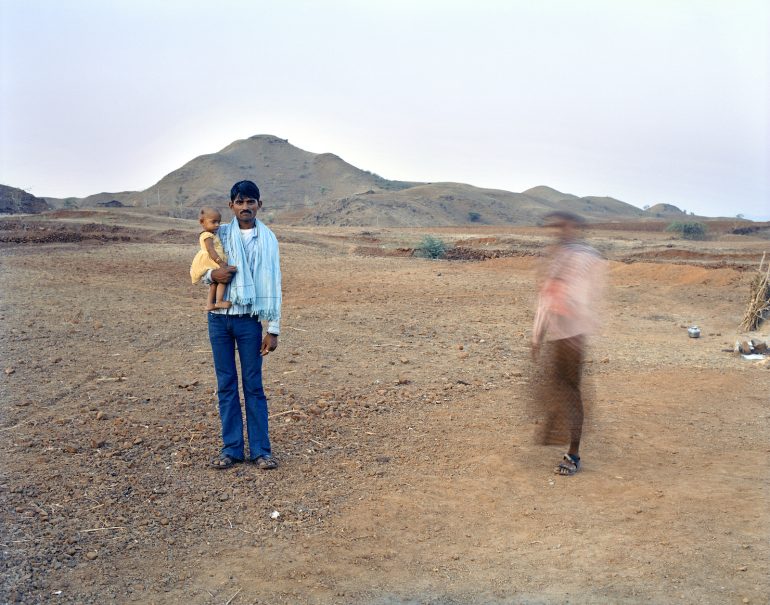

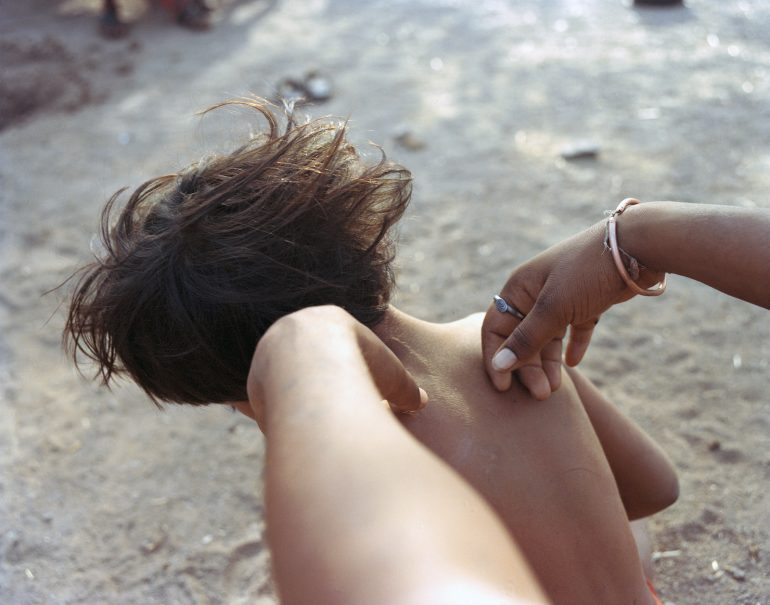


There is a sort of new language of photography coming into existence because of the looseness of social media. It’s weird, it’s surprising, it’s ugly, it’s beautiful, it’s voyeuristic, it’s anrcissistic, it’s ordinary, it’s precise, it’s misleading, it’s a lot of contradictions put together.
Sohrab Hura
For instance, in Pati, the film looks at the villages of Madhya Pradesh and how the region passed the 2005 National Rural Employment Guarantee Act, which promises 100 days of employment for all citizens. The photographer combines stills and footage to highlight deforestation’s impact in the area. In a similar vein, Snow depicts the ongoing unrest in Kashmir, also known as IoK (India-occupied Kashmir), a contested region in India. Through his photographs and television footage, the photographer highlights the people’s struggles in the area. The Coast is another series where Sohrab Hura explores the nation’s changing politics, particularly on a beach in Tamil Nadu.

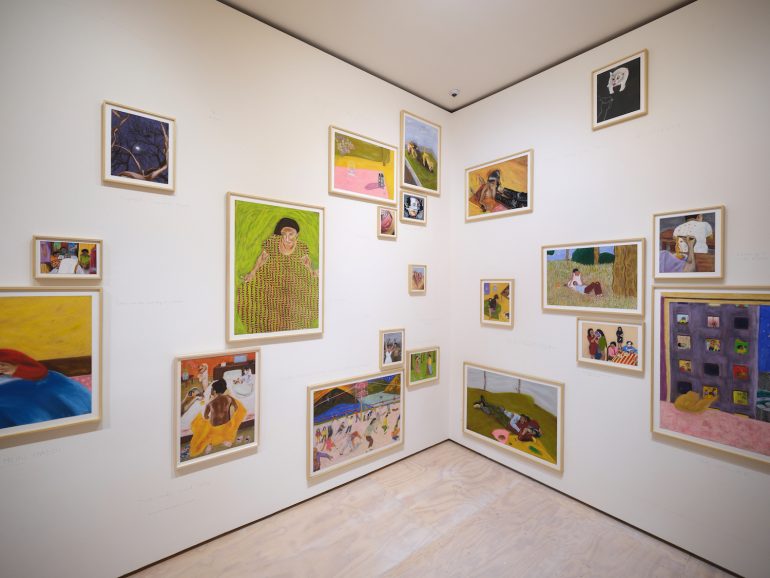

As for the exhibition title, Mother, Sohrab Hura recently expanded on his practice, and in his latest series, Bittersweet (2019), the photographer documents his mother and her dog. The project was created following his mother’s diagnosis of schizophrenia. In recent years, Hura has worked on a series of pastel drawings and gouache paintings, which are also part of the exhibit. The artworks from Felt But Not Quite Expressed (2022–ongoing) and Ghosts in My Sleep (2023–ongoing) are created from memories and imaginations.
Sohrab Hura: Mother is an exceptional look at the photographer’s approach to the ethics of the documentary, as well as his personal and political introspection. His work will not only provide insights into the diversity and challenges in India but also reveal how one can use diverse art forms, in addition to photography, to build on a narrative. Sometimes, arranging the images to be played as a video is a great enough start to engage an audience with little knowledge about photography. Furthermore, the paintings certainly are as surreal as his photographs. When you look at them together, they will transport Hura’s lived and imagined memories to you.
For anyone interested in documentary photography, Hura is one of those photographers you must pay attention to. This exhibit and his years of beautifully crafted images will help you envision your project better. Sometimes, a story works well in stills alone; other times, it has to be weaved with other formats to do justice to the narrative. Hura stands at the latter junction, proving that both can be achieved if you are willing to work for it.
Sohrab Hura: Mother is on display and will end in February 2025 at the Museum of Modern Art. For more information, visit MOMA’s website.
Get rid of the ads!
Did you enjoy reading this article as much as we enjoyed writing it? There's a way to support us and our reporting, getting ad-free navigation and more as a bonus. Subscribe to us for less than a coffee per month —just $3.99— or take advantage of our yearly subscription with a hefty discount for only $25.- An ad-free experience
- A free mystery box for Lightroom or Capture One
- All the books in our store
- 20% discount on Capture One
- 30% discount on Imalume Photo Theft Protection
- 20% off Herbs and Kettle Tea Company.
- 20% off your order from MPIX printing services.
- 5% off Viltrox Products via their eCommerce store.
- 10% off all film developing, printing and scanning services from Blue Moon Camera and Machine
- 15% off 7Artisans products: The lens and accessory maker is offering a sweet discount for Phoblographer's readers.