


As John Berger rightly said, cities are like human beings. They have distinct characteristics, tones, age, and gender. New York is like a career enthusiast, and London is a teenager. Paris is like a man in his 20s, while Rome is like a beautiful, sophisticated older woman. Whichever city you visit, you will gather experiences that will change the course of your life. Something similar happened to Parisian photographer Grégoire Huret when he visited New York in 2013, carrying a Rollei 35 SE gifted by his dad. “My first trip to NYC was an artistic revelation. I experienced something I’d never done before. Being lost in a big city, my only goal then was to capture on film,” he tells The Phoblographer. His brief stay transformed the way he saw Paris and his practice. “It was like my artistic needs, which were deeply hidden inside my body, surfaced for good.”
All images are by Grégoire Huret and used with permission. For more, visit his website or follow his Instagram @gregoire.huret.
From Street to Fashion, With Love
Once he returned from NYC, Grégoire Huret truly began to yield his camera with comfort and confidence. As he continued, he began to gauge situations better and composed his photographs based on the scene unfolding. “At the very beginning, I was a hardcore street photographer, never asking permission for portraits,” he states. However, with time and more maturity in his art, Huret realized that sometimes, a different approach isn’t so bad. “I’m almost 40, and I know, sometimes, it’s better to ask than miss my photographs because the moment is chaotic,” he explains. Today, as a street and portrait photographer, he knows exactly what his goal is. “My photographic identity is guided to be a witness.”

Huret’s approach is quite simple; he likes moments, and he wants to capture them with authenticity. “I’m more of a documenter than a creator,” he states. But the joy of shooting with the street, Huret says, is also coming back to certain events that happen annually. For instance, the opportunity to capture one of the most loved events in Paris, the Fashion Week. The photographer has been documenting the occasion for the past five years, and every time he visits the same location, he is welcomed by a whole new hoard of people, distinct in every way. “You can cross the road of stars, fashionistas, students, or just fashion lovers, all dressed to impress (or not). This mixed people in the same pitch is very interesting for me,” he states.
I understood that with a camera and a film you can build meaninful stories.
Grégoire Huret


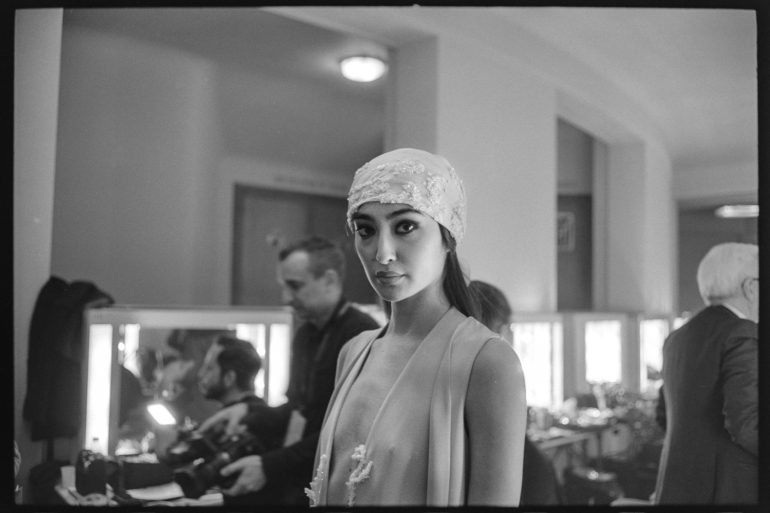


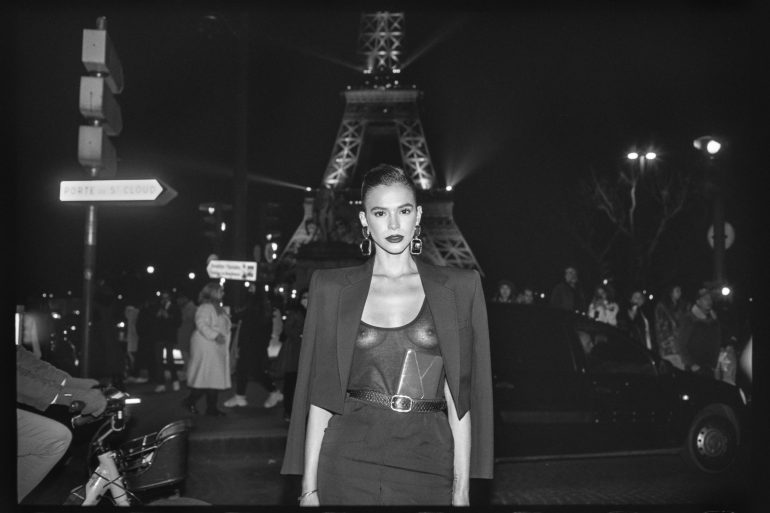
What makes his Paris Fashion Week work distinct is that the photographer marries two genres into one. His documentary approach reveals the diversity and the environmental portraits of models and attendants depict a distinct side of Paris. Everyone here is dressed well, confident, and certainly not shy of the camera. However, in some photographs, where there are too many people, the confusion is palpable, which also speaks volumes about the event. “I’ve decided to be close to my subjects, with strong frames, without artifacts, and no distractions. I was very satisfied because when you see the series, you cannot distinguish a common person from a celebrity.”
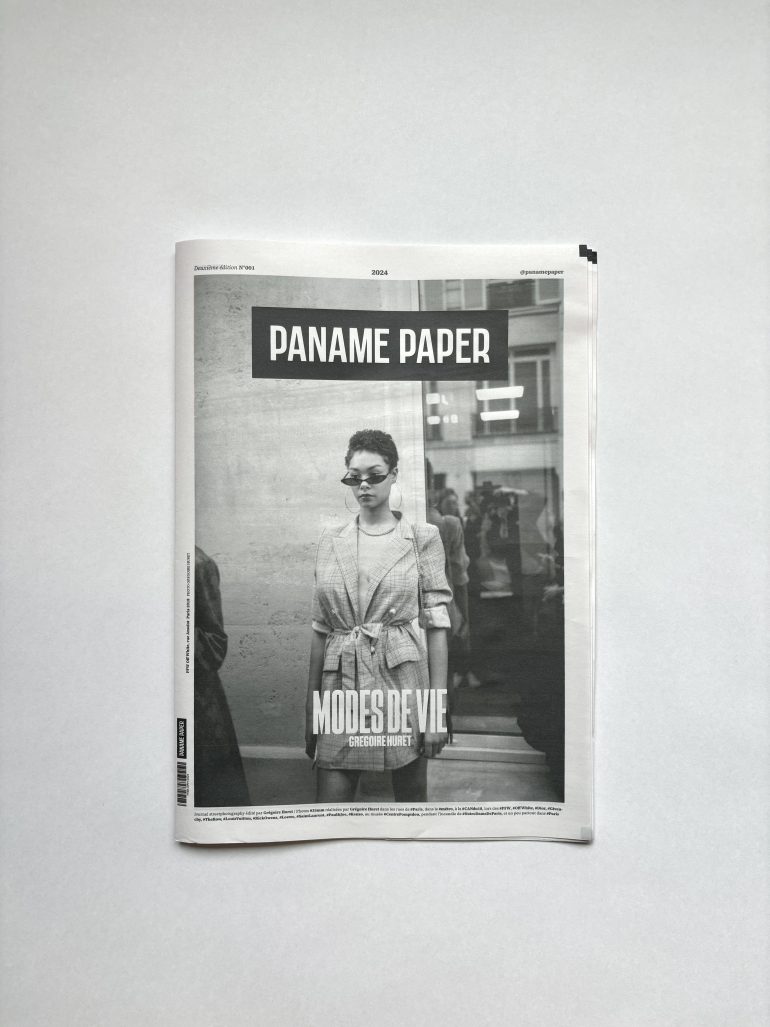
The series is also printed as a zine, designed like a newspaper called Paname Paper (Paname is slang for Paris, while ‘Modes de vie’ means “way of life.”) The ingenuity of this lies in Grégoire Huret’s comment about the fashion industry and its fast-paced, transient nature while also highlighting the theatricality and permanence of extraordinary moments in Persian life. “Sometimes, I print big prints on paper and stick them on Paris walls. It’s funny to make a solo show totally in the open air. People talk with you and your art; it’s very interesting to confront them,” he states, explaining his motives behind Paname Paper.
Grégoire Huret’s Magic of Film and Everyday Moments
Since the beginning, Grégoire Huret has loved 35mm film photography. While his journey began with Rollei, Huret switched to Leica M6 in 2015, paired with Kodak Tmax and Ilford Delta. The photographer says about his choice of film and gear: “The black-and-white films help me keep the situation under control. They help me stay focused on the subjects. In photography, I want to go straight to the point. I need to stay light and free to move fast.” And once his roll of film is done, Huret develops the work in his kitchen. “Only the best are lucky enough to get a print by Picto Paris. It’s magical, maybe the best moment after all the process,” he states.

Much of how he frames a photograph is revealed by looking at his inspirations. For instance, Huret likes the works of great masters such as Henri Cartier Bresson, Mary Ellen Mark, Robert Frank, Bruce Davidson, Harry Gruyaert, Marc Riboud, and Henrik Purienne. “All these photographers taught me to stay focused on the situation, the story first, and the subjects overall,” he explains.
Either my photo is good, or it is not. Then there is no point in processing and reprocessing it endlessly to try to save it.
Grégoire Huret
Given Huret’s photography, we also wanted to know his thoughts on AI and what he thinks of it gradually seeping from the cracks of the medium. In his response, he explains: “The magic of everyday life requires being there; it cannot be invented. There are improbable situations that could be recreated, but in truth, they only happened once and only once, and in this, they are essential for me.”
Grégoire Huret’s photographs prove that our life is an ever-evolving movie, with varied characters tethered to reality and imagination. Every nook and corner offers drama, solitude, amazement, and inspiration. These elements are so fleeting that if you blink, you might miss the very essence of what makes us human.
AUTHENTICITY STATEMENT
The Phoblographer works with human photographers to verify that they’ve actually created their work through shoots. These are done by providing us assets such as BTS captures, screenshots of post-production, extra photos from the shoot, etc. We do this to help our readers realize that this is authentically human work. Here’s what this photographer provided for us.


Get rid of the ads!
Did you enjoy reading this article as much as we enjoyed writing it? There's a way to support us and our reporting, getting ad-free navigation and more as a bonus. Subscribe to us for less than a coffee per month —just $3.99— or take advantage of our yearly subscription with a hefty discount for only $25.- An ad-free experience
- A free mystery box for Lightroom or Capture One
- All the books in our store
- 20% discount on Capture One
- 30% discount on Imalume Photo Theft Protection
- 20% off Herbs and Kettle Tea Company.
- 20% off your order from MPIX printing services.
- 5% off Viltrox Products via their eCommerce store.
- 10% off all film developing, printing and scanning services from Blue Moon Camera and Machine
- 15% off 7Artisans products: The lens and accessory maker is offering a sweet discount for Phoblographer's readers.
- 15% off a VSCO One subscription: Get a bunch of great tools with their all-in-one package.