Sometimes, you hear an unexpected report that you simply hope becomes a reality. It is an idea that makes you stretch your head, but, at the same time, it seems quite logical. In this case, it is an article about a Sony cinema camera; however, the more we looked at it, the more we began to think about how cool it would be if the company developed the technology. Okay, we won’t run around the bush any longer. The rumor is about a Sony camera with features… Wait for it… A black and white sensor!
First reported by Sony Alpha Rumors, the report highlights how Sony may be working on the a7 L, a cinema camera featuring a black-and-white sensor, where the “L” stands for Luma. Other features include a 48MP sensor and the ability to shoot “uncropped 8K/30p, 4K/60p recording.” While the news has now been dismissed as “fake,” we couldn’t help but wonder: Can Sony give photographers a cheaper version of Leica’s Monochrome cameras?
The Classic History of Leica Monochrome
Before we get into Sony, let’s have a look at what Leica offers its users. We all know buying a Leica is not easy. The exorbitant price can only be provided by those who come from wealth, which is not a large chunk of us. But what makes Leica so desirable is not its iconic red dot (that’s perhaps the last thing on the list) but the ingenuity of its cameras. The Leica Monochrome, in this sense, is not so different.

Leica launched the M Monochrome in 2012, a camera that shoots purely black and white. As with other Leica devices, some loved the technology, while others did not see its point. In our review, we also highlighted how the camera is quirky, which is the case with most Leicas. “That feel and the breathtaking image quality is what we all love about the Leica M, and the legend lives on with the M Monochrom. It’s just as much of an M as any of the others, and while clearly a very specialized camera, it is capable of producing the most beautiful images coming from an M yet,” we wrote.
From there on, the legacy kept on building. Leica released the M Monochrome M (Typ 246) in 2015, the M10 Monochrome in 2017, the Q2 Monochrome in 2020, and the M11 Monochrome last year. With each iteration, Leica improved the cameras, offering a higher megapixel count, fast autofocus, less noise at high ISO, and a robust build with the classic style. However, the price range of either the M and Q2 Monochrome is close to $8000 and $6000, respectively. That’s without counting the extra lenses that you may buy.
Sony Monochrome/Infrared Sensor is What We Need
One could even say that Sony has perfected the art of a good mirrorless camera. The company’s APS-C and full-frame lineups offer a wide variety for its users. For instance, the Sony a7c II offers exceptional image quality for an entry-level camera, whereas the full-frame Sony a9 III is exceptional for off-camera flash. As you know, these conclusions were made after our rigorous real-world tests of the devices. Considering their growth in the past decade and a half, it is safe to say that Sony can manufacture a sensor that takes photography to new heights.
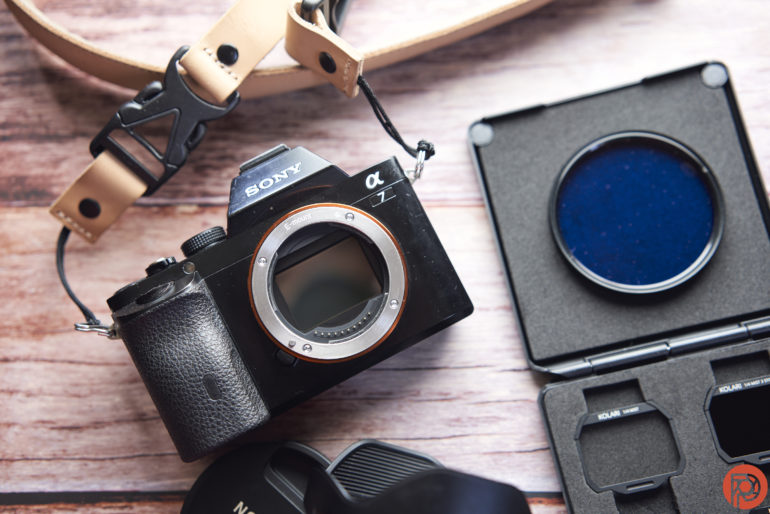
If Sony launches a monochrome camera, it is safe to assume that there will be buyers. The same goes for infrared technology. In fact, our editor, Chris Gampat, changed the sensor of his old a7 to infrared, giving the device a new lease on life. The images that he captured were exceptional hues of pink, making the transition worth every penny. Looking at his results, I can confidently say that Sony can be a real competitor to Leica. Sure, the quality is quite different, and so is the ergonomics. However, Sony can offer a cost-effective monochrome or infrared camera. While the full frame editions can be expensive, they also can trickle the technology down to APS-C, enabling beginnings to push their creativity to new heights.
With Canon and Nikon still catching up to Sony, an engine innovation like this can breathe life into photography. Most cameras today follow the herd; nothing exciting is happening in the photo department. Most makers, including Sony, focus on video, which is the next big gig for social media. In such scenarios, photographers feel left behind. It is also why retro cameras are making such a huge comeback, thanks to the distinct design.
With the monochrome and infrared sensors, Sony can further dominate sales. But as they do so, they also make many photographers exceptionally happy.
Get rid of the ads!
Did you enjoy reading this article as much as we enjoyed writing it? There's a way to support us and our reporting, getting ad-free navigation and more as a bonus. Subscribe to us for less than a coffee per month —just $3.99— or take advantage of our yearly subscription with a hefty discount for only $25.- An ad-free experience
- A free mystery box for Lightroom or Capture One
- All the books in our store
- 20% discount on Capture One
- 30% discount on Imalume Photo Theft Protection
- 20% off Herbs and Kettle Tea Company.
- 20% off your order from MPIX printing services.
- 5% off Viltrox Products via their eCommerce store.
- 10% off all film developing, printing and scanning services from Blue Moon Camera and Machine
- 15% off 7Artisans products: The lens and accessory maker is offering a sweet discount for Phoblographer's readers.