


Photography has three critical stages: shooting, editing, and printing. These components are so paramount that Ansel Adams wrote a trilogy detailing it that continues to be referenced in photography schools. However, the era in which the books were published differed greatly from today’s circumstances. Back then, two photographs would never look the same, even if shot in the same environment. Call me a cynic, but it was evident whoever picked a camera, an expensive hobby for some, delivered pictures with a voice and a life of their own. However, a distinct visual sense and tone appear to be a secondary thought to many today. One could even indicate that the possible culprit of the casual way of photography is the enormous reliance on photo editing.
The Love and Labor of Darkroom
I do not aim to romanticize the nature of darkroom and analog photography. Yes, film photography was cumbersome, and one practically inhaled toxins and chemicals. But, in some ways, the two compelled you to do better. Analog cameras require you to learn exposures, with people even employing cheat sheets to remember the numerical. But if you missed even one detail, your image was ruined. So, a good and diligent photographer would make several exposures and frames just to be on the safe side. It was also why photography was held at the highest status back in the day. One had to press forward to obtain the best shots in-camera. Photo editing was the subsequent step in getting their pictures to look as close to reality as possible in print.
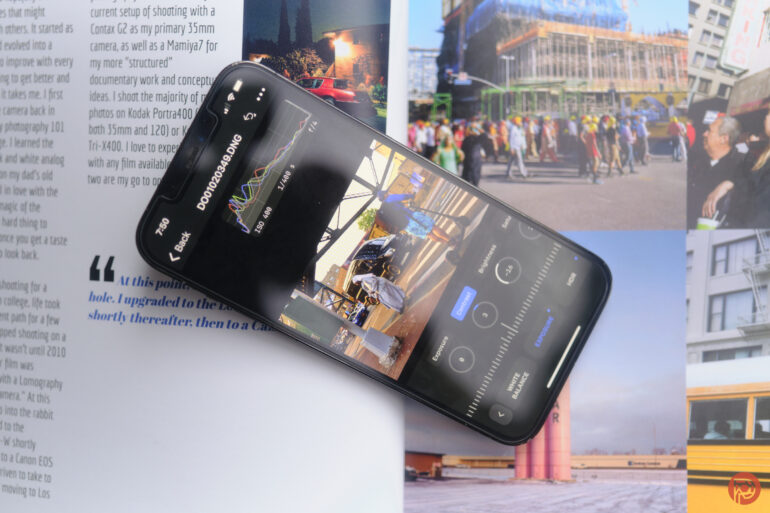
The Ease of Digital Photo Editing
As digital cameras and photo editing tools became democratized, new ways of seeing emerged in every genre. New photographic styles are abundant, from Bruce Gilden‘s harsh flash portraits to Todd Hido‘s tranquil and enigmatic photos of houses at night. While renowned photographers taught us that the evolution from analog to digital can be beneficial, some of us have been leaning on photo editing software too much. I don’t exactly remember when, but I began to notice picture after picture that appeared identical. In fact, just a few months ago, a photographer and I discussed how one can barely distinguish between the artists in the fashion and street photography spheres.
What Possibly Went Wrong?
It’s often said that you stop trying when things come too easily. I do not believe in this, as easy means uncovering methods to shine. An example of this is Inka and Niclas’ mysterious portraits, which are unlike anything you have seen before. Per their interview with The Phoblographer, the photographers used reflective suits and flash to create these stunning self-portraits. One could easily pass their work as computer-generated, but the reality is far from it. While photographers like Inka and Niclas make storytelling the crux of their photography (and keep editing to a minimum), there is a surfeit of artists highly dependent on favoring the visuals created with Instagram filters and presets. As Dan Ginn, a staff member of The Phoblographer, noted: “Presets have become a lucrative form of income for many photographers. The more established photographer can easily charge hundreds of dollars to those that want to replicate there images. The result is that many photo streams are almost identical to the other.”
What is the Correct Course?
Are photo editing tools making us lazy? That entirely depends on how you approach photography and your intention to edit. For instance, if you wish to cater to a certain audience on social media, you certainly are doing some disservice to yourself and your work. Trends and algorithms are always here to force the best of the bottom of the feed, and that certainly is disappointing. But you must ask yourself: what good can come from following a mediocre tide?
As for professional photographers who dabble in events, advertisements, and weddings, I believe presents and photo editing tools are God’s saving grace. The time-bound deadlines and the plethora of photographs are humanly impossible to edit in two days. But if your salary depends on it, then you must achieve it anyway, including laboring over the edit for 24 hours straight. Despite these challenges, signature style is paramount for professional photographers, as that is what brings new clients to your doorstep. The prime concern, however, would be the ethical use of photo editing tools. For instance, AI photo editing tools can change your images in a few seconds but can take away your creative autonomy. This way, you are similar to a photo lab technician that most amateurs would go to get the final prints.
As Saudi Arabia’s most celebrated photographer, Tasneem Al Sultan, once told us in an interview: “I believe that a photographer needs to take a photo as well as they can on camera, to minimize the work and the efforts in the end.” As Al Sultan notes, in the end, your photographs will do the talking, and photo editing is a small measure in making that great photograph excellent. But if the picture itself is bad, no amount of cropping, present, or shady Instagram filters can do justice to it. Perhaps it’s time we give modern photography a little more love and look at photo editing as a form of therapeutic practice to rejuvenate that devotion to the medium.
Get rid of the ads!
Did you enjoy reading this article as much as we enjoyed writing it? There's a way to support us and our reporting, getting ad-free navigation and more as a bonus. Subscribe to us for less than a coffee per month —just $3.99— or take advantage of our yearly subscription with a hefty discount for only $25.- An ad-free experience
- A free mystery box for Lightroom or Capture One
- All the books in our store
- 20% discount on Capture One
- 30% discount on Imalume Photo Theft Protection
- 20% off Herbs and Kettle Tea Company.
- 20% off your order from MPIX printing services.
- 5% off Viltrox Products via their eCommerce store.
- 10% off all film developing, printing and scanning services from Blue Moon Camera and Machine
- 15% off 7Artisans products: The lens and accessory maker is offering a sweet discount for Phoblographer's readers.