


I sincerely think that one of the greatest street photographers of our time is Jonathan Higbee — and you can see this from his work around patterns and morifs. Traditional media calls it irony; and that’s surely the case. But it’s also just how the human eye sees things when it looks at the world objectively inside of trying to make sense of what’s in front of us. Patterns are easily seen when you look at couples walking around. After some time, they eventually start to look like one another, dress alike, etc. You can often tell a lot about those people by mannerisms like this. But those are patterns that you truly need to dissect to see. We’re talking about much more obvious ones.


The human brain is attuned to patterns partially because it helps us make sense of what’s in a scene — but when doing street photography, we don’t necessarily connect the dots. Perhaps it’s because we’re so often caught up in our own lives and actions that we’re just not letting ourselves be vulnerable to what’s around us. What you’ll realize is that all forms of art use the establish-repeat action of some sort. In cinema, it’s used in story-telling and that’s why people can often predict what will happen. But with street photography in particular, we can’t predict real life.
One of the reasons for this is that we’re thinking in 3D, so our eyes tend to fixate on one thing or another. At least, that’s how the Western mind thinks. Eastern thinkers tend to look at the whole picture instead.
Street photographers aren’t the only ones who can use this — so many other photographers can apply it too. Landscape photographers can often make their images look like a painting or play with a particular abstract moment to make it look like something else. Part of this is because of how our memory and mind work to make sense of scenes. When done just right, it can make a person stare at the image and realize that something else is at play.
T

In the image above, we’re looking at a standard front of a building. But when the right light hits it, a shadow is created that connects the awning to the window. It also acts as as a parallel to the shadow below on the ground. Patterns like this make for more visually intriguing images. So the idea sometimes comes from thinking of what kind of pattern you could create, and to frame your scene to make that pattern happen.
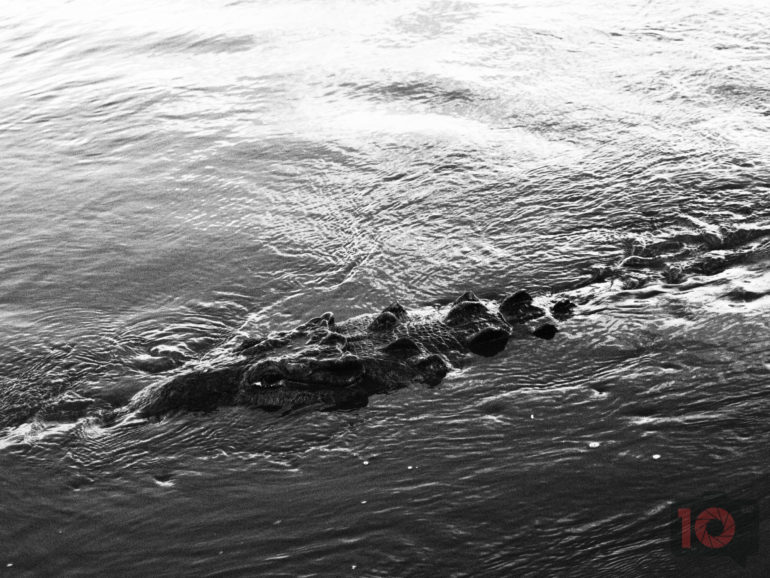
Sometimes, making an image in black and white can make patterns more effective. When we look at the scene above, we’d think that it’s probably just a log in the water or some rocks. But in fact, it’s a crocodile.
Get rid of the ads!
Did you enjoy reading this article as much as we enjoyed writing it? There's a way to support us and our reporting, getting ad-free navigation and more as a bonus. Subscribe to us for less than a coffee per month —just $3.99— or take advantage of our yearly subscription with a hefty discount for only $25.- An ad-free experience
- A free mystery box for Lightroom or Capture One
- All the books in our store
- 20% discount on Capture One
- 30% discount on Imalume Photo Theft Protection
- 20% off Herbs and Kettle Tea Company.
- 20% off your order from MPIX printing services.