

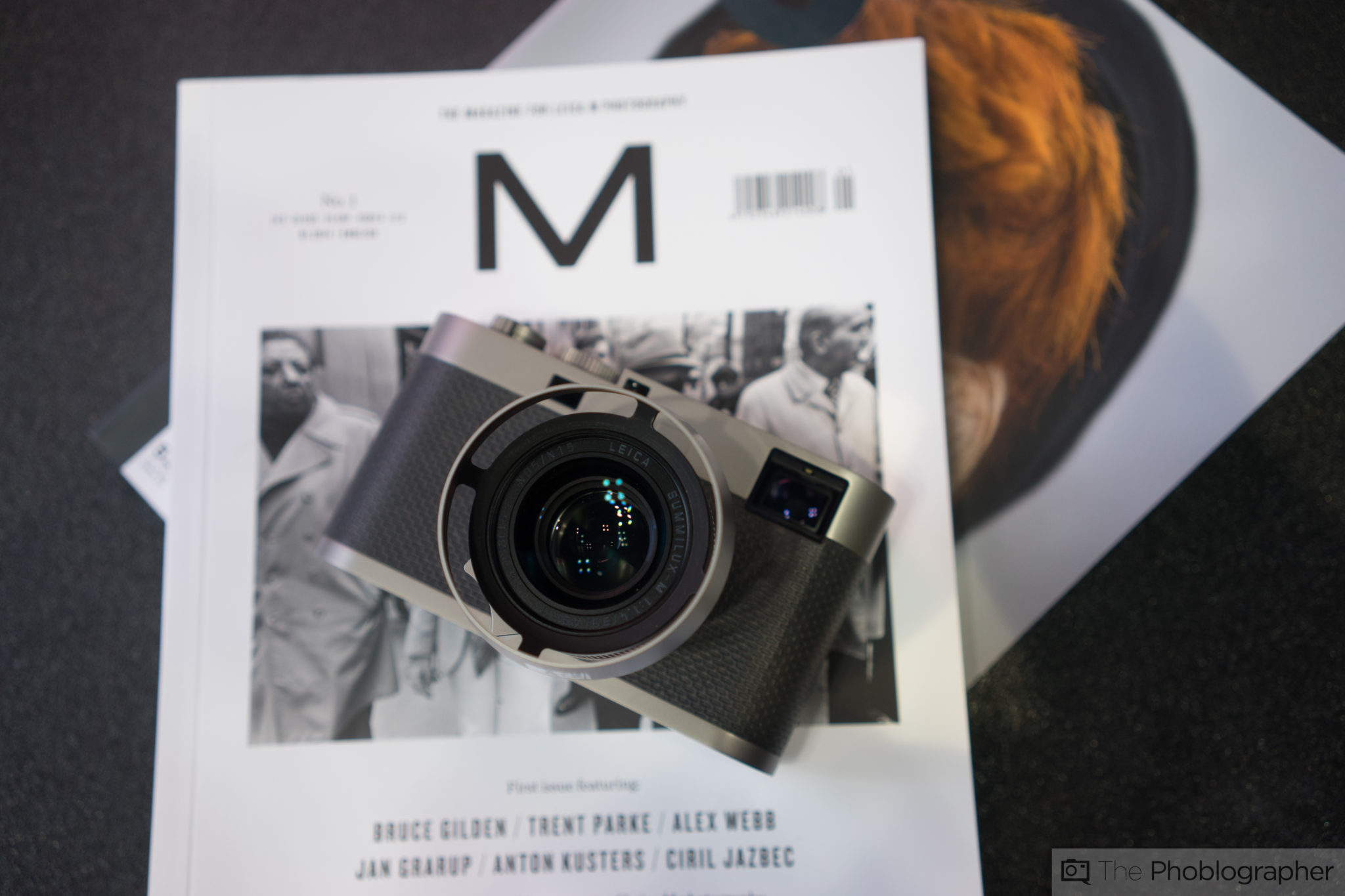
Half a century after the end of German dominance in camera and lens construction, the German Photo Industry Association will be dissolved in 2025. As a contemporary witness, Italian photo journalist Giulio Forti looks back at turbulent times that he experienced and that still have an impact today. Until the 1960s, the German camera industry was considered the world leader. Its decline took place between 1965 and 1979. In this relatively short period, Japanese camera production grew from 3.5 to 10.8 million units, while that of the West German photo industry collapsed from 3 million to 310,000 units, of which only 5,000 were SLR cameras. What had happened?
This article and images are syndicated from Profifoto; a fellow member of TIPA. The Phoblographer and Profifoto have an article exchange agreement. You can view the original here. It was originally written by Giulio Forti. In fact, this article is a section of a book called Nikon: A Japanese Story. The article is a translation.
Table of Contents
TURNING POINT
At the end of the 1960s, the photography industry, like many other areas, underwent a technological change. Electronics replaced mechanics in camera construction too. Integrated circuits (ICs) made it possible to automate functions that had previously had to be controlled manually by the photographer, which benefited beginners in photography in particular. Semi-automatic exposure systems were soon followed by the first electronically controlled shutters, in which capacitors and electronic resistors replaced the precision mechanics that had previously been required.
The first camera made in West Germany to use an electronic focal plane shutter was the Contarex SE developed by Zeiss Ikon and Voigtländer in 1966.
But even though the West German photography industry was a technological leader, after two decades of growth it slipped into a deep crisis that affected all major manufacturers. In 1970, the situation of Zeiss Ikon and other well-known German camera brands became so precarious that the cancellation of Photokina was discussed. KoelnMesse was only able to avoid closure thanks to new exhibitors from Japan.


ZEISS
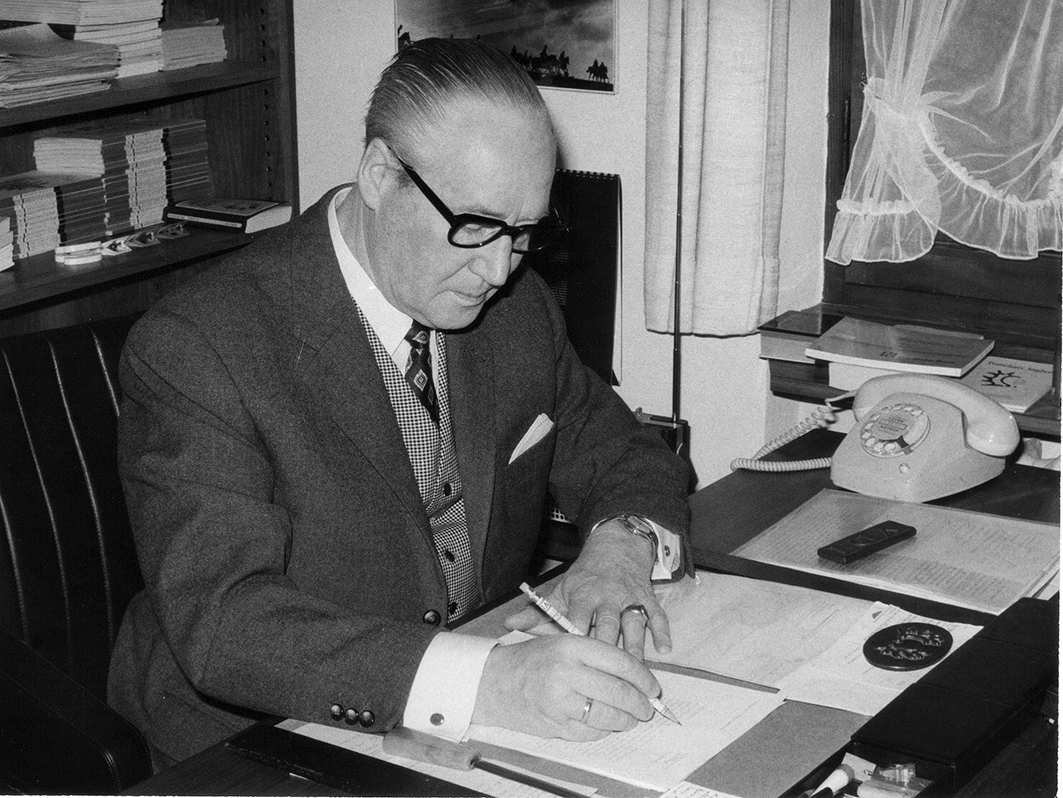

Heinz Küppenbender, Carl Zeiss, 1973
Sales of Zeiss Ikon cameras and lenses had fallen by 18% in the second half of the 1960s, while demand for cameras at acceptable prices and with modern features was increasing. Instead of reacting to this, Zeiss Ikon and other German camera manufacturers continued to rely on tried-and-tested concepts, convinced that this would continue to put them ahead of the Japanese competition. During the same period, wages and salaries as well as production costs in Germany rose by 40%.
The losses, which amounted to around two million marks at Zeiss Ikon in 1965, rose to 6.6 million after Zeiss rescued Voigtländer two years later. In 1970, 9.9 million were missing from the balance sheet. On September 2, 1972, Heinz Küppenbender, then head of Carl Zeiss, announced that his subsidiary Zeiss Ikon would close its camera division and the factory in Stuttgart.
Germany was shocked, but Küppenbender had long since set in motion a (then still secret) Plan B. First, he sold the Voigtländer factory to Rollei, including a license to manufacture Zeiss lenses.
In order to be able to sell these himself, he also planned to revive the legendary Zeiss brand Contax. Instead of with German partners, negotiations were initially held with Asahi Kogaku. Although these were unsuccessful, Asahi did win a license to use the bayonet of an SLR camera developed in Dresden before the war that never came onto the market. This Syntax bayonet has been used for the Pentax K series since 1975.
Instead, the Contax brand license was given to a company that was founded in 1949 with a starting capital of 600 dollars on Lake Suwa in Okaya, Japan, to produce components for electric clocks. Twenty years later, Yashica was a leader in electromechanics and started a joint venture with Carl Zeiss, which SPIEGEL first reported on in April 1974: “The cooperation agreement [concerns] the development and sale of high-quality SLR cameras.” Designed by Porsche Design, the Contax RTS caused a stir at the 1974 photokina. The brand stood for premium cameras for the next 30 years before disappearing from the market in 2005.
But back to the late 1960s: At that time, Heinz Küppenbender did not see the cause of the misery at Zeiss Ikon in the outdated product range, but blamed inflation and the resulting increase in export prices. Acute financial difficulties also caused Zeiss to cancel a lucrative order for optical components for the Leopard tank, in which Ernst Leitz Wetzlar was also involved.
LEITZ
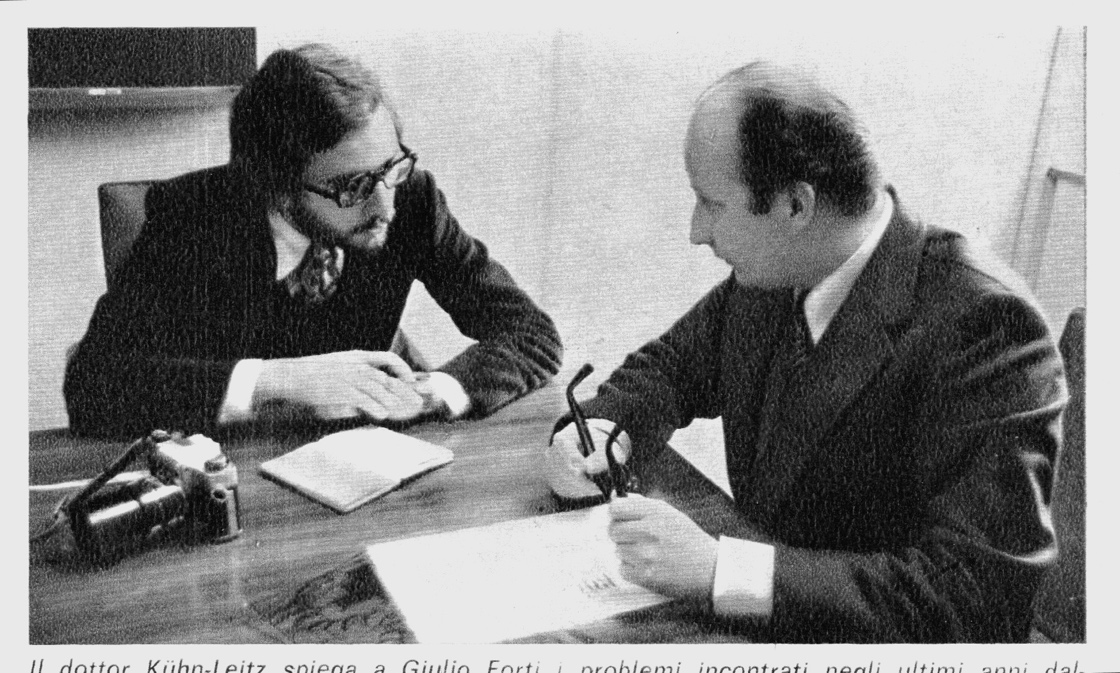

The author Giulio Forti in conversation with Dr. Knut Kühn-Leitz about Japanese camera manufacturers, May 1973
This was one of the reasons why the Leitz family found themselves in similar difficulties to Zeiss and sold 25% of the company to Wild Heerbrugg, a company owned by the Schmidheiny family and a manufacturer of microscopes, theodolites and inclinometers for civil and military use.
The Leitz managing director at the time, Knut Kühn-Leitz, nephew of Ernst II, complained at the time about the high production costs in Germany, “while in Japan they are 50% lower because the government supports exports”, as he knew from previous dealings with Minolta in the field of microscopy. His advice was to lay off 2,000 employees in Wetzlar, set up a factory in Portugal and launch the Leica CL, which was manufactured by Minolta in Japan. Shortly afterwards, the Leicaflex was replaced by the R3 Electronic, which was a Minolta XE-1 in Leica guise. The CL was so successful that it cannibalized sales of the M5 produced by Leitz itself, until both were discontinued and Leitz stopped producing cameras with the M bayonet for almost three years. M production was only resumed due to sustained demand, but at the Leitz factory in Canada because production in Germany did not seem economically feasible.
PHOTO SHOP
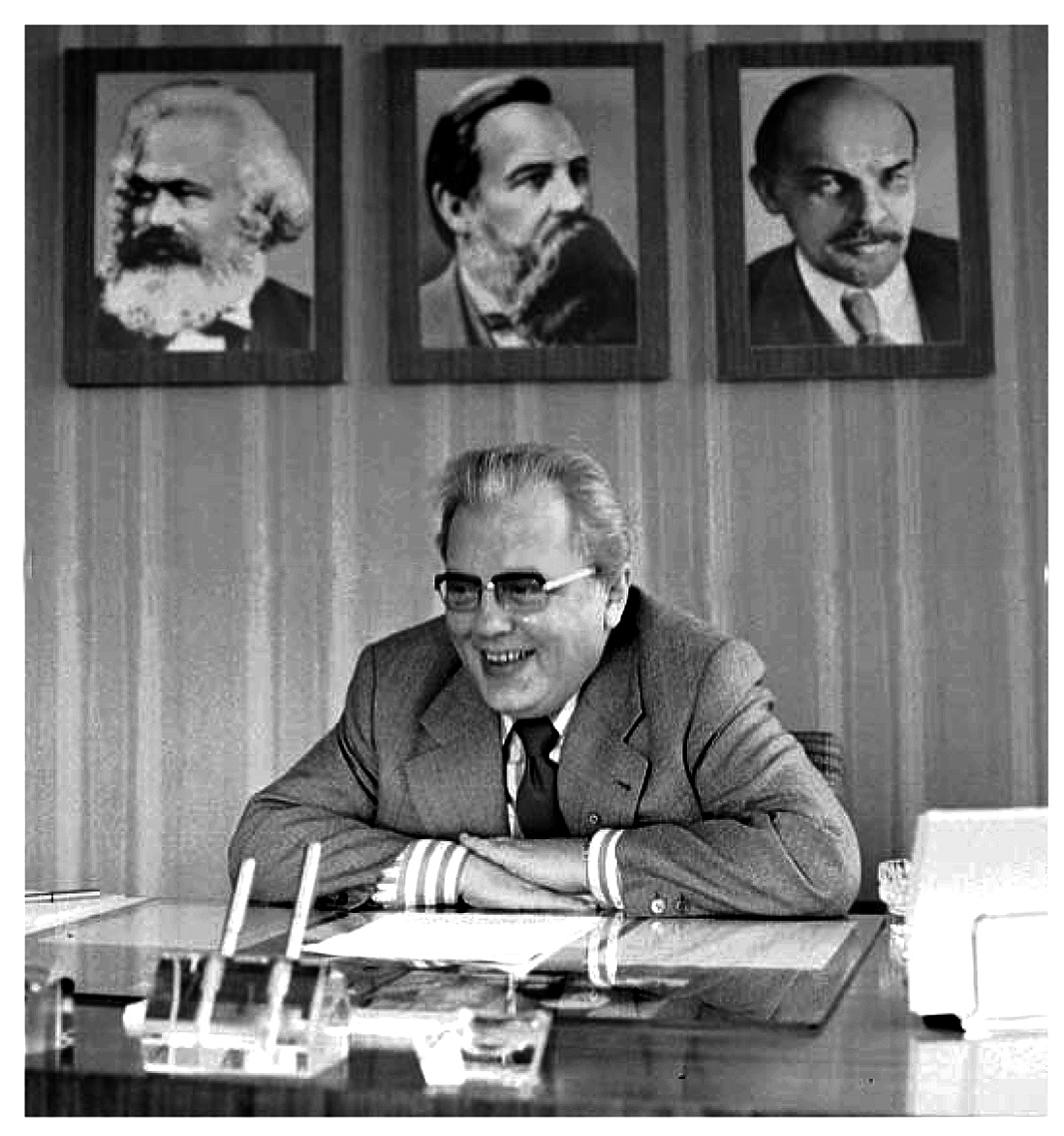

Wolfgang Biermann, Director of VEB Carl Zeiss Jena since 1975
The Federal Cartel Office caused additional problems in the German photo market during these years, as it objected to the price fixing that had been in place for photo products until then. After this was abolished, the prices of cameras and lenses fell by an average of 20%. In order to compensate for this, manufacturers cut discounts and bonuses for photo retailers, a move that was to prove very expensive: major players in the photo retail trade such as Photo Porst, Foto-Quelle and Ringfoto immediately negotiated with VEB Pentacon about importing Prakticas from the former GDR and with Zenit from the Soviet Union about supplying inexpensive 35mm SLR cameras. The Japanese manufacturers Chinon and Cosina were also prepared to supply Porst and Quelle cameras and lenses under their own brands. The result was that the import share of the German camera market rose to 80% by the mid-1970s.
During the same period, German camera brands also lost even more market share in important countries in Europe and the USA than in Germany. In 1970, there were 5.8 million cameras from Japan (of which 1.6 million were SLRs), around 8,000 cameras from West Germany and 130,000 from East Germany. In addition, despite the Cold War, around 100,000 came from the USSR. For comparison: the Japanese photo industry delivered a total of 7,720,505 cameras last year.


MADE IN JAPAN
After conquering the American market and attacking Europe, exports by Japanese camera manufacturers increased steadily when an international currency crisis occurred in the early 1970s. On August 15, 1971, American President Richard Nixon unilaterally canceled the United States’ commitment to exchanging dollars for gold. The dollar thus lost its function as an anchor for other currencies overnight. The rest of the world was completely unprepared for Nixon’s decision to combat rising inflation and secure funding for the Vietnam War. At the same time, Nixon introduced a ten percent tax on imports, which, among other things, caused German camera exports to collapse further, while Japan was able to keep its exports stable thanks to government support despite the 15 percent rise in the yen. Nevertheless, the development also led to the relocation of production of cheaper cameras and lenses to low-wage Asian countries and to the expansion of automation in domestic production. At this time, Canon opened its first factory in Taiwan, Asahi Kogaku in the Philippines, Yashica in Hong Kong, but Japanese camera manufacturing plants also opened in Brazil, Ireland and Portugal. Thailand and Malaysia were also attractive.
ROLLEI
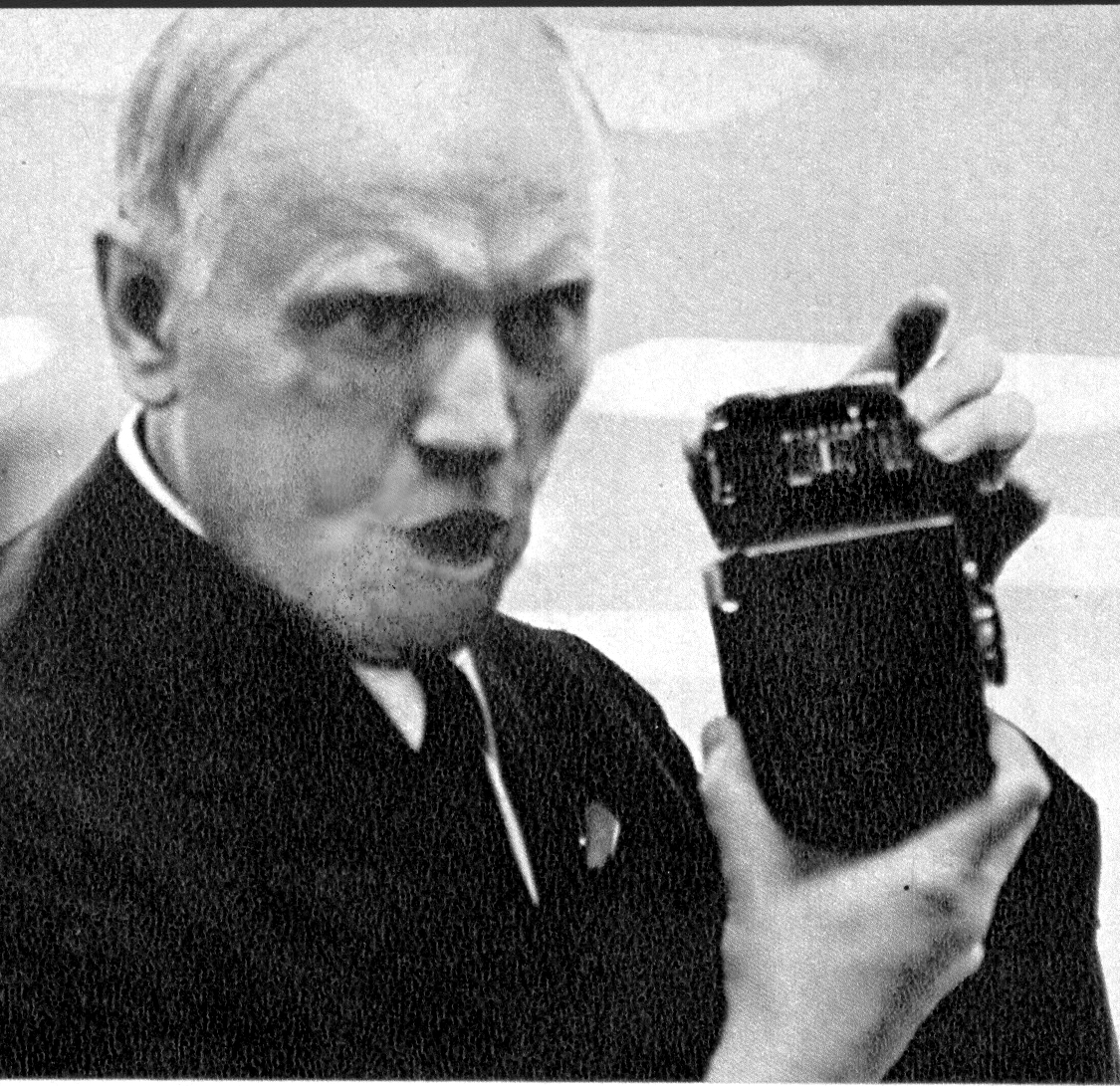

Heinrich Peesel, head of Rollei-Werke, at the presentation of the Rollei SLX 6x6cm, Singapore, 1973 (PHOTO: CESCO CIAPANNA)
Heinrich Peesel, then general director of the Rollei works, wanted to replicate this Japanese strategy by producing the Rollei SL35 in the small state of Singapore, where low wages and tax breaks were tempting and promised a high profit margin. The 35mm camera made its debut in the spring of 1973, but proved to be neither technically nor price-competitive. Peesel had forecast sales of 300 million marks and a profit of eight million marks in the first year, but instead made a loss of ten million. After two years, he had to lay off 800 employees in Braunschweig and 2,000 in Singapore. The company went bankrupt in 1981, causing the Norddeutsche Bank to make a loss of 500 to 600 million marks. “We shouldn’t have trusted the Germans,” said Hon Sui Sen, the finance minister of Singapore, from whom Peesel had wrested tax exemptions and other benefits for 15 years.
REPUTATION
In order to get to the bottom of the success of the Japanese camera industry, the editor of the Italian photography magazine Fotografare, Cesco Ciapanna, paid a visit to the country in 1972. Between official appointments and interviews with Japanese managers and engineers, comments about German competitors were repeatedly made. In response to the accusation that German cameras had been copied before World War II, one manager replied that these models had been reworked in order to simplify them and optimize production costs and profits.
And today? (Absolutely excellent!) lenses from the Japanese manufacturer Cosina, which also makes photo lenses for Zeiss, are marketed under the Voigtländer brand. Photo accessories from China are sold directly under the Rollei brand. Only Leica has managed, after numerous crises, to become a globally respected manufacturer of premium photo technology “Made in Germany” again. In addition to Wetzlar, production still takes place in Portugal, and the sensors in Leica cameras currently come from Sony, as with almost all other cameras. The fact that, after Huawei, Xiaomi is now cooperating with Leica in the development of its smartphones shows that photo technology “Made in Germany” still has (and rightly so) an excellent reputation worldwide, which Sony also knows how to use for its own purposes with the Zeiss brand.
About the author

Giulio Forti is honorary chairman of the Technical Image Press Association, TIPA, and has been publisher and editor-in-chief of FOTOGRAFIA REFLEX since 1980. In 1994 he was awarded one of the prestigious Photokina obelisks.
His article on the decline of the German camera industry is based on a chapter of his book “Nikon, a Japanese story”. In this exciting and expertly written specialist book, Giulio Forti describes with great knowledge how a passion for photography could develop in early 20th century Japan against the backdrop of the history of the Empire of the Rising Sun, which was marked by wars and conquests. More information about the book can be found here.
Get rid of the ads!
Did you enjoy reading this article as much as we enjoyed writing it? There's a way to support us and our reporting, getting ad-free navigation and more as a bonus. Subscribe to us for less than a coffee per month —just $3.99— or take advantage of our yearly subscription with a hefty discount for only $25.- An ad-free experience
- A free mystery box for Lightroom or Capture One
- All the books in our store
- 20% discount on Capture One
- 30% discount on Imalume Photo Theft Protection
- 20% off Herbs and Kettle Tea Company.
- 20% off your order from MPIX printing services.
- 5% off Viltrox Products via their eCommerce store.
- 10% off all film developing, printing and scanning services from Blue Moon Camera and Machine
- 15% off 7Artisans products: The lens and accessory maker is offering a sweet discount for Phoblographer's readers.