

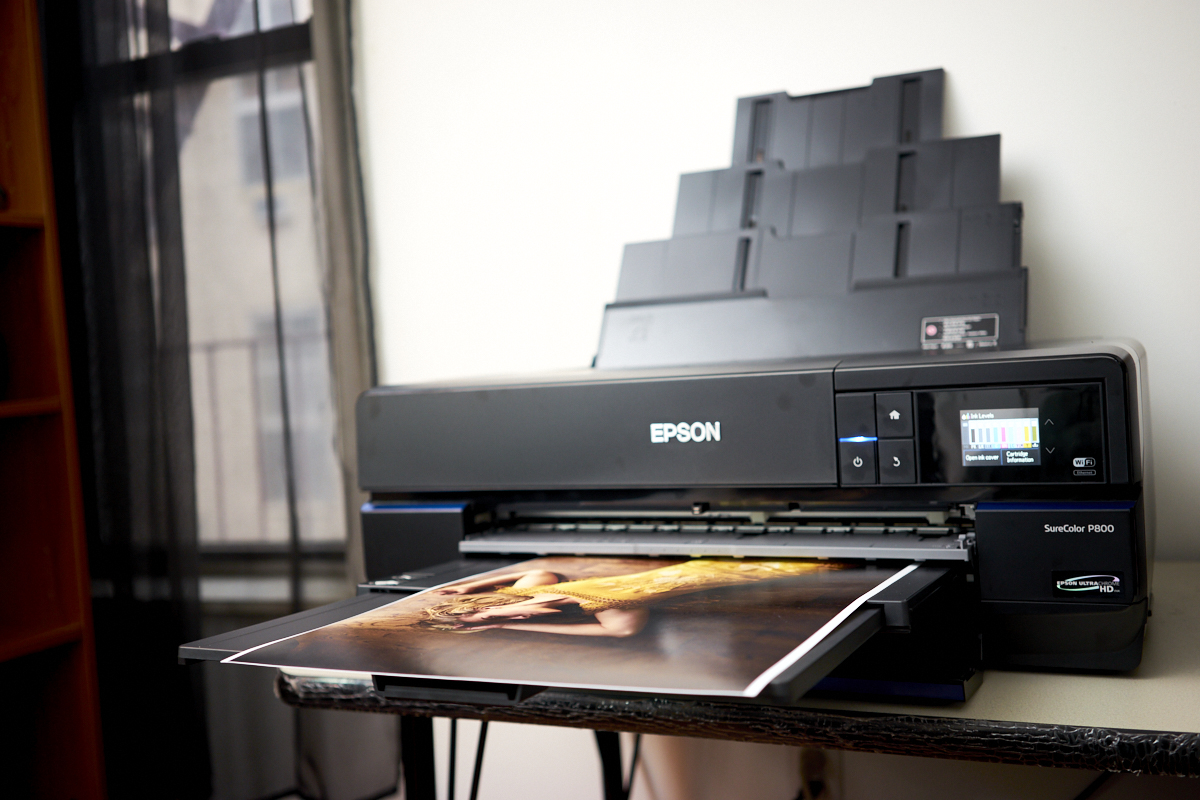
I love to make prints — and I think that everyone who calls themselves a photographer should consistently make prints to showcase their masterpieces. The sensory experience of holding and looking at a printed image is far unlike staring at a screen. Big printer companies like Epson and Canon have only ever made photo printers using ink. And sure, there’s the dye sublimation process too — but that’s meant for a completely different kind of print. I truly wish, however, that Canon or Epson would’ve made a more special kind of printer that somehow mimics processes you can only do in the darkroom by hand. Let’s call it an Alternative Process Printer.
The idea for this come from the fact that you can print so many images to Instax and much more. So why then, theoretically, can’t we do other processes?
So, what am I talking about?
- Perhaps a cyanotype printer could take your image and enlarge it onto the surface, expose it, and then spit it out so you can put it in a water bath all by yourself. Alternatively, you could put it into something like green tea or whatever else you want.
- Gum oil prints
- Silver gelatin prints
- Direct positives with the chemistry in the printer and all
Does this sound like something I could dream about and would never come to market? Sure. But the Alternative Process Printer is also something that I truly think Canon or Epson could’ve made and made a lot of money with it. In the same way, they make large format printers, they could make printers with built-in darkroom processes.
There’s a market for photographers who would buy these, especially with so many photographers recently returning to the darkroom to take more control over their images. But more importantly, photographers would probably gladly pay for the ability to make their images look like something else in person. It’s something that they could sell to clients, followers, fans, etc. And more importantly, it makes the process more available to others.
That’s part of why film is still seen as niche; it’s not simple, so to speak. It hasn’t adapted, and the tools around it to support it haven’t adapted much either. That’s a problem. But more than anyone else, Canon and Epson could work with various paper companies on the market or manufacture the paper needed to make art like this.
Get rid of the ads!
Did you enjoy reading this article as much as we enjoyed writing it? There's a way to support us and our reporting, getting ad-free navigation and more as a bonus. Subscribe to us for less than a coffee per month —just $3.99— or take advantage of our yearly subscription with a hefty discount for only $25.- An ad-free experience
- A free mystery box for Lightroom or Capture One
- All the books in our store
- 20% discount on Capture One
- 30% discount on Imalume Photo Theft Protection
- 20% off Herbs and Kettle Tea Company.
- 20% off your order from MPIX printing services.
- 5% off Viltrox Products via their eCommerce store.
- 10% off all film developing, printing and scanning services from Blue Moon Camera and Machine
- 15% off 7Artisans products: The lens and accessory maker is offering a sweet discount for Phoblographer's readers.