7 Reasons Why I’m Not Buying the Panasonic GF-2

by Chris Gampat on 11/05/2010

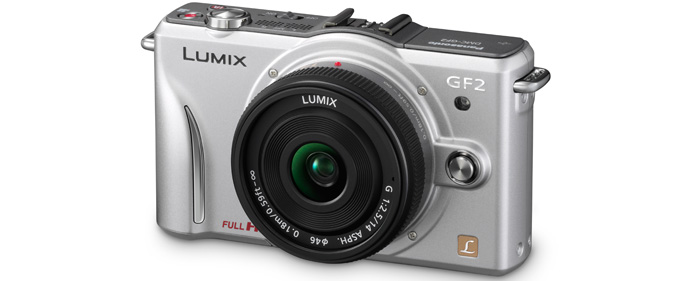
The Panasonic GF-2 made its rounds recently in the news after rumors kept circulating. Now that it’s gone official, I admittedly haven’t had any time with it but it seems like a step in the wrong direction for me. We reviewed the GF-1 (after other journalists took their sweet time returning it to the PR reps) and we also had the G2 for a while. Now, we liked the G2. Sadly, we didn’t totally dig the GF-1 for a couple of reasons though it seemed like it needed just a bit of improvement to make it a solid choice enough for me to want to make the purchase. The GF-2 is instead something more of a higher grade LX-5 (though the Leica version is more my style.) Here are seven reasons why I won’t be buying the GF-2.

Editor’s note: this posting reflects my opinion and doesn’t necessarily reflect those of the rest of ThePhoblographer’s staff or any other company I work with.

Smaller Isn’t Always Better

Once upon a time, I got to play with the Olympus EPL-1. I didn’t like it for ergonomic reasons. The GF-2 seems like Panasonic is just trying to get new Olympus Pen out of the spotlight. Smaller cameras mean that they’re harder to grip onto. Sure the user has that front grip now, but for it to really be any use it will require the purchase of Panasonic’s electronic viewfinder. Packing all of the features and buttons onto a smaller body also doesn’t make pushing them that much easier.

Granted, there is a touch screen: but the touch screen of the G2 is much easier to use because of the larger body that you can grip onto.

The other bad side of the touch screen is that certain settings are always harder to change without taking your eye out of the viewfinder. But if you’re only going to be changing the aperture, shutter speed and ISO you generally shouldn’t have a problem.

I Miss My Top Dial

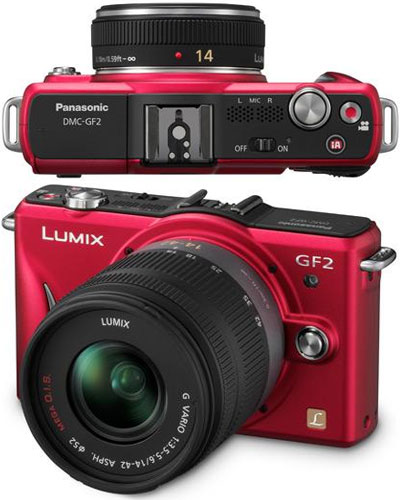
Why, Panasonic, would you get rid of the top dial on the GF-1? I thought it was wonderful. The settings snapped in solidly and it didn’t turn that easily either to ensure that your shooting settings didn’t change easily. Sure, the touch screen will allow those settings to not be touched at all, but if you’re using the viewfinder and want to switch from Manual mode to Aperture then you’ll need to enable the screen first, then choose the shooting mode, and then re-enable the viewfinder and continue to shoot.

That sounds like a pain. If you had used the EP-2′s style of dial, it would have been much more convenient for users.

For the record, the EP-2′s dial is very small and modes are changed using a small wheel that won’t turn easily when the camera is put into your bag.

I Want More Dials

Not only did you get rid of the top dial, but I wanted more dials to begin with. The back dial for changing shutter speed and aperture is nice, but the camera really needed a front dial for even faster changing of settings. The Canon G12 has this now and it’s wonderful. It makes manipulation of settings for street photography so much easier.

And yes, there are many street photographers that adopted Micro Four Thirds bodies.

Seriously, No Microphone Jack?

You gave us 1080p video and no microphone jack? I’m very disappointed because Panasonic helped to pioneer the merging of stills and video with the GH1 and now the GH2 and AF100.

So why not give the successor to one of your most popular cameras a much better boost in the video department? For those of you that say that 1080p HD video is enough, consider the fact that film schools teach that your videos re 60% sound and 40% visual. Yes, the argument can be made that this camera was designed with the focus on still photography first, but then why not put more dials?

No 24p Video Recording
Months ago photographers, reviewers, and cinematographers were ranting that the Canon 5D Mk II needed 60p HD video and before that 24p HD video. The latter has become much more mainstay and useful over 60p (in fact, it has been for years.)

Why is there no 24p for that better cinematic look? You know that someone is going to develop a hack to put it into the camera anyway. And if that can be accomplished by the home brew community it is inexcusable for a corporation with large amounts of money to not be able to do this.

4/3rds and Micro 4/3rds Sensors Still Have to Catch Up

I’m going to admit that Olympus has made some very intriguing progress with the E-5 but that 4/3rds sensors overall need to step up their game. There is no reason why a sensor cannot be developed with amazing high ISOs, lots of detail, and a stellar dynamic range at 8MP or 10MP when Fujifilm did it years ago with an APS-C sized sensor in the S3 and S5 Pro. 4/3rds lenses are capable of resolving quite a bit of detail and Micro Four Thirds cameras can take almost any lens you can think of.

The Sony NEX-5 Has Amazing High ISOs

We reviewed the Sony NEX-5. It’s got a smaller body than the GF-2 but a slightly larger sensor. If you’ve still got this large of a camera body there should be a way to put in more processing power to keep high ISO noise down (like Canon did with the 7D and using dual DIGIC 4 processors.)

To be fair, I haven’t seen production quality images yet but Panasonic products have seemed to not change much in the image quality department for the past couple of years. That’s actually quite sad.

Please Support The Phoblographer

We love to bring you guys the latest and greatest news and gear related stuff. However, we can’t keep doing that unless we have your continued support. If you would like to purchase any of the items mentioned, please do so by clicking our links first and then purchasing the items as we then get a small portion of the sale to help run the website.

Also, please follow us on Facebook, Flickr and Twitter.

  • Jacob

    And the glass in this new prime looks só small (smaller than it was already) and its aperture is smaller :(
    We don’t know about quality yet, and neither do we about the usability of touchscreen only.
    I don’t know yet

    • http://thephoblographer.wordpress.com Chris Gampat

      Touch screens can be fine but I’ve yet to see it implemented well for interchangeable lens compacts besides the G2. The GF2′s ergonomics I don’t think would work for it.

      I’ve got the Leica D-LUX 5 in for review right now (close the the body size and layout) and without that built in image stabilization I don’t see how the primes will be able to take steady and blur-free photos.

  • DFI

    There was a mention of street photography but there was no mention of the importance of vari angle lcd necessary for candid shots and unusual shooting angles.
    This means GF2 belong old school photography where fixed lcd is becoming a classic feature for their automatic restrictive shooting angle. This is the deal breaker to me. To me, to use it is to feel old.

  • DFI

    There was a mention of street photography but I like to add the importance of vari angle lcd for candid shots and unusual shooting angles in stealth mode.

    • http://thephoblographer.wordpress.com Chris Gampat

      This again as was said with the 60D? Try shooting without even looking through the viewfinder or LCD screen. Nailing that shot takes skill and all the cool kids are doing it ;)

  • Dragon Yang

    Panasonic provides a great lineup of micro 4/3rd camera and lenses. It will have to appeal to various customers. I am a G2 owner and am very happy with the camera. Some like you and me would not trade buttons or dials for size. But, those who bought NEX-5 are another group who would.

    I think the only valid point you had is the ISO performance of 4/3rd sensor which is inferior to that of APS-C. Sony and Samsung managed to design the optics to make small camera using bigger sensor is a fundamental blow to the micro 4/3 standard. As an optics professional, I may very surprised by this great achievement. If this could be done easily, why it was not done before?

    I think micro 4/3rd led the revolution to the professional photographer to give up their beloved OVF for EVF. But, larger sensors are the best love of the photographers. To give up, we need to get something back. In principle, a smaller sensor should be cheaper. But, Panasonic and Olympus do not show any price advantage of having a smaller sensor.

    The other advantage is micro 4/3rd is to have smaller and cheaper lens. From optics point of view, when keeping the same F/#, the overall size of the optics should scale with the size of the sensor. However, the mechanism of image stablizer, and other mechanical parts keep the size reduction less obvious. Yet, the lens need to get sharpness, pushing tolerance of lens manufacturing.

    I think the fate of micro 4/3rd is determined by whether Panasonic can really take the advantages of cost and size promised by this standard. Once these happen, one stop of ISO performance is not going to become a major issue.

    • http://thephoblographer.wordpress.com Chris Gampat

      Hi Dragon Yang,

      First off: who named you? ;)

      Only valid point I had? What you heard or tried the Leica CL or the Fujifilm X100? They’re small and can do amazing thing. Sure one is film, but still. Plus the Fujifilm has an OVF as well as an EVF. So your tradeoff point isn’t valid.

      It sounds like you’re mostly a still photographer as well: have you ever has clients ask you for both video and photos? It happens often these days.

      You and I both like dials as you clearly stated, and so that is also a valid point. Though I do agree with you on cost.

      -Chris

  • omox

    According to what You wrote, GH-2 is the camera for You, it has EVERYTHING You have addressed here :)
    GF-2 is not packed with all these features because it is made for different type of customer. That’s all.
    If You want to do advanced stuff like plugging external microphone and shoot in low light You need more advanced tool. I totally agree with You and Your analysis above – You definitely shouldn’t buy GF-2.

  • Zaph

    I’m a bit confused. You said that you want the dials and buttons. Yet you put forward the NEX-5 as an example of showing how you can get great high-ISO performance out of a tiny camera. And that may be true, but they did it by removing all the buttons and dials, so they had space to fit everything in they needed. They also removed the flash. Isn’t the NEX-5 actually an example that it *isn’t* possible to do what you want?

    The E-P1/2 would maybe be a good example, but again, they had to remove the flash to fit everything.

    • http://thephoblographer.wordpress.com Chris Gampat

      The NEX-5 is a camera I concluded in my review to be a camera that you essentially leave in an auto mode of some sort and just shoot. However, that one dial is better than nothing.

      If anything, I’d want the NEX-5′s power in the NEX-3′s body.

  • Nfoto

    What I don’t like is that they sacrifice the dial and put mics on there! When I want to take video I use a video camera. Besides, they could fit a dial on the smaller LX5 so why not this?

    What I hope is that this means a GP-1 or one similar to the rumor about a weather proof MFT. I don’t want it to be much bigger than the gF1 or I might as well use my DSLR. I want this rangefinder-styled camera to be small (but not tiny..)!

  • jon

    Good assessment I think. I don’t think this well sell well at all when its competitors are doing 95% of what this camera can do at a much lower price point. Isn’t this going to be like a $1000 camera (w lens)? Aren’t the lenses for these 4/3rds pricier too, in part because of a silent AF for video? And no 24p? Won’t the GH-2 bring the consumer better value with a slightly larger sensor, more video options, swivel LCD, etc., for not a ton more $$?

    • http://thephoblographer.wordpress.com Chris Gampat

      they’re both costly.

  • Candyman

    The gf2 is killing 2 markets at one time. What serious photographer now wants a camera which has less dials and is now even smaller making it harder to hold? Then you have the first time novice photogs..which of them are going to bother with things like interchangeable lenses? If the gf2 is meant for that market then why even bother putting on a m4/3 sensor and mount? The companies are afraid of scaring off the consumer market while never fully satisfying the prosumer market. Take a look at the NEX, what serious street photog wants to go around holding that little thing while trying to switch modes via the lcd menu screen? The cost of these m4/3 cameras is another put-off.Some will say its because of new technology.Larger sensor new technology? No.Mirrorless camera? Nothing new. contrst AF ? Nope, been here for a long time. i cant fathom why a tiny camera with a relatively small sensor and no mirror should ever command any price higher then 4.99 us dollars. Bottom line- wait for Canon and Nikon to make their own small EVIL cameras before you plunk down a grand of your hard working dollars to companies who dont even care about putting a simple dial on a camera which would burn a thousand dollar hole in your wallet.

  • j

    These reasons are the ones why I’m going to buy it!

    I got really tired of carrying DSLRs around, and these compact cameras are great to have in your everyday bag. Dials and so? Uhm, I want a camera that is responsive to shooting, switch on, instant focus and go. I don’t mess anymore with aperture or speed, unless I prefocus the camera which is something I would do beforehand anyway.

    Really don’t need a mic jack, and I don’t get the difference between 24 or 60 something.. It looks small and it’s supposed to deliver a better quality than compact cameras. I’m not a professional photographer, I just need a camera with decent autofocus. Video is just an extra.

    And the touch screen is going to be the future for everything, being the kids these days raised with an Iphone in the hand.

    I’ll give you the point on the 4/3 quality though.. but it will be always better than a p&s.

    Just a different point of view..

  • Digital Nomad

    The reason why people like knobs and dials is for easy quick access to change modes. Talk to anyone who has used a camera for a reasonable amount of time and they’ll tell you that When you have less dials and knobs, it takes more steps while going into menus and sub menus and options just to change a single mode.Case in point the sony NEX take around 6 steps just to change the iso.What Panasonic has done with the GF 2 is similar to Minolta’s past history, which was filled with such blunders.There is a very old saying ” never try to fix something that ISN’T broken.” Were there too many dials on the GF1 before? No.Is it faster to change modes on the new GF2? No. So why fix something that worked? Only Panasonic would know.

    Case in point about Minolta.When sony bought Minolta’s camera division they came up with a very competent nice line of cameras in the a200, a300 and a350.They had nice grips, a movable lcd etc.Very useful stuff.Then what happened a year later? They made the a230 a330 cameras.Gone were the comfortable grips.I sell cameras for a living and I can tell you not many ppl want to even hold those things.It was as though Sony-minolta thought that human hands had become 60% smaller and decided that comfortable grips were no longer working.Not only did those cameras not sell, they wasted a full year and lost a lot of potential buyers.And all for what? to be different and to try and fix something that was never broken.Minolta is still doing that with Sony.Gimicky thing one year and then something different the next.Anything good one year and t’s gone the next.

    This what essentially Panasonic has done with the GF 2.They taken everything away that was good with the GF1 and disappointed GF1 users.Not to mention the price of that little thing costs around 800 usd.In this recession 800 before taxes is a lot of money.Panasonic seems to have the Minolta-Sony indecisiveness. They don’t seem to want to cater to the dslr user market, and yet point n shoot users usually bypass their cameras for dslr’s when they decide to get a more advanced camera. Cameras should be an evolution, not a revolution.Cameras should get better and better in terms of usuability year after year. Not new things for the sake of saying it’s new.Does touchscreen screens on high end cameras make shooting photos any easier?Does scrolling through menus for around a minute to change a setting make using the camera any easier? So what happens now? nothing really, I won’t be buying a GF2 and Panasonic has a whole year to think about why sales weren’t as good as the GF1 and why they changed something that wasn’t broken.

  • Flap Jack

    What I find absolutely mystifying is how no one is finding fault with the quality of the touch screen LCD image. The GF2 boasts a 480k pixels LCD and yet the touch screen technology makes for a very noisy, grainy-looking screen image. I recently purchased a GF2 after reading many reviews and a brief hands-on look. The LCD is noisy to the point that you won’t know what level of grain your image will carry until you’ve downloaded the image from the camera. To get an idea, imagine you’re looking at 3200 ISO image full-time. That this has escaped reviews is shocking to me. I purchased a Lumix ZS7 along side the GF2 and the quality of the ZS7′s LCD image is night and day better.
    Is there something I’m missing?

  • http://twitter.com/PeterJThomson Peter Thomson

    Well, I defied this review and bought a GF2 anyway. For street shooting it’s almost perfect. Most of the seven reasons above are perfectly valid. But you need to assess whether they would impact your own individual usage. My only comment on the dials is that if you’re shooting manual then you set the ISO by the available light and the GF2′s single dial allows you to adjust both Aperture and Shutter Speed by toggle/clicking the dial. So I’ve found the GF2 has plenty of manual control.

  • Alan

    5 Reasons why your Reasons are “rubbish”:

    1) Dial or not is a subjective requirement. Humans can adapt
    2) Microphone Jack: Well, seriuos Videographer use Zoom or Tascam portable audio Rekorder (60-90 bucks)
    3) 24p? Well, here in the EU the GF2 has 25p which is ok. The 50i in the datasheet is in real a 25p in an interlace Wrapper coded.
    4) High ISO: Good photographer doesnt need high ISO because you have to learn to use and set light!
    5) The GF2 sensor is older but the Video Engine is the same as in the GH2. With the firmware hack you can get 44Mps Videorate – the video quality increases a lot.

    So……the GF2 is quite nice a B camera….for more you need to spend money but I you are a noob…..then you should keep your hands of HDSLRs.

    cheers

    alan

    • ChrisGampat

      Man, you’ve got way too much time on your hands.

      -Chris Gampat
      Editor in Chief
      The Phoblographer

Previous post:

Next post: