

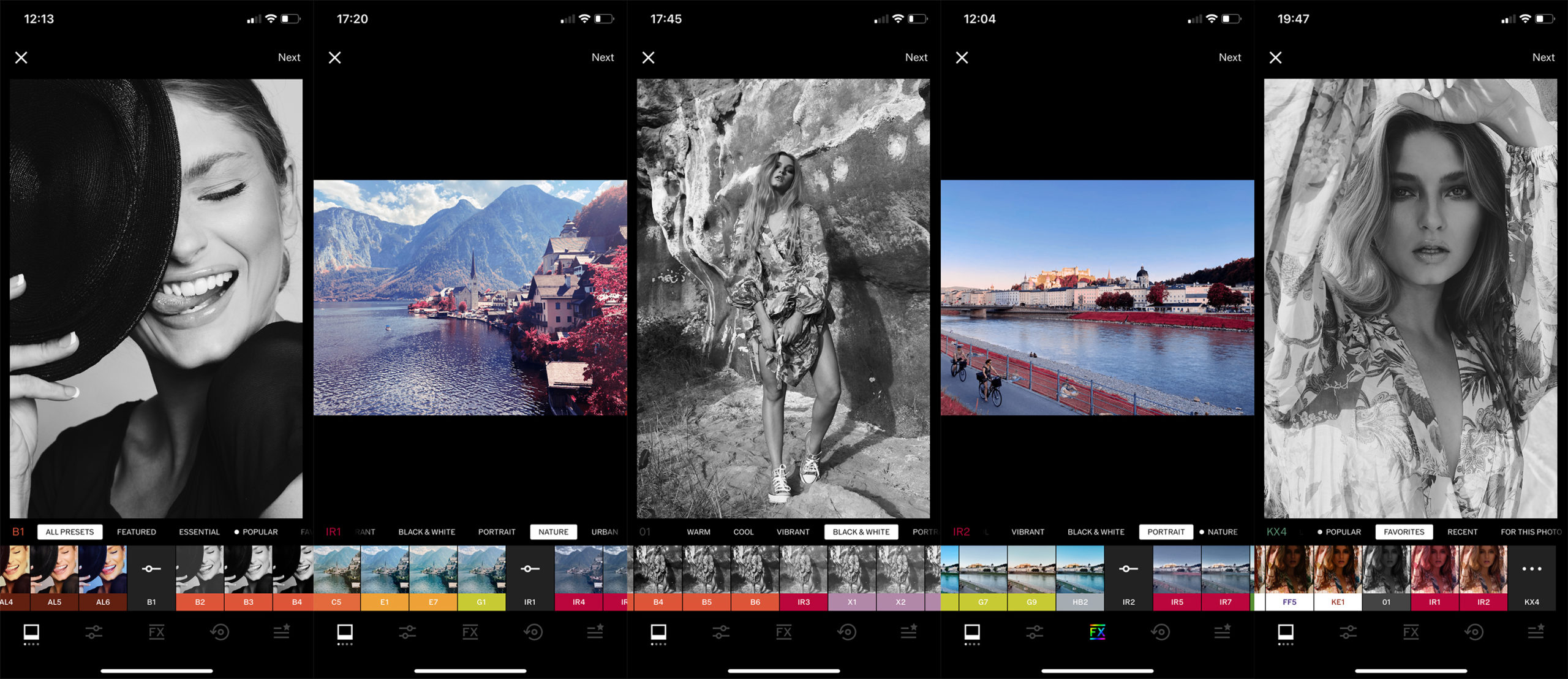
VSCO changed their Community Guidelines, Privacy Policy, and Terms of Use. As the company that we’ve championed as the most ethical option aside from Instagram and Behance for photographers, we think that it’s very well worth discussing what’s happening there. So what’s changed?
Admittedly, it’s hard to find the differences here for most people. VSCO doesn’t say exactly what parts are brand new. But by using OSINT tools Claude and Text Compare for help, the tools were able to help us compare and contrast the guidelines in order to see what is changing. So below, we’re discussing the analysis.
One thing you should know, I’m the Editor in Chief/Founder of the Phoblographer and also the only openly Legally Blind Journalist in the photo industry. Claude does indeed help me due to my disability. But I also recruited and asked other journalists for help,
Just as an FYI, VSCO reads this website and the Phoblographer has a very transparent relationship with the company. So we may address and make edits to this article later on. If we do, the Phoblographer’s system let’s people know how updates were made below the title of the article. And we’ll clarify exactly what was edited later on, if anything was at all.
Make no mistake: more than one human analyzed this.
Changes to VSCO Community Guidelines as of June 22nd, 2026
We asked Claude to compare the current guidelines and the guidelines coming on June 22nd.
Here’s the summary it gave us of what it says is new in quotes:
🆕 Entirely New Sections
AI Integrity (brand new section under “Safeguard Integrity”) The new guidelines add a dedicated AI section prohibiting:
- Using AI-generated/modified content to deceive, exploit, harass, defraud, impersonate, or harm others
- Creating or sharing non-consensual AI-generated depictions of real individuals
- Removing, altering, or misrepresenting labels/watermarks that identify content as AI-generated
✏️ Notable Changes to Existing Sections
Violence and Threats — Two bullet points added:
- Depictions of death, severe injury, or graphic aftermath of violence
- Medically graphic content
Harmful or Suicidal Content — The self-harm bullet is expanded to explicitly include disordered eating behaviors alongside eating disorders.
Illegal Behavior — Two items move here that were previously under “Nudity and Sexually Explicit Content”:
- Soliciting or offering sexual services for money or other consideration
Nudity and Sexually Explicit Content — The description of suggestive content is simplified/rephrased. The old version referenced “genitals, anus, buttocks, or private body parts that would typically be covered by a bathing suit”; the new version says “intimate body parts, including the genitals, buttocks, or breasts.” Also, boudoir photography shared in private (password-protected) Galleries is added as a new exception.
Child Safety — Language is strengthened. The old version said “engaging or trying to engage a minor in conversation for sexual purposes”; the new version broadens this to “any conduct intended to build a relationship with a minor for the purpose of sexual exploitation or abuse.”
False Information — A small but meaningful tweak: the AI content clause adds “that results in harm” (previously it just prohibited failure to represent AI-generated content accurately, now it specifies harm must result).
Fraud and Spam — Renamed from “Fraud and Spam” to “Scams and Spam”. The final bullet is reworked: the old version said “using generative AI or automations to facilitate any of the above”; the new version replaces this with a prohibition on “coordinated inauthentic behavior, including operating multiple accounts or networks designed to artificially manipulate engagement, trends, or public discourse” — a broader, more specific rule.
Private Information — The catch-all “any other non-public or private data” bullet is removed. The prohibition wording shifts slightly from “submission, generation, solicitation, or disclosure” to “sharing, generation, solicitation, or non-consensual disclosure” — adding “non-consensual” as a qualifier.
Non-Consensual Content — Strengthened to explicitly include AI-generated intimate depictions of real individuals (previously just covered non-consensual intimate imagery generally).
Impersonation — A new bullet added: “Using AI-generated or manipulated media to impersonate real individuals.”
Enforcement & Reporting — Restructured into its own clearly labeled section (previously it was embedded in the introductory text).
Photographers should know that something that Claude didn’t detect is that there is a brand new section about enforcement and reporting. Additionally, there’s a breakdown in the whole, “The Detail section,” that now uses headings. Perhaps this is done to make it easier for people to understand what’s going on.
Overall, the new guidelines seem to be targeting more of the use of AI on their platform as well as authenticity.
What’s fascinating to think about is how they’re discussing violence as it’s not clear how that’s defined. What if I’m a street photographer or a journalist that’s reporting on something and I share an image to VSCO that then syncs with my VSCO site using an album of some sort? That means that VSCO may potentially take down the image — and at least when it comes to the curation of my own website, that’s a red flag flying at half mast and upside down crying out for help. One of the reasons why I’m considering going back to using VSCO more is for the integration of sites. I’d move away from Format for this; but VSCO will take down photojournalistic work that depicts violence or sometimes graphic material, then I have reason to be concerned.
Imagine if the work of Magnum Photographer Susan Meisalas was taken down from a platform for showing the graphic issues that she helped uncover? Or imagine if I was a photographer currently documenting the protests happening in the UK against the police for their murder of Henry Nowak. In fact, VSCO clearly states, “We reserve the right to decide, in our sole discretion, what content violates these guidelines and will not be permitted on VSCO.”
Granted, that’s a rarity here — though it’s one that shouldn’t at all be discounted. Most people who use VSCO are typically more commercial photographers. But I can see the brand expanding more to encompass photographers from all walks of life.
Truly, I think that VSCO should’ve adopted the use of Content Credentials a while ago. But according to what Eric Wittman, CEO of VSCO, told us in an interview, VSCO believes that Content Credentials should be embedded at creation.
Changes to VSCO Privacy Policy as of June 22nd, 2026
Here’s a link to VSCO’s current Privacy Policy and here’s a link to the upcoming changes. Below is Claude’s analysis of the difference in quotes:
🆕 Brand New Sections / Additions
“Providing AI Tools” — entirely new entry in “How We Use Your Data” The new policy adds a dedicated section explaining that VSCO offers AI-powered tools such as chatbots for onboarding/support and photo-editing tools that use AI to apply prompted changes. It clarifies that when you use these photo-editing tools, they analyse the content you provide — including people and objects — to apply your instructions, but that VSCO does not use these tools to recognise, verify, or identify specific individuals, does not extract or store biometric information, and that any analysis performed to make a requested edit is not stored afterwards. vsco
“Administrative/Support Communications” — new entry in “How We Use Your Data” The new version explicitly lists sending technical notices, security alerts, and administrative/support messages as a named use of your data. This wasn’t a separate item in the current policy.
“Disable push messages” — new entry in “Your Choices” A new row is added explaining that you can stop receiving push notifications by changing your device’s notification settings, with a note that VSCO has no control over your device’s notification settings. vsco
✏️ Notable Changes to Existing Sections
Scope of policy — “Studio Manager” replaces “VSCO Workspace” The new policy states it does not apply to personal information processed on behalf of customers of “Studio Manager,” whereas the current policy refers to “VSCO Workspace” — reflecting a product rename. vscovsco
U.S. State Privacy Rights — expanded list of covered states The new policy adds Indiana, Kentucky, Rhode Island, and Virginia to the list of covered U.S. states, compared to the current version. (Indiana, Kentucky, and Rhode Island are new additions.) vsco
“Delivering our Services” — the new policy adds “including to facilitate payment for our Services” as an explicit sub-purpose, which wasn’t stated before.
“Data from Other Creators” — slightly broadened. The current version says this covers data provided “when they invite you to use VSCO.” The new version expands this to also include data stored within “VSCO Galleries, Workspace, or similar offerings.” vscovsco
“User-Generated Content” — minor wording change. Currently described as content “you create or post with VSCO.” The new version says “on our Services,” a broader framing. vscovsco
Age restrictions — parental consent language removed The current policy says data collected from under-13s will be deleted “without the consent of the child’s parent or guardian as required by law.” The new version simply says VSCO will delete such data if it learns it was collected — dropping the parental consent qualifier. vscovsco
“Contacting VSCO” — renamed from “Online Help Center” to “Online Support Center” and adds a separate link for Workspace-related questions.
Cookie preferences — the new “Your Choices” section drops the reference to a “Cookie Settings” link that appeared in the current version, consolidating everything under “Your Privacy Choices.”
“Other Creators, Companies and the Public” — the current version includes “like favoriting or resharing” as an example of visible interactions. This specific example is removed in the new version. vsco
Service Providers and Partners — currently lists “data hosting” as an example. The new version expands this to “data or service hosting,” a minor but slightly broader description.
We also did a Text Compare of the two policies. What Claude didn’t pick up on is the differences for the deletion rights on the Freelance Photographer, the addition of VSCO chatbots, and an oddity around, “Other uses.” Specifically, this is worded as, “For any other purpose for which we have provided notice or for which you have consented,” in regards to information usage.
That doesn’t really make me feel all that safe necessarily. Where are they potentially sending my information to and what’s it being used for?
There’s also this weird section about not selling your into if you’re between ages 13-15 unless you’ve given consent.
Changes to VSCO Terms of Use as of June 22nd, 2026
We had Claude compare the current Terms of Use with the new ones going into effect. Here’s what it said:
🆕 Entirely New Sections & Concepts
Section 2 — AI Content now split into distinct sub-sections
The current version handles AI in a single combined paragraph. The new version breaks this out into four distinct sub-sections:
- “Ownership of AI Content” — now a standalone clause clarifying you own your AI Content to the extent permitted by law, but explicitly noting that outputs may not be unique and may not be legally protectable.
- “AI Prompts” — now a dedicated clause making clear you are solely responsible for all prompts you submit, including ensuring compliance with applicable laws.
- “Compliant Usage of AI Services” — a brand new clause stating you are responsible for ensuring that your AI-generated or AI-modified content complies with all applicable laws and regulations, including any requirements to disclose that content has been artificially generated or manipulated. vsco
- “Third-Party Services” — previously bundled into the AI paragraph, this is now its own named sub-section, and adds that VSCO may share your Creator Content and AI Content between VSCO Services or with third-party providers.
Section 2 — “Creator Content” definition expanded
The new version adds “edit, retouch, modify” to the list of what you can do with content on VSCO’s services, reflecting the platform’s expanding editing tools. The current version only lists “post, publish, submit, upload, share.” vscovsco
Section 2 — “Account Data and Storage” replaces “No Storage”
This is a significant expansion. The current version has just a brief “No Storage” clause saying VSCO isn’t obligated to store content and may permanently delete accounts. The new version replaces this with a detailed “Account Data and Storage” section that specifies four concrete grounds for deletion: accounts inactive for 12+ continuous months; accounts suspended for violating the Terms or Community Guidelines; accounts making excessive use of storage capacity; and as required by applicable law. It also adds that VSCO will make commercially reasonable efforts to notify you before deleting an inactive account, and that once deleted, content cannot be recovered — placing the responsibility for backups squarely on the user. vscovsco
Section 3 — Content Moderation section gets an introductory paragraph
The new version adds an opening summary paragraph to the content moderation section, stating that VSCO uses systems and moderation tools to support discovery, enforce policies, and maintain platform safety. Also, the moderation language is strengthened: account suspensions for violations are now described as “permanent” unless appealed, whereas the current version simply says the account “may be suspended” — a notable tightening. vscovsco
Section 4 — VSCO Services scope expanded
The current version describes the licence as covering “websites and mobile apps (including all copies).” The new version broadens this to “websites, mobile apps, and all products and services made available through our Services (including all copies)” — a wider grant of rights to VSCO over its product ecosystem. vscovsco
Section 5 — New “VSCO Confidential Information” clause
This is entirely new. The updated terms add a dedicated confidentiality clause covering non-public business, technical, and financial information disclosed by VSCO, including tools, techniques, trainings, and strategies made available through the Services. You agree to keep this strictly confidential, not disclose it to third parties, use it only as necessary, and promptly delete it upon request. Disclosure is only permitted if legally required, and even then only with prior notice to VSCO where legally permitted. vsco
Section 6 — Paid Services expanded to cover TFP and Workspace subscriptions
The current version’s cancellation clause refers only to a single generic subscription link. The new version provides separate cancellation instructions for VSCO, VSCO Workspace, and TFP subscriptions, and explicitly states you must cancel through the same platform where you originally subscribed. It also introduces the concept of “Payment Provider” as a defined term, explicitly including buy now, pay later (BNPL) providers — a new addition. vsco + 2
Section 6 — Refund policy clarified
The current version says you “will not be eligible for a refund for any prorated fees you paid for the then-current Subscription term.” The new version changes this to state that “all fees and charges you paid for your then-current Subscription term are non-cancellable and non-refundable” after any applicable cancellation periods — a slightly more categorical framing. vscovsco
Section 7 — Product-Specific Terms substantially expanded
Several new programmes are now formally governed by the Terms:
- VSCO Hub now explicitly requires users to agree to the VSCO Hub Agreement, where previously the current terms did not include this cross-reference. vsco
- VSCO Workspace now has its own dedicated sub-section, describing it as an all-in-one CRM platform and requiring users to agree to the VSCO Workspace Agreement. This wasn’t in the current terms at all. vsco
- Creator Partner Program is newly added, covering how eligible Creators can earn compensation, receive promotional opportunities, or access exclusive features. VSCO reserves the right to modify, suspend, or discontinue this programme at any time. vsco
- Referral Program is newly formalised, prohibiting spam, automated systems, or deceptive practices to generate referrals, and reserving the right to void rewards or suspend accounts for fraudulent activity. vsco
- The Freelance Photographer (TFP) gets its own expanded sub-section, with separate terms on TFP participation (noting that discussions are not confidential) and TFP membership (noting it requires separate account creation and acceptance by VSCO). vsco
Section 9 — Indemnity expanded
The current indemnity clause lists items (a) through (f). The new version adds a new item (d): “your use of Outputs” — meaning you now explicitly indemnify VSCO for any claims arising from how you use AI-generated content. vscovsco
Section 10 — No Warranty expanded for AI
The new warranty disclaimer adds a specific sentence noting that the disclaimer covers “legal or tax guidance,” and changes the AI warranty language to apply to “AI Content” broadly (rather than just “Prompts or Outputs” as in the current version), and adds that “you are solely responsible for ensuring that your use of our AI Services and any Output complies with all applicable laws.” vsco
Section 16 — “Force Majeure” clause added
This is brand new. The updated terms add a force majeure clause, providing that neither party is liable for delays or failures caused by events beyond reasonable control, including acts of God, natural disasters, pandemics, epidemics, war, terrorism, riots, and similar events. The affected party must promptly notify the other and use commercially reasonable efforts to mitigate the impact. vsco
Section 16 — “Entire Agreement” clause strengthened
The new version adds a sentence stating that in the event of a conflict between these Terms and the terms of any Third Party Provider, these Terms shall prevail with respect to the agreement between you and VSCO — a new priority rule that wasn’t in the current version. vsco

Here’s a big change spotted by Gear Editor Alberto Lima very much worth talking about.
Ownership of AI Content. As between you and VSCO, to the extent permitted by law, you own your AI Content. However, Outputs generated by AI Services may not be unique, and other users may receive similar or identical Outputs. Outputs may also not be protectable by law.
AI Prompts. You are solely responsible for all Prompts that you submit, make available through, or otherwise provide to our AI Services, and for your use of all Outputs, including ensuring compliance with applicable laws, regulations, and policies relating to such Prompts or Outputs. You represent and warrant that you own or have sufficient rights, licenses, or consents necessary to provide such Prompts for use in accordance with these Terms.
Compliant Usage of AI Services. You are responsible for ensuring that your AI-generated or AI-modified content created using our AI Services complies with all applicable laws and regulations, including any requirements to disclose that content has been artificially generated or manipulated.
Third-Party Services. The Services (including AI Services) we provide may include tools, services, platforms, models, or functionality provided by third parties (“Third Party Services” and such parties, “Third Party Providers”), as well as provide functionality for integration with both Third Party Services and other VSCO Services. By using such Services, you acknowledge and agree that VSCO may share your Creator Content and AI Content between VSCO Services or with the Third Party Services and Third Party Providers, as applicable. VSCO does not have responsibility or liability for any acts or omissions of any Third Party Providers or for any Third Party Services.
We really think that the system should’ve had content credentials in place
Plus there’s now something about human moderators, but it’s not clear if they’re internal or if they’re outsourcing it to contractors. And what are the contractors ethics?
Another odd thing to note is the following statement:
“Force Majeure. Neither you nor VSCO will be liable for any delay or failure to perform its obligations under this Agreement (other than payment obligations) to the extent such delay or failure results from causes beyond the reasonable control of either party, including acts of God, natural disasters, pandemics, epidemics,
war, terrorism, riots, embargoes, acts of civil or military authorities, fire, floods, labor disputes, or power failures. The affected party will promptly notify the other and use commercially reasonable efforts to mitigate the impact.”
Disclosure on their way out of issues with data centers and war are rather fascinating, making us wonder where their data centers are right now.
In summary, all of this is really weird. But I still think that VSCO is a far better choice than Instagram and that they’re still doing better at a lot of things than Adobe and Meta both are. At the same time, I kind of yearn for the days when Google was all about not doing any evil in the world.
Get rid of the ads!
Did you enjoy reading this article as much as we enjoyed writing it? There's a way to support us and our reporting, getting ad-free navigation and more as a bonus. Subscribe to us for less than a coffee per month —just $3.99— or take advantage of our yearly subscription with a hefty discount for only $25.- An ad-free experience
- A free mystery box for Lightroom or Capture One
- All the books in our store
- 20% discount on Capture One
- 30% discount on Imalume Photo Theft Protection
- 20% off Herbs and Kettle Tea Company.
- 20% off your order from MPIX printing services.
- 5% off Viltrox Products via their eCommerce store.
- 10% off all film developing, printing and scanning services from Blue Moon Camera and Machine
- 15% off 7Artisans products: The lens and accessory maker is offering a sweet discount for Phoblographer's readers.