


Going back to a much simpler time, the year was 2018 and towards the end of that year, Canon did what felt unthinkable; they finally released their first true, mirrorless camera – the Canon EOS R. By this time Sony had all but dominated the mirrorless space and enjoyed a monopoly in full-frame mirrorless cameras and Canon (and Nikon) had a lot of ground to cover. Now, nearly eight years after it was first released, does the Canon EOS R still have the chops for serious work in 2026.
The below text was added to our full Canon EOS R review, which you can view at this link.
A Look Back at the Canon EOS R
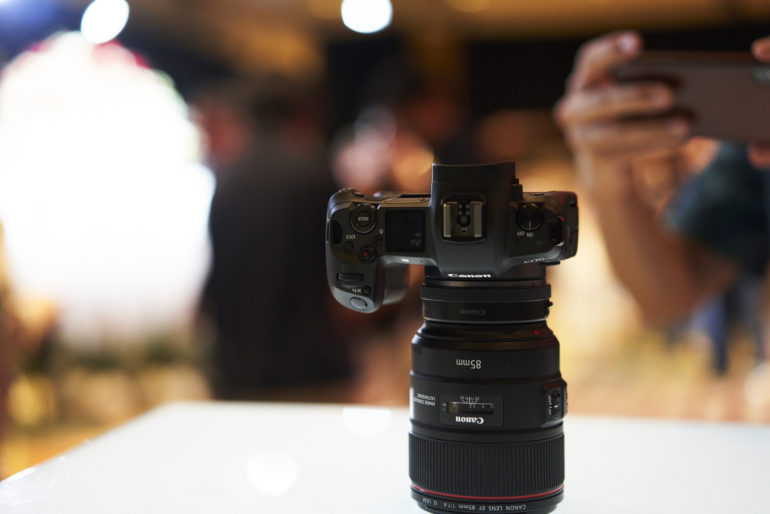
In 2018, the EOS R was an interesting proposition – Sony released both the a7 III and a7R III, and Nikon released the Z6 and Z7 giving photographers the option of both a faster performing 24-megapixel sensor and a “slower” high-resolution camera (42.4 megapixels in the Sony a7RII and 45.7 megapixels in the Nikon Z7), Canon did something very unique giving photographers a higher resolution camera (the EOS R has a 30 megapixel full-frame sensor) that was just as capable as its 24 megapixel competitors. Canon made some very unique (for the time) engineering decisions that completely changed what we’ve come to expect from modern cameras. One such decision was the option to close the shutter curtain to protect the sensor when powering off the camera. It’s a small detail that eight years later, we’ve come to expect in higher-end cameras.
Looking back at the EOS R, it’s impressive and very forward thinking of Canon to include a 30-megapixel sensor. They could’ve just as easily slapped on a 24-megapixel sensor in direct competition with the a7III and Z6 of the time, but instead chose to go bigger. This is one of those features that really pays off in the long run, especially if you’ve been eyeing modern Canon cameras like the EOS R6 III.
That said, not ever design choice went over as well as those listed before. One of the biggest gripes from reviewers at the time, The Phoblographer included, was the omission of a second card slot. In our initial review we wrote:
Now here is the biggest let down about the Canon EOS R; the single card slot. At least it’s an SD card slot and not XQD like Nikon did.
Even in 2018, it was expected that any camera that was made for professional work must have a dual card slot at minimum. Unfortunately, there’s no firmware update to remedy this and still remains one of the biggest caveat of the EOS R.
Likewise, Canon’s decision to nix the thumb joystick at the rear of the camera was met with near universal pushback. In our initial review of the we addressed it as follows:
Then there is the big other thing that annoys me: why the heck did Canon remove the joystick? This is an essential item on any camera that is meant to be serious in any way.
But even these missteps weren’t enough to stop us from loving the direction Canon was headed with the EOS R.
Work or Play – Canon EOS R Today
When we began looking back at some of the cameras that The Phoblographer team uses today, the Canon EOS R was one of the first that came up in discussion. Everyone at The Phoblographer is a photographer and a lot of the gear that we cover we often end up purchasing (I’m always looking at eBay and resellers for deals on great, pre-loved equipment) and the Canon EOS R is one of these cameras. In late March I borrowed the EOS R from EIC Chris with the intent of only using the camera for a week for this update, instead I ended up using the camera for everything from paid gigs to wondering about a chilly Spring in Brooklyn. Outside of the lack of joystick, the control layout of the Canon EOS R is so familiar to anyone that’s used a Canon camera over the last 20 years that when I picked it up, it felt like hugging a friend I haven’t seen in years. You lose touch, sure, but then you go right back to picking up the conversation from the last time you saw each other.
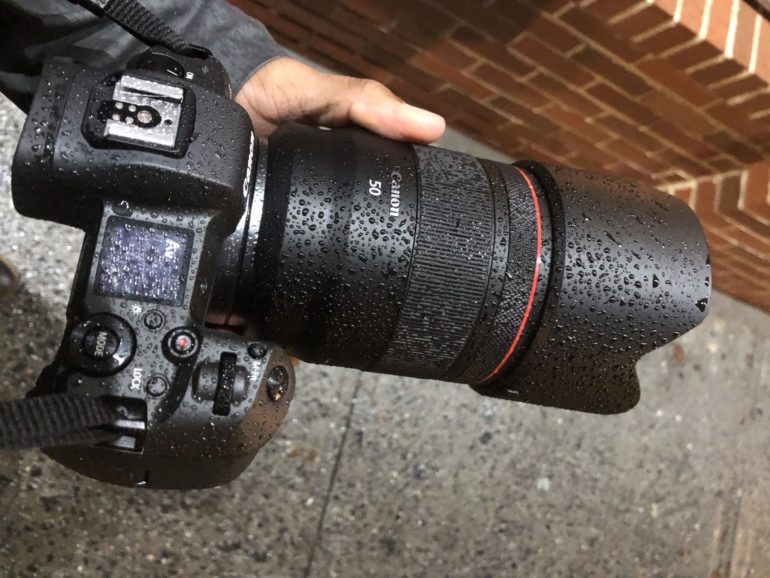
One of the photography community latest obsession with cameras is IBIS – if a camera doesn’t have IBIS, it’s not worth owning. We’re just going to call BS on IBIS with the Canon EOS R. I’ve used the Canon EOS R in low-light situation with slow shutter speeds and haven’t really found any issues getting great if not usable images from this camera. Adding to that, I’ve used the Canon EOS R with various manual focus lenses (because Canon refuses to let third-party manufacturers make AF lenses for their full-frame cameras) and even then, I hadn’t run into any issues with camera shake.
The Pictures Speak for Themselves
The images speak for themselves. Whether it was for a job for a local assembly person’s office, wondering the streets, or capturing celebrations with friends and family, the Canon EOS R was able to deliver the goods. Never mind the fact that the 30-megapixel images have been used all over this site for various gear product images accompanying our reviews. I’ve never found myself feeling like the EOS R couldn’t keep up with whatever I was doing. Below are some of my favorite images taken with the EOS R:


Should You Buy the EOS R in 2026
One of the biggest issues I’ve had with many recently released cameras today is that they offer very little in terms of technology that will actually improve or even impact your photography, and the manufacturers are all too happy to charge you close to $3k for the privilege. In 2026, unless you’re shooting sports or wildlife professionally, there’s little reason to not buy the Canon EOS R on the merit of its capability alone. But if you really need another reason to consider the EOS R in 2026, consider this: our very own Nilofer Khan noted that the Canon EOS R is one of the five best full-frame cameras you can buy under $1000. And I agree wholeheartedly.
Get rid of the ads!
Did you enjoy reading this article as much as we enjoyed writing it? There's a way to support us and our reporting, getting ad-free navigation and more as a bonus. Subscribe to us for less than a coffee per month —just $3.99— or take advantage of our yearly subscription with a hefty discount for only $25.- An ad-free experience
- A free mystery box for Lightroom or Capture One
- All the books in our store
- 20% discount on Capture One
- 30% discount on Imalume Photo Theft Protection
- 20% off Herbs and Kettle Tea Company.
- 20% off your order from MPIX printing services.
- 5% off Viltrox Products via their eCommerce store.
- 10% off all film developing, printing and scanning services from Blue Moon Camera and Machine
- 15% off 7Artisans products: The lens and accessory maker is offering a sweet discount for Phoblographer's readers.