

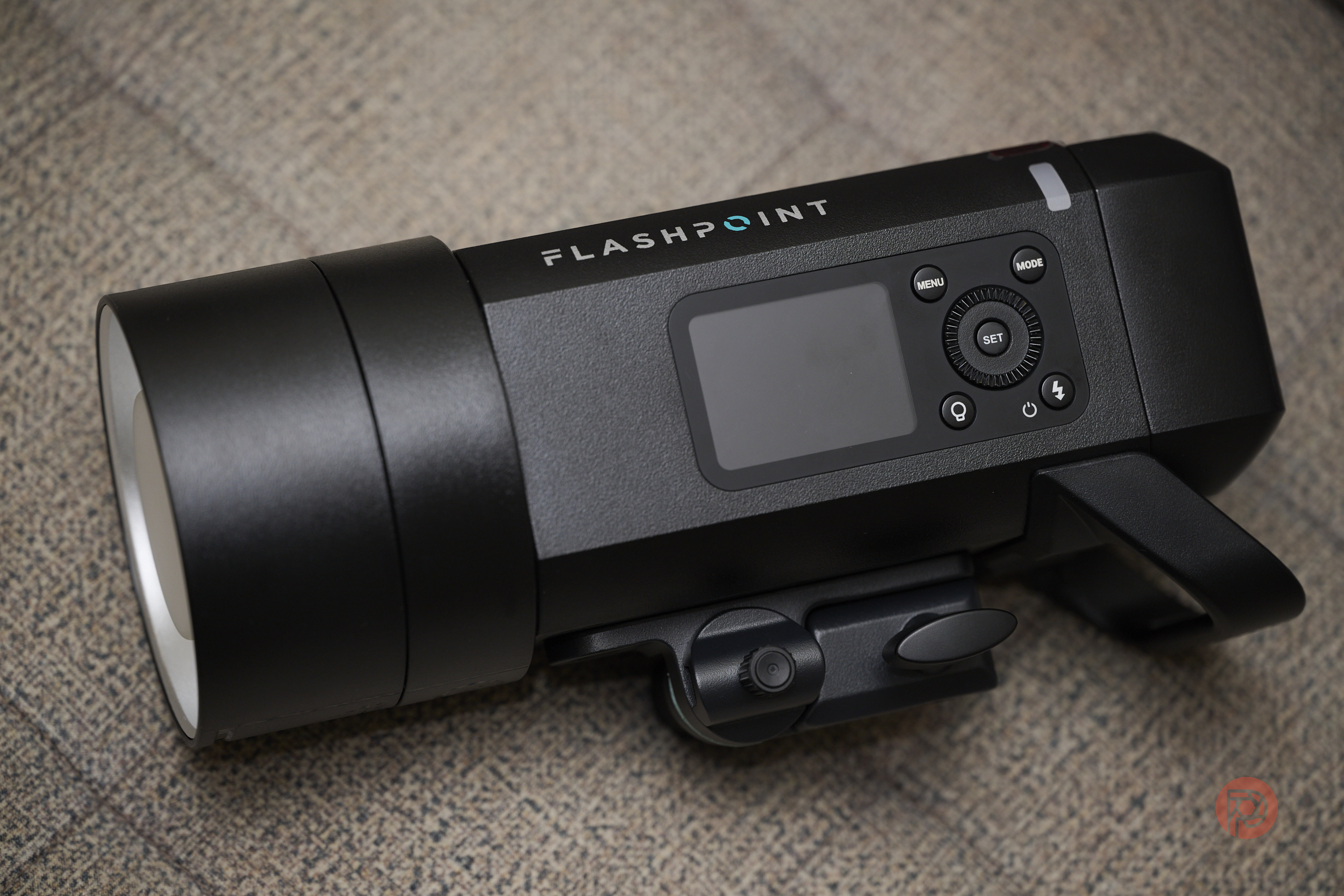
With their first gen line of strobes, Flashpoint (the US branded lineup of Godox) have established themselves as a company with affordable yet reliable speedlights and off-camera lighting accessories. They’ve recently started refreshing their lineup with next-generation releases of various units. We got our hands on the new Flashpoint XPLOR 400 Pro II strobe for some weeks, and it’s safe to say that this is going to be a much sought-after strobe for studio and location photographers.
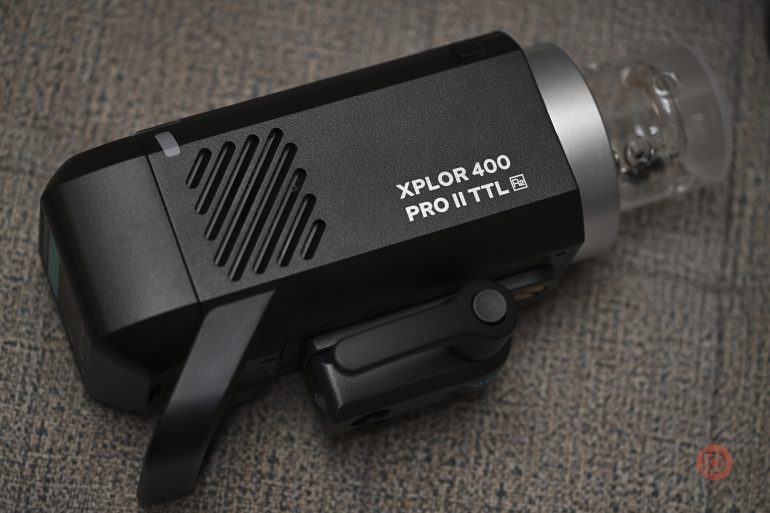
Table of Contents
The Big Picture: Flashpoint XPLOR 400 Pro II Strobe Review Conclusions
The on-location strobe market has definitely changed for the better, in the last decade or so. Where previously you’d have to lug along a heavy battery pack or have the strobe connected to a power outlet, now you have more portable designs that have really fast refresh cycles. It was once a compromise between power and portability, but that isn’t the case anymore. I think before the decade is out, we might see most AC-powered strobes being phased out to make way for faster battery-powered models like the Flashpoint XPLOR 400 Pro II. More of an evolutionary upgrade than a revolutionary one, this strobe still has some very useful features introduced and is a worthy successor to the 1st gen model.
- 10 steps of power now as compared to 9 from the previous model
- Color LCD replacing the dot matrix panel
- One-touch sync with compatible remote triggers
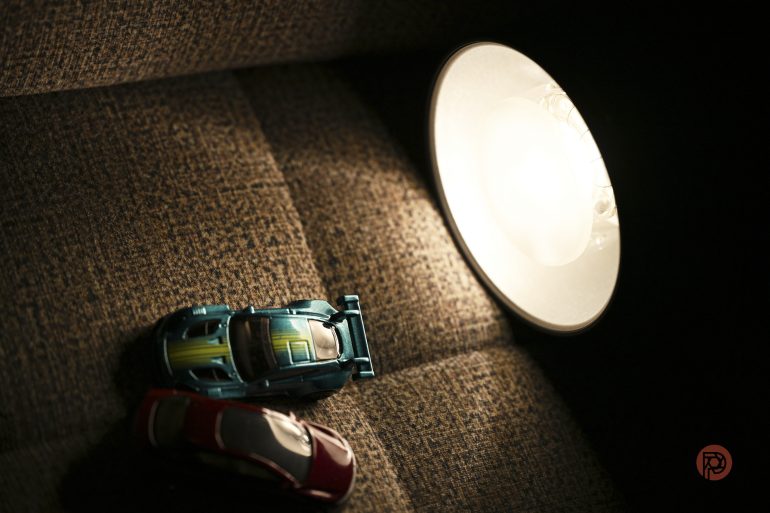
- Bi-color LED modeling lamp
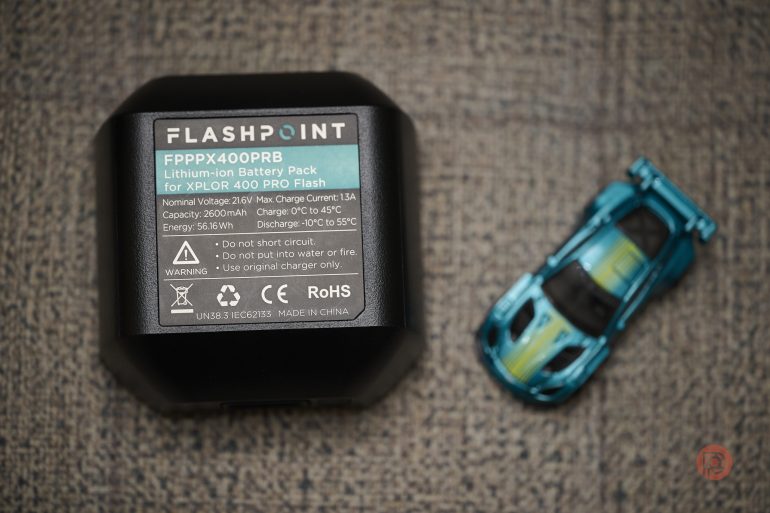
- Over 450 flashes on full-power before having to recharge
- Comes with a Bowens mount adapter in the box, but it’s time consuming to swap it out. Plus you can’t really pack it back in the case with the Bowens adapter on
- The biggie – 1/8000s shutter speed support when using High Speed Sync
- Should really come bundled with a remote to entice flash photographers into getting in to strobe territory
- About a 5% weight drop
The Flashpoint XPLOR 400 Pro II might not be the most powerful light in Godox’s lineup, but it could be the one that makes the most sense for photographers who actually work on location. It comes in the middle of the gen II lineup, right between the compact 200 II and the larger 600 II but it makes quite a good argument for any photographer today who wants to get into strobes without compromising on pretty much anything. And if you’re someone who owns the 400 Pro, you will more than enjoy the upgrade when you try out all the new features this strobe comes with.
Experience
My first round of testing with the XPLOR 400 Pro II didn’t go so well. I’d managed to get some local league badminton players to agree to be snapped in action during their games, and I hauled myself to their courts with the strobe, a 36 inch Bowens mount softbox, and a Godox X3-N trigger. Since it would be distracting to have a lightstand on court, my friend Avinash graciously agreed to hold up the strobe for the duration of the shoot…..which wasn’t very long thanks to a technical error.
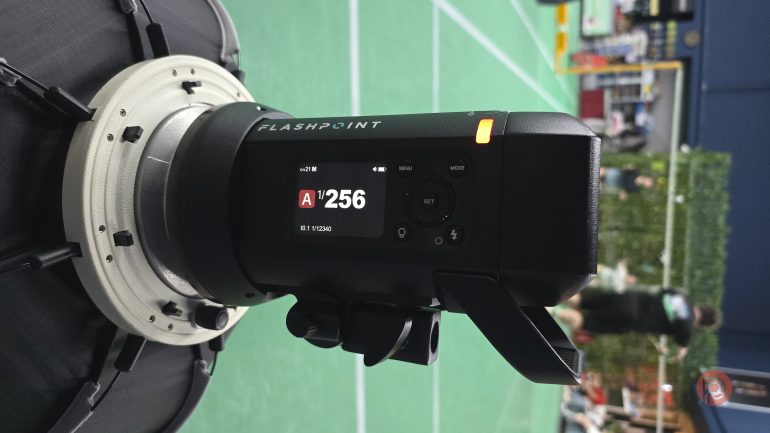
Everything looked fine in terms of setup (which took 10 minutes longer than I factored in, because the Bowens mount setup took a while; more on that below). The trigger was able to pair with the strobe quickly. The softbox attached soon enough. And Avinash wasn’t weighed down by the combination being held above his head. The issue that unfolded soon enough, was that the Z8 I was using wouldn’t dial past 1/250s even though I had set HSS on the camera. Embarrassing to say the least, as I had a handful of badminton players wanting to be frozen midair during their game. I even wondered if it was a hotshoe issue on my camera, so I put the Nikon SC-29 TTL cable between my camera and the trigger. Still nothing.

As a slight panic ensued, I scrolled through the strobe’s menu to see if HSS was on, which it was. So it was too on the trigger, but I saw a Legacy Hot Shoe menu option in there which I toggled on. Voila, the Z8 was now able to dial past 1/250s. But my happiness was short lived, as at any shutter speed above this, I was seeing clear banding in the frames. Technical complications had gotten the better of me and I walked away from the venue dejected. Emails on this matter to the Godox technical support team and our Adorama rep didn’t help fix the matter. The options they asked us to try didn’t seem to resolve the issue I was facing, so I trawled the internet for a week trying to see if anyone else had the same issue. Reddit didn’t throw up much on this and I was almost going to give up, when a thread on a Godox Facebook user group gave me the breakthrough was looking for (thank you Rachel McHugh of Root & Reverie Photography!). As it turns out, Nikon mirrorless cameras need to be in Fill flash mode in order for HSS to work successfully. Not rear-curtain sync or any other mode apparently.

Gosh, once I figured out how to correctly use HSS on this, the fun really went up a few levels. To be able to shoot in high-power at high shutter speeds using a strobe can be such a refreshing experience. I decided to try it out at a portrait shoot I had scheduled for the weekend after. One pop after another and the images just kept coming out so great in-camera. Whether it was a standard headshot or just someone jumping around in front of the camera, the Flashpoint XPLOR 400 Pro II just kept belting out one banger after another without looking like it would slow down at any point.
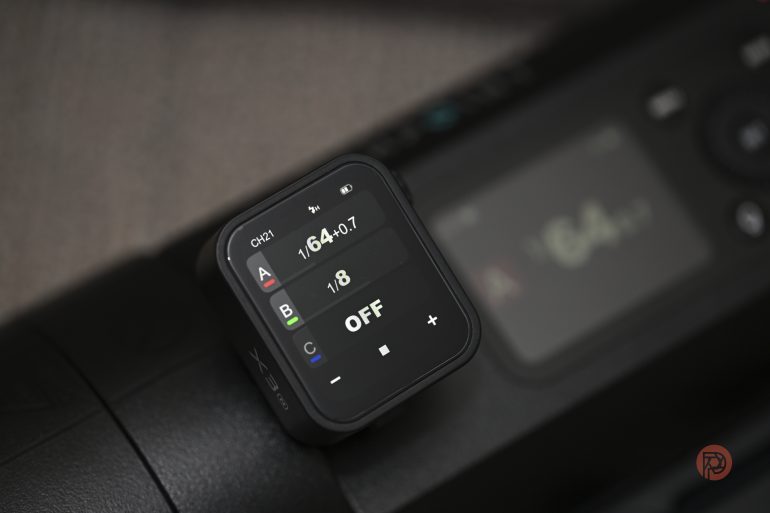
Once mounted on your light stand, set the channel ID and the group, and leave it to work it’s magic. I controlled and adjusted all other settings from the Godox X3 trigger (which I purchased to use for this review). The color LCD on this strobe pairs perfectly on a visual level too with the screen on the trigger. The group indicator lights allow you to quickly identify up to 16 different strobes from your remote itself to be able to quickly adjust settings. It’s not a small strobe by any means, but it isn’t heavy at all at around 2 kg (just under 4.4lb).
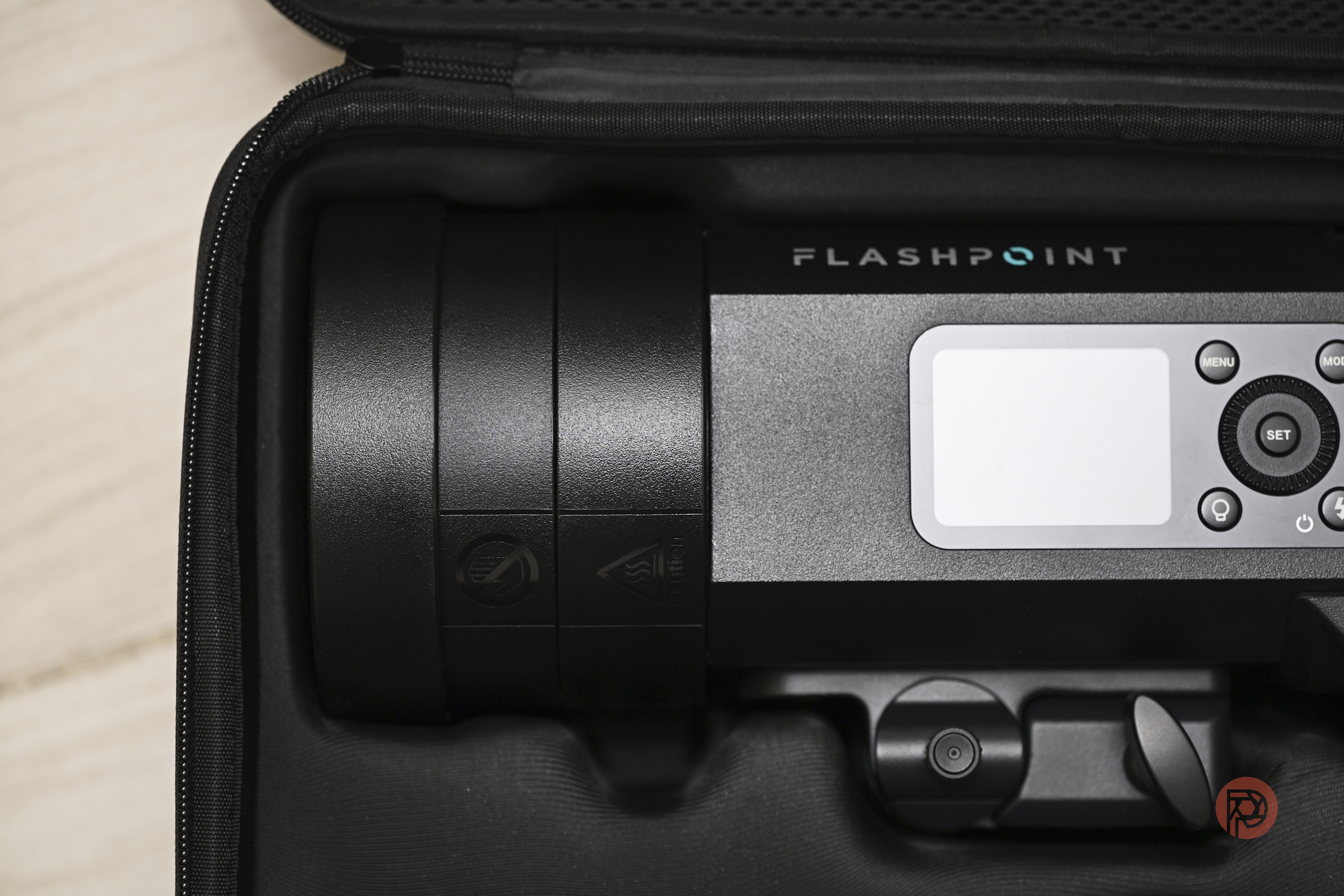
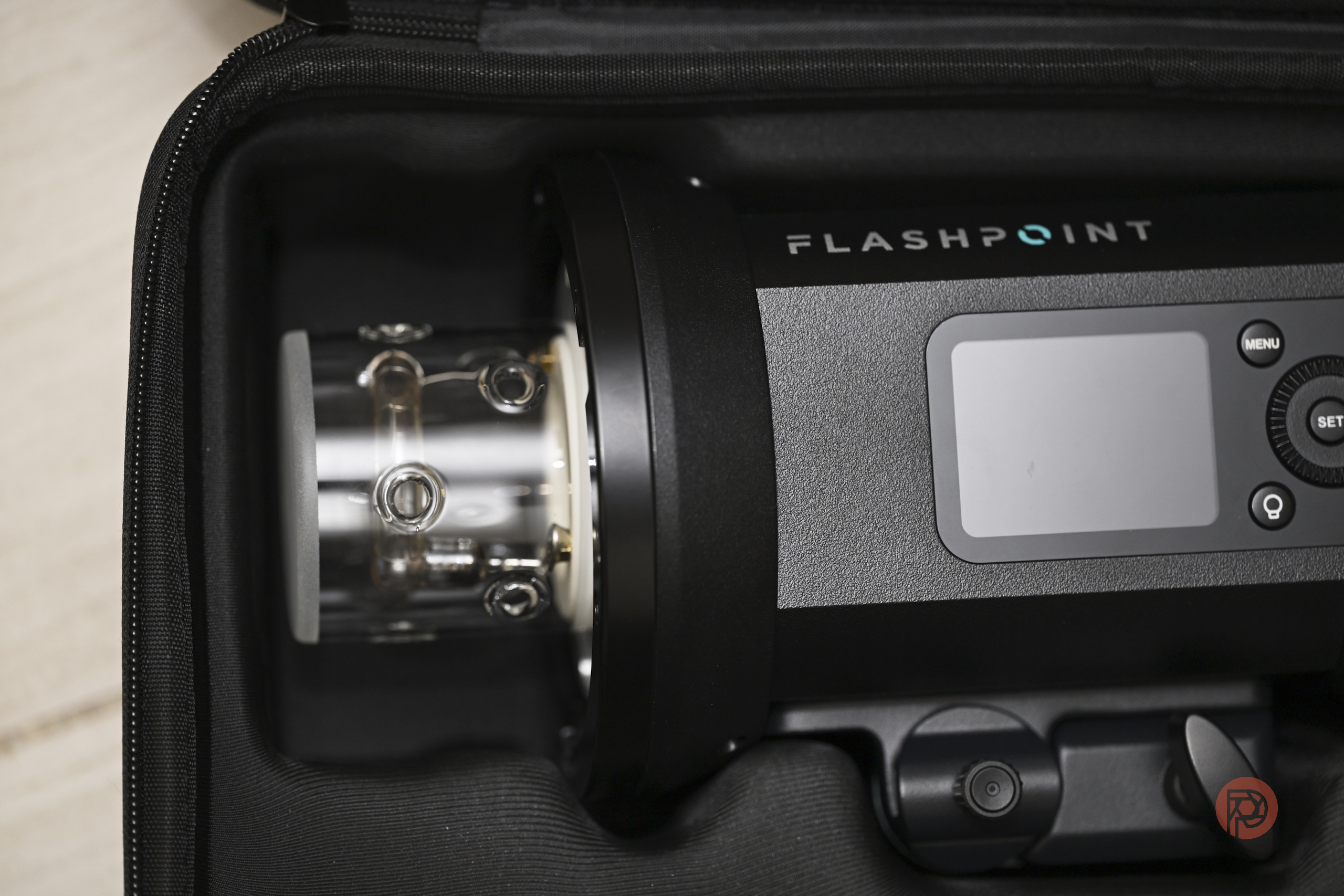
So since this is a Godox mount strobe, it’s best paired with Godox lighting accessories, none of which I have. Thankfully you don’t need to head out to purchase a Bowens adapter if that’s the mount that most of your softboxes are in. The Flashpoint XPLOR 400 Pro II box comes with a Bowens adapter inside. It’s just that swapping these mounts takes a good 10 minutes. Popping off the Godox head is easy enough, but then you need to remove the very snugly and tightly stored Allen/hex key (which is honestly a half size too small) from the top of the strobe, use it to remove two screws, place the Bowens mount on the strobe, and then replace those two screws plus add another two for extra protection. In all fairness, this is fine to do; I only wish that this could have been a one-time activity and I could just place the strobe back with the Bowens head into the box. Nope, this clearly wasn’t thought out well, and now every time I want to store it back, I have to reverse the process and put the Godox head back on to pack everything away.
Image Quality
Images seen below have been mildly edited for exposure and white balance.

That evening I shot over 500 photos with it at various power levels – the feedback I had gotten from this client was unlike any other before for portraits. They were thrilled beyond bits with the results and immediately put them up on their promo pages. I do hope that both Godox and Flashpoint add this as a footnote in their product manual – you can’t use HSS on the Nikon cameras reliably in any other flash mode besides Fill Flash. If I’d known this earlier, I could have saved that first shoot, but hey – we learn best through our mistakes. Here are some headshots from that session.


When it came to fast action freezing, the strobe showed no weakness and powered through even better than I expected. Except in on particular scenario. At 1/250s, the exact base setting for the HSS on my camera, there was very visible banding. At any other speed, higher or lower, the frame was clean.
All the images seen below were shot at 1/1250s or faster. The team was kind enough to humor my high speed photography request.


I’d say this (or the Godox equivalent AD 400 Pro II) is the ideal strobe for anyone who wants a decent bit of power and also wants to be able to shoot fast action photos at high power. When you consider the fact that this retails for USD 649 at the moment, it really makes your decision easier if you’re teetering over whether to get one or not.
Declaration of Journalistic Intent
The Phoblographer is one of the last standing dedicated photography publications that speaks to both art and tech in our articles. We put declarations up front in our reviews to adhere to journalistic standards that several publications abide by. These help you understand a lot more about what we do:
- At the time of publishing this review, neither Godox nor Adorama (the US Flashpoint partner for Godox) are running direct-sold advertising with the Phoblographer. This doesn’t affect our reviews anyway and it never has in our 15 years of publishing our articles. This article is in no way sponsored. That’s against FTC laws and we adhere to them just the same way that newspapers, magazines, and corporate publications do.
- Note that this isn’t necessarily our final review of the unit. It will be updated, and it’s more of an in-progress review than anything. In fact, almost all our reviews are like this.
- Flashpoint sent the unit to the Phoblographer for review. There was no money exchange between us or their 3rd party partners and the Phoblographer for this to happen. Manufacturers trust the Phoblographer’s reviews, as they are incredibly blunt.
- Adorama knows that it cannot influence the site’s reviews. If we don’t like something or if we have issues with it, we’ll let our readers know. As we did in this review.
- The Phoblographer’s standards for reviewing products have become much stricter. After having the world’s largest database of real-world lens reviews, we choose not to review anything we don’t find innovative or unique, and in many cases, products that lack weather resistance. Unless something is very unique, we probably won’t touch it.
- At the time of publishing, the Phoblographer is the only photography publication that is a member of Adobe’s Content Authenticity Initiative. We champion human-made art and are frank with our audience. We are also the only photography publication that labels when an image is edited or not.
More can be found on our Disclaimers page.
Get rid of the ads!
Did you enjoy reading this article as much as we enjoyed writing it? There's a way to support us and our reporting, getting ad-free navigation and more as a bonus. Subscribe to us for less than a coffee per month —just $3.99— or take advantage of our yearly subscription with a hefty discount for only $25.- An ad-free experience
- A free mystery box for Lightroom or Capture One
- All the books in our store
- 20% discount on Capture One
- 30% discount on Imalume Photo Theft Protection
- 20% off Herbs and Kettle Tea Company.
- 20% off your order from MPIX printing services.
- 5% off Viltrox Products via their eCommerce store.
- 10% off all film developing, printing and scanning services from Blue Moon Camera and Machine
- 15% off 7Artisans products: The lens and accessory maker is offering a sweet discount for Phoblographer's readers.