

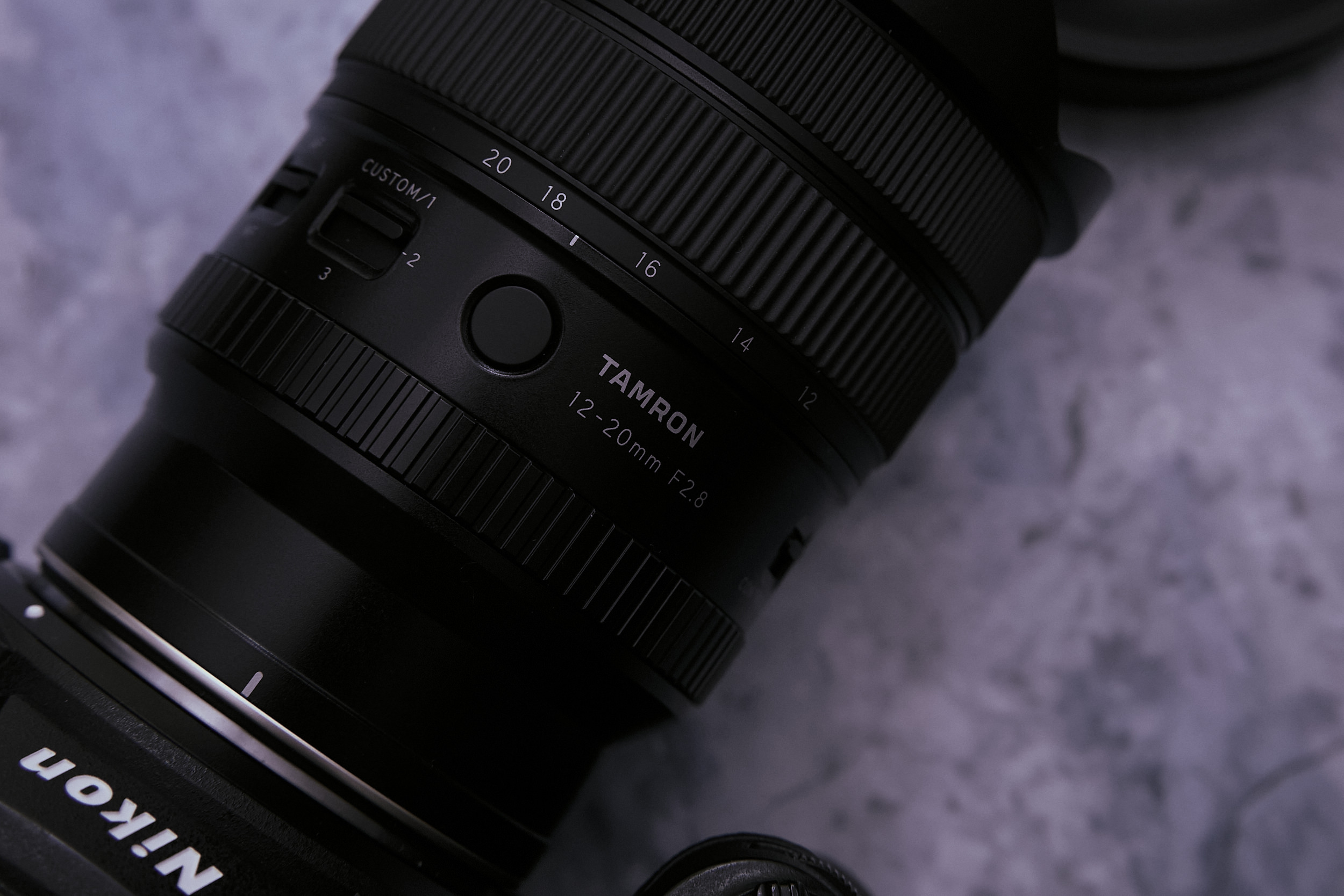
Ultrawide lenses have become something of an obsession for me. I’ve found myself wanting to stretch my creative limits and for me, an ultrawide really gets me out of my comfort zone and really making images that I’m proud of. Up until now, I’ve largely shied away from ultrawide zoom lenses for two reasons: First, fast aperture ultrawide zoom lenses are typically very large and very heavy. Secondly, most fast aperture ultrawide zooms are also extremely expensive. The Tamron 12-20mm F2.8, however, isn’t like any ultrawide that’s come before it.
The Big Picture: Tamron 12-20mm F2.8 Review Conclusions
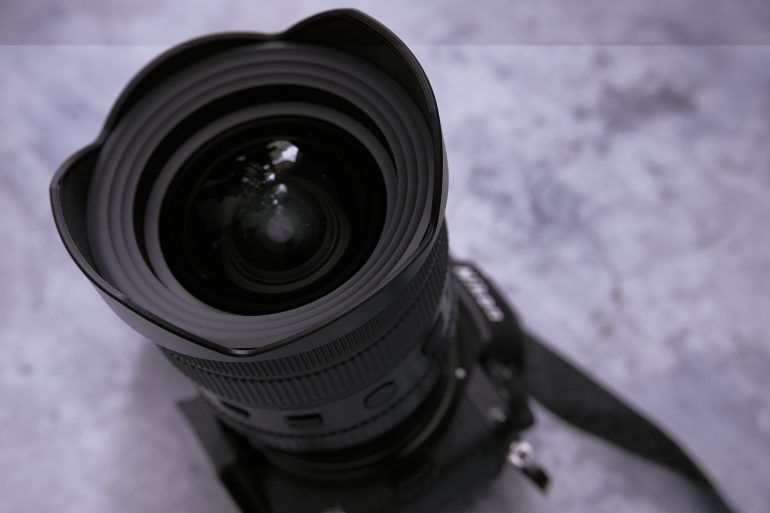
When I first got my hands on this lens I was floored by how impossibly light it felt. I’ve used other ultrawide lenses from various camera manufacturers and I’ve found all to be too large, too heavy for me to consider picking one up for myself. The Tamron 12-20mm F2.8 was nothing like those other lenses – weighing only 20.7 ounces, it’s lighter and shorter than Nikon’s 14-24mm option making it easier to pack without many compromises. This lens is not only light, includes an internal zoom mechanism that is fully weather-sealed – so it will easily find itself as your go-to lens no matter the environment.
The Tamron 12-20mm F2.8 ticks off just about every box a photographer cares about: Looking for an ultrawide lens with a fast aperture? Check. What about a flexible zoom range? The 12-20mm F2.8 has you covered. Is it light enough to go off the beaten path for some astro or landscape photography? You betcha! Best of all, the Tamron 12-20mm F2.8 is aggressively priced – around $1700 for the Sony E-mount version and $1800 for the Nikon Z-mount version.
We’re giving the Tamron 12-20mm F2.8 four out five stars. Want to try one for yourself? You can purchase on Amazon: Sony E-Mount $1699 (expected ship date: July 30, 2026) | Nikon Z-Mount $1799 (expected ship date: August 27, 2026).
- Extremely lightweight and compact design
- Fast F2.8 maximum aperture
- Internal zoom design
- Weather-sealing
- Non-removable, petal hood keep the lines of the lens’s design uniform at the cost of the ability of using existing glass filter systems
- Rear cut filter holder built into rear of the lens
- Nearly half the price of Nikon’s closest competitor
Experience
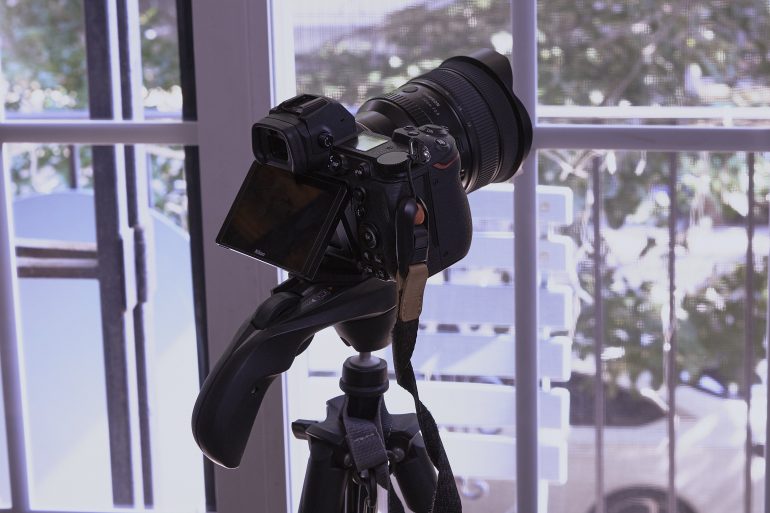
We tested the Tamron 12-20mm F2.8 using the Nikon Z7 II and occasionally with a sheet ND filter that was clumsily cut to size. Tamron is also releasing a variant of this lens for the Sony E-Mount
Using the Tamron 12-20mm F2.8 has been a game changing experience for me personally. I’ve mentioned earlier in this article, but I’m still floored by just how lightweight this lens is. Typically, ultra wide-angle lenses like this will make you reconsider what gear you end up packing, especially if your photography journey takes you on roads less traveled. Tamron’s 12-20mm weighs only 20.7 ounces – noticeably lighter than Nikon’s closet competitor. This is important when you consider that it’s a lens aimed at landscape, astro, and architectural photographers who will most likely be carrying additional gear like tripods and possibly sandbags to keep their camera secured and stabilized. This weight savings is significant as you build out your kit for your next trek or gig.
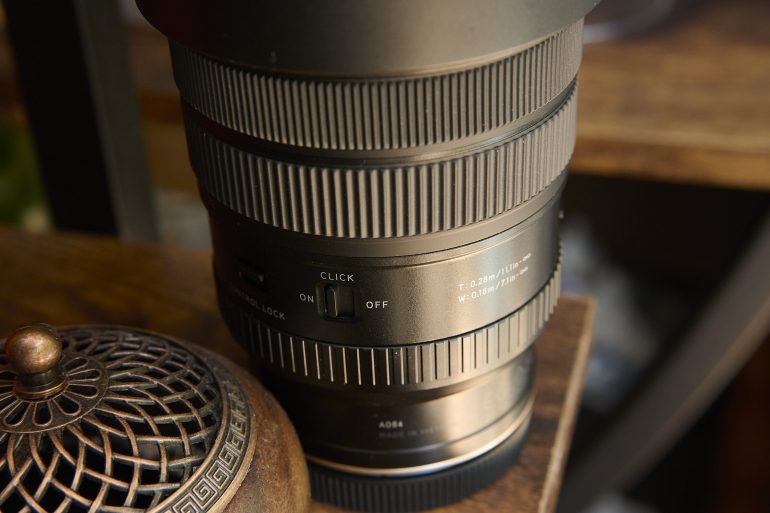
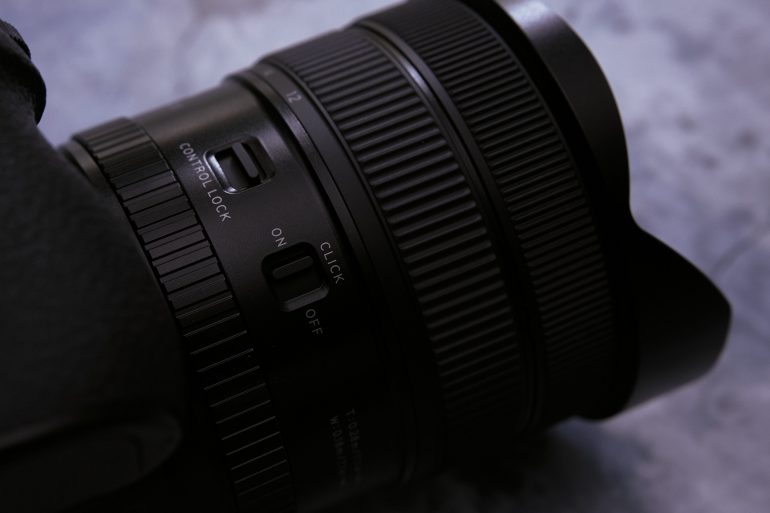
Outside of its weight, the 12-20mm F2.8 represents a big design shift for Tamron. Dubbed its “Tone Profile Next” design language, this lens marks what’s to come in terms of their design framework. The Tamron 12-20mm makes some marked changes to aesthetics by moving away from the current pure minimalism toward a more precise, tactile experience for photographers. For starters, the main barrel sports a semi-gloss, textured finish that give it a premium look. Operational parts, like switches and buttons, are contrasted with a very visually pleasing matte finish. When in use, these buttons/switches are strategically placed where a photographer could easily make adjustments by touch – even while using a pair of gloves.
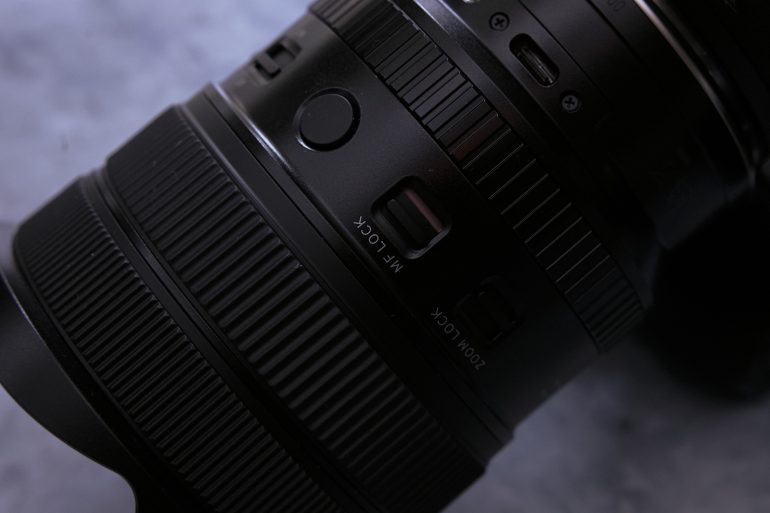
The control and aperture rings also see a change. Instead of the minimal, rubberized feeling of their current construction, the new “Tone Profile Next” design reimages these touchpoints with larger grooves that make it easier to know which ring you’re working with just by touch. During a recent editorial meeting, my editor, Chris Gampat, noticed that this new design for the control rings is a throwback to Tamron lenses from the 90s. Having spent the last week and a half working with this lens, I have to say that it is a very pleasant change (though, I don’t hate my 35-100mm F2.8 by any stretch).
In terms of weather-sealing, I found this lens was more than able to hold its own. Recently, we’ve had a run of heavy thunderstorms and steady rain in the New York City area, this lens allowed me to get out and make photographs no matter the weather. After spending roughly an hour in the driving rain one morning, the lens just shrugged it off and kept working. There were some instances where I missed focused – possibly because of a water droplet throwing off my Z7 II’s autofocusing – but there were no issues with the lens or its performance. Again, this lens begs to travel and without being babied or handled with kid gloves.
In terms of autofocusing speed, the Tamron 12-20mm F2.8 is appropriately speedy. I’ve found when using this lens and having face recognition turned on, the lens quickly locked on to faces in both AF-S and AF-C modes. For the most part, I shot with the camera in AF-C as wider angle lenses rarely will need to be in single-point AF. Whether on the street, in a room, or
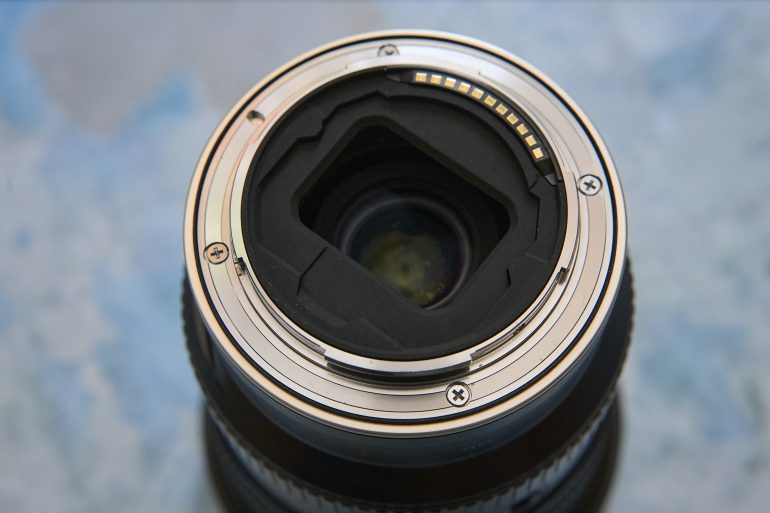
There is one serious caveat that needs to be addressed: the non-removeable petal hood means you will not be using existing glass filter systems. This is a situation where it feels like Tamron chose form over function. The loaner we were provided included instructions and dimensions for cutting my own filter using standard sheet filters but this is less than ideal. I often found myself, clumsily cutting the sheet filters down and even with the measurements, making the resulting filter sheet either too large or too small for the filter holder at the rear of the lens.
While I can image many landscape and astro photographers clamoring for a much lighter, ultrawide zoom, I don’t see anyone asking for a new, proprietary filter system. For their part, Tamron has indicated that they are working with third-party filter manufactures to support this new rear-mounted filter system. Also, it’s worth noting that Tamron is far from the only company doing something similar – both Canon and Sony have made lenses with seemingly arbitrary lens filter systems for their lenses as well.
Images
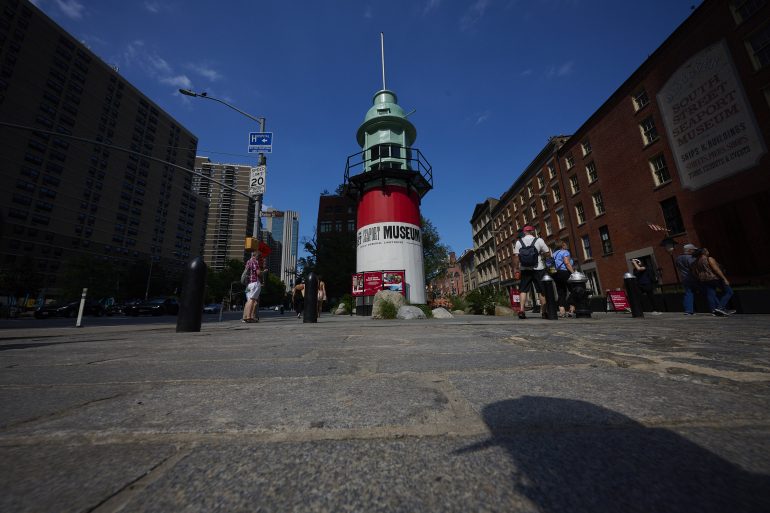
My biggest regret during this entire review period is that I did not have good enough weather during my time with it to get out and give a serious try at astro photography. That said, I did take advantage of its lightweight design, carrying it along as my secondary lens. I found that images are extremely sharp from edge to edge with no noticeable vignetting. This also lends to the flexibility you have when using this particular lens – more shots that you could use without having to spend too much time in your photo editor.

What about lens distortion? Despite it being an ultrawide lens, you can quickly correct any distortion in your editor of choice with minimal cropping needed. That said, I look forward to a future lens profile update in Capture One where I’ll be able to turn this into a one-button correction workflow.
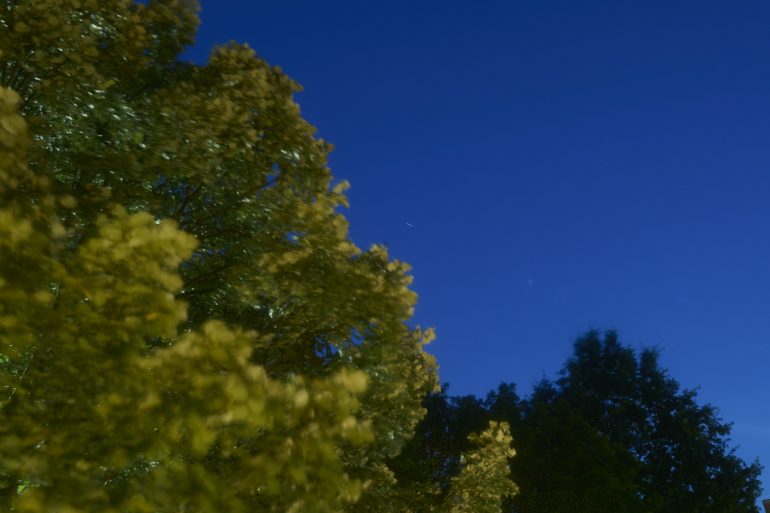
Here are some unedited images I made with the Tamron 12-20mm F2.8 and the Nikon Z7 II:


The following images were edited using our Film and Photojournalism preset packs:


Do You Really Want to Buy From Tamron?
We believe that everyone should be aware of the ethical decisions that they’re making when they spend money. So to do this, we research the companies that whose products we test and make folks aware of both possible concerns and reasons to feel great about giving a company your money.
Here’s what we’ve got for Tamron:
- Tamron has a warning on its website about the use of Carbon Black. The state of California states that it can cause cancer and has believed so since 2003.
- Tamron is part of the UN Global Compact. It has guidelines on corruption, human rights, labor, and the environment. It’s an organization that includes Canon Europe (not Japan), Nikon, Panasonic, and Fujifilm as participants.
- Tamron is working to decrease its carbon emissions by 30% by 2030 based on what it was generating in 2015. Part of this also involves their use of solar energy. So far, they’ve apparently achieved 15% improvement.
- Over the years, Tamron has reported that they’ve shown marked improvement in the use of recycled materials.
- Tamron’s back caps for their lenses are made of 100% recycled plastics.
- Tamron provides a breakdown for the recycling efforts made for all their products.
- Tamron has addressed issues with its products before and even issued recalls such as with the 70-1800m f2.8.
Tech Specs
The following tech specs were provided to us by Tamron:
- Model: 12-20mm F2.8 (Model A084)
- Angle of View: (Diagonal) 121°58′- 94°30′ for full-frame mirrorless format
- Optical Construction: 17 elements in 12 groups (1 XLD / 3 LD / 1 XGM / 3 GM)
- MOD: 7.1” / 0.18m (WIDE), 11.1” / 0.28m (TELE)
- Maximum Magnification Ratio: 1:5.8 (WIDE) / 1:9.1 (TELE)
- Filter Size: N/A (Integrated rear filter holder)
- Maximum Diameter: Ø90mm
- Length: 4.7” (119.3mm) for Sony E-mount | 4.8” (121.3mm) for Nikon Z mount
- Weight: 20.2 oz. (570g) for Sony E-mount | 20.7 oz. (585g) for Nikon Z mount
- Aperture Blades: 12 (circular diaphragm)
- Minimum Aperture: F16
- Mount: Sony E-mount, Nikon Z mount
Declaration of Journalistic Intent
The Phoblographer is one of the last standing dedicated photography publications that speaks to both art and tech in our articles. We put declarations up front in our reviews to adhere to journalistic standards that several publications abide by. These help you understand a lot more about what we do:
- At the time of publishing this review, Tamron isn’t running direct-sold advertising with the Phoblographer. This doesn’t affect our reviews anyway and it never has in our 15 years of publishing our articles. This article is in no way sponsored.
- Note that this isn’t necessarily our final review of the unit. It will be updated, and it’s more of an in-progress review than anything. In fact, almost all our reviews are like this.
- None of the reviews on the Phoblographer are sponsored. That’s against FTC laws and we adhere to them just the same way that newspapers, magazines, and corporate publications do.
- Tamron loaned the unit and accessories to the Phoblographer for review. There was no money exchange between us or their 3rd party partners and the Phoblographer for this to happen. Manufacturers trust the Phoblographer’s reviews, as they are incredibly blunt.
- Tamron knows that it cannot influence the site’s reviews. If we don’t like something or if we have issues with it, we’ll let our readers know.
- Tamron paid for shipping of the unit to the Phoblographer and, if they request it back, will be paying for the return shipment. This is a standard practice in the world of journalism.
- The Phoblographer’s standards for reviewing products have become much stricter. After having the world’s largest database of real-world lens reviews, we choose not to review anything we don’t find innovative or unique, and in many cases, products that lack weather resistance. Unless something is very unique, we probably won’t touch it.
- In recent years, brands have withheld NDA information from us or stopped working with us because they feel they cannot control our coverage. These days, many brands will not give products to the press unless they get favorable coverage. In other situations, we’ve stopped working with several brands for ethical issues. Either way, we report as honestly and rawly as humanity allows.
- At the time of publishing, the Phoblographer is the only photography publication that is a member of Adobe’s Content Authenticity Initiative. We champion human-made art and are frank with our audience. We are also the only photography publication that labels when an image is edited or not.
More can be found on our Disclaimers page.
Get rid of the ads!
Did you enjoy reading this article as much as we enjoyed writing it? There's a way to support us and our reporting, getting ad-free navigation and more as a bonus. Subscribe to us for less than a coffee per month —just $3.99— or take advantage of our yearly subscription with a hefty discount for only $25.- An ad-free experience
- A free mystery box for Lightroom or Capture One
- All the books in our store
- 20% discount on Capture One
- 30% discount on Imalume Photo Theft Protection
- 20% off Herbs and Kettle Tea Company.
- 20% off your order from MPIX printing services.
- 5% off Viltrox Products via their eCommerce store.
- 10% off all film developing, printing and scanning services from Blue Moon Camera and Machine
- 15% off 7Artisans products: The lens and accessory maker is offering a sweet discount for Phoblographer's readers.