


I’m in what is possibly a seriously toxic relationship with Canon. I’ve been using Canon cameras since the Canon 5D Mark II, way back in 2008-2009. The very first Canon camera I purchased for myself was the Canon 6D – I used it to start off my photography career. And since then I’ve found myself leaving Canon and coming back, each time with a new regret. This led me to ask, “Does Canon hate their customers?”
The first time I strayed away from Canon it was in search of a smaller and capable camera system. In the mid 2010s, I was experiencing some health issues the worst of which was chronic issues with my back. By this time I had a moderately successful event photography business and accumulated a few lenses including the EF 24-70 F2.8, an EF 50mm STM, and an EF 70-200mm F4. My backup camera was a Canon EOS 7D – I was invested to say the least. But while this list may not sound impressive, when you experience a debilitating back injury, that’s 2 lenses and a camera too much to carry. After trying out the Olympus OM-D E-M5 II, I was ready to leave Canon behind. I had held on, hoping Canon would release a mirrorless “pro” camera. Sadly, they didn’t. I became a brand ambassador with Samsung and I sold my gear.
…with the release of the Canon EOS R5 Mark II, it seems like Canon is not really interested in photographers, but in this imaginary “content creator” that isn’t interested in photography, but videos made on photography cameras.
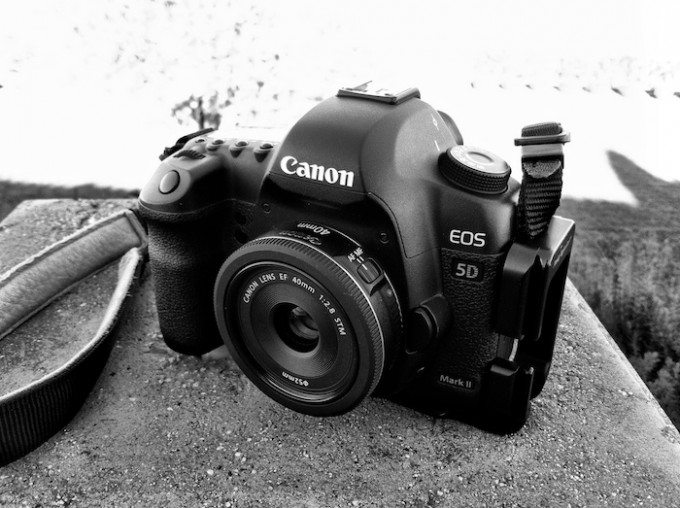
In 2015 my stint with Samsung ended and I was ready to dip my toes in the world of Canon cameras again. I bought my uncle’s Canon EOS 5D Mark II – he had recently made the switch to Sony and was trying to convince me that this was the move. A mirrorless camera that was lighter than the 5D and the lenses he was using at the time were significantly lighter. I tried the a7II but the battery life seemed like a big liability, especially compared to what the 5D II was able to do with a single battery.
In the end, I left the 5D in favor for Fujifilm – I was already comfortable with the perceived limitations of APS-C cameras and the lighter camera and lenses were hard to beat. For the next six years, I’d go back and forth between Fuji and Sony – two mirrorless systems with affordable lens options and decent weather-sealing. It wasn’t a “premium” it was the default, and unlike any past experiences with Canon.
…the truth is that I write this not because I want you to leave Canon – quite the opposite, I want Canon to come back to us.
In 2020, I got a chance to test the Canon EOS R and EOS RP and I finally felt that Canon was listening to their customers. Finally, Canon had released a viable mirrorless camera that was more than a vlogger’s toy (looking at you EOS-M cameras) and could take advantage of their storied L series glass. And then I saw the prices. The EOS R when announced was around $2400 USD, and the lens I would’ve purchased with it, the Canon RF 50mm F1.2 L USM was at least double that on launch. I would sit on the sidelines until 2024 after the release of the R8.
The R8 is not a pro camera. It’s not lost on me that I traded the APS-C vlogger camera for its full-frame cousin, but I really wanted to make it work. But something that I noticed with the release of the Canon EOS R5 Mark II, it seems like Canon is not really interested in photographers, but in this imaginary “content creator” that isn’t interested in photography, but videos made on photography cameras.

The EOS R5 Mark II marked the change for me for one distinct reason: Canon removed RAW multiple exposures from their cameras. Not even their top-of-the-line EOS R1 has that option anymore. Instead, you get use an Iris control dial in their VCM line of lenses. After over a decade of wanting capable, compact and lightweight lenses, we finally got them but can only use them to their fullest on very specific camera bodies – I hope you’re ready to open your wallet.
…Canon had released a viable mirrorless camera that was more than a vlogger’s toy (looking at you EOS-M cameras) and could take advantage of their storied L series glass.
There are some seriously solid lenses that Canon makes in the RF mount, and each time I want to walk away for good, I’m reminded just how good these lenses can be. The Canon RF 70-200mm F2.8 L IS USM Z is a phenomenal lens for events, portraits, and even sports – but it is extremely expensive putting it out of reach of many. The RF 45mm F1.2 STM brings tons of character to the system, but on the more affordable end, Canon forces you to make compromises that other, up-and-coming companies don’t.

When everything is all said and done, the truth is that I write this not because I want you to leave Canon – quite the opposite, I want Canon to come back to us. Canon once prized photographers and the photographer’s experience above all else. They strived to be competitive in terms of innovation and quality. Since those bygone days of photography, the technology has gotten better by leaps and bounds, and new lens, lighting, and even camera manufacturers have entered the arena offering similar levels of innovation at cut rate prices.
I don’t just want for Canon to not just survive the next chapter of photography; I’d love for them to thrive and give photographers the support that we’ve given them over the years.
Get rid of the ads!
Did you enjoy reading this article as much as we enjoyed writing it? There's a way to support us and our reporting, getting ad-free navigation and more as a bonus. Subscribe to us for less than a coffee per month —just $3.99— or take advantage of our yearly subscription with a hefty discount for only $25.- An ad-free experience
- A free mystery box for Lightroom or Capture One
- All the books in our store
- 20% discount on Capture One
- 30% discount on Imalume Photo Theft Protection
- 20% off Herbs and Kettle Tea Company.
- 20% off your order from MPIX printing services.