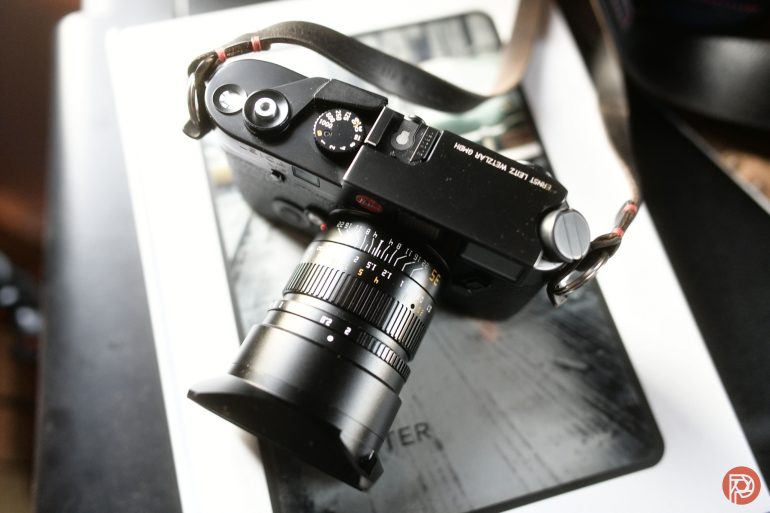
Last week, I had a moment to sit down with Sigma’s Kazuto Yamaki to discuss a few things about the future of photography. In the short 10 minutes that I allowed myself, we discussed AI in photography, the new Foveon Sensor, and content credentials. And from it, he got me very excited about the future of Sigma in some ways.
Lead image by Alberto Lima.
The first thing we discussed are Content Credentials in cameras. One of the biggest things that the staff and I here at the Phoblographer have been pushing are content credentials. Reviews Editor Alberto Lima has spent several articles critiquing Sony’s implementation of it across their cameras — mostly jabbing at them for only making it available for newsrooms intead of for everyone.
Nikon also worked to implement it but then had to pull it from their cameras.
And thus far, the only company to really stick with it through and through is Leica. Leica’s alternative isn’t software based and it’s instead hardware based with a chip on the motherboard that writes content credentials into every single image.
When asked about Sigma putting Content Credentials into their cameras, Mr. Yamaki remarked that it’s something that they’re considering but that they’re waiting to see what the bigger, universally accepted standard is. With Sigma being part of the Leica L-mount alliance, Kazuto stated that he believes that Leica’s hardware-based solution is superior to those of other brands.
With this in mind, I pressed him to ask about whether or not Sigma will be working on tools to help photographers combat AI. And ultimately, Mr. Yamaki doesn’t think that AI will ever really replace photographers. He concentrated on talking about the feel and process of making an image and how that’s still something that people love. As a Vipassana certified meditation teacher, I asked him them if he believes that Sigma’s future will be towards making instruments that feel more meditative.
His answer didn’t at all seem to say, “no.”
And so Sigma is probably going to be making some changes to really make folks fall in love with their lenses. Part of that may be the idea of making them even smaller like with the 35mm f1.4 II.
Sigma has also been working on a new Foveon sensor for an upcoming camera. It’s still very much so in the developmental stage and they’ve been working on trying to get it really right. I asked Mr. Yamaki a question that I truly think real photographers will appreciate. You see, everyone and their mother tries to make a camera that can make stills and video. But the Foveon sensor has always been made with the intenion of making nice stills. And with that in mind, that’s still the case.
Real photographers can expect the Sigma Full-Frame Sensor Foveon camera to be something primarily designed for making stills — not frivolous content meant to be scrolled past and double tapped.
That, perhaps more than anything else, really made my day. It’s been so long since we’ve had more cameras made primarily for stills. And we really need them.
Get rid of the ads!
Did you enjoy reading this article as much as we enjoyed writing it? There's a way to support us and our reporting, getting ad-free navigation and more as a bonus. Subscribe to us for less than a coffee per month —just $3.99— or take advantage of our yearly subscription with a hefty discount for only $25.- An ad-free experience
- A free mystery box for Lightroom or Capture One
- All the books in our store
- 20% discount on Capture One
- 30% discount on Imalume Photo Theft Protection
- 20% off Herbs and Kettle Tea Company.
- 20% off your order from MPIX printing services.
- 5% off Viltrox Products via their eCommerce store.
- 10% off all film developing, printing and scanning services from Blue Moon Camera and Machine
- 15% off 7Artisans products: The lens and accessory maker is offering a sweet discount for Phoblographer's readers.