

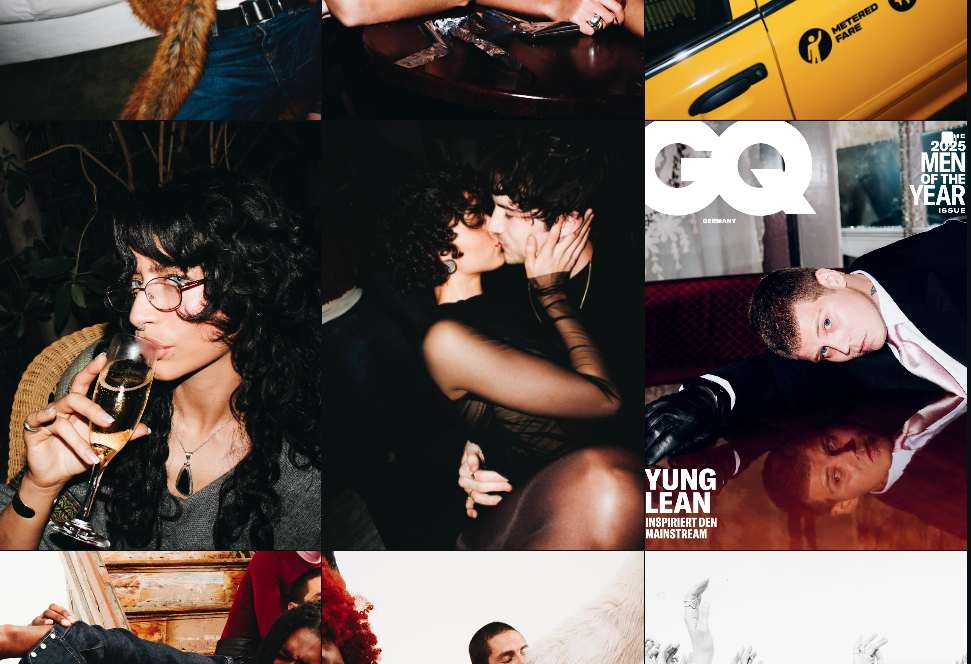
As a young man in my 20s, I often looked to the pages of GQ as a guide on how I’d like to present myself – not verbatim, but a jumping off point that I could incorporate into my personal style while still having a classic, cool about me. While my mileage may have varied and looks have changed (some even have come full circle), the photography within the pages of GQ magazine often intrigued me. More recently, GQ has made a pivot in its use of images to tell the stories within its pages, and in doing so, has changed the way we think about not just fashion photography but masculinity itself. These five photographers are the new vanguard that’s breathing new life into the stodgy world of men’s fashion photography.
Jack Bridgland
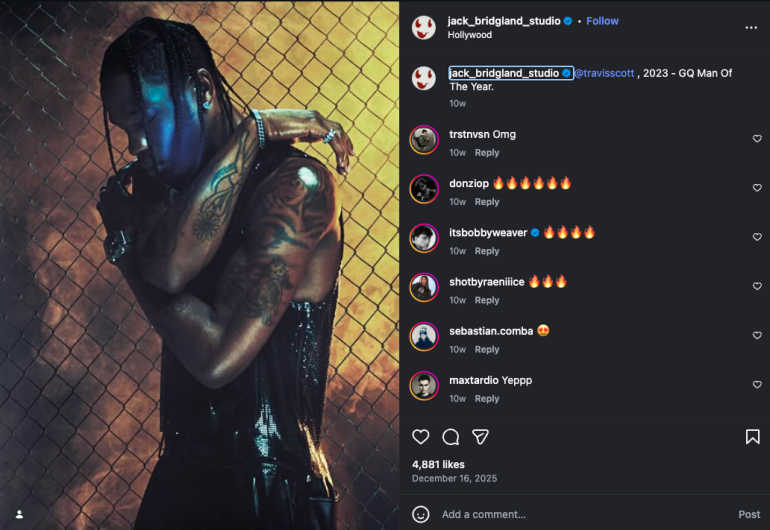
If you’re looking for stayed and true, high-fashion photography, look elsewhere. Jack Bridgland blends surrealist energy with bright color palettes and ’90s-era nostalgia for a new generation. Each of his GQ covers conveys youthful energy paired with familiarity. Each of the covers – 2022’s Robert Pattinson cover, 2023’s MOTY Travis Scott/Kim Kardashian cover, and 2024’s Michael B. Jordan cover – plays with harsh lighting, pop culture references, and allows his subjects an opportunity to show a side that they may not be immediately known for.
Elizaveta Porodina
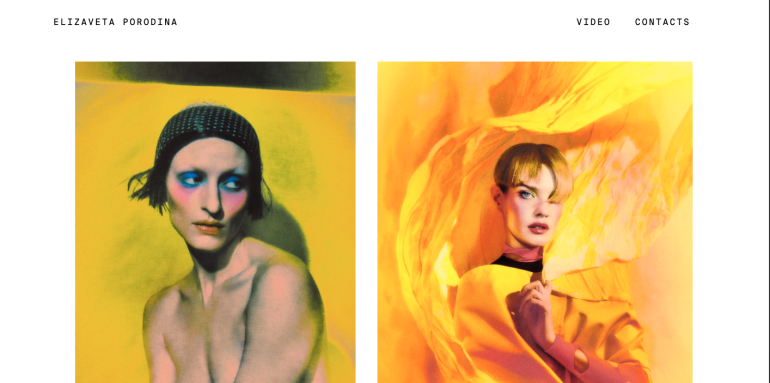
For those not in the know, Elizaveta Porodina is a Russian-born photographer who’s built a career around high-concept, surrealist fashion photography. Porodina’s style brings tons of life and character to her work in GQ, turning simple magazine stand covers into works of art in and of themselves. Her 2022 cover and cover story of HoYeun Jung allowed the Squid Games actor to put their unique personal style on full display. Likewise, her work with Brad Pitt on GQ’s August 2022 cover placed the Hollywood star in a dream-like environment that felt like a cross between Saturday Night Fever and a surrealist exhibit at the MoMA. And while her work may appear to be the result of heavy post-shoot editing, Porodina’s work is all done in-camera.
Campbell Addy
The new general direction of GQ Magazine has focused on what the magazine calls the “New Masculinity,” and, truthfully, we could not take that direction seriously without examining society’s relationship to racial/cultural identity and its ideals of beauty and masculinity. Addy’s work challenges both, focusing the camera as a tool to create a space for under-represented communities to not only be seen, but to be seen as both powerful and elegant. His work on the 2024 Lewis Hamilton cover takes his style and visual language and applies it to the seven-time Formula 1 World Champion’s spread. Addy’s use of color, blocking, and film helps create a series of images that denote presence, beauty, and a quiet strength.
Renell Medrano
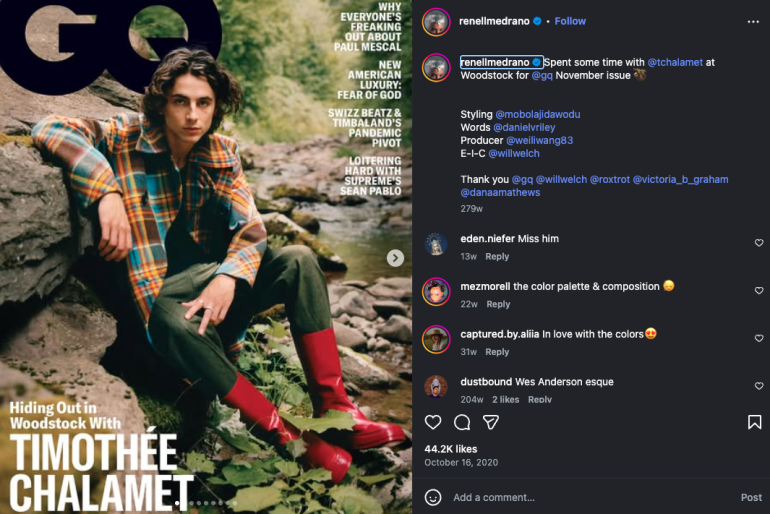
There are fewer photographers who evoke an authentic cool quite like Renell Medrano. The Dominican American, Bronx native, has built her career capturing her subjects’ essence through vulnerability and environmental portraiture. Largely working away from traditional studios, Medrano uses space to create her narratives – whether it be a beautiful marble bathroom sink, or an empty plywood house frame, Medrano’s work evokes raw emotion to each subject. Her 2021 cover story feature with Naomi Osaka and Cordae showcases her ability to create moods that feel more like a peek into someone’s home than a high-fashion spread. Personally, I love the realism and effortless cool that her images give.
Tyrell Hampton
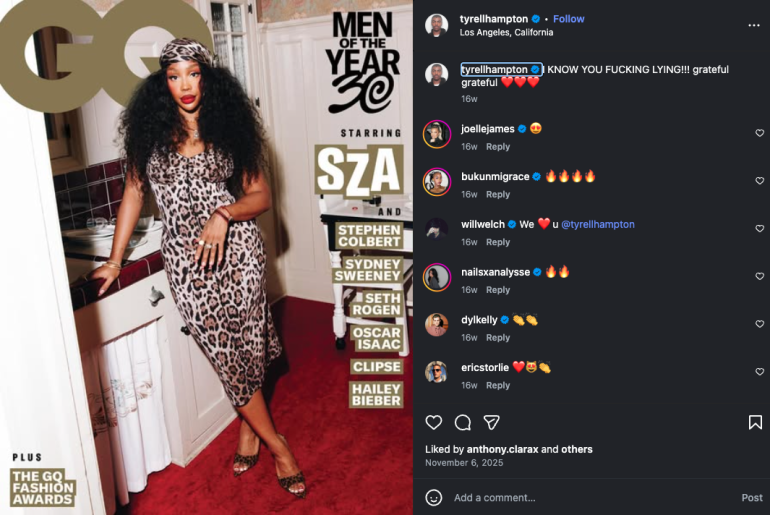
Tyrell Hampton is, in my opinion, one of the most powerful visual artists of the current GQ run. Hampton’s work evokes the feeling, movement, and unrestricted joy – something like a never-ending party, and nowhere is it more evident than in his work, the Stephen Colbert/SZA covers and stories. For starters, the direct flash and warm tones used in both spreads give the images a sense of a raucous house party among friends. Your friends just happen to be one of the most famous defenders of free speech and a Grammy-winning siren. Hampton’s work perfectly encapsulates a look that is both effortlessly cool and youthful and effervescent, no matter the age of his subjects.
For decades, the GQ aesthetic was synonymous with the perfect “power suit” portrait, largely unchanged since the magazine’s founding. Like their representation of masculinity – stodgy, strict, and very hetero-white – many of the photo spreads within the pages of the magazine were quickly becoming irrelevant, especially among younger readers. These five photographers have not only injected the Magazine with youth and a sense of cool but also helped solidify its direction, blazing a path forward that views masculinity through more modern lenses. Hopefully, for decades more to come.
Get rid of the ads!
Did you enjoy reading this article as much as we enjoyed writing it? There's a way to support us and our reporting, getting ad-free navigation and more as a bonus. Subscribe to us for less than a coffee per month —just $3.99— or take advantage of our yearly subscription with a hefty discount for only $25.- An ad-free experience
- A free mystery box for Lightroom or Capture One
- All the books in our store
- 20% discount on Capture One
- 30% discount on Imalume Photo Theft Protection
- 20% off Herbs and Kettle Tea Company.