

Last Updated on 02/27/2026 by Chris Gampat
Once again, photographers from around the world have displayed immense talent in showcasing what the world looks like beneath the surface of the oceans. A combination of breathtaking, mesmerising, surreal, and outright astonishing images make up the Underwater Photographer Of The Year 2026 contest winners.
Table of Contents
The Top 4 Winners at the UPOTY 2026
Here’s what the top 4 winners used.
Underwater Photographer of the Year 2026

© Matty Smith/UPY2026
ISO: ISO200 Aperture: f/16 Shutter: 1/60
“Once several weeks old and weaned from their mothers milk, elephant seal pups are abandoned by their parents on shore, left to navigate life alone. On Sealion Island in the Falklands, I watched dozens of them clamber over one another in shallow rockpools, awkwardly learning to swim, and quite engaging to my presence. I’d come here for this moment, to witness and photograph their first solo lessons in life. On the very first evening of my arrival, the sky ignited with colour. I donned my dry suit and rushed into the water, capturing a handful of frames before the light vanished. It turned out to be the defining moment of the trip, and I’m glad I didn’t hesitate.” – Matthew Smith
Gear Used: Nikon Z9, Nikkor Z 14-30mm F4 S, 2 x Ikelite DS230 for lighting and an Aquatica Digital AZ9 underwater housing
Up & Coming Underwater Photographer of the Year 2026
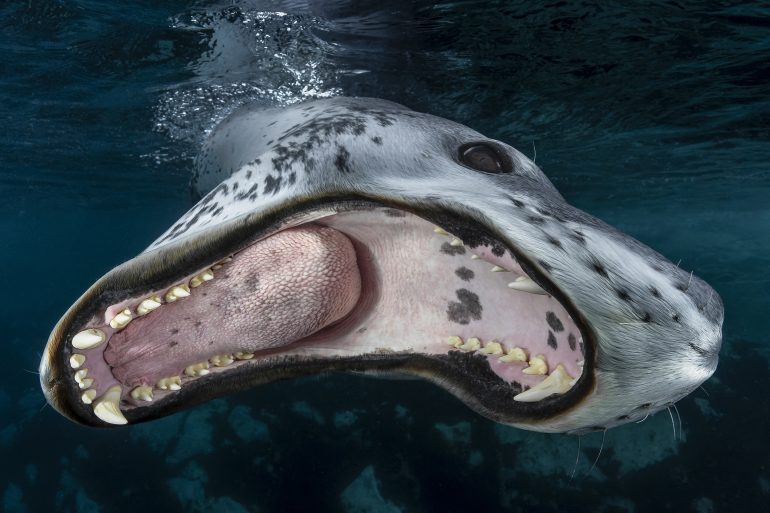
© Sam Blount/UPY2026
ISO: 1000 Aperture: f/10 Shutter: 1/500
“For years, the leopard seal topped my Antarctic wish list, a predator I dreamed of encountering face to face. I have to say, this dive was everything I could have hoped for: clear water, good lighting, and a playful seal. Leopard seals wield an astonishing array of dominance displays, and this one put them all to use, darting around me with effortless power. Watching that massive mouth lined with sharp teeth charge straight toward me is a thrill I’ll never forget.” – Sam Blount
Gear Used: Sony A1, Sony 16-35mm f4, OneUW 160X Strobes and Nauticam NA-A1 housing
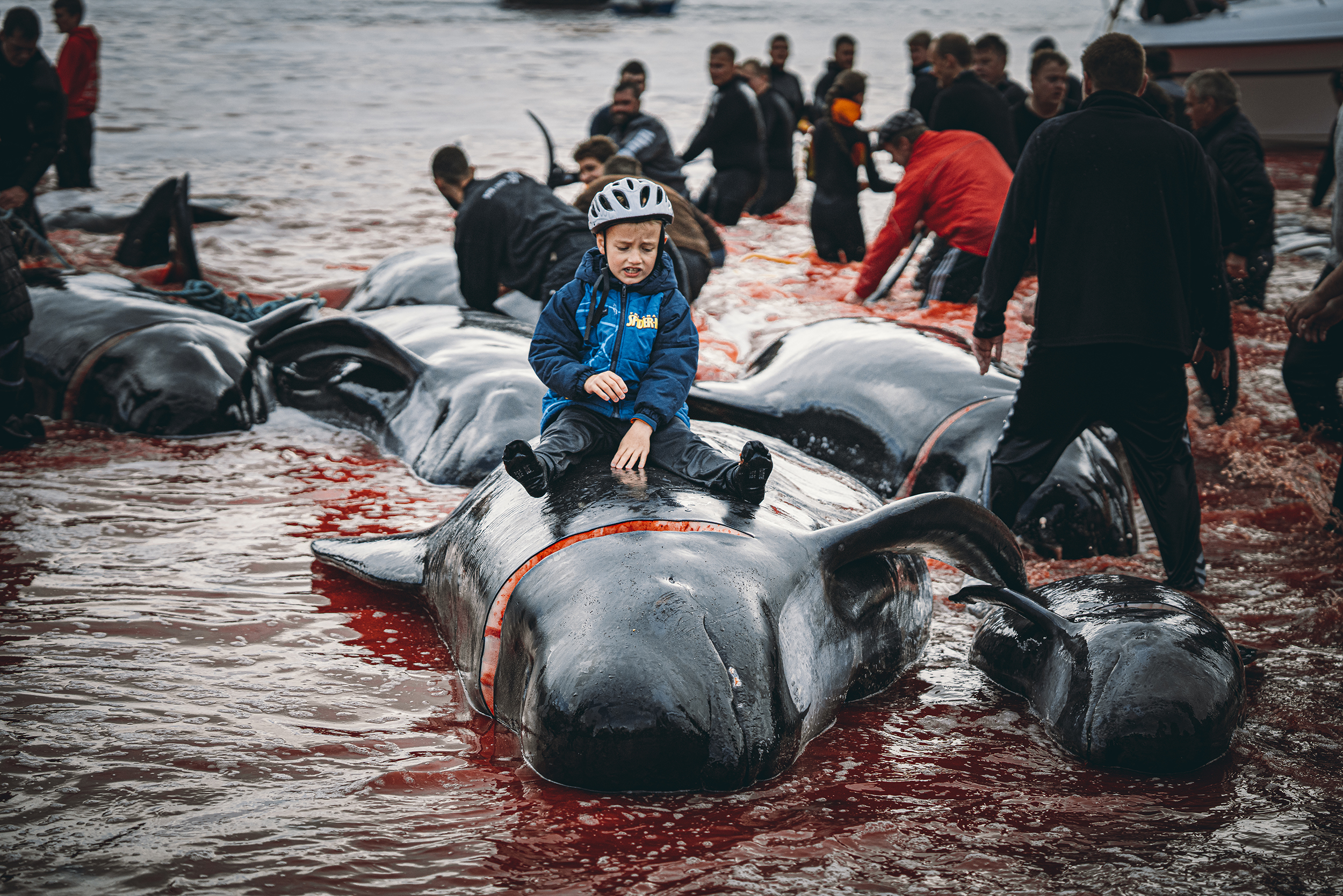
‘Save our Seas Foundation’ Marine Conservation Photographer of the Year 2026

© Khaichuin Sim/UPY2026
ISO: 800 Aperture: f/2.5 Shutter: 1/8000
“In the Faroe Islands, the annual pilot whale hunt known as Grindadráp, remains one of the world’s most controversial traditions. Seen by locals as a cultural heritage and source of food, it is condemned globally for its brutality and impact on marine life. In this poignant scene, a young boy sits atop a slain whale amid blood-red waters, a haunting reflection of how tradition, identity, and ethics collide. It captures not just a moment, but a generational question: what should be preserved, and what should change?” – Khaichuin Sim
Gear Used: Sony A7RM2, Sony FE 85mm F1.4 GM lens
Most Promising British Underwater Photographer 2026
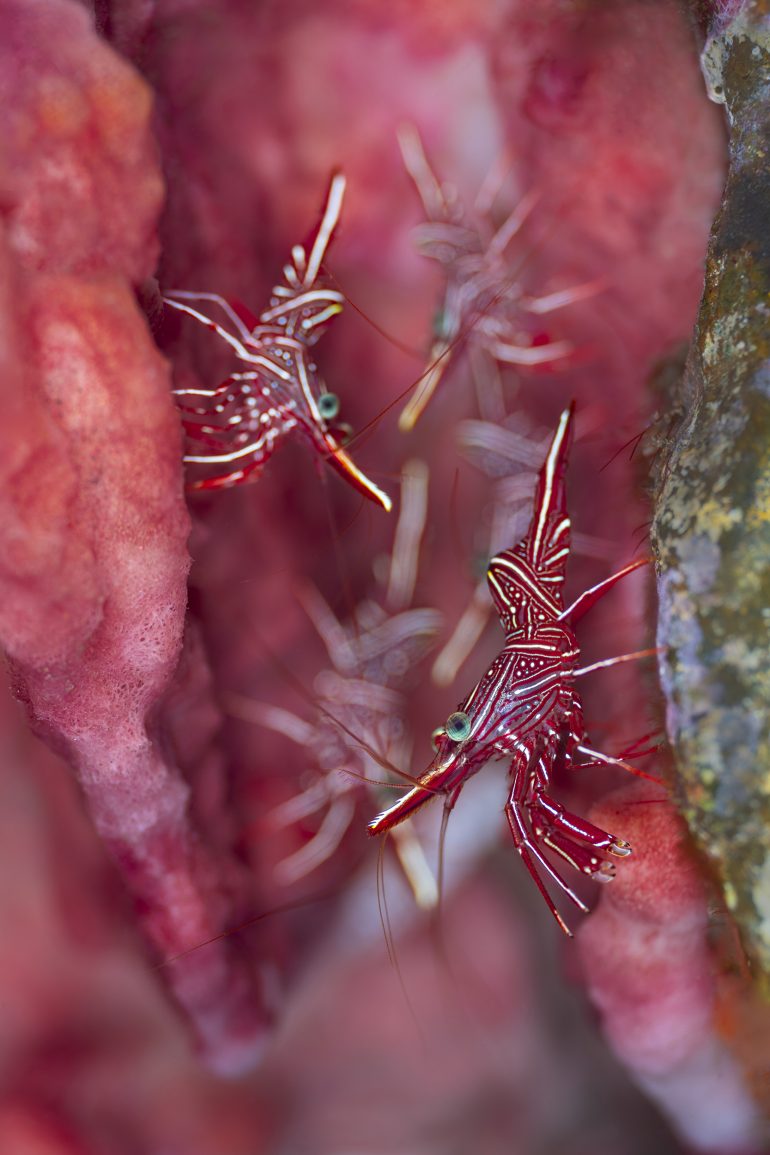
Crowded House‘© Natalie Yarrow/UPY2026
ISO: 80 Aperture: f/5.0 Shutter: 1/200
“Peering into the crevices of this vibrant barrel sponge, I could see several dark figures moving around like shadow puppets. This turned out to be a large colony of hinge-beak shrimps, living together in very close quarters! While somewhat of a tight squeeze, communal living suits these social and cooperative creatures, as well as providing ‘safety in numbers’ against predators. Further, the craggy pink walls allow for great camouflage. I selected a wide aperture so that each shrimp is rendered increasingly out of focus as the eye is drawn deeper into the sponge. Those individuals at the back are reduced to a fuzzy puzzle of white dots and stripes. I would like to thank my guide, Wix (Scuba Seraya), for finding these shrimps for me, and also for taking me back to the same spot a second time as I liked them so much, which resulted in my getting this shot.” – Natalie Yarrow
Gear Used: Sony A7RV, Sony FE 90mm f/2.8, Retra Pro Max lighting, Nauticam NA-A7RV housing
Other Category Winners
Wide Angle
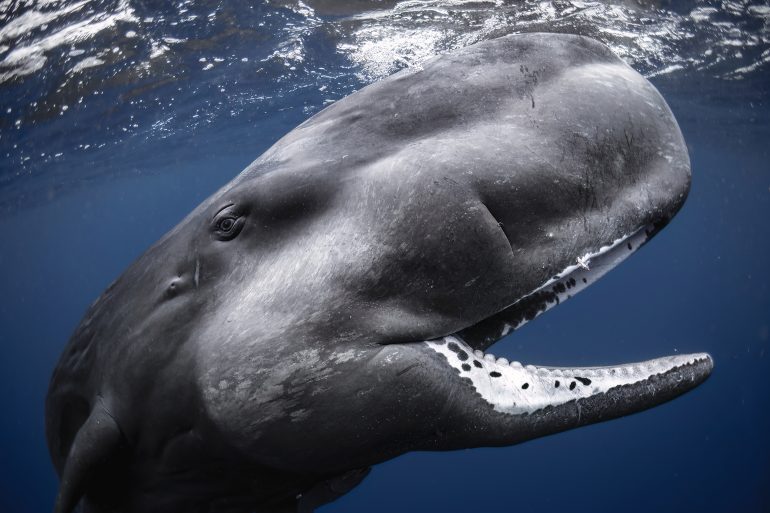
© Cecile Gabillon Barats/UPY2026
ISO: 800 Aperture: f/7.1 Shutter: 1/400
“As a tour leader and photographer in Dominica, I was fortunate to experience a truly magical encounter with a curious juvenile sperm whale. We entered the water at a respectful distance alongside the mother and her calf, watching as the mother prepared to dive in search of food, leaving her youngster at the surface. Almost immediately, the calf spun around and approached us, coming remarkably close, mouth wide open to reveal his emerging teeth, rolling playfully upside down. It seemed he was eager to interact. We could clearly see a chunk of squid held in his jaw and the many scars already etched into his skin. Over the years, I’ve photographed sperm whales countless times for documentaries and a feature film, but this unforgettable moment will always hold a special place in my heart. Looking back at the encounter, it’s tempting to believe he was smiling—and perhaps even about to give us a cheeky wink!”
Gear Used: Nikon D850, Tokina 10-17 lens, NAUTICAM NA D850 housing
Macro
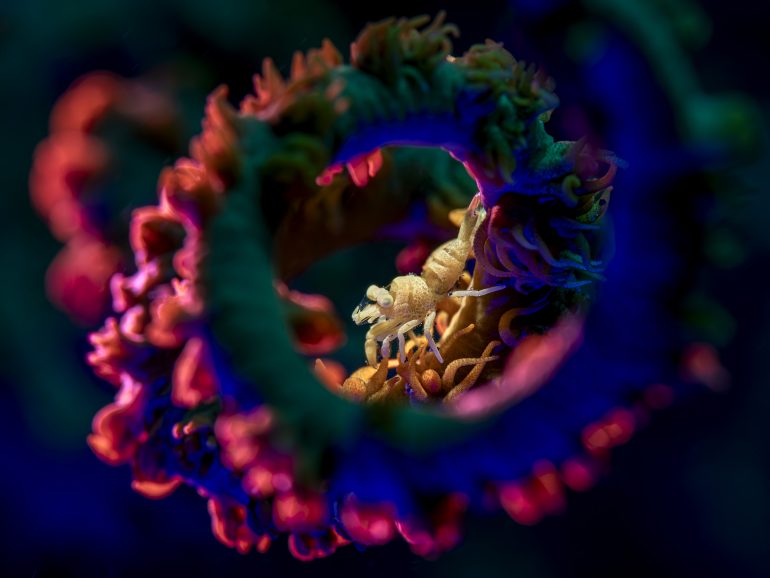
© SeongCheol Cho/UPY2026
ISO: 560 Aperture: f/16 Shutter: 1/160
“While diving in Tulamben with my guide, Jaye, I encountered a commensal shrimp living within a naturally spiralling whip coral. Something I had long hoped to see. The coral’s deep, rich green formed a striking nest for the brightly coloured shrimp resting inside. By introducing red and blue light against the green coral, I wanted to create a sense of intense beauty combined with visual turbulence, while expressing the shrimp’s stillness at the centre.
Everything about this dive was a first for me, the location, the guide, and working with continuous light, but meeting a subject I had dreamed of photographing and capturing it in a satisfying way made the experience especially memorable.”
Gear Used: Nikon D850, AF-S VR Micro-NIKKOR 105mm f/2.8G IF-ED, Weefine Solar Flare Zoom 1500, Smart Focus 1200FR lighting, Nexus D850 housing
Wrecks
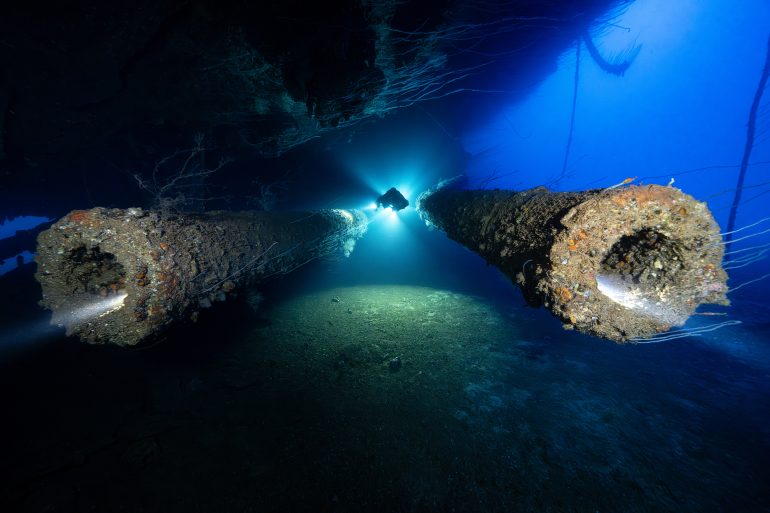
© Niclas Andersson/UPY2026
ISO: 8000 Aperture: f/9 Shutter: 1/100
“IJN Nagato is a famed Japanese battleship from which Admiral Isoroku Yamamoto is said to have issued the order to attack Pearl Harbor. Seized by the United States at the end of World War II, she was later towed to Bikini Atoll and used as a target ship during Operation Crossroads, the early nuclear weapons tests. Today Nagato rests upside down at roughly 52 meters, making it a demanding but highly rewarding dive. On descent, divers are greeted by four enormous propellers, while the standout features are the twin stern guns, best approached from the port side. This image was carefully staged by a four-person team to maximize safety and reduce silt, since visibility can be limited and particles stir easily. “
Gear Used: Sony A7R IV, Sony 12-24mm F4G lens, lighting – 2x Inon Z330, 2x BigBlue 30,000 lm videolights, Ikelite 200DL housing
Behaviour
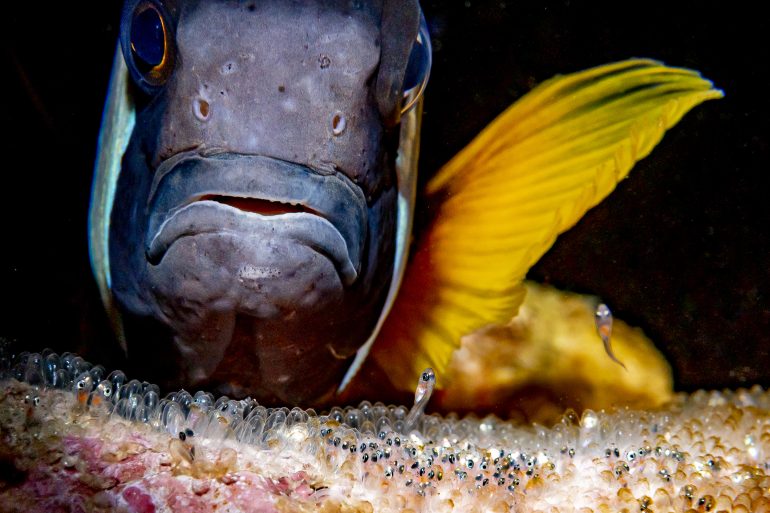
© Kazushige Horiguchi/UPY2026
ISO: 200 Aperture: f/16 Shutter: 1/125
“This photograph captures the exact moment clownfish eggs hatch in Kagoshima Prefecture, Japan. In the late afternoon, my close friend Koji Matsuda told me that the eggs would hatch that day. Even before hatching, the parent clownfish carefully guarded the eggs, constantly watching for predators as they waited for the moment to come. I was able to capture the instant the larvae emerged. Holding a snoot in one hand, I carefully controlled the light so that it illuminated only the clownfish and their newborn larvae, allowing them to stand out against the darkness. I have been photographing clownfish for over three years and pressed the shutter countless times that day, but this single image is the only one that truly succeeded.”
Gear Used: Nikon D500, AF-S Micro NIKKOR 60mm f/2.8G ED, INON Z330 + Marelux SOFT Lite, Anthis Nexus D500 housing
Coral Reefs
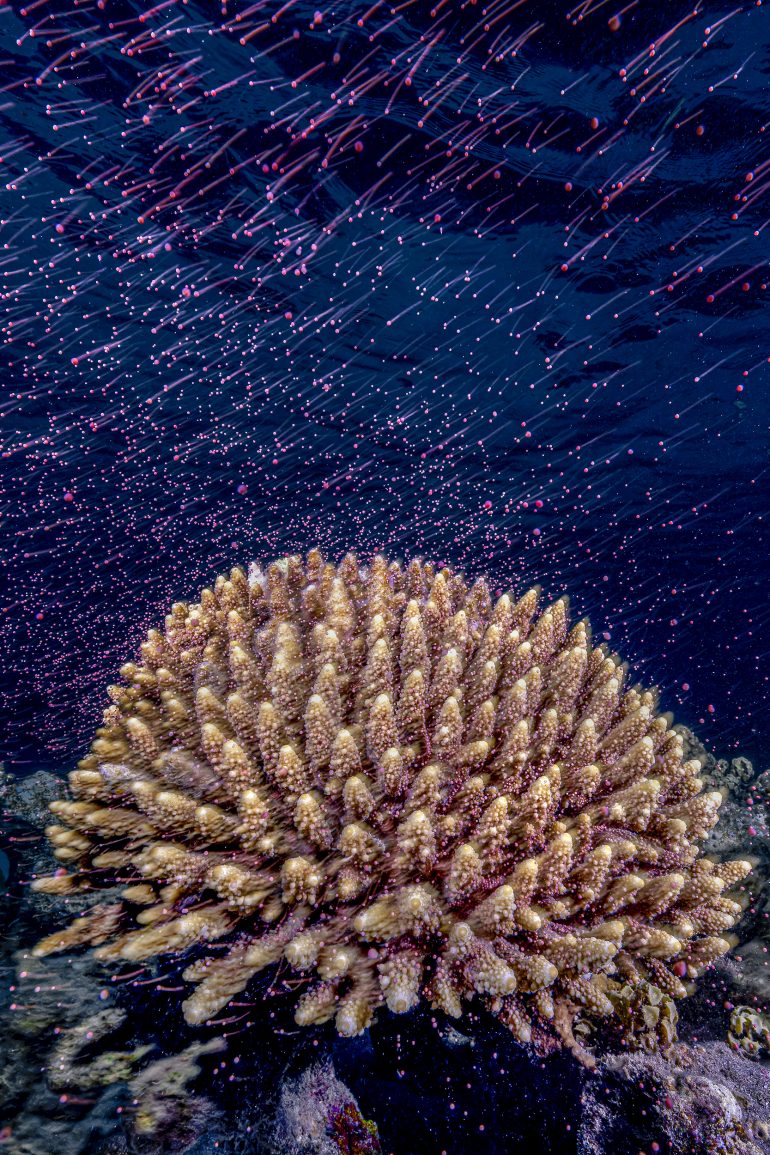
© Dr. Tom Shlesinger/UPY2026
ISO: 200 Aperture: f/18 Shutter: 1/5
“Corals are animals, and this is how they reproduce. Revealing the hidden world of coral reproduction exposes one of the ocean’s most extraordinary spectacles. Like clockwork, thousands of corals across hundreds of kilometers synchronize to release egg-and-sperm bundles into the open sea. Capturing this fleeting event is exceptionally challenging: it occurs only once a year, on a specific night of a particular month, within a narrow window of just minutes. Using a slow shutter speed as waves break and sweep the buoyant bundles upward transforms the scene into a colorful underwater meteor shower. This image is part of an ongoing scientific-documentary journey exploring the vibrant nocturnal life and reproductive rituals of corals in the northern Red Sea, a project shaped by more than 300 nights spent underwater during spawning season.”
Gear Used: Sony a1, Sony FE 12-24mm F2.8 GM, Retra Flash Pro Max, Nauticam housing
Black and White
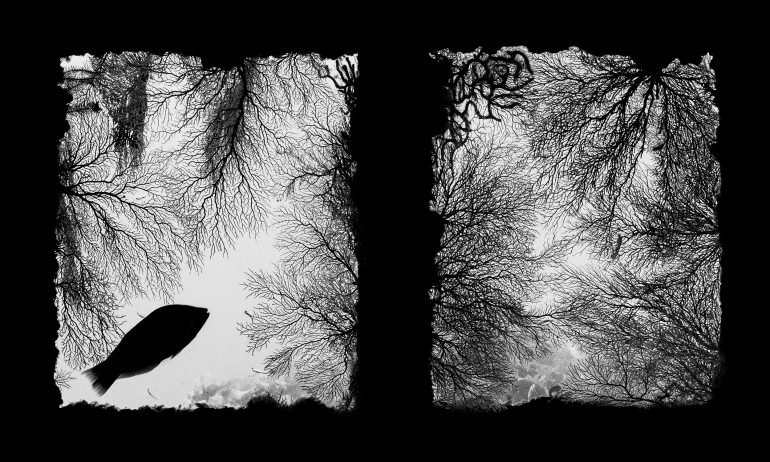
© Shunsuke Nakano/UPY2026
ISO: 320 Aperture: f/16 Shutter: 1/50
“Light enters the wreck through a window, a square cut into history and now taken over by life. Choosing to shoot in black and white, I am inviting the viewer to contrast the thick, straight manmade lines with the delicate and intricate patterns of nature. Gorgonians fan outward like frozen breath, turning rust into art. Between them, a lone wrasse punctuates the frame, providing movement in an otherwise still composition. Off Sado Island, the past is not lost, it is inhabited. The window no longer looks out; it invites us to look in, framing the story of nature reclaiming metal.”
Gear Used: Nikon D850, Nikkor 28-70mm f3.5-4.5 d, Nauticam NA D850 housing
Compact
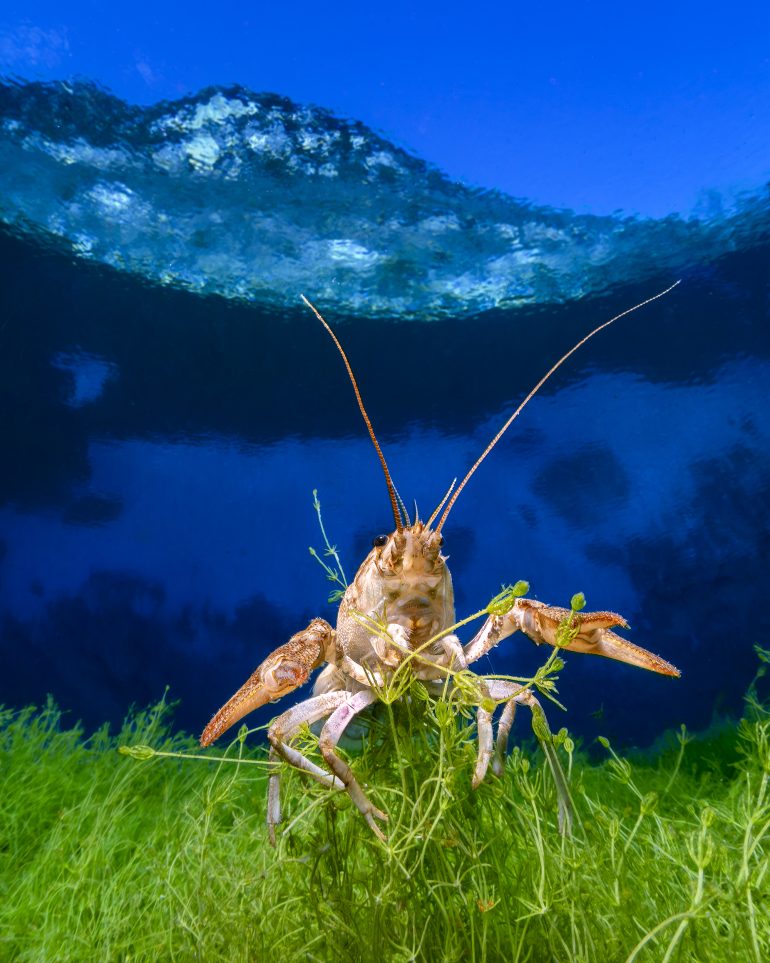
© Andrea Michelutti/UPY2026
ISO: 125 Aperture: f/11 Shutter: 1/50
“After years of waiting, I dived into a cold Alpine lake near my home in northeastern Italy. Its clear, deep-blue waters rise from a spring, making it a gem among the mountains. Low nutrients favour green algae growth, the constant low temperature (around 9–11 °C) contributes to the water’s clarity and unique colour. Life is sparse, but I spotted a freshwater crayfish (Austropotamobius pallipes) among the aquatic plants. Impetuous, it swam toward me until it was touching my wet lens. With the housing too low to use the LCD, I had to shoot blind, holding the camera in one hand and one strobe in the other. I turned off my second strobe, positioning the remaining light above the dome for natural top-down illumination. The composition I’d planned for years is built on the transition from green vegetation to deep blue water, with mountain peaks framed in Snell’s Window.”
Gear Used: Sony RX100 M7, Single Inon Z330 lighting, Marelux housing
Smartphone
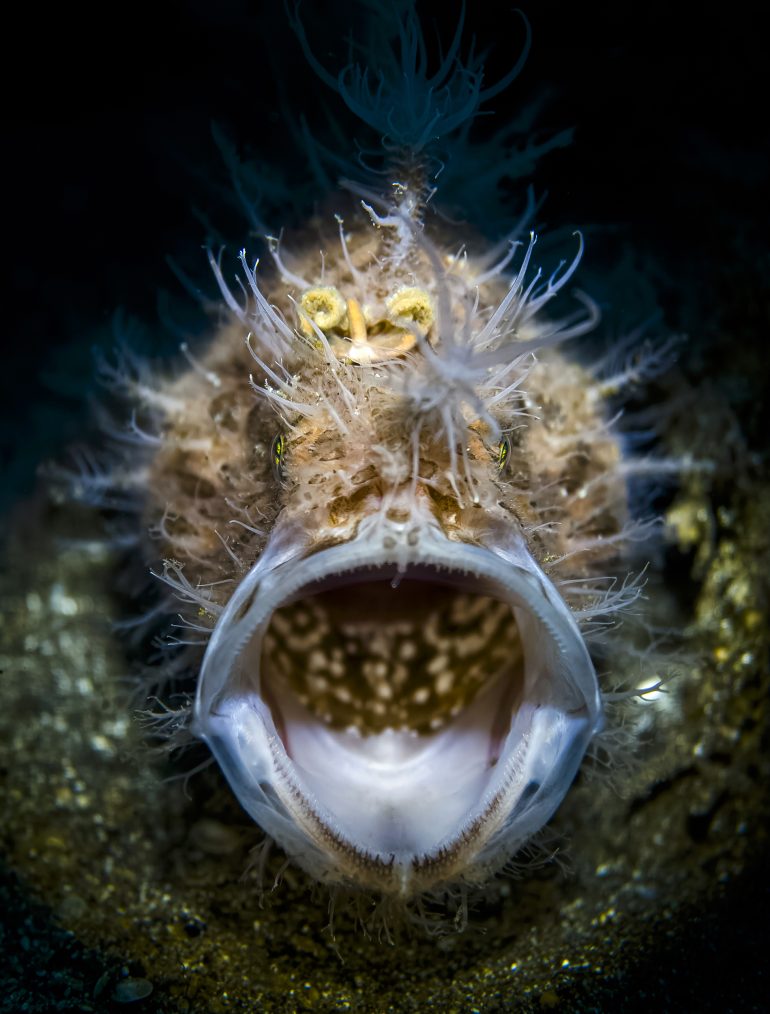
© Jack Ho/UPY2026
ISO: 200
Aperture: f/2.7
Shutter: 1/460
“While shooting on the sandy seabed at 15 meters in the Lembeh Strait, Indonesia, I found this well-camouflaged frogfish patiently lying in wait for prey. I waited for at least 15 minutes. To get a clean shot against the messy background, I aimed a macro light at its head to capture the split second it opened its huge mouth. Luckily, I got the perfect moment.”
Gear Used: VIVO X100, X-ADVENTURER M2000 lighting, Divevolk housing
British Waters Wide Angle
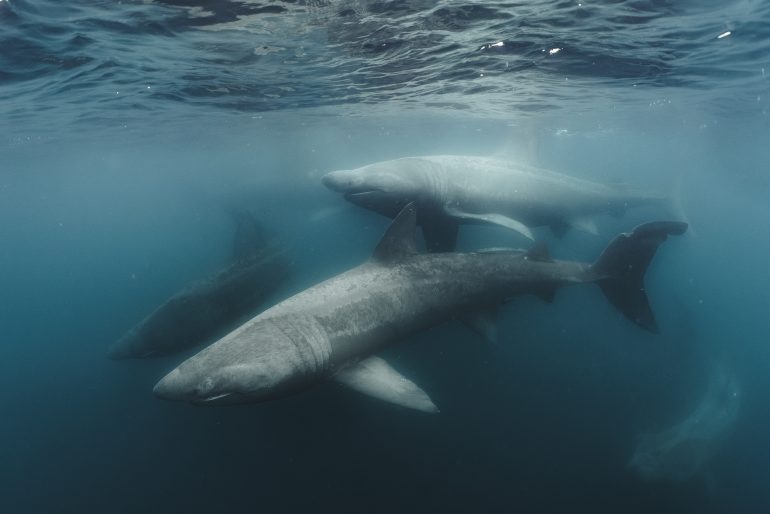
© Evan Johnston/UPY2026
ISO: 640 Aperture: f/6.3 Shutter: 1/400
“What started out with 2 large sharks feeding at the surface turned into 3, then 4, then 5 over the course of the day. At some point most of the sharks had gone, and after watching the last tail fade away, I turned around and was greeted with the image here. These sharks had stopped feeding and formed a tight shoal, before breaking off and swimming in slow rhythmic circles, eventually spiralling off into the deep. This behaviour is known as a Torus and is thought to be a courtship behaviour and the precursor to mating – although that remains a mystery. Over the course of the summer we observed multiple toruses from the boat, with close to 20 sharks slowly circling for hours at a time. It felt like an ancient ritual that happens out of sight from the world and was an incredible moment to witness and capture.”
Gear Used: Sony A7R iii, Sony FE 28-60mm f/4-5.6, Nauticam NA-A7R iii housing
British Waters Macro
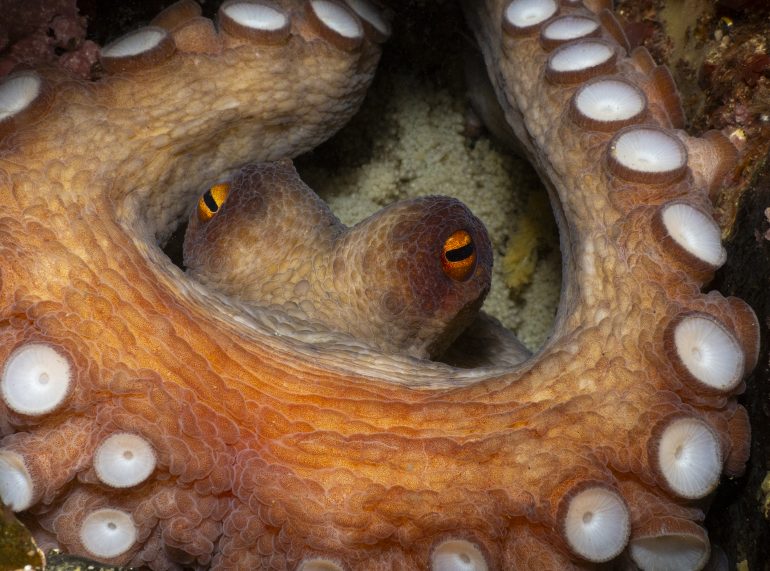
© Tom Ingram/UPY2026
ISO: 500 Aperture: f/11 Shutter: 1/200
“2025 was undoubtedly the Year of the Octopus. Being such an imposing creature underwater, these intelligent and charismatic animals had brought delight not just to me but many fellow UK divers. Throughout 2025 I’ve been treated to an array of natural behaviour, ranging from hunting pray to mating, but in this case I wanted to capture a females final act of selflessness, as after she lays her eggs she diligently guards, cleans and wafts oxygen rich water over them to keep them healthy. During this time which can last for several months, she doesn’t leave their side not even to feed herself, and once the eggs hatch she will sadly die.
In this bitter sweet and quite poignant time I spent with her, I wanted to try and capture the narrative of her final few weeks by shooting her face on, and encircling her offspring in the background.”
Gear Used: Canon Canon G7X Mark iii, Nauticam CMC2 Wet Lens, 2x Inon Z-330 Strobes, Isotta housing
British Waters Living Together
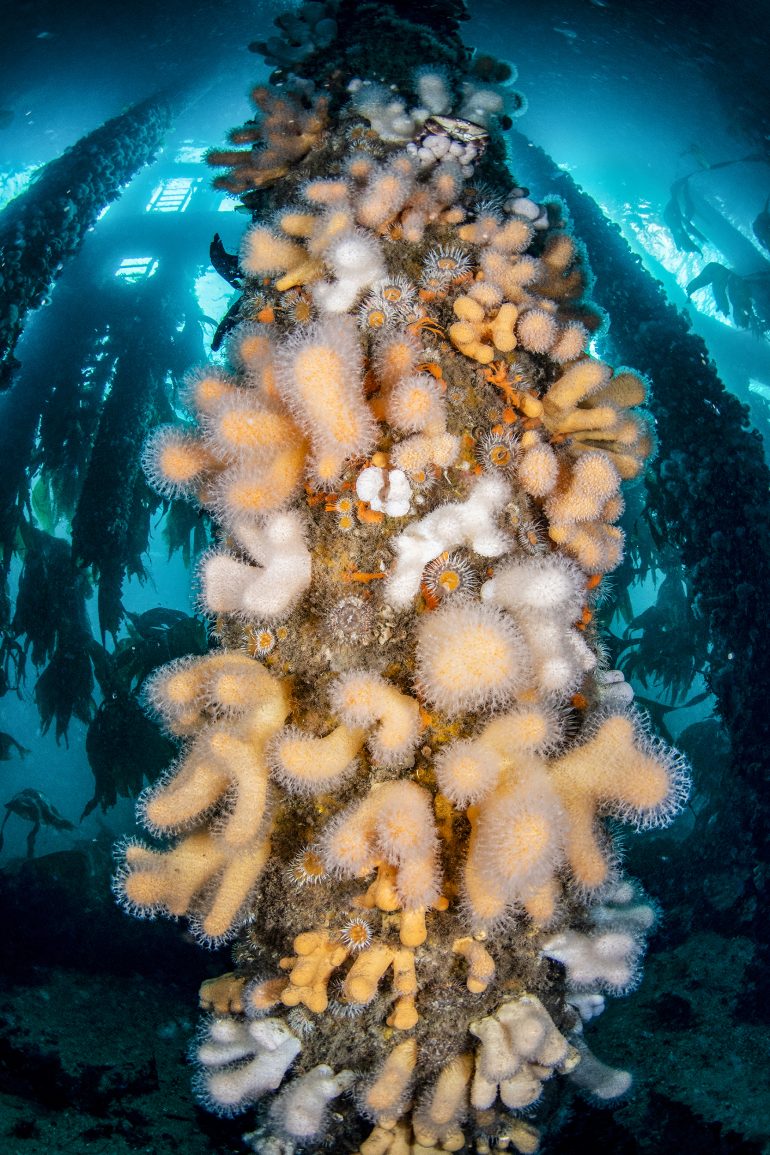
© Valerie Reid/UPY2026
ISO: 400 Aperture: f/9 Shutter: 125
“Last summer, I was fortunate to dive in my native west coast of Scotland after many years, and this pier dive was a particular highlight. The man-made steel piles provide a great substrate for marine life to grow and flourish. I managed find a pile where the dead man’s fingers soft coral had its polyps out. I chose a close-focus wide-angle perspective, using Seacam mini dome with a fisheye lens and Retra strobes in the “12 and 6 o’clock” position. Shooting at an extreme upward angle to capture the pile’s full height, keeping it vertically centred for a strong symmetrical image. I was delighted to capture this magnificent scene of British marine life, and especially thankful to UPY judges awarding my image as the winner ! I dedicate this image to the late Martin Edge, who taught and inspired me to appreciate the photographic opportunities under piers and jetties.”
Gear Used: Nikon D500, Tokina 10-17mm, Retra strobes, Seacam housing
All images seen in this article are copyright of the respective photographers, and were provided to us for usage by the Underwater Photographer of the Year marketing team. The lead image is by the UPOTY 2026 overall winner, Matthew Smith
Get rid of the ads!
Did you enjoy reading this article as much as we enjoyed writing it? There's a way to support us and our reporting, getting ad-free navigation and more as a bonus. Subscribe to us for less than a coffee per month —just $3.99— or take advantage of our yearly subscription with a hefty discount for only $25.- An ad-free experience
- A free mystery box for Lightroom or Capture One
- All the books in our store
- 20% discount on Capture One
- 30% discount on Imalume Photo Theft Protection
- 20% off Herbs and Kettle Tea Company.
- 20% off your order from MPIX printing services.
- 5% off Viltrox Products via their eCommerce store.
- 10% off all film developing, printing and scanning services from Blue Moon Camera and Machine
- 15% off 7Artisans products: The lens and accessory maker is offering a sweet discount for Phoblographer's readers.