


At The Phoblographer, we’ve never shied away from trying out cameras of any ilk. From the latest flagship cameras to the point-and-shoot cameras from decades ago and everything in between, we believe in giving everything a fair shake. So, when I came across a $50 digicam on AliExpress that looked like a mini–Mamiya M645, I just had to try it out. This camera isn’t for everyone, but here’s a breakdown of the four kinds of photographers who would love it.
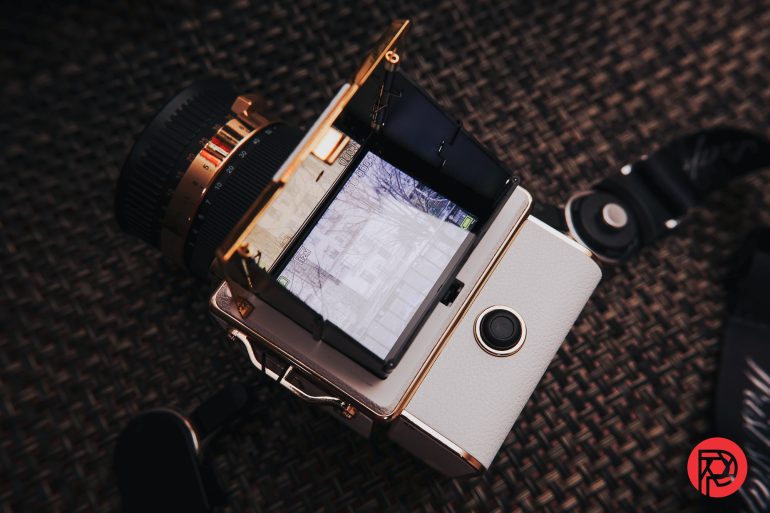
Before jumping into who would love, if not at least enjoy, the novelty of this camera, it’s important to understand exactly what we’re working with. For starters, when you spend $50 on a brand-new camera, you’d be forgiven for having very limited expectations before you power it on for the first time. According to the product listing on AliExpress, the Retro Portable Mini Camera sports a 12-megapixel CCD sensor, has a 2x optical zoom, and even claims to be waterproof/shockproof – a claim I was able to briefly test at the beginning of January’s major snowstorm. On paper, the Retro Portable Mini Camera is capable of producing images that can be easily shared on social media.
The Collector


Living with the Retro Portable Mini Camera often feels like picking up a toy. Because of its all-plastic build, the camera feels even lighter than it looks. It’s like picking up a decorative paperweight that lacks much weight. Which brings us to the first type of photographer who would enjoy this camera – the collector. That said, like many toys, if you approach it from that perspective, you begin to understand that this camera is meant to spark joy in its owner’s heart. At roughly 2.5 inches wide by 2.5 inches high, and 4.5 inches long, it’s tiny but not completely unwieldy like the Kodak Charmera. This decorative item looks cool sitting on your desk, on a shelf, or as a fun prop for a photo shoot. The fact that it can actually take photographs is just a plus.

The camera’s CCD sensor can produce a look that’s hard to replicate by many modern camera sensors. We’ve talked about the unique qualities of CCD sensors in the past, and, like those cameras, this camera’s CCD sensor produces images that are warmer in indoor light and skew “teal” in daylight. If you’re one of those photographers who can appreciate the look of old-school digicams, the Portable Mini Camera might find a soft spot in your heart. That said, you’re probably only taking this one out during daylight hours – there’s no definitive information on the actual sensor or its size, but we’re assuming it’s similar to cellphone cameras from the mid-aughts to around the early 2010s. Like many point-and-shoot cameras of the era, this one comes with four distinct image presets: Standard, Sepia, Black and White, and what I’ll describe as a black-and-white Pop Art filter. None of these are very sharp, and the shutter lag, even in daylight, is real, so just embrace the quirks and have fun.
For the Aesthetics

If you’ve ever wanted a Mamiya M645 but could never quite afford one (raises hand), this is a great impulse buy to get the joy of street photography with a waist-level finder. By no means will this camera match the quality you’d get in that Mamiya, but at $50-ish I can at least cosplay as that photographer. There’s something magical about using a waist-level finder for making photographs – it retrains your eye when composing, and superficially, I think it just looks pretty damn cool. The Retro Mini Camera’s lightweight, box-like design eliminates the hassle of being weighed down by heavy gear while remaining relatively easy to handle, even with thick gloves. The “film winder” on the side of the camera is used to control menus and zoom during operation, though I would’ve loved for it to advance to the next “frame.”

This is a camera for the “unserious” photographer. Let me explain: When I first unboxed the Retro Portable, the first thing I noticed was my wife’s reaction. Upon first seeing the camera, she lit up and asked if she could keep it after the review. She didn’t care for the megapixel count, how many frames per second it shot, or even if the images were very good. As she put it, “This just looks like a lot of fun, and the pictures are for me.” Which is really the best kind of relationship to have with photography. This camera isn’t a lot of things – the optical zoom claim is sketchy at best, the autofocus is spotty, and struggles to focus to infinity, and the low-light performance is like thick mud – but there is a sense of joy that this camera seems to spark in everyone who has come across it. It’s a conversation starter, for sure, and people usually just smile when they see you using it in public.
Below are some additional sample images, all taken straight out of the camera:


As a product journalist, whenever I get a chance to review something like this, I want to make it abundantly clear: this is not a camera that will replace your current one. Hell, it won’t even be “good” enough to replace your phone. But once you get those expectations out of the way, you really see what this is – a toy, a trinket, and a ton of fun. With all that’s going on in the world today, there’s nothing wrong with finding something that sparks a little joy in your life, and at around $50, this isn’t the worst way to find it.
Get rid of the ads!
Did you enjoy reading this article as much as we enjoyed writing it? There's a way to support us and our reporting, getting ad-free navigation and more as a bonus. Subscribe to us for less than a coffee per month —just $3.99— or take advantage of our yearly subscription with a hefty discount for only $25.- An ad-free experience
- A free mystery box for Lightroom or Capture One
- All the books in our store
- 20% discount on Capture One
- 30% discount on Imalume Photo Theft Protection
- 20% off Herbs and Kettle Tea Company.