


Last Updated on 02/18/2026 by Nilofer Khan
The analog world woke up to the news that Kodak had announced the reproduction of iconic film stocks. However, unlike the last time, the new film rolls will no longer be sold via its British-based Kodak Alaris subsidiary, but by Eastman Kodak itself — at least, that’s how we’re understanding it. This marks a shift from the way the company has been working so far, further showcasing how excited many photographers are. Here’s a look at the story
According to the company’s Instagram post, Kodak announced that it is restocking Ektar 100 and Tri-X 400, which will be available directly from the manufacturer to retailers and to customers in North America. The newly packed films are available in both 35mm and 120mm formats, and showcase refreshed branding on the retailer list.
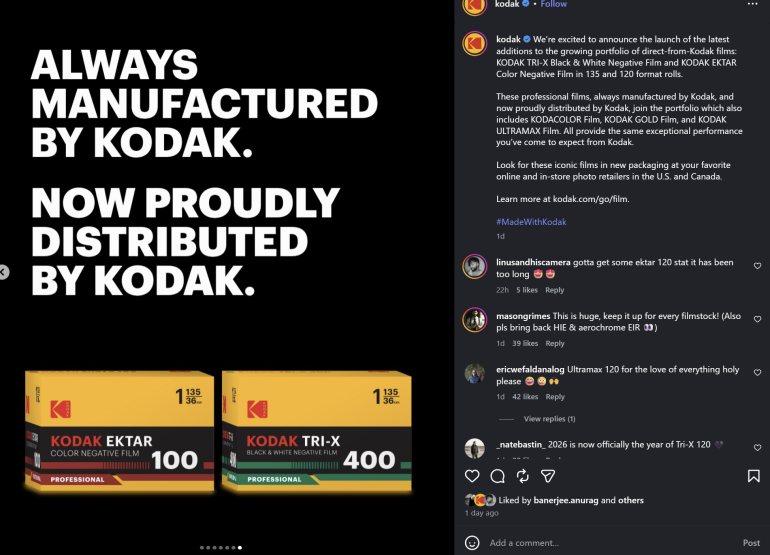
So, what does this move imply? For more than a decade, Kodak manufactured its film rolls, but Kodak Alaris handled sales, marketing, and distribution worldwide. This was a spin-off to help the company keep moving forward following the bankruptcy restructuring that followed the 2012 announcements. So, now that Eastman Kodak is gradually stepping into distribution, it gains greater control over inventory, pricing, and retail strategy in a market that shows renewed interest and demand for film photography. Some believe this can help stabilize film prices. However, that depends entirely on whether Kodak can reduce the MRP.


On Reddit, the announcement was met with supportive messages. Users noted that it appears Kodak is once again keen on still photography after outsourcing for multiple years. One highly voted comment described the change as “cool to see that Eastman is now selling these two professional stocks direct to consumers,” highlighting how this can affect prices. For now, Kodak has not revealed how much these film rolls will cost. However, some reports suggest it will cost less than Alaris’ version. This is because their films, such as Kodak Color 200 Film and Kodak Ultramax 400 Film, were priced at $9 and $27, respectively.

Another comment noted that this shift may indicate greater control and flexibility, which were not possible under the last agreement with Alaris. This also heralds a great time for the return of other professional film stock soon.
However, some were also skeptical since Kodak‘s deal with Alaris will end in 2028. So it is possible that this distribution is regional or partial, rather than a complete takeover. Some believe the move may be more closely tied to tariff considerations or logistical efficiency than to a wholesale shift in strategy.
Despite the future of new stocks being all over the place, it does signal that the demand is strong enough for the company to step in. What this trend brings remains to be seen, but for now, film photographers are excited to see more development in the industry.
Get rid of the ads!
Did you enjoy reading this article as much as we enjoyed writing it? There's a way to support us and our reporting, getting ad-free navigation and more as a bonus. Subscribe to us for less than a coffee per month —just $3.99— or take advantage of our yearly subscription with a hefty discount for only $25.- An ad-free experience
- A free mystery box for Lightroom or Capture One
- All the books in our store
- 20% discount on Capture One
- 30% discount on Imalume Photo Theft Protection
- 20% off Herbs and Kettle Tea Company.
- 20% off your order from MPIX printing services.
- 5% off Viltrox Products via their eCommerce store.
- 10% off all film developing, printing and scanning services from Blue Moon Camera and Machine
- 15% off 7Artisans products: The lens and accessory maker is offering a sweet discount for Phoblographer's readers.