

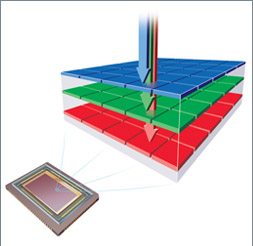
Most of us are accustomed to discussing sizes and resolutions when it comes to the camera models that we’re familiar with. Those of us who are a bit more tech-savvy know of back-illuminated sensors. But how many of us actually know about layered sensors like the ones created by a now-defunct company called Foveon? Read on further to understand how this revolutionary technology could find its way to your favorite camera brand next year.
Do You Know How Your Camera Sensor Works?
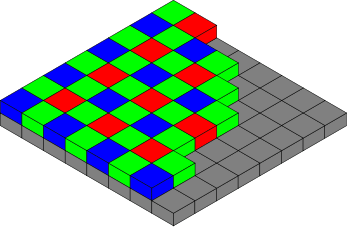
Most of us don’t quite think about how our cameras process color; we just care about the results. Most cameras these days use Bayer sensors, a technology that’s been the go-to tech for camera brands for decades now. Think of it as the hotdog of digital imaging – reliable, familiar, and easily fine-tuned. But what if there’s a better option out there that manufacturers should really start looking to?
According to a recent article by Mirrorless Rumors, one of the sessions at the ISSCC 2025 (International Solid-State Circuits Conference) in San Francisco is about 3-layer sensor tech. Of course, the first question that comes to mind is—what are the main benefits of this type of layered sensor over what seems to be working great for us now? I mean, don’t we already love the colors coming out of almost all Fujifilm cameras now? The pioneer of layered sensors was a company named Foveon, founded in California in 1997 and eventually acquired by Sigma in 2008. Foveon sensors take a radically different approach from Bayer sensors when it comes to processing the light that is read by the sensor. Instead of relying on filters like Bayer sensors, Foveon sensors consist of three silicon layers on top of each other. Each layer in a Foveon sensor captures information about a single primary color from the incident light. This means every pixel records full-color information without relying on interpolation like Bayer sensors do.
How Is This Better?
In real-world scenarios, images processed by Foveon sensors result in photos with true-to-life colors. Also, many of the weird artifacts that come with demosaicing aren’t present anymore. Foveon sensors are tailor-made for people who are sticklers for detail. Studio photographers, landscape shooters, and anyone printing their work at massive sizes would embrace such sensors any day of the week if they had access to them. This then begs the question: Why aren’t such sensors mainstream already, given the obvious benefits they seem to have?
For starters, the current range of Foveon sensors appears to struggle in low-light scenarios. This is primarily because the stacked design model isn’t as sensitive as a Bayer sensor. That, and the fact that currently, they’re more expensive to produce and harder to process. I suppose only a tiny niche of the photography market would be willing to pay more for these added benefits, which doesn’t make it so appealing for manufacturers to mass-produce Foveon sensors.
What Happened Sigma?
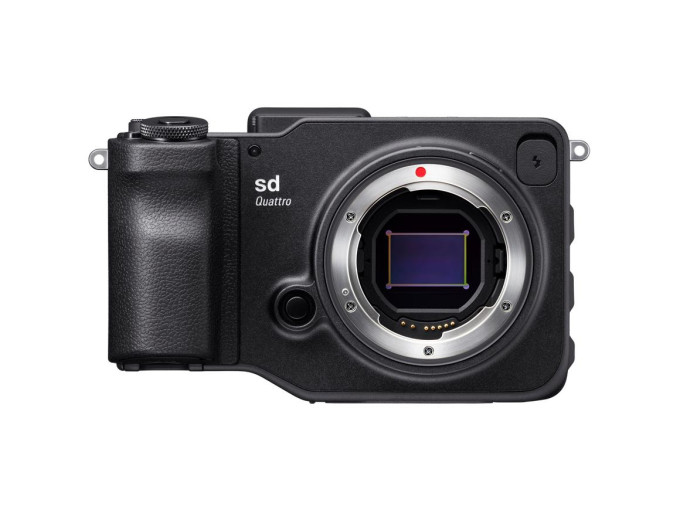
So far, following their purchase of Foveon, only Sigma has been really bothered introducing this kind of sensor in its cameras. One of their most famous cameras with this was the APS-C sensor SD Quattro, which we reviewed in 2016. It didn’t impress us much, taking home only 2 stars in our review. While the image quality under ISO 1600 was great, there were many things that didn’t make it a financially viable purchase:
“The Foveon sensor inside of Sigma’s cameras have always been the strong point. They’re very capable of getting lots of detail, fantastic colors (in the hands of a skilled editor and someone who understands color balance in-camera) and just a genuinely nice feel overall. This is still the case, but there’s one really big problem: it’s 2016. Camera manufacturers (namely Fujifilm) have caught up. The X Trans Sensor is capable of producing better colors when running images through Capture One Pro. Additionally, the Sony a7r II and the Canon 5Ds are also cameras with incredibly capable sensors”
We concluded by feeling that Foveon sensors really didn’t have a foothold of any kind back then. But what about now, nearly a decade later? Is it time for camera brands to stop playing it safe and start giving us tools that push boundaries, even if most people won’t adopt them right away? Foveon wasn’t/isn’t perfect. But neither was mirrorless when it first launched, right? Imagine if a company like Fujifilm decides to invest in Foveon sensors for their GFX line of medium format cameras. Coupled with their amazing color science, they could totally corner the studio photography segment in this case. Maybe someone besides Sigma needs to take a chance on a Foveon sensor that prioritizes the ultimate image quality over mass-market convenience. Let’s hope the discussion at the 2025 ISSCC leads to a good future for Foveon.
Get rid of the ads!
Did you enjoy reading this article as much as we enjoyed writing it? There's a way to support us and our reporting, getting ad-free navigation and more as a bonus. Subscribe to us for less than a coffee per month —just $3.99— or take advantage of our yearly subscription with a hefty discount for only $25.- An ad-free experience
- A free mystery box for Lightroom or Capture One
- All the books in our store
- 20% discount on Capture One
- 30% discount on Imalume Photo Theft Protection
- 20% off Herbs and Kettle Tea Company.