


Photography, as an art form, is entirely dependent on vision. But what happens when you don’t see the world as you should? While this may sound like the end of a career to many, it, in fact, is not. So, on this Braille Day, we are bringing you a round-up to showcase the creativity, rigor, and dedication of visually impaired photographers and those who have issues with their vision. We do hope their work continues to inspire you.
The lead image is by Kurt Weston. All are used with permission.
Table of Contents
Vivienne Gucwa
At the age of 9, after being unable to read from her right eye, Vivienne was prescribed glasses, which gave her headaches. It was not until when she was 20 and more financially stable that she finally got an MRI done. It was revealed that she has cortical blindness. In her words, Vivienne describes her right eye as “I see scattered light only the light looks like it’s being seen through broken glass like light through a crushed kaleidoscope.” While her left eye is the one she really depends on while shooting, it is the right one that helps her edit her images. The image above, thus, proves that the colors she saw were truly vibrant, making this scene appear more enchanting. The soft blur on the edges of the frame enhances this mood, while the graininess gives it a film-like appearance.
In her interview with us, she said:
Visual impairments really span a huge spectrum of issues, and having a device that can help even a fraction of people along this spectrum to see and experience better vision feels like a miracle.
Cham Phan

Cham fell in love with photography in high school, and his early career was in fashion photography. However, due to his undiagnosed diabetes, Cham lost his vision. As he struggled to make images during the sunset, the photographer focused on infrared photography, allowing him to shoot during noon. The image above is one such example. Using false color editing, Cham takes us to a world that exists between reality and fiction. The white leaves and the black water make us further question what we see and, thus, give Cham the opportunity to draw his viewers in, one image at a time. Thus, we had to include him on our list on Braille Day.
In his interview with us, he said:
I look for lines that tell a story. I like to frame my subjects almost uncomfortably and always shot as low as possible for a larger feel. The most peaceful aspect of the process is lining up the frame then waiting for the clouds to land exactly where they need to be. It’s a waiting game and requires patience and focus.
Derek Schrock
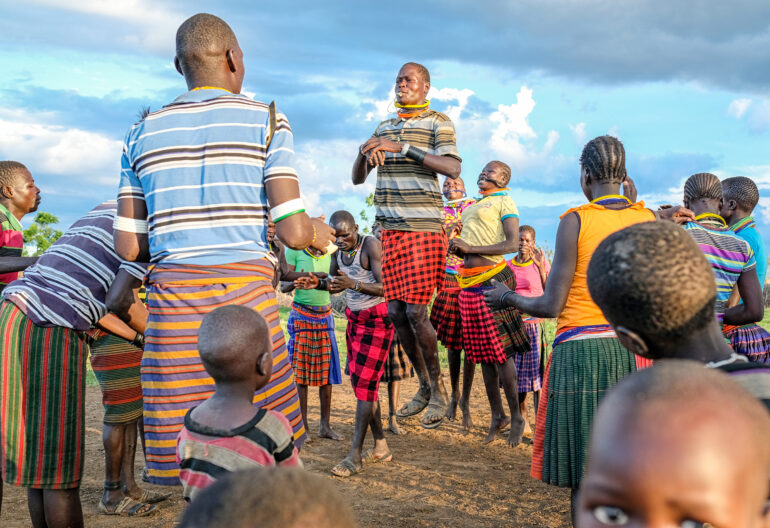
Glaucoma affected Derek’s vision, leading him to contemplate the end of his career as a photographer. However, he persisted and pushed himself, which helped him down this path. Today, he is a successful photographer who creates images in various places around the world. His work is distinct because Derek does not seem to pry; instead, he is empathetic about the people he photographs. The image above is one such telling shot. The man in the air is joyful, as if he is unaware of Derek’s presence. In fact, nobody seems bothered by the image. Only the child at the bottom right is aware of the photographer. The moment is endearing and in-depth in a fraction of a second of the people who invited him and treated him as a guest. And that is truly a win on his part. So he had to be on our list this Braille Day.
In his interview, Derek said:
I worked on myself. I began to see myself clearer than ever. As it just so happens, simultaneously the images accumulated. Everyone is going through something. Glaucoma limits one nerve but gave me another to reach out. There became a comfortability in being vulnerable, and in doing so I’ve seen more than I ever imagined.
Walter Rothwell
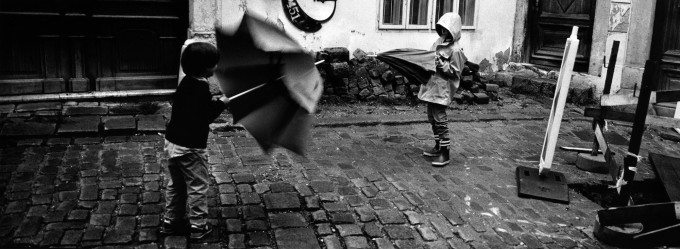
We have featured Walter Rothwell on the website a few times. He is an excellent photographer who is partially blind. This means that he can see the world through one eye while the other retina is detached. However, despite that, Walter continued photographing the streets, bringing us unique moments that would often go unnoticed. The image above was shot using the Hasselblad Xpan, which allowed him to capture panorama images. In a time when we are stuck with the square format, Walter’s unique format propels viewers to stay back. For instance, the grains, slow shutter, and the wide look of the alley are inviting and make us ponder what exactly these kids were doing. There is so much drama that you can’t help but fall in love with his images. It is his ability to show us the world in an unusual way that has made us choose him for our Braille Day feature.
In his interview with us, he said:
I found it intriguing that I had started to see these images. It was not a format that had ever interested me. I thought panoramic was for landscape and architecture, but using it for street photography suddenly made sense. I still question as to whether the fact I am half blind has something to do with it, my eye naturally sweeps left to right and panoramic feels as natural as a classic 35mm frame.
Francesco Nacchia

Unlike other photographers on the list, Francesco’s work uses a lot of shadows and some mild highlights to bring out his food images. That’s because the photographer is color blind and prefers to avoid the clash of too many colors. But despite the darker shades, Francesco’s images are truly captivating and remind one of the still-life paintings by Caravaggio. The image above, for instance, works so well because the orange stands out without shouting too much. The dull tones of the wood, alongside the soft light, make the photograph quite intriguing.
In his interview with us, Francesco said:
I don’t have a definite style, or at least I have not found one I like, so I often change according to the exposure of the photo or according to the subject that I want to photograph.
Kurt Weston
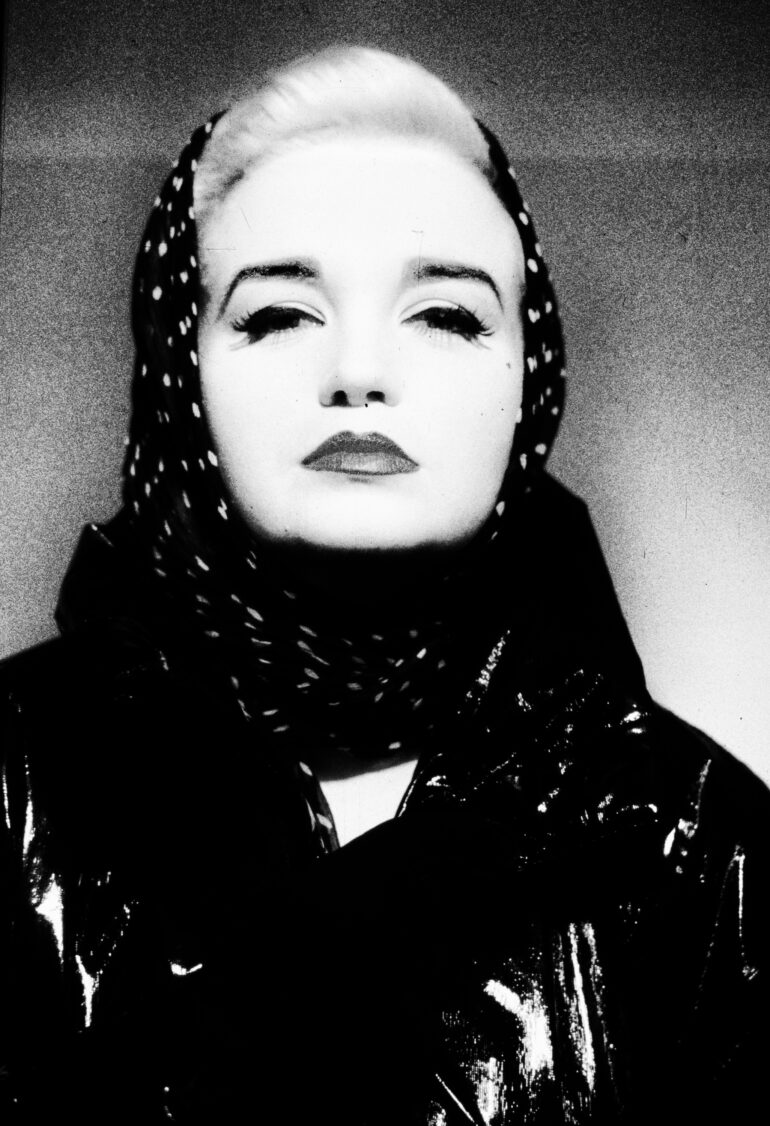
Kurt’s photographs remind one of the neo-noir films that have become a craze among indie film students. The stark black-and-whites make the portraits appear like stencil drawings, but on a closer look, you realize they are photographs. To capture such distinct images, Kurt used film and a scanner with objects that would leave a mark on the photographs. “I would spray the scanner glass with foaming glass cleaner, sometimes incorporating pieces of tinsel and shards of broken glass to replicate the obstructions I experience in my field of vision,” he said, explaining his legal blindness. As a result, you see images that are distinct, as they are cinematic.
In his interview with us, Kurt said:
In my portraits I utilize the distinct tonal contrasts between my luminous subjects and their dark, shadowy backgrounds as well as, the dark environments they are portrayed in. This luminosity, this light emitting from my subject allows me to see the final print more distinctly and creates a very dramatic portrait with the attention specifically on the subject.
Nathan Wirth
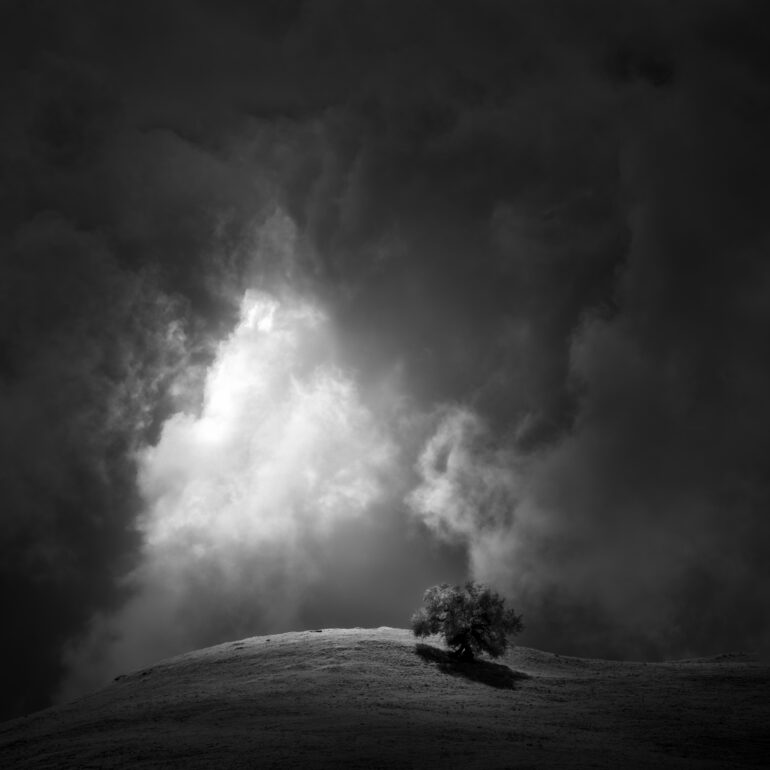
What makes Nathan’s image so compelling is the use of light. The way the shadows and light dance in his pictures make it appear as if we are looking at the world exactly how God had intended it to be. For instance, the image above, the single source of light, almost makes the whole scene very biblical. As if God said, “Let there be light,” and the skies parted to shine upon the lone tree. However, the spiritually coded images are created wonderfully despite his extreme near-sightedness. If he does not wear his glasses, Nathan will see the whole world in a simple blurry state.
In his interview with us, Nathan said:
I have never been interested in capturing the world as it is. I suppose this has a lot to do with my fascination with black and white. I wish, again, to simply create—and I wish to create black and white images even if I must sometimes squint and must always wear glasses to safely navigate through the world.
Tammy Ruggles
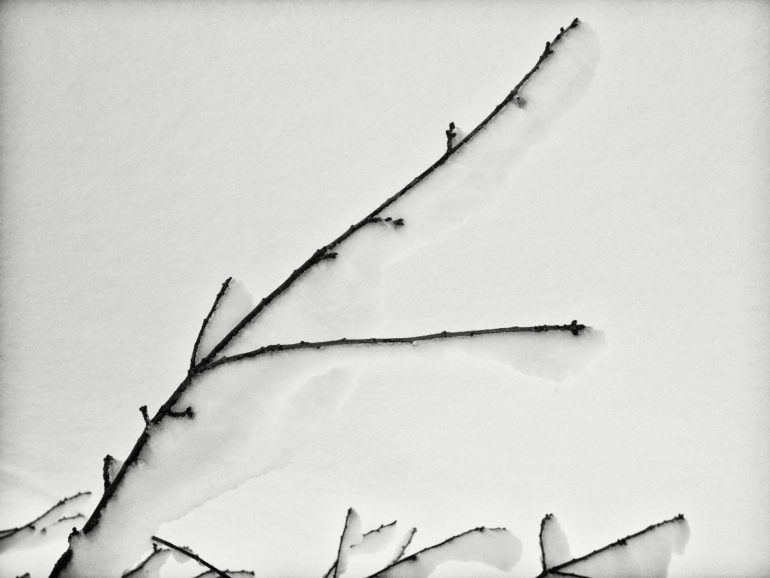
A legally blind photographer, Tammy’s images remind you of Abbas Kiarostami, Alfred Stieglitz, and Ansel Adams’s images. The use of contrast, grain, and patterns found in nature are what works so well for her. The image above, for instance, will instantly remind you of Kiarostami’s lovely photographs made in the snow. The soft fall of the shadows, the dark dead branches, and the sheet of snow are almost poetic. And that’s why we chose her for our Braille Day feature.
In her interview, Tammy told us:
I can express my creativity, and my camera shows me see what my eyes miss. I can view the world I capture as enlarged images on a giant computer monitor.
Get rid of the ads!
Did you enjoy reading this article as much as we enjoyed writing it? There's a way to support us and our reporting, getting ad-free navigation and more as a bonus. Subscribe to us for less than a coffee per month —just $3.99— or take advantage of our yearly subscription with a hefty discount for only $25.- An ad-free experience
- A free mystery box for Lightroom or Capture One
- All the books in our store
- 20% discount on Capture One
- 30% discount on Imalume Photo Theft Protection
- 20% off Herbs and Kettle Tea Company.