

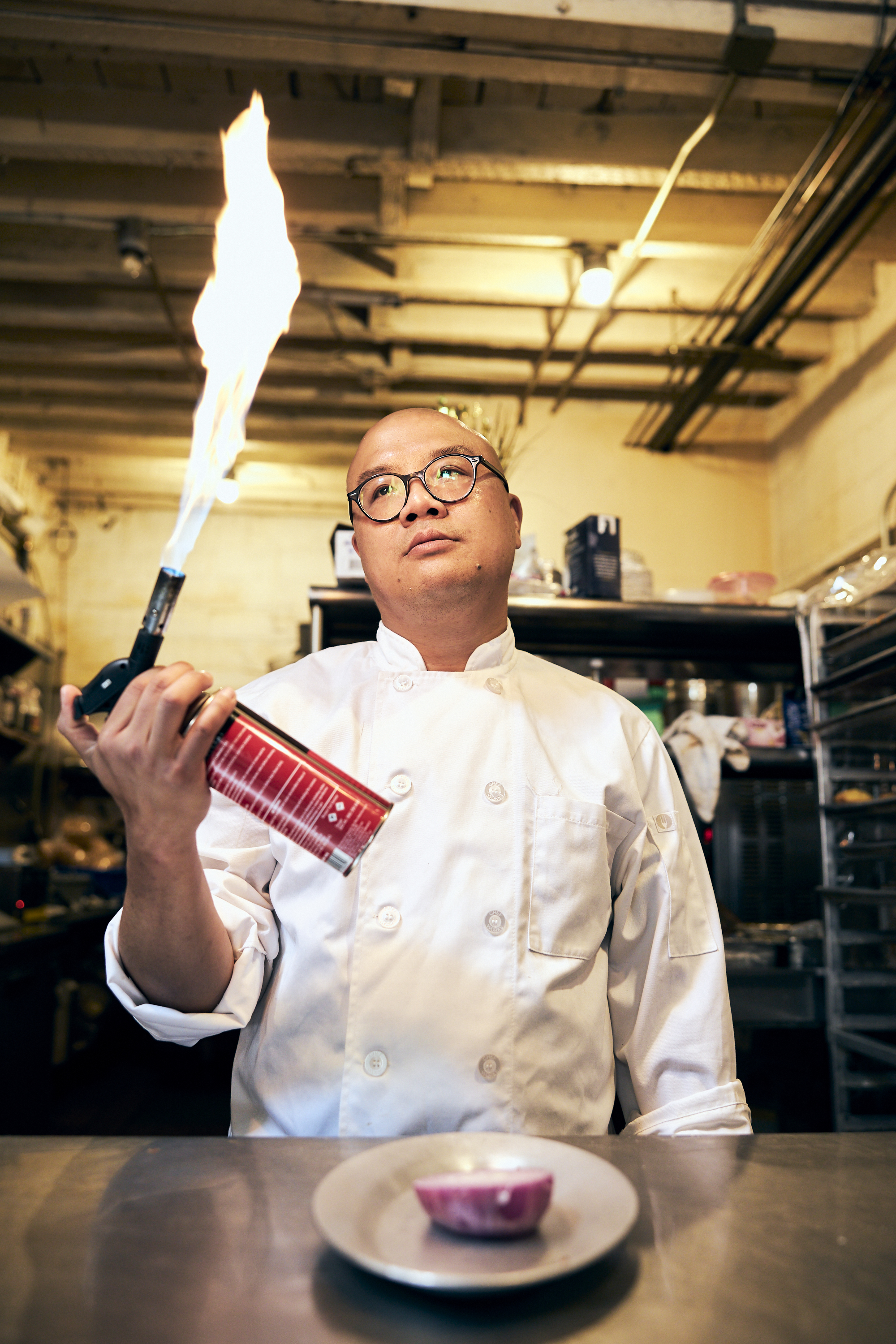
Ask most photographers who grew up learning photography online, and they’ll tell you that you need to have bokeh in your photographs to make them great. But in reality, you don’t. Nearly every photograph you make will have an important idea to balance: foreground vs background. Of course, there are abstract photographs that don’t do this and throw the idea out the window. But it’s incredibly important to storytelling in several cases, such as with portraits and landscapes. All of these can be applied to photojournalism, too. Today, we’re diving into that idea and giving you more things to think about.
“A photograph is a two-dimensional rendering of the three-dimensional world,” says Brian Dilg in his book Why You Like this Photo. “It flattens perspective and draws attention to the spatial relationships between objects. While the spotlight effect of our conscious attention tends to blind us to anything other than what we’re concentrating on, photographs freeze the chaotic world, inviting us to compare the interrelationships between elements in the frame.”
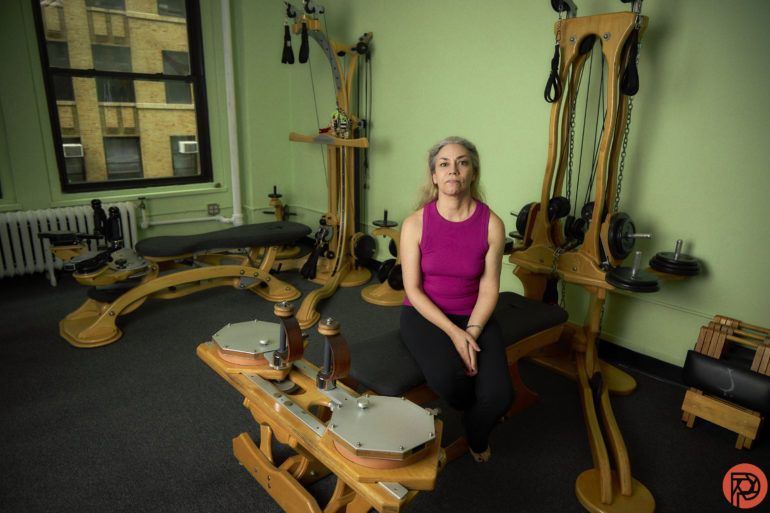
The subject matter of your photograph is incredibly important; and every single part of it should be carefully considered. When you’re telling a story through images, you need to answer many of the important questions:
- Who is important in your image? Are they an important part of the composition?
- What is important to your story? Are you telling the story in the image here?
- Is this an important moment in the story, and is it progressing the story you’re telling forward?
- Where are we? Can we see exactly where we are?
- How is this story being told as part of what I want it to come off as? How can cropping, rotating, or basic edits change the feeling of the image?
- Why is this image important to the story?
All of these questions can be further run by the following:
- Is what’s in the foreground of this image important?
- Is what’s in the background of this image important to the story?
Overall, the idea here is to tell a story in your images. Stories are more important than you think. They’re part of what keeps people staring at your images. More specifically, stimulating stories that don’t feel generic. Instead, personal stories are what keep people glued. The days of a model against the backdrop of NYC in the distance are long gone and don’t merit your time. If a model asks you to photograph at the Vessel, just move on. Sure, they’ll get double taps on Instagram. But those are so easy to get if you just follow the same algorithmic formula.
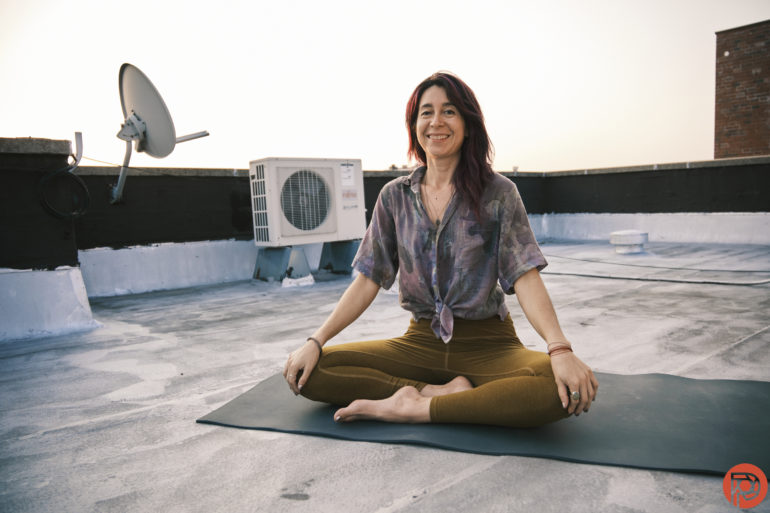
As we always say: make art, not content.
Tell stories in your photos that tell us more about the person or give us more context about the photograph. If you’re photographing a chef, shoot them in their environment. Here are some tips from photographers we’ve interviewed and articles we’ve done on environmental portraits:
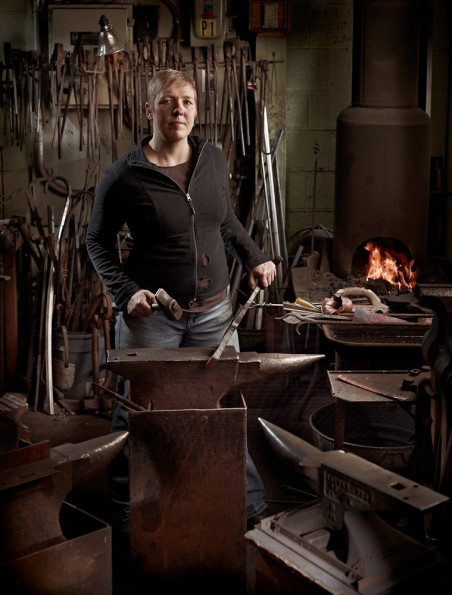
“To me a perfect environmental portrait is a portrait that tells a story, you are learning something about the person in the portrait without the use of words,” said Jonathan Bielaski, in an interview with us. ” “The background and foreground are just as important as the person in telling the story but they are the supporting cast and the person is the lead role. On their own, they could make good images but together they make a great image.” Our interview with Jonathan has more.
Jonathan’s image is on the right, and was used with permission in our interview. We can dissect it see how Jonathan is a master of the environmental portrait. In the foreground, we have a blacksmith at an anvil. There are lots of elements that tell the story. The blacksmith is using their tools that are iconic to what the profession does. Those tools and the blacksmith themselves are given ample light to spotlight the important things to the job.
In the background, we see lots of other supporting objects. There are other tools, pieces of work, a furnace with a fire, etc. The portrait is told with a few colors: brown, red, green, and orange. Slight desaturation is used throughout the image to give more emphasis on the scene’s subject, who is surrounded by the tools. It’s a masterful piece of environmental portraiture that uses foreground and background well.
Another thing to remember here is that you’re not always working with models. You should think of the people in your photographs more as heroes of the story.

“If I’m not going for more of a model-like look to the image, I won’t do much posing,” says photographer and former staffer Travis Lawton in a tutorial. “The main reason for this is that if you’re shooting someone who may not be comfortable in front of a camera, barking at them to turn their head slightly to the right, not that far, a little more my way, no not like that, will intimidate them, make them feel more self-conscious and will kill the mood of the image.” We can see that in the image above. Sometimes, when people can feel the tools that are important to them, they’ll become natural, and it can make for a better portrait.
In Travis’s image above, he’s using the foreground and effective lighting to separate the hockey player. We can immediately tell that they’re a hockey player because of the gear and the location we’re in. Clearly, we’re not photographing a chef here.
For more environmental portrait inspiration, we recommend you check out the work we did with Danny Santos II and James Chororos. The importance of foreground, subject, and background relationships are all well explored in these articles.
Get rid of the ads!
Did you enjoy reading this article as much as we enjoyed writing it? There's a way to support us and our reporting, getting ad-free navigation and more as a bonus. Subscribe to us for less than a coffee per month —just $3.99— or take advantage of our yearly subscription with a hefty discount for only $25.- An ad-free experience
- A free mystery box for Lightroom or Capture One
- All the books in our store
- 20% discount on Capture One
- 30% discount on Imalume Photo Theft Protection
- 20% off Herbs and Kettle Tea Company.
- 20% off your order from MPIX printing services.
- 5% off Viltrox Products via their eCommerce store.
- 10% off all film developing, printing and scanning services from Blue Moon Camera and Machine
- 15% off 7Artisans products: The lens and accessory maker is offering a sweet discount for Phoblographer's readers.