


Perhaps more so than any other color, the color yellow can be presented as both a form of chaos and beauty. A lemon can be made to be both sour and fresh. Yellow Starburst is often the flavor that people like the least. Yet at the same time, they also like the taste of lemonade. It’s a color the shows quite a paradox and can be used to represent change, evolution, chaos, and beauty all at the same time. Today, we’re taking a look at how photographers use the color yellow in their work.
All images used with permission in our interviews. Lead photograph by Cristina Venedict.
How Yellow Has Been Used in Art
If you’ve studied art, you’ll know that the color yellow has often been a bit of a duality. In many classical paintings, yellow is often used to showcase royalty and beauty. It was used this way in ancient Indian and Chinese pieces, which journeyed to the Arab world and European royalty. Yellow is uniquely used in the book, The Great Gatsby often to bring great prominence to something. Of course, this is all dependant on the context of the painting that we’re looking at.
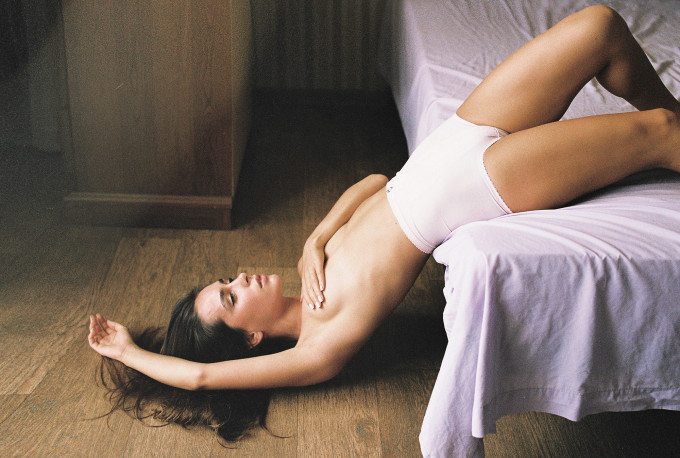
What’s more, yellow has been used for skin in many different paintings. Photographer Anastasia Egonyan references that she loves Kodak film for its red and yellow tones. Perhaps this is why Kodak Portra is so incredibly popular with many photographers.
However, it has also been a form of chaos. If you’re a fan of Sin City, you’ll remember the Yellow Bastard, who stood out in the movie. Here, it was used to create chaos and contrast in the scenes. Again, this is all dependant on the context. Sin City is all black and white; and any color in the scene really stands out.
In both situations, yellow is used effectively with lighting to make it shine like gold. But in modern photography, yellow is used much differently.
Yellow: the Color of Beautiful Chaos
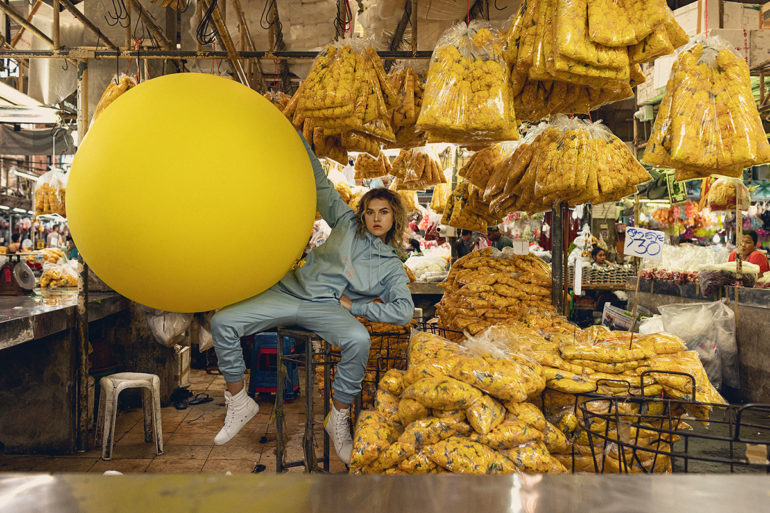
In a fun series by Julia Marie Werner and Manuel Wagner, we can see how the color yellow can be a whimsical yet chaotic color. The two created something completely out of the norm by taking a giant yellow ball around Bangkok and shooting photos with it. The big yellow ball is a character in the story — which you can see in the image above. Without it, there is no story between it and the relationship with the model. It’s a chaotic and experimental series that leans into randomness and draws our eye to the ball. From there, we explore the rest of the scene as we are constantly bewildered. This, as crazy as it seems, is what art is designed to do. It forces us to question things and look for meaning. That’s the case of many of the things that Julia photographs. In fact, the color yellow is used often in her work.
Photographer Joe Giacomet uses the color yellow similarly to add contrast and to parody something otherwise seen as very reverant. Here’s what we stated in an article:
Joe further playfully parodied the “Chinese Girl” painting in his photography by having the model do humorous and unexpected poses such as blowing bubble gum, smoking a cigarette, wearing a Smurf’s hat, or even dramatically dressed in a full traditional Chinese Communist military uniform. The creative play in varying facial expressions and different acts in each image, yet having similar composition framing to the original planning was cleverly done. What Joe and his team have done in this series of portrait images was adding layers of dimension and lively, fun stories to the “Chinese Girl”.
The color yellow is critical to all this. It adds surreal, chaotic elements to the scenes that also bring non-traditional ideas to the front.
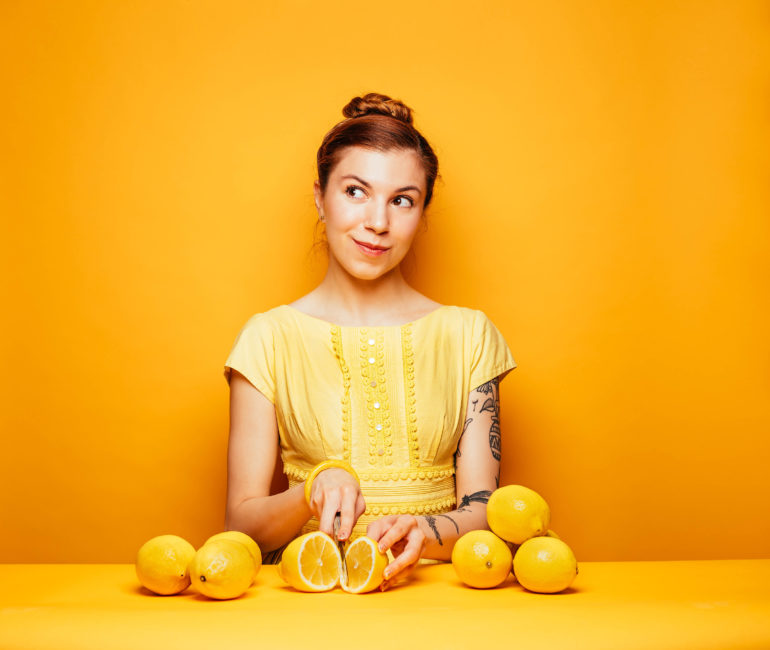
Like early paintings did previously, we can also use the color yellow to add a bit more fun to a scene. During the pandemic, Ian Pettigrew collaborated with his wife Nicole to make a series of photographs based around colors. “Orange or yellow might have been our first shoot, I can’t remember now,” he told us. “I have an old Fisherman’s yellow raincoat I thought would be a good idea for a monochromatic shoot, but it morphed into using foods that corresponded with the colour we chose.” In this series, he was clearly experimenting and being playful. But the two used the color yellow to create some beautiful work that shows how the color leans into being experimental and chaotic.
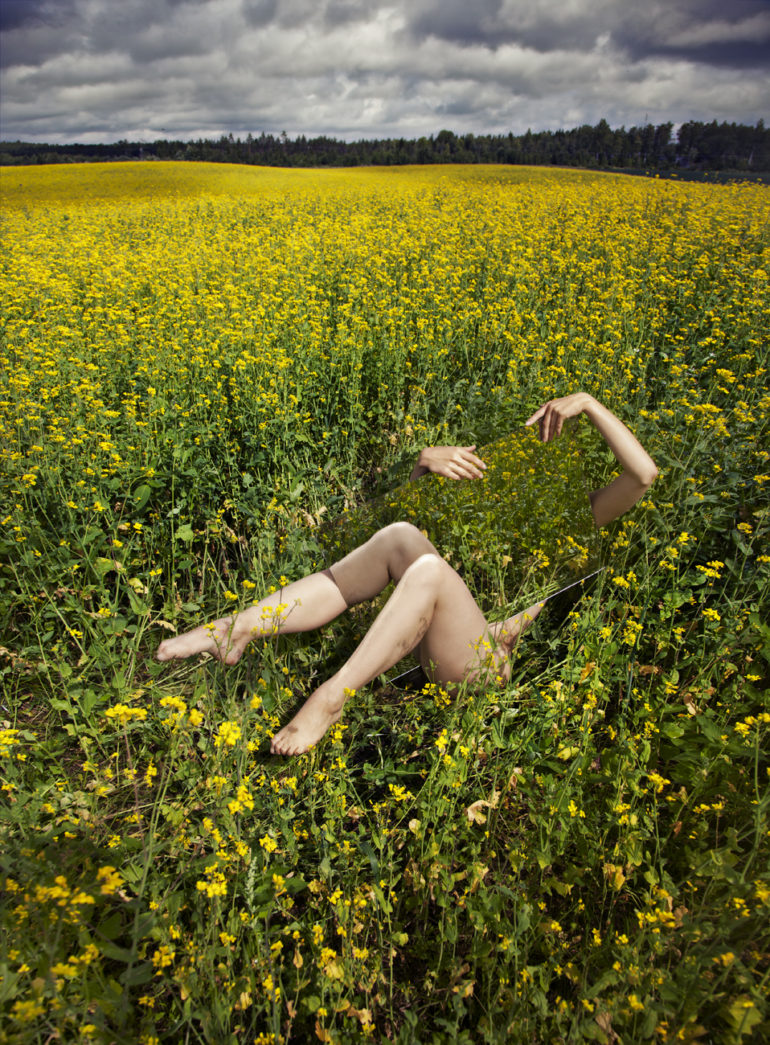
Photographer Loreal Prystaj used the color yellow to lean into a bit of the idea of nature’s beauty. In fact, the series is literally about reflecting on nature, and that’s a big part of why there are mirrors in the images. In our interview, she told us:
“The most challenging aspect of this project was being at the right place at the right time. Planning ahead to capture the right lighting was crucial. If the sun was out, oftentimes it would create glares in the mirror, so I had to wait for bright overcast days, for the most part. Also some elements of my environment were seasonal–for example, the field of yellow flowers only were in bloom for five days. Had I not photographed in that time frame it would have been a green field.”
Loreal Prystaj
Truly, yellow can be used to show so many different things in photography that it’s very difficult to pinpoint one specific thing. In society, traffic lights and signals use the color yellow to bring our attention to something and provide caution. But in art, it can be used to create beauty.
Intentional Contrast
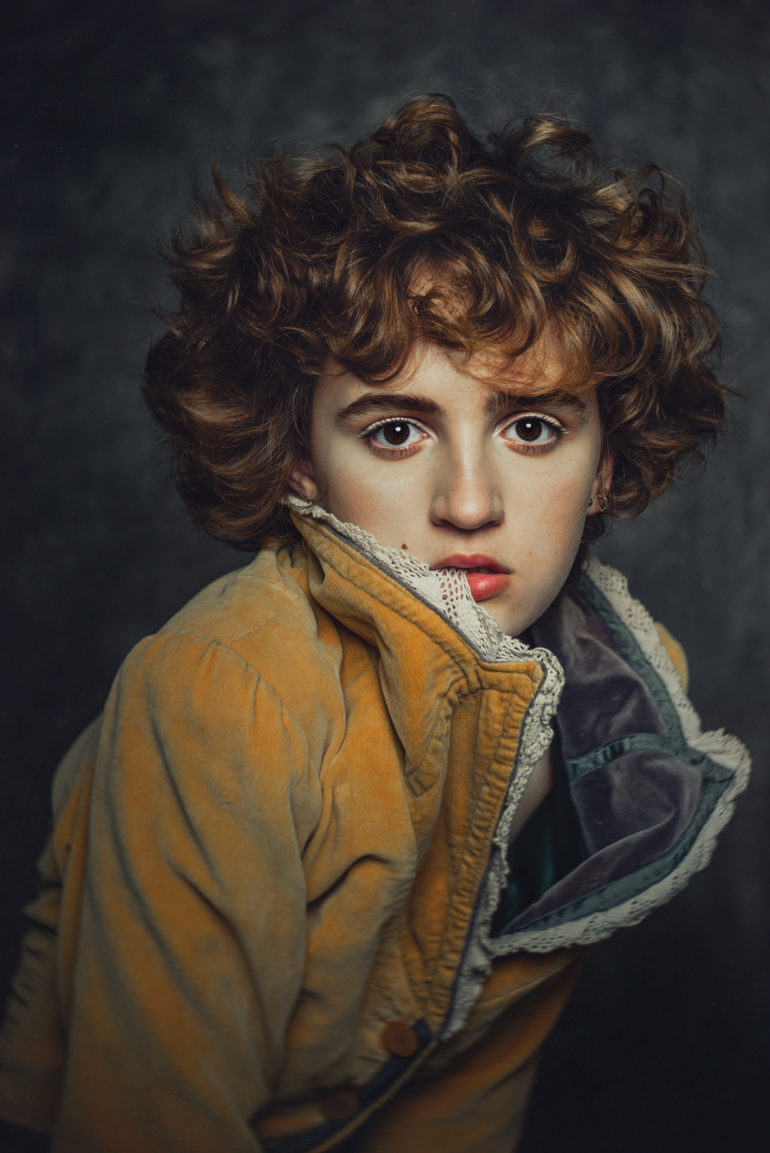
Several photographers have used the color to bring contrast to their images. But unlike green, blue, brown, white, and black, it cannot be found with every other color naturally in the world. A photographer who’s work we really see this in is Cristina Venedict’s. She’s an award-winning portrait photographer that says that she’s really into the color yellow in our interview. Clearly here, we see it being used both in contrast and in beauty.
Her images often follow the simple three-color portrait rule which tries to separate out the background, attire, and skin into three different colors. Effective lighting is used to ass further distinction and contrast.
Cristina’s work is far different from a photographer like Ken Hermann, who tries to make entire backgrounds the color blue while using a soft yellow on his portrait subjects to make them stand out. It’s striking — and the technique tells us immediately what to focus on in the frame even if there is deep depth of field and focus within the image.
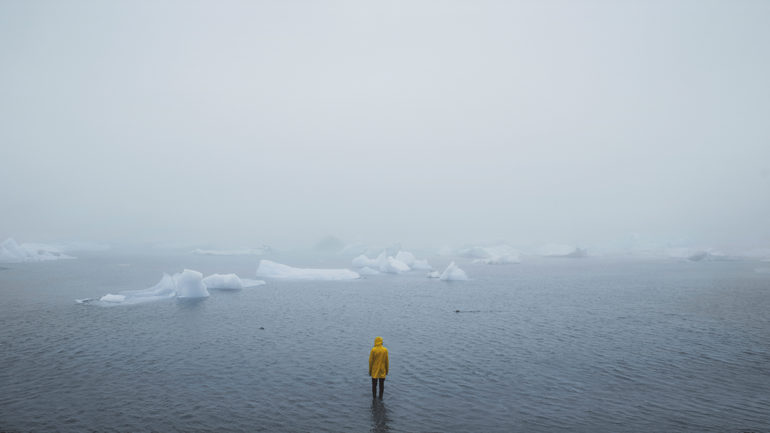
Like Ken, photographer Florian Wenzel uses the color to add contrast to his scenes. In fact, he calls himself a spot of color in a black and white world. But his scenes don’t look like what we see in Sin City. Instead, he adds context by bringing us to nature and simply just giving him a bright yellow raincoat. The images are striking, yet use yellow in a simple way to add contrast.
There are so many different uses for this color that it cannot be pinned down. Perhaps that’s what makes it so beautiful to us yet it’s also why some of us might be so adverse to using it.
Get rid of the ads!
Did you enjoy reading this article as much as we enjoyed writing it? There's a way to support us and our reporting, getting ad-free navigation and more as a bonus. Subscribe to us for less than a coffee per month —just $3.99— or take advantage of our yearly subscription with a hefty discount for only $25.- An ad-free experience
- A free mystery box for Lightroom or Capture One
- All the books in our store
- 20% discount on Capture One
- 30% discount on Imalume Photo Theft Protection
- 20% off Herbs and Kettle Tea Company.
- 20% off your order from MPIX printing services.